Determining barrel id - 303 br mk4 for load development

RonR

Regular
Super GunNutz
Rating - 100%
25   0   0
Location
Saskatoon
I purchased a mk4 rifle for my son who’s really excited to get it to the range and am going through considerations for reloading for Saturday. ( I am aware of the rubber ring trick for fireforming as well from experience that the chambers and barrels are generous on these rifles.) Haven't fired this rifle yet and it's like a new toy...and I've got to play it.

I’m getting into new territory here with this question…perhaps it should be in the gunsmithing forum but it’s related to reloading so here it is. Pardon any ignorance in advance, I haven’t done this before.I’ve never slugged a barrel and need some coaching to determine/confirm the barrel diameter with what I have here for tools and equipment if possible. I’ve got some .311 and .312 speer and hornady 150 gr bullets.

The questions I have are this
- Is it possible to “slug” one of the bullets from above down from the action to the muzzle and will that provide enough information indicating a preferred bullet dia?
- Is a lead fishing plomb or lead cast bullet required or more effective?
- Recommendations for the “rod” to push the bullet down. I've read wooden dowels work.
- After barrel cleaning, what kind of barrel prep is suggested to "slug"?
- Is there another method I'm not aware of?

Regards all,
Ronr
 
A lead slug - could be a fishing weight, if soft lead - could be upset and pushed through. It just needs to be a bit larger than the bore. Tap it in the muzzle, then push it through. I stay away from dowels in barrels.
Personally, I wouldn't bother with slugging the barrel.
Issue ammunition sure wasn't made in different diameters, and the rifles served just fine.
Try both bullets. You may find that one shoots better than the other.
If you are using range pickup brass, inspect it very carefully for incipient separations.
 
A lead slug - could be a fishing weight, if soft lead - could be upset and pushed through. It just needs to be a bit larger than the bore. Tap it in the muzzle, then push it through. I stay away from dowels in barrels.
Personally, I wouldn't bother with slugging the barrel.
Issue ammunition sure wasn't made in different diameters, and the rifles served just fine.
Try both bullets. You may find that one shoots better than the other.
If you are using range pickup brass, inspect it very carefully for incipient separations.

Sound advice and direction. Noted on the range brass...purchased new brass for this rifle as part of Christmas for my son. Thank you very much.

Best regards
Ronr
 
RonR

I preferred Hornady .312 flat base bullets and never bothered to slug any Enfield barrel. Any flat base bullet when fired and kicked in the seat of the pants will expand and fill the bore.

On a worn Enfield bore the .312 Hornady 174 grain round nose bullet shot the best due to their longer bearing surface to grip the worn rifling.

As a side note I had a 1943 Remington 03-A3 30-06 with a very worn bore, it was .311 in the throat, .309 at mid bore and .312 at the muzzle. It shot a 30-30 170 grain bullet with the best accuracy and again this was because the 30-30 bullet had a softer lead core and expanded to bore diameter when fired.

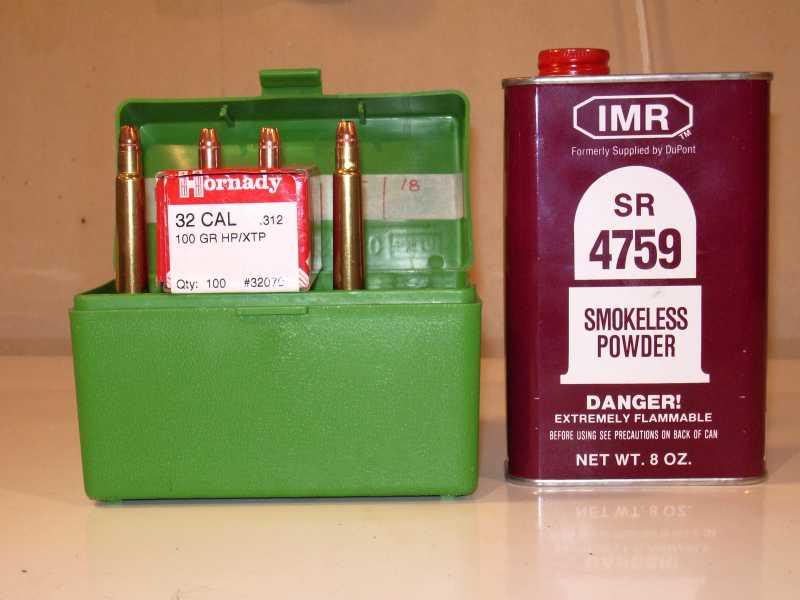
For fire forming and plinking the 100 grain Hornady .312 pistol bullets with reduced loads work well and make the brass butt plate softer when shooting 50 to 100 rounds. ;)

HHDfGl9.jpg


FCHGvIZ.jpg


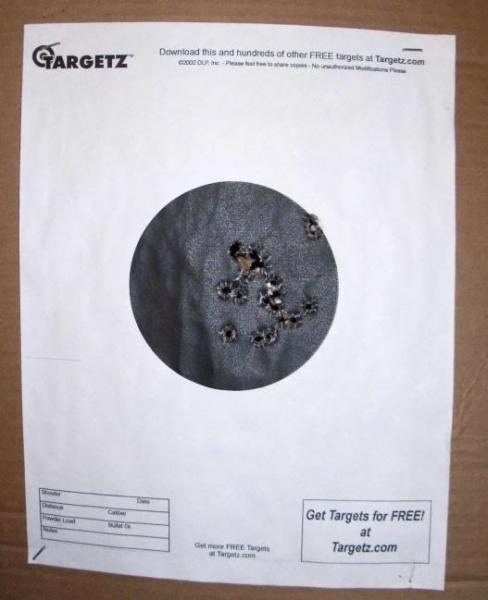
The funny thing about the reduced loads with the pistol bullets is the delay from pulling the trigger...................and hearing the bullet hitting the target board.

If I remember correctly I had to raise the rear sight to 400 yards to hit the bull below at 100 yards.

HyLFfuv.jpg
 
For slugging barrels up to 8mm, I use a pure lead .330" round ball, designed for muzzle loading rifles.
Be aware that if that 303 has 5 lands and grooves, the slug cannot be measured easily with a micrometer. You will
need to triangulate to get the actual diameter. I have seen 303 rifles with groove diameters as large as .317"
Regards, Dave.
 
RonR

I preferred Hornady .312 flat base bullets and never bothered to slug any Enfield barrel. Any flat base bullet when fired and kicked in the seat of the pants will expand and fill the bore.

For fire forming and plinking the 100 grain Hornady .312 pistol bullets with reduced loads work well and make the brass butt plate softer when shooting 50 to 100 rounds. ;)

Noted on .312. Got that info from 303br.com. (Brass butt plate...lol...that's exactly what I want my son to experience. The brass but plate of mine is where I "cut my teeth" so to speak but in those days my shoulder didn't give a s$^t. He's spoiled with his hunting rifle.:rolleyes: but excited as hell about this one.) The reduced load thing would be great for my daughters and when I'm at that point I'll sniff around at reduced loads.

The funny thing about the reduced loads with the pistol bullets is the delay from pulling the trigger...................and hearing the bullet hitting the target board.

If I remember correctly I had to raise the rear sight to 400 yards to hit the bull below at 100 yards.

HyLFfuv.jpg

Interesting, nice shooting and thanks for the post!
Regards
Ronr
 
For slugging barrels up to 8mm, I use a pure lead .330" round ball, designed for muzzle loading rifles.
Be aware that if that 303 has 5 lands and grooves, the slug cannot be measured easily with a micrometer. You will
need to triangulate to get the actual diameter. I have seen 303 rifles with groove diameters as large as .317"
Regards, Dave.

Hey Dave, to be really honest the rifle was not fired by the previous owner and I just wand to be sure of what I have and it's not something hybrid in terms of the barrel. (plus I wanted to try slugging )

The barrel appears to have two groves and has a newer external finish vs the rest of the metal. The markings opposite the bolt read No.4 Mk1/2 and the barrel has somewhat familiar military markings but nothing to indicate caliber. Additionally there are two flat head set screws where the barrel meets the action at 12 o'clock if I was to shoulder the rifle. (Re-barrel?) It's also got a flip up sight stamped MkIII.

Perhaps someone can help with that interpretation? I'd fire some factory 303 offerings to test but again I'd like to know beyond reasonable doubt of what the bore is.

Regards Dave,
Ronr
 
You probably don't have to slug the barrel. I have made loads for a number of #4's. The only time I bothered to slug a barrel was for a rifle that would not group.

BUT, try a 303 case and a 308 case just to be sure it is not a 308, but with a 2 groove barrel it is 99% a 303. If you slug it you might find it is a 30 cal bore. Some Savage 303 barrels were based on 30 cal.

I suggest you buy a box of flat base 150 and 180 spitzers and a box of 180 flat base round nose. Lot each with 5 of each from start to max in 1 gr increments.

This will make for a great first range day with lots of shooting. At least one of those loads will show a lot of promise.

I also try the Sierra match bullet. Only one rifle shot it well. It shot it much better than the cheap bullets. The rounds nose was good (2 MOA) but the match bullet was almost 1 MOA.

Worn barrels don't shoot boat tails well, so start with the flat base bullets.
 
Last edited:
A piece of OO buck shot will do to slug the bore. I've used an old aluminum shotgun cleaning rod to tap them through. As mentioned above the .312 flat base hornady may be your best shooting bullet. Certainly is in my 2 groove savage no 4.
 
You probably don't have to slug the barrel. I have made loads for a number of #4's. The only time I bothered to slug a barrel was for a rifle that would not group.

BUT, try a 303 case and a 308 case just to be sure it is not a 308, but with a 2 groove barrel it is 99% a 303. If you slug it you might find it is a 30 cal bore. Some Savage 303 barrels were based on 30 cal.

I suggest you buy a box of flat base 150 and 180 spitzers and a box of 180 flat base round nose. Lot each with 5 of each from start to max in 1 gr increments.

This will make for a great first range day with lots of shooting. At least one of those loads will show a lot of promise.

I also try the Sierra match bullet. Only one rifle shot it well. It shot it much better than the cheap bullets. The rounds nose was good (2 MOA) but the match bullet was almost 1 MOA.

Worn barrels don't shoot boat tails well, so start with the flat base bullets.

Thanks Ganderite. You definitely know your 303 br and thanks for affirming the bullet selections in mind here for testing. I have no idea if its a shooter or not but there's signs on the rifle that have us excited about the prospects...but it's ugly right now! If there are some positive results I'll be combing for threads on accuracy loads for the 303 and perhaps drawing on your experience a bit more. But until then thanks.

I should mention that the part about testing a 308 case as a sort of go-no go check for a 308 derivative is some experience shared that I appreciate.

Best Regards
Ron
 
A piece of OO buck shot will do to slug the bore. I've used an old aluminum shotgun cleaning rod to tap them through. As mentioned above the .312 flat base hornady may be your best shooting bullet. Certainly is in my 2 groove savage no 4.

Ahhh, more good advice from a person that works for living cutting and fabbin' metals and more. Love the signature line. I used to make engineers look good too...but with regards to the papers used to create their creations. :) :nest: <<< in good fun.

Regards
Ronr
 
Back
Top Bottom