Do you practise shooting off hand?

Where do people hunt here that you can go prone to take a shot? I have drawn at least 10 moose tags in my short life and they have all been filled with me kneeling while shooting.
I figured every hunter on here could shoot a 6 inch, 3 shot group with irons, at 100 yards while standing. If I could not do that I wouldn't go hunting. Am I being unreasonable or arrogant in thinking this?
 
Where do people hunt here that you can go prone to take a shot? I have drawn at least 10 moose tags in my short life and they have all been filled with me kneeling while shooting.
I figured every hunter on here could shoot a 6 inch, 3 shot group with irons, at 100 yards while standing. If I could not do that I wouldn't go hunting. Am I being unreasonable or arrogant in thinking this?

http://1.bp.########.com/_heuRpNedY48/TOKWJb5m3tI/AAAAAAAABuA/JZZk81nUSPo/s1600/Rockies_from_the_Prairies_near_Pincher_Creek-1.jpg
 
Where do people hunt here that you can go prone to take a shot?

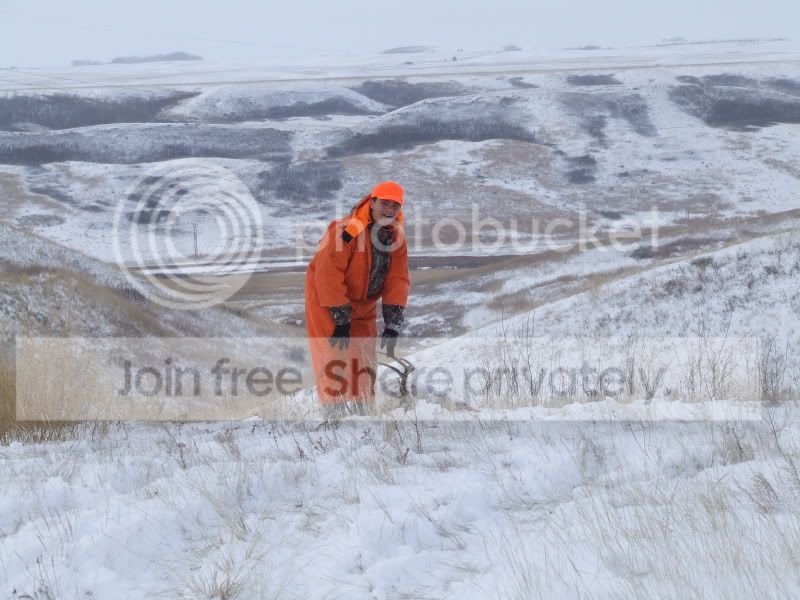
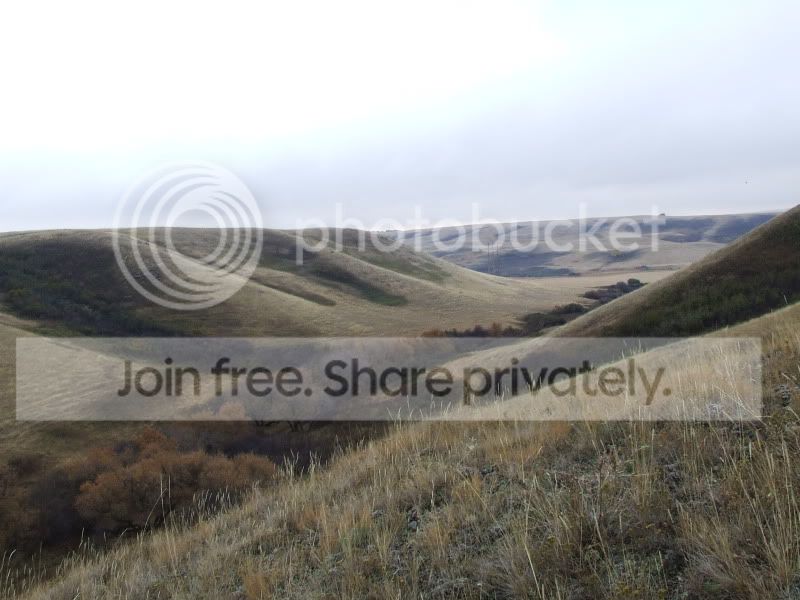
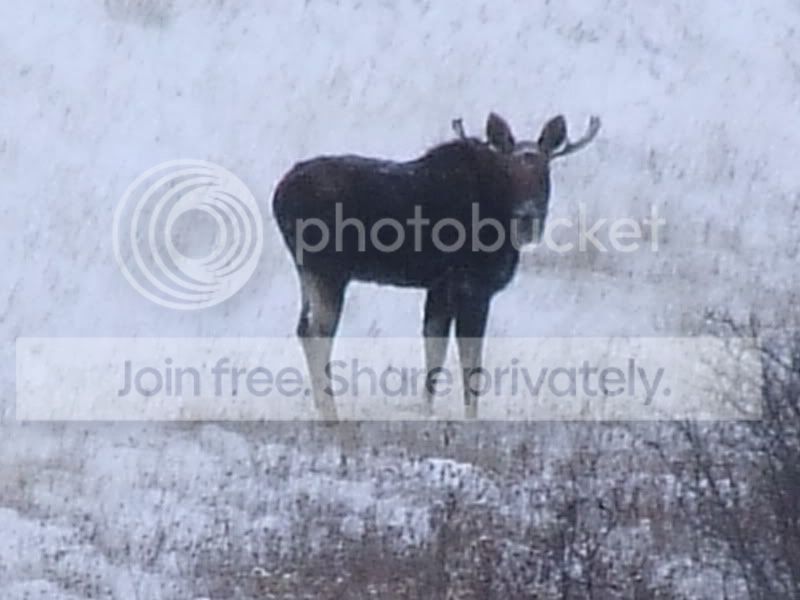
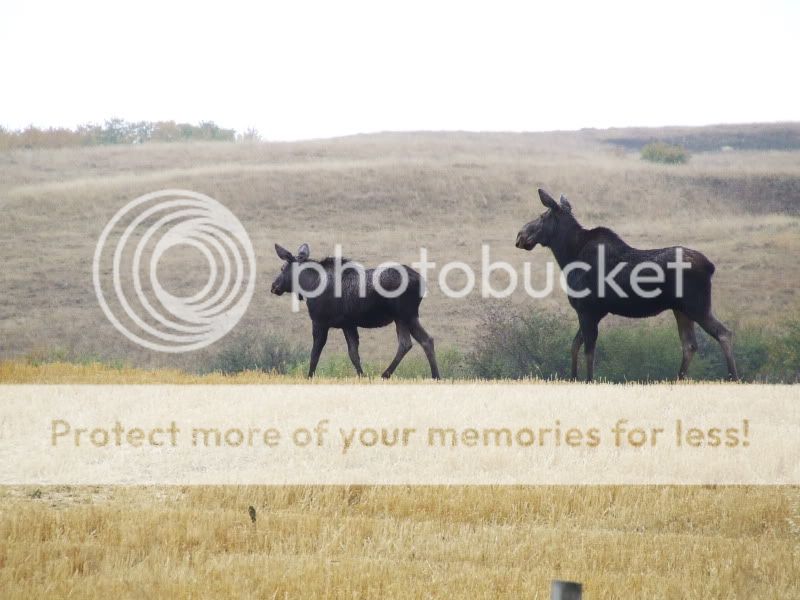
My place? The prairie moose pics are just for fun, but thats where these ones live. Then there's antelope country, its a mite spacious.

DSCF3477.jpg


DSCF3530.jpg


DSCF3470.jpg


DSCF3518.jpg


DSCF3479.jpg
 
Only twice that I can remember in about 40 years of hunting have I taken a big game animal from any position other than standing.

The usual encounters are at rock throwing distance, and the time to take the shot is usually a few seconds.

But I have managed one kneeling shot, and one prone shot, when the ranges were far enough for me to have the time to get into those positions.
 
Actually that terrain is quite similar to wear I live and it's great hunting. I don't subscribe to shooting at animals past 300 paces so they have a really good chance of seeing another day.
And I consider quad & truck hunting to be unsportsmanlike in the worst way, so it's on foot.
I'm more of a meat hunter anyway so if a wily trophy buck get's on to me before I'm in range , no worries.
I like iron's which helps with the offhand shooting in my case, but I don't practice enough shooting at angles. In reality I should be doing more uphill / downhill practice; that way when I jump one and it's leaving town over the top of the coulée I will be a little better prepared.
Stay safe
 
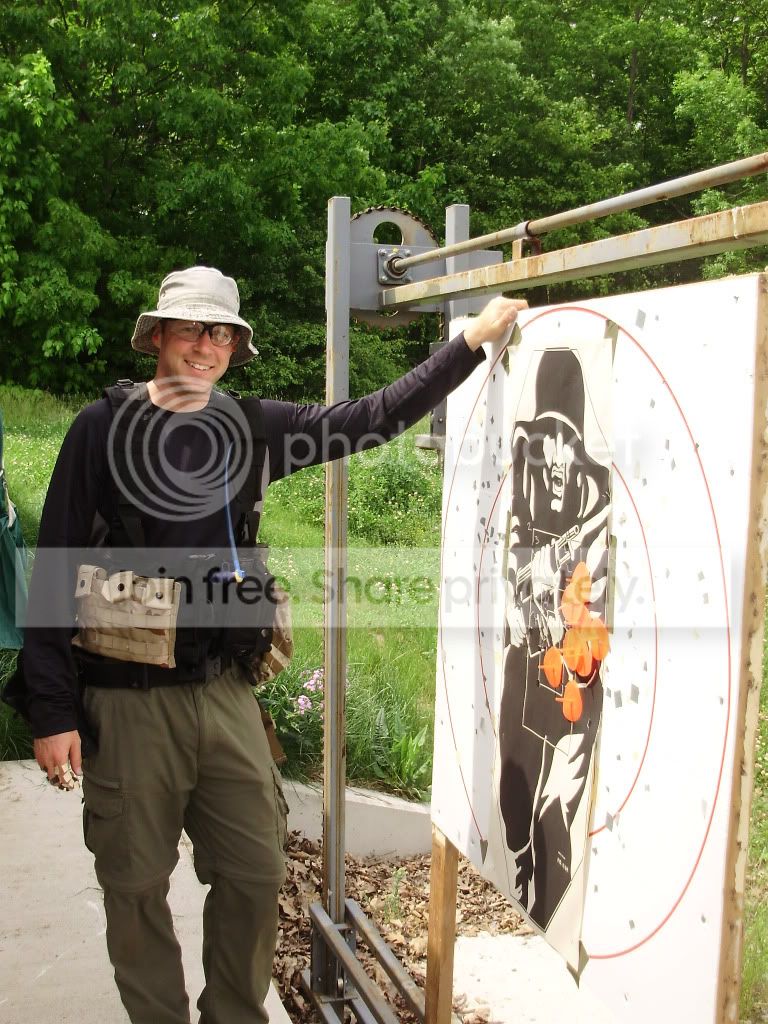
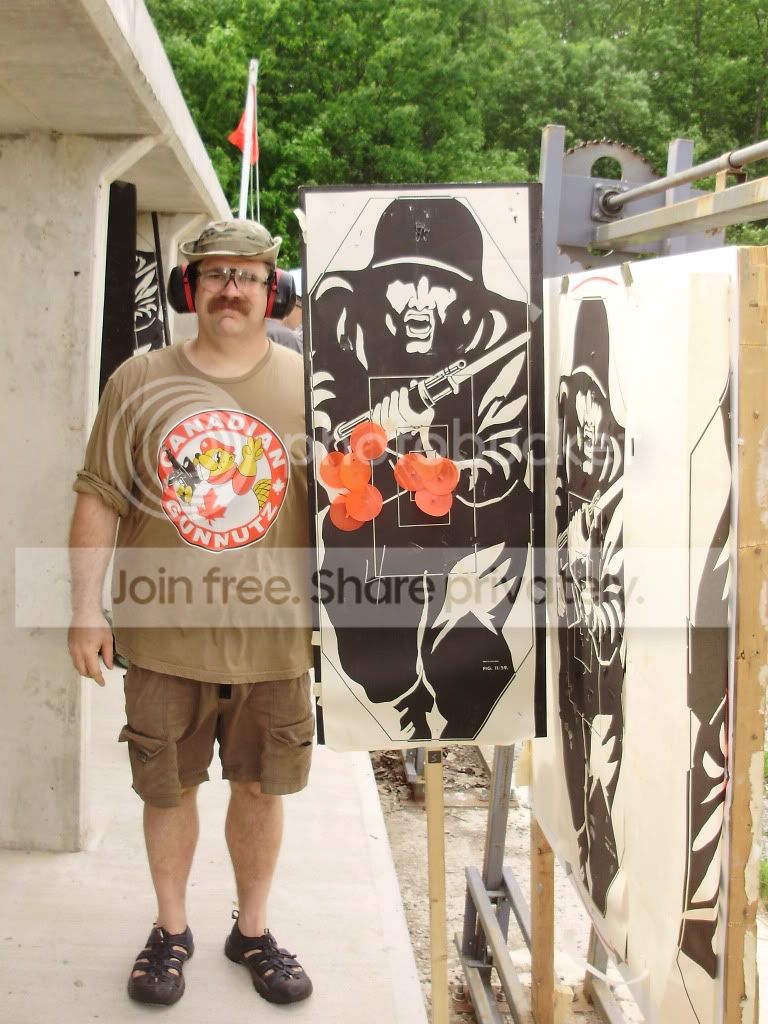
How well do you shoot with your hunting rifle off hand? I am happy enough with a 6 inch group at 100 yards off hand, as that is about as far as I shoot hunting, and a moose has a pretty large boiler room. I see all these pics of targets on the various forums that are much better than that, I would love to see some realistic off hand targets..

With my .270 win I get <6" at 100 with my .243 I shoot clays off hand at 150-200. Good enough for the game I go for!
 
To each his own, however, I don't consider shooting as hunting ;) lol

I tend to agree...

I have a friend who loves to stalk..A few years back, after a 4hr stalk, he shot a big bull caribou @ 6yds in the back of the head with his custom .338 Lapua..The reason I applaud this, is that he is a retired Canadian military sniper, who was totally capable of taking the animal when he first spotted it..That is a true hunter!!
 
Where do people hunt here that you can go prone to take a shot? I have drawn at least 10 moose tags in my short life and they have all been filled with me kneeling while shooting.
I figured every hunter on here could shoot a 6 inch, 3 shot group with irons, at 100 yards while standing. If I could not do that I wouldn't go hunting. Am I being unreasonable or arrogant in thinking this?

There are a few things to consider here.

Its sometimes difficult to imagine how well you might do if hunting in country you're unfamiliar with. The western prairies and deserts, the mountains, the northern tundra and sea ice all present possibilities for an individual to make a longish shot on game if thats what he's interested in doing. Whether the game is shot at 100 feet or at a half mile makes little difference to the animal, it would rather live.

I tend to abide by the rule that if you can get closer, then get closer, and if you can get lower, then get lower. A few years back I belly crawled up to a caribou and could have killed it with a knife had I been so inclined. But while it was fun I wouldn't say that was a skill necessary in order to make caribou hunting fair chase, although around here caribou are more about groceries than about sport and for some fair chase is the limitation of their snowmobiles over any particular piece of ground.

There are days here where even with a proper kneeling position; that is with my butt resting on my heel, with my support arm placed directly under the forend, with the pad of my arm behind the elbow resting on my knee, and with the sling tight around the back of my support arm, the wind batters me so much that I can't hold to make a 100 yard shot with a 2X scope or irons. Sitting is only slightly better, but from prone I could shoot without the wind interfering, provided I have a clear view of my target.

IMHO, shooting groups is a poor measure of field marksmanship, but we continue to do it. Lets examine your example of a 6" 3 shot off hand group at 100 yards with irons. A 6" group might be sufficient to kill a moose size game animal, but in order for it to be sufficient, the rifle must be sighted so the group is centered on the point of aim, in other words, no bullet ever strikes the target beyond 3" from your point of aim. When we shoot groups, regardless of whether those groups are made up of 2 shots or 20, they never form a concentric donut a fixed distance from the bull. Some hit the bull, some hit the 7 ring, and given a competent marksman, the majority of shots strike closer to the center, yet the group still measures 6". That is why rifle competitions often employ scoring rings, although measuring the distance from the center of the target to each bullet hole and dividing the total by the number of shots fired would work as well.

But in hunting, its the first cold bore shot that matters. If you want to shoot a group to test your prowess as a field marksman, put up a target at whatever range you feel is appropriate, and each morning go out and fire one shot at that target from your preferred position, with your hunting rifle, loaded with full powered hunting ammo. Don't even look at the target for a week, because that will interfere with your concentration. Then after 7 days retrieve it, and measure your group size; that group might mean something because it shows what you can do on demand under the conditions of which you conducted your test. Even better is to use a target with no aiming mark, as game doesn't come with a bullseye painted on it, and would force you to bisect the target with your scope, or use the width of your front sight to find center if you're shooting with irons. Each shot fired should be broken as quickly as possible, as is the case for a shot on game, which as a rule won't wait around all day for you to shoot it, the primary difference between shots on paper and shots on game is the open ended nature of the time you have to make the shot on game; because you never know how much time you'll have, you must shoot quickly.

But the best course for training or testing is to put up targets in your actual hunting area, where you could engage the targets while walking along a trail. Scoring is +1 for each hit and -2 for each miss, and -5 for shooting a don't shoot target, with no score added or subtracted for a target that is passed up. Once you fire on a target, you must continue to shoot until its hit or until you're out of ammo. There is a reduction to the score if you take too long to complete the course, and the course should include barriers that prevent just one position from being used, that include obscured targets, and include don't shoot targets. You should never be able to shoot the course clean, or it was not demanding enough. This was the premise behind the Kenyathelon, which unfortunately failed to catch on, but which was perhaps the best tool a hunter could use to test and improve his field marksmanship.

 
Last edited:
Took the model 1912 mauser 7x57 out and shot a 2-1/2" three shot group at 100 long paces off hand. very happy witgh a full military configurated rifle
 
There are a few things to consider here.

Its sometimes difficult to imagine how well you might do if hunting in country you're unfamiliar with. The western prairies and deserts, the mountains, the northern tundra and sea ice all present possibilities for an individual to make a longish shot on game if thats what he's interested in doing. Whether the game is shot at 100 feet or at a half mile makes little difference to the animal, it would rather live.

I tend to abide by the rule that if you can get closer, then get closer, and if you can get lower, then get lower. A few years back I belly crawled up to a caribou and could have killed it with a knife had I been so inclined. But while it was fun I wouldn't say that was a skill necessary in order to make caribou hunting fair chase, although around here caribou are more about groceries than about sport and for some fair chase is the limitation of their snowmobiles over any particular piece of ground.

There are days here where even with a proper kneeling position; that is with my butt resting on my heel, with my support arm placed directly under the forend, with the pad of my arm behind the elbow resting on my knee, and with the sling tight around the back of my support arm, the wind batters me so much that I can't hold to make a 100 yard shot with a 2X scope or irons. Sitting is only slightly better, but from prone I could shoot without the wind interfering, provided I have a clear view of my target.

IMHO, shooting groups is a poor measure of field marksmanship, but we continue to do it. Lets examine your example of a 6" 3 shot off hand group at 100 yards with irons. A 6" group might be sufficient to kill a moose size game animal, but in order for it to be sufficient, the rifle must be sighted so the group is centered on the point of aim, in other words, no bullet ever strikes the target beyond 3" from your point of aim. When we shoot groups, regardless of whether those groups are made up of 2 shots or 20, they never form a concentric donut a fixed distance from the bull. Some hit the bull, some hit the 7 ring, and given a competent marksman, the majority of shots strike closer to the center, yet the group still measures 6". That is why rifle competitions often employ scoring rings, although measuring the distance from the center of the target to each bullet hole and dividing the total by the number of shots fired would work as well.

But in hunting, its the first cold bore shot that matters. If you want to shoot a group to test your prowess as a field marksman, put up a target at whatever range you feel is appropriate, and each morning go out and fire one shot at that target from your preferred position, with your hunting rifle, loaded with full powered hunting ammo. Don't even look at the target for a week, because that will interfere with your concentration. Then after 7 days retrieve it, and measure your group size; that group might mean something because it shows what you can do on demand under the conditions of which you conducted your test. Even better is to use a target with no aiming mark, as game doesn't come with a bullseye painted on it, and would force you to bisect the target with your scope, or use the width of your front sight to find center if you're shooting with irons. Each shot fired should be broken as quickly as possible, as is the case for a shot on game, which as a rule won't wait around all day for you to shoot it, the primary difference between shots on paper and shots on game is the open ended nature of the time you have to make the shot on game; because you never know how much time you'll have, you must shoot quickly.

But the best course for training or testing is to put up targets in your actual hunting area, where you could engage the targets while walking along a trail. Scoring is +1 for each hit and -2 for each miss, and -5 for shooting a don't shoot target, with no score added or subtracted for a target that is passed up. Once you fire on a target, you must continue to shoot until its hit or until you're out of ammo. There is a reduction to the score if you take too long to complete the course, and the course should include barriers that prevent just one position from being used, that include obscured targets, and include don't shoot targets. You should never be able to shoot the course clean, or it was not demanding enough. This was the premise behind the Kenyathelon, which unfortunately failed to catch on, but which was perhaps the best tool a hunter could use to test and improve his field marksmanship.


Well thought out post!
 
We offer a Vintage Rifle Match at the ORA. The 100 relay is shot standing. 10 shots at a figure target mounted on a 4 foot frame in 5 minutes and then 10 shots at a hand held figure that gives 10 3 second exposures and then walks 10 feet for one shot (X10).

The standing at 100 is a good example of hunting type shots. Most do well on the slow fire and the snap, but the mover causes some problems. If the slowfire standard is 10 shots in 6", I don't think very many can do it.

P5260112.jpg


P5260120.jpg
 
Those of you who claim the moral high ground that hunting and shooting are different skills, and a real hunter does not have to shoot well as he is always a few feet from his prey have never hunted with someone who neither shoots well or knows his limitations with a rifle. I hunt in the brush, where a fairly short but fairly quick shot is required, and I am not near as concerned about a miss as I am about a bad hit. Of course hunting is all about taking shots that are with the limitations of the shooters capabilities, but a hunter will not know his limitations if he does not practise. Also, even if a first shot is the result of a stellar stalk, what if a second shot is required? Or does the hunter have sufficient confidence to shoot at a dying animal that is charging him? I think off hand practise is the most valid. With offhand practise, all the other shooting gets easier. I would also suggest practising offhand dryfiring to get in the habit of following through as the firing pin hits. This teaches you to breath and where to put your feet in relation to shot direction to stand the best chance of having your sight on target when the pin hits. Off hand shooting is not about holding still, as no one can hold a rifle still for a long time, it is about shooting when the sights cross the target. Once you can shoot off hand you can shoot game that is moving, I have shot a three moose that were running, and got all three first shots in the front quarter. I know a fellow who blasted through both hips of a running moose with a 338 wm. If you hunt in an area where you have good visibility and long shots, and you want to score the horns before you shoot them, shooting off hand is not a valid technique, but where I hunt it is required, plus you would want to be able to put a bullet in the bear or the cougar that is considering you his dinner.
 
Shilloutte shooting soon separates the men from the boys. It can make you very humble in a hurry. Was shooting gophers off hand the other day but use a rest when it was available.
 
You believe that the stated ability to keep most shots in a 8" circle at 100 yards is bragging? Or perhaps made up? Tells me all I need to know about yours.

i think he's just mad he can't shoot for crap. i can hold 8" at 100 yards off hand with my Remington 700 7mm Rem Mag, Bushnell Elite 3-9x40mm and factory ammo about 80% of the time. with practice, that would become 100%. 8" is about the size of a dinner plate most NA hunters use for a "sight in" standard anyways...


 
i think he's just mad he can't shoot for crap. i can hold 8" at 100 yards off hand with my Remington 700 7mm Rem Mag, Bushnell Elite 3-9x40mm and factory ammo about 80% of the time. with practice, that would become 100%. 8" is about the size of a dinner plate most NA hunters use for a "sight in" standard anyways...

I can do better than 6" 80% of the time with iron sights off hand, my shooting skills are nothing special, I just practise. Actually, I do not find that a scope helps very much, as it comes down to timing the firing of the rifle with sight alignment with the target. Just because I can see better does not make my timing any better.
 
Back
Top Bottom