












































You are using an out of date browser. It may not display this or other websites correctly.
You should upgrade or use an alternative browser.
You should upgrade or use an alternative browser.
Does anyone handload 2-1/2 inch 12 gauge?
- Thread starter northern skies
- Start date
Not uncommon, I'm sure someone with hands on experience will chime in. I've dabbled with 16 ga, loading 2 9/16. Roll crimping is probably your best bet. It's a bit fiddly at first, but it has the advantage of loading larger payloads. For 12 ga I would probably go with a MEC 600 Jr. I have one, and a MEC Sizemaster as well. Both are decent, the Sizemaster is better.
I'd set it up for 2 3/4" and buy the short kit for it. This gizmo raises the last 3 stages so that no readjustment of the crimping is needed to convert from 2 3/4" to 2 1/2". If you trim your hulls, you may need to skive them as well. That is something you would not have to do if you roll crimped.
The older shotgun forcing cones and chokes were spec'd around fiber wads. Fiber wads are easiest to adjust height for a proper crimp. Nothing wrong with the Winchester red wad. It's discontinued but claybuster has a clone.
Pick a hull with a low(ish) base wad, to gain room for payload. I'm old school, I'd use AA hulls.
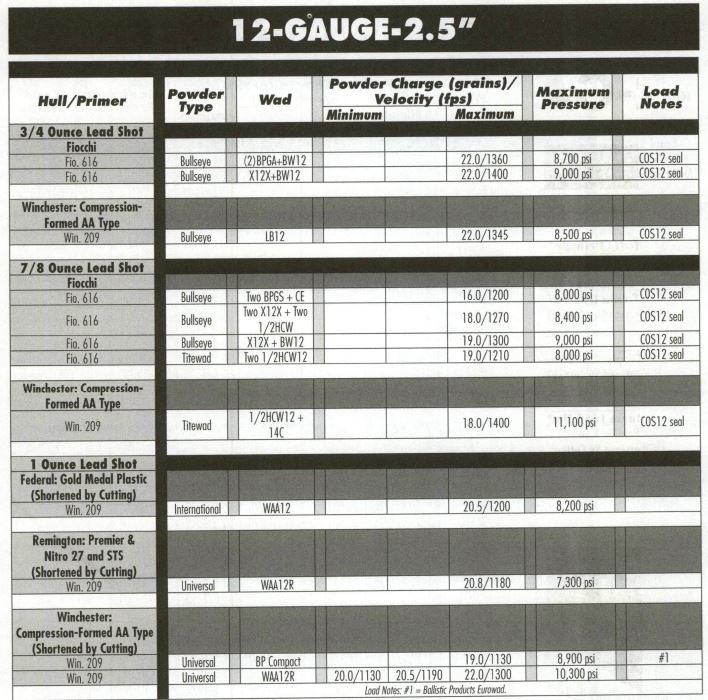
I don't have a lot of data, but this looks doable.
If going non-toxic, Bismuth would seem like the best option. I can't imagine steel working well at all.
Try some of the British forums. They shoot a lot of the older shotguns, and load fiber so they can shoot on private land and leave no plastic wads behind for sheep to eat. I've heard of hunters loosing their access because the owner found a hull in his field.
I'd set it up for 2 3/4" and buy the short kit for it. This gizmo raises the last 3 stages so that no readjustment of the crimping is needed to convert from 2 3/4" to 2 1/2". If you trim your hulls, you may need to skive them as well. That is something you would not have to do if you roll crimped.
The older shotgun forcing cones and chokes were spec'd around fiber wads. Fiber wads are easiest to adjust height for a proper crimp. Nothing wrong with the Winchester red wad. It's discontinued but claybuster has a clone.
Pick a hull with a low(ish) base wad, to gain room for payload. I'm old school, I'd use AA hulls.
I don't have a lot of data, but this looks doable.
If going non-toxic, Bismuth would seem like the best option. I can't imagine steel working well at all.
Try some of the British forums. They shoot a lot of the older shotguns, and load fiber so they can shoot on private land and leave no plastic wads behind for sheep to eat. I've heard of hunters loosing their access because the owner found a hull in his field.

Well...
I was givin a whole pile of 2 1/2 hulls so now I am more motivated to hand load for my husky I purchased.
Loading is not to bad...I stick with 1.0 oz 2-3/4 data at the lower end of the powder charge and a verity of wad combinations to provide a good column height to get a nice crimp
An example I use now is a straight hull..Winchester primer...17grs of a powder( can't remember type rite now)...a nitro card over powder, a fibre wad(can't remember thickness)...and a red winAA12r...
You can size and prime in any press...lee works good..I use a mec
Powder dispense in any press...mec for me
You have to fiddle with putting your wad column in...one at a time,nitro card,fiber wad then your cup...drop your lead as you would after
I use a lee crimp hand starter
And for the life of me, I can't remember if I use another press that I have altered for the crimp or just run it through my 2 3/4 with slight adjustments
At the end,they work very well...I have pondered of roll crimping,but I would use 2 3/4 cut back to get rid of the star crimp for a cleaner roll
Hope this provides some in sight
I was givin a whole pile of 2 1/2 hulls so now I am more motivated to hand load for my husky I purchased.
Loading is not to bad...I stick with 1.0 oz 2-3/4 data at the lower end of the powder charge and a verity of wad combinations to provide a good column height to get a nice crimp
An example I use now is a straight hull..Winchester primer...17grs of a powder( can't remember type rite now)...a nitro card over powder, a fibre wad(can't remember thickness)...and a red winAA12r...
You can size and prime in any press...lee works good..I use a mec
Powder dispense in any press...mec for me
You have to fiddle with putting your wad column in...one at a time,nitro card,fiber wad then your cup...drop your lead as you would after
I use a lee crimp hand starter
And for the life of me, I can't remember if I use another press that I have altered for the crimp or just run it through my 2 3/4 with slight adjustments
At the end,they work very well...I have pondered of roll crimping,but I would use 2 3/4 cut back to get rid of the star crimp for a cleaner roll
Hope this provides some in sight

Check out Rusty Wood Trading Co, they have lots of shotshell loading supplies. Mostly blackpowder, but some for whatever you're looking for, including fiber wads and overshot cards.
I've loaded 2 1/2" 16g blackpowder, using some magtech brass shells, with diy cork wads , and no crimp, just an overshot card (that I make from cereal boxes with a hole punch) glued in place.
Loading brass shells might be something you'd consider. If loading blackpowder, a box of shells would likely last a lifetime, not sure about loading smokeless though. Here is some interesting info I found while looking into it awhile ago:
Theres also a RCBS 12g die set that works in a single stage press if you want to go brass shell route that you might be interested in.
I've loaded 2 1/2" 16g blackpowder, using some magtech brass shells, with diy cork wads , and no crimp, just an overshot card (that I make from cereal boxes with a hole punch) glued in place.
Loading brass shells might be something you'd consider. If loading blackpowder, a box of shells would likely last a lifetime, not sure about loading smokeless though. Here is some interesting info I found while looking into it awhile ago:
Post subject: Re: 12 Gauge Brass Shotshell reloading Information
PostPosted: Thu Apr 15, 2004 11:54 pm
Utility Grade
Joined: Mon Dec 15, 2003 3:49 pm
Posts: 8
Ok, here's my own, totally home brewed method USE AT YOUR OWN RISK!! Work up to it starting
with a reduced load.
I run 12GA magtech brass, and ALL 10GA wads, from Circle Fly, in my SXS coach gun for CAS. This
is a strong modern 3 inch gun, so, if yers is an oldie, I don't recommend my loads.
I load using CCI mag LP primers, a 10 ga overpowder (nitro) card, (2) 1/2 inch 10 ga fibre fillers, 1 1/8
ounces of 7.5 shot, and a 10 ga overshot card. I do not crimp, I use duco cement to run a bead around
the inside of the case mouth at the overshot, to secure and water seal em. It works.
The charge is 18.5 grains of 700X, and it runs a tad slower than a STS remmie (maybe 40 fps slower).
I load manually, no press, and use a close fitting dowel and a bathroom scale to gauge compression.
The overpowder is compressed to 50 lbs, slowly, so the air gets out and it fully seats, then run in the
cushion, and again seat them, then the shot and overshot, gently seating the overshot to assure a snug,
level charge, and seal with duco.
These thin walled brass shells have a larger case capacity than plastic, especially around the primer
pocket, so the charge runs a bit heavier than a similar plastic shell charge. Also, the expansion is
minimal, after 5 or so firings you MIGHT need to resize, but I haven't seen it yet. I bored a hole in a
plate to use as a resizer, but haven't needed it yet.
Got easy, work up slow, and don't use real fast powder, and you should be ok.
Considering that I have found absolutely no load data for brass shotshells, I wanted to share with you guys what I found regarding brass shotshells in the 16 gauge. As always, if you decide to do this, be safe. This is NOT a published load and may not work correctly in your firearm.
We started with 12.5 grains of Alliant Promo which sounded VERY mild. We tried 13.0 grains, then we worked up to 14.0 grains which seemed to be a fairly decent load, but then 14.5 grains patterned better. It later proved to be a good squirrel load. The loads use 1 oz. of #7.5 lead shot.
Enough wad pressure is essential to the function of these shotshells. I ordinarily use a hardwood dowel and a few good taps with a hammer to seat the nitro card hard against the powder, then use the same technique to compress the fiber cushion wads against the nitro card.
Alliant Promo can be substituted for Alliant Red Dot by weight, but the density of the powder is different. Therefore, the same weight charge will not be dispensed by the same size dipper/powder bushing.
The CBC brass hulls (by Magtech) use Large Pistol Primers. That's extremely handy when you don't want to have to stock an extra set of primers for your shotguns
Components used in one shotshell, in order:
1. CBC 16 Gauge Hull
2. Federal Large Pistol Primer
3. 14.5 Grains of Alliant Promo
4. .125 Maxi Nitro Over-Powder Card
5. .500 Fiber Cushion Wad (2)
6. .030 Overshot Card
Then, use a drop or two of Duco Cement to seal the overshot card to ensure it doesn't fall out while jostling around in a pocket, etc.
Might I add, I don't know I'll ever start using plastic shot-cups in my reloads. The paper and fiber wads decompose and don't leave a mess in the woods, but I've found plastic wads from years gone by... they don't biodegrade.
I ordered my brass hulls at MidwayUSA and my fiber wads and cards from Ballistic Products, Inc. I'm not affiliated with either company and don't care where you get your stuff.
Below is a video I published on YouTube demonstrating how I reload brass 16 gauge shotshells.
https://www.youtube.com/watch?v=4-qrquIYh3U
Two lessons I have learned since the video: Don't use Elmer's glue on 16 gauge shells. Worked fine on .410's, but pulls away from the sides of the 16 gauge hull. Don't ask me why. Secondly, don't use lubricated fiber wads (dry ones are fine). It soaks through the nitro card and the powder and then you get bloopers and hangfires.
Theres also a RCBS 12g die set that works in a single stage press if you want to go brass shell route that you might be interested in.


This is a hole cutter for ceramic tiles. Costs about $3,00 on ebay, mailed from china. The 16mm hole size, I think.
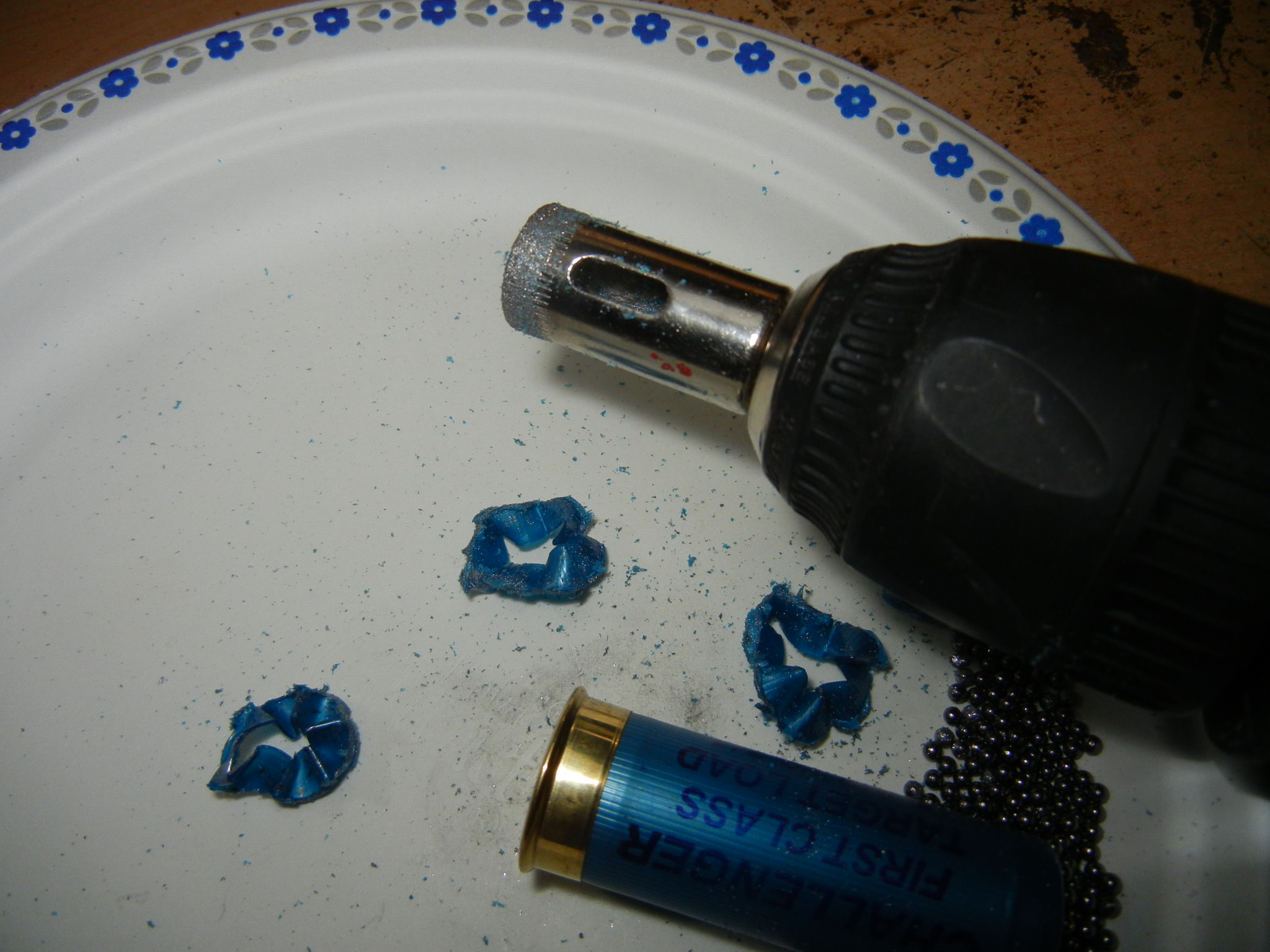
I use it to cut the folded crimp off a shot shell.
A 2 1/2" shell is measured with the crimp open.
If you cut the crimp off a 23/4" shell, as in the picture, the resulting shell, open, measures a bit less than 21/2".
You would have to glue a top card wad on with some white glue.
I use it to cut the folded crimp off a shot shell.
A 2 1/2" shell is measured with the crimp open.
If you cut the crimp off a 23/4" shell, as in the picture, the resulting shell, open, measures a bit less than 21/2".
You would have to glue a top card wad on with some white glue.
Ballistic Products Inc have everything you will need. Last time I tried ordering from them they did not ship to Canada, must go through their Canadian distributor, Bilozir.net in Alberta and he has most of the more common tools and components in stock. Suggest you check out the BPI catalogue on line. They also have a couple of very useful booklets on the subject. Most single stage presses such as Mec and the original table top Lee loader all work fine for most operations and case prep such as shortening 2 3/4" hulls can be done with simple tools. I have had great success with the BPI hull trimmer and roll crimpers. As you already have the short hulls, your biggest decision after settling on a load will be fold crimp or roll crimp. Some hulls such as the old original Winchester AA , Federal Gold Medal and Remington STS and Nitro 27 roll crimp beautifully, most promo hulls and european including Game Bore don't recrimp well and the Remington ones above are very difficult to reopen after one reload to reload again. This specialty reloading is slow, labour intensive and requires some trial and error but the results can be worth it because of the elevated cost of factory 2 1/2" , not to mention the personal satifaction.

Use the tile cutter, place in card board shot card, roll crimp. No hand loading required.
The cutter cuts inside the existing crimp, so a little ledge is left in place. This keeps the was compressed and in place.
So All you need is a card and a little glue to keep the shot in place. It would need to be well glued to withstand recoil.
The Challenger target loads are mild. Good for an old SxS

Londonshooter
CGN frequent flyer
- Location
- SW Ontario
Most of my guns are 2.5" so I reload a fair bit. In fact would stick to 2.5" commercial loadings if anyone had them in #9 (club requirement)
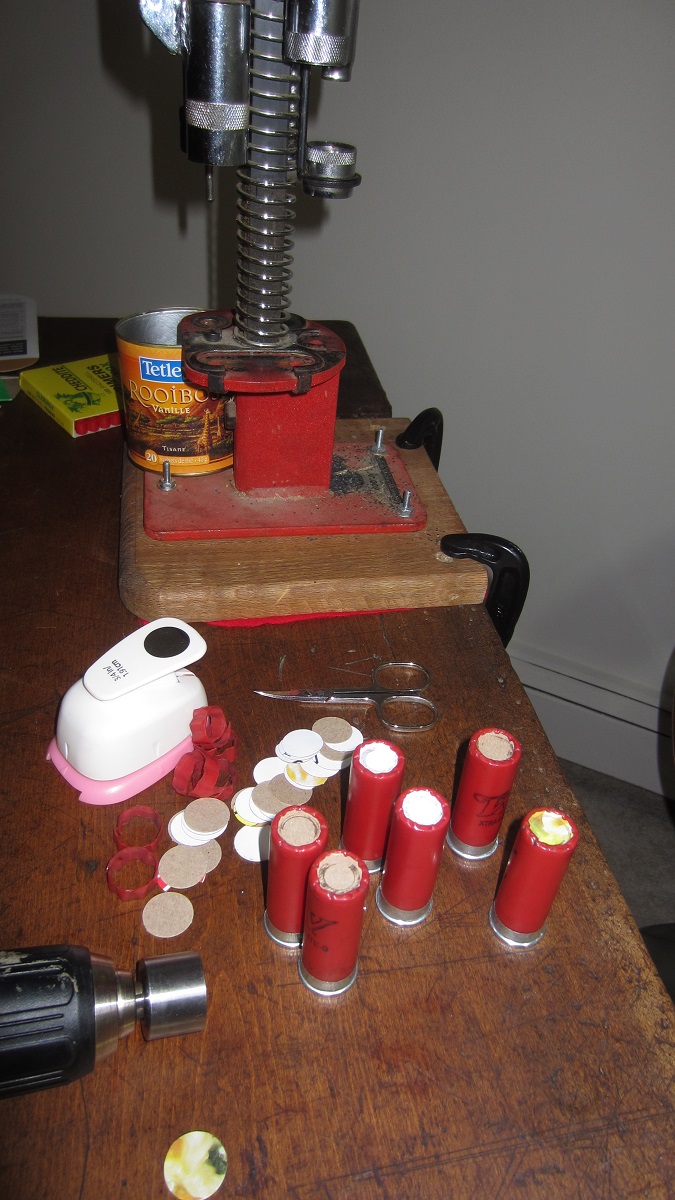
Shown is the BPI roll crimp in a cordless drill but now I do it all with drill press. PM if you want details of the 12 gauge loads but they're from Hodgdon's site using 700x powder and 1 oz loads. Pressure is sub 7000 psi. If you want to load low pressure sub-gauges, e.g. 20 ga., that is a bit of a challenge since some of the better powders have been discontinued.
Shown is the BPI roll crimp in a cordless drill but now I do it all with drill press. PM if you want details of the 12 gauge loads but they're from Hodgdon's site using 700x powder and 1 oz loads. Pressure is sub 7000 psi. If you want to load low pressure sub-gauges, e.g. 20 ga., that is a bit of a challenge since some of the better powders have been discontinued.
I'm thinking of starting into shotshell reloading to feed an english double. I would be a total newbie at that.
Loader recommendations? Short-shell adapters?
Fiber wads? Bismuth loads?
Any tips or pitfalls to know about?
Thanks.
First thing to do is determine whether your gun is safe to shoot with smokeless powder or whether it is a BP only affair.
I have an old belgian double, circa 1880, and I reload Federal paper shells trimmed to 2.5 inches and loaded with BP and light lead loads.

northern skies
CGN frequent flyer
Haven't got the gun yet, but it will definitely be nitro proofed fluid steel. I'm probably buying an English double this week and I asked this more as preliminary research to see if a 2-1/2"-chambered gun is feasible.
Thanks to everyone's input, it seems much more feasible than i ever thought. Much easier. I'm going ahead with the purchase if the gun passes my inspection, and I will certainly be using all of these tricks! Thank you!
Thanks to everyone's input, it seems much more feasible than i ever thought. Much easier. I'm going ahead with the purchase if the gun passes my inspection, and I will certainly be using all of these tricks! Thank you!
NO! Never just open up one of these fine old British 2 1/2" doubles to 2 3/4"! They are lightweight guns designed and purpose built for the intended ammo. If you take one of these guns out of proof by rechambering it for longer more powerful ammo you risk creating a hazardous situation with a thinner barrel in the new chamber throat area, that is why gun proof exists. A competent gunsmith may measure the affected area and approve the job but be sure to ask for his written responsibility for the safety of this work on this gun. The longer chamber may encourage the owner to use far heavier and higher pressure loads than the gun was made for 50,75,100 years ago and even if the present owner is selective in his ammunition choice who can say what future owners will do? In addition to the safety aspect, use of heavier than intended loads will pound the gun and loosen it taking it off face and possibly even causing stock cracks and substantially lowering the value of these guns. Do it to your Cooey, your Winchester or your Zabala if you like, leave these fine old English guns alone. 2 1/2" ammo is available, there is no need to compromise a fine gun.
Haven't got the gun yet, but it will definitely be nitro proofed fluid steel. I'm probably buying an English double this week and I asked this more as preliminary research to see if a 2-1/2"-chambered gun is feasible.
Thanks to everyone's input, it seems much more feasible than i ever thought. Much easier. I'm going ahead with the purchase if the gun passes my inspection, and I will certainly be using all of these tricks! Thank you!
Start off with Kent Gamebore shotshells, preferably paper shells. Then reload with fiber wads and cardboard shot cards. The only tool you will need is a wood dowel to seat the fiber wad, a manual resizer and a roll crimp tool.

Not uncommon, I'm sure someone with hands on experience will chime in. I've dabbled with 16 ga, loading 2 9/16. Roll crimping is probably your best bet. It's a bit fiddly at first, but it has the advantage of loading larger payloads. For 12 ga I would probably go with a MEC 600 Jr. I have one, and a MEC Sizemaster as well. Both are decent, the Sizemaster is better.
I'd set it up for 2 3/4" and buy the short kit for it. This gizmo raises the last 3 stages so that no readjustment of the crimping is needed to convert from 2 3/4" to 2 1/2". If you trim your hulls, you may need to skive them as well. That is something you would not have to do if you roll crimped.
The older shotgun forcing cones and chokes were spec'd around fiber wads. Fiber wads are easiest to adjust height for a proper crimp. Nothing wrong with the Winchester red wad. It's discontinued but claybuster has a clone.
Pick a hull with a low(ish) base wad, to gain room for payload. I'm old school, I'd use AA hulls.
I don't have a lot of data, but this looks doable.
Data! I'm going to run with this. Will advise.
Update: Used the bottom listing, worked awesome.
Last edited:





















