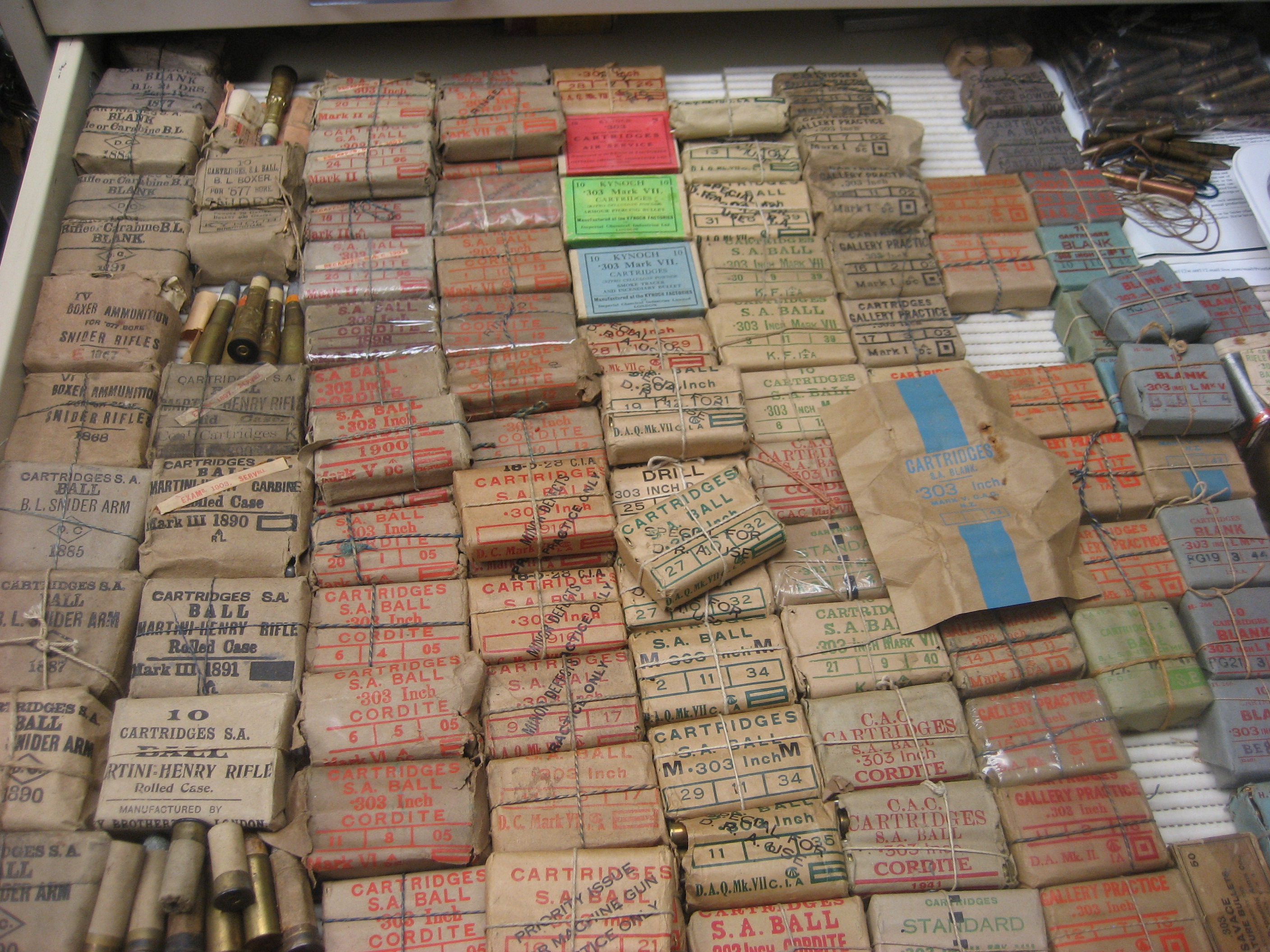
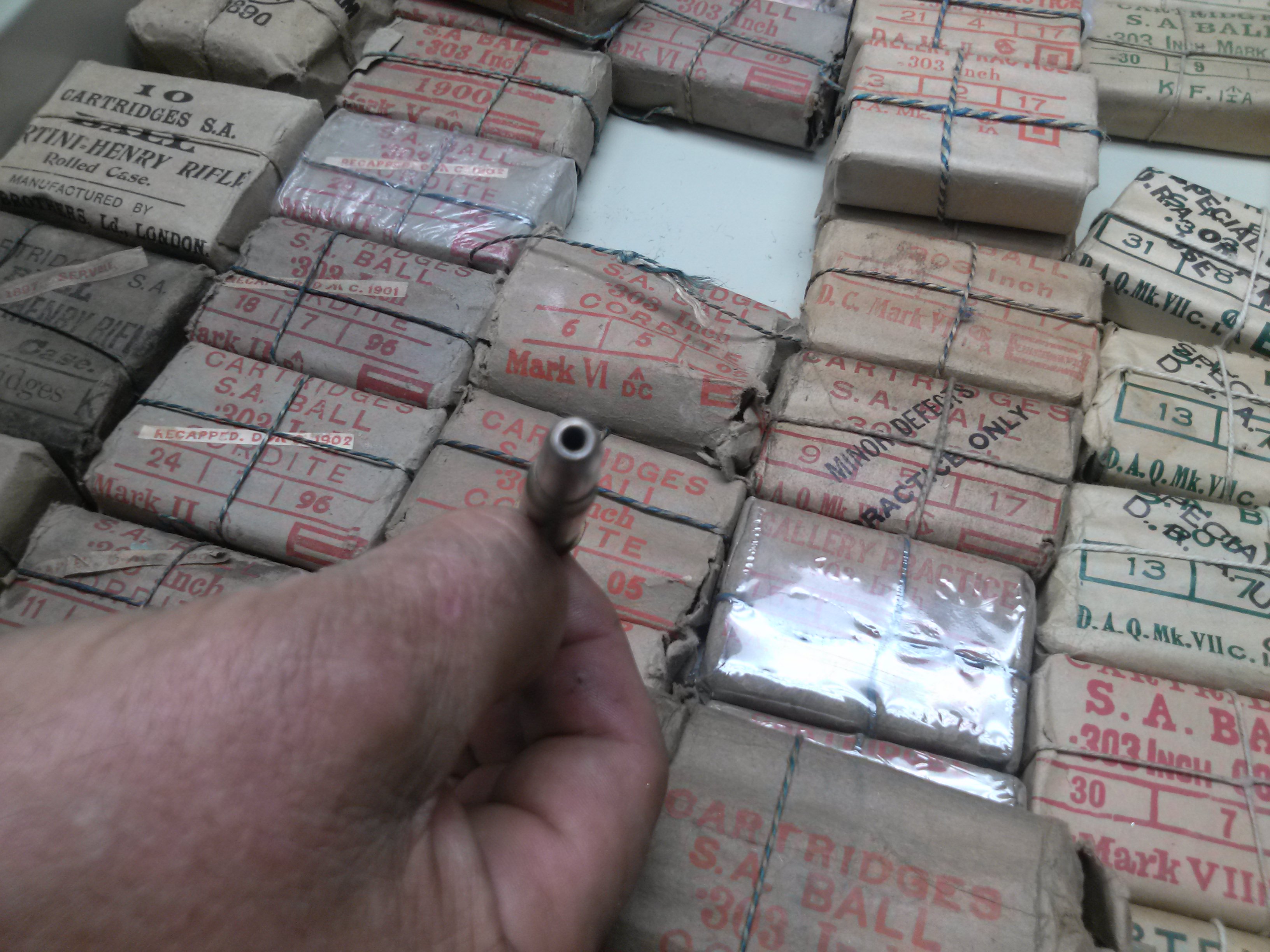
factory 303 British ammo question. and pics

Evanguy

CGN Ultra frequent flyer
Rating - 100%
103   0   0
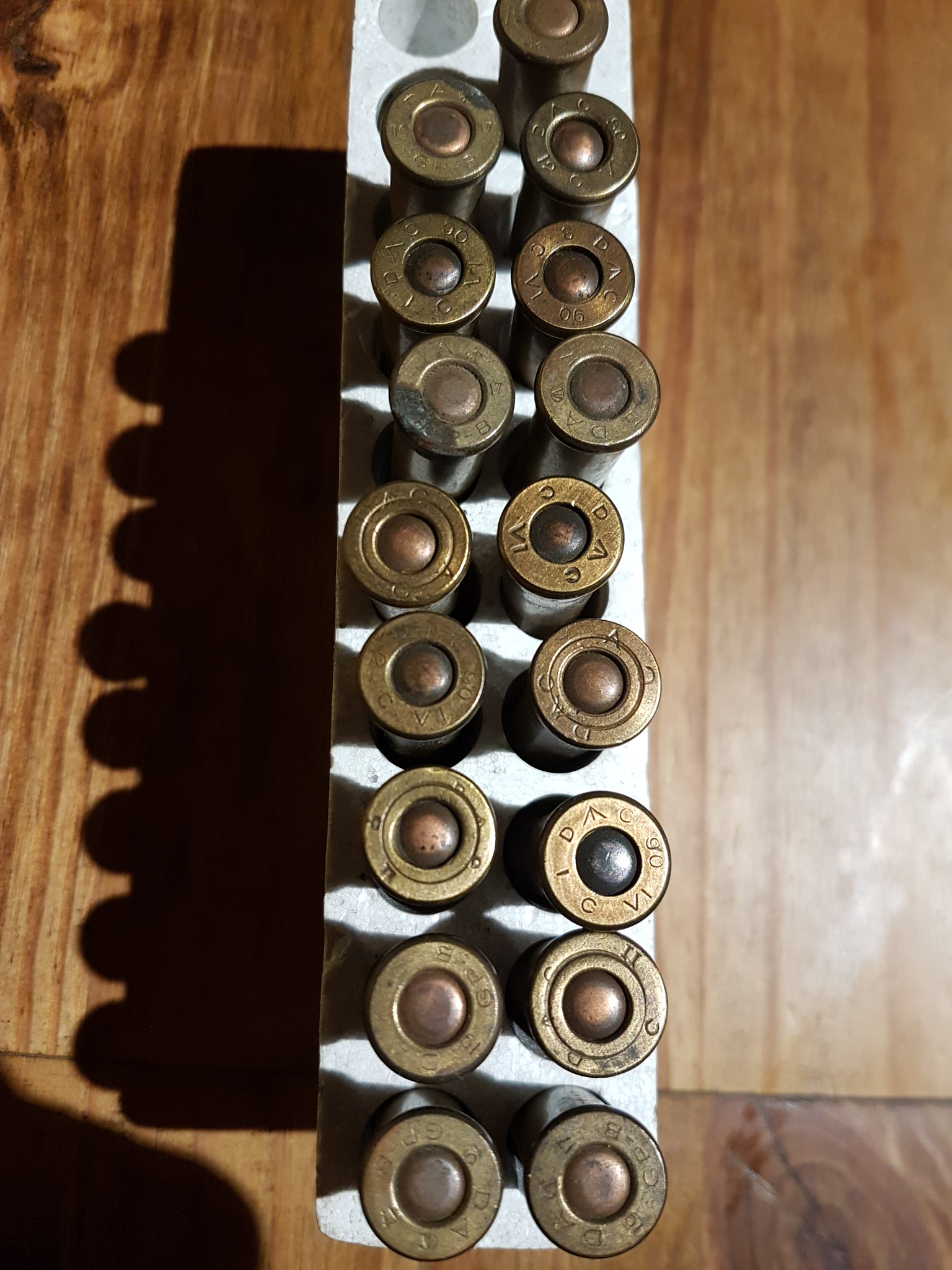
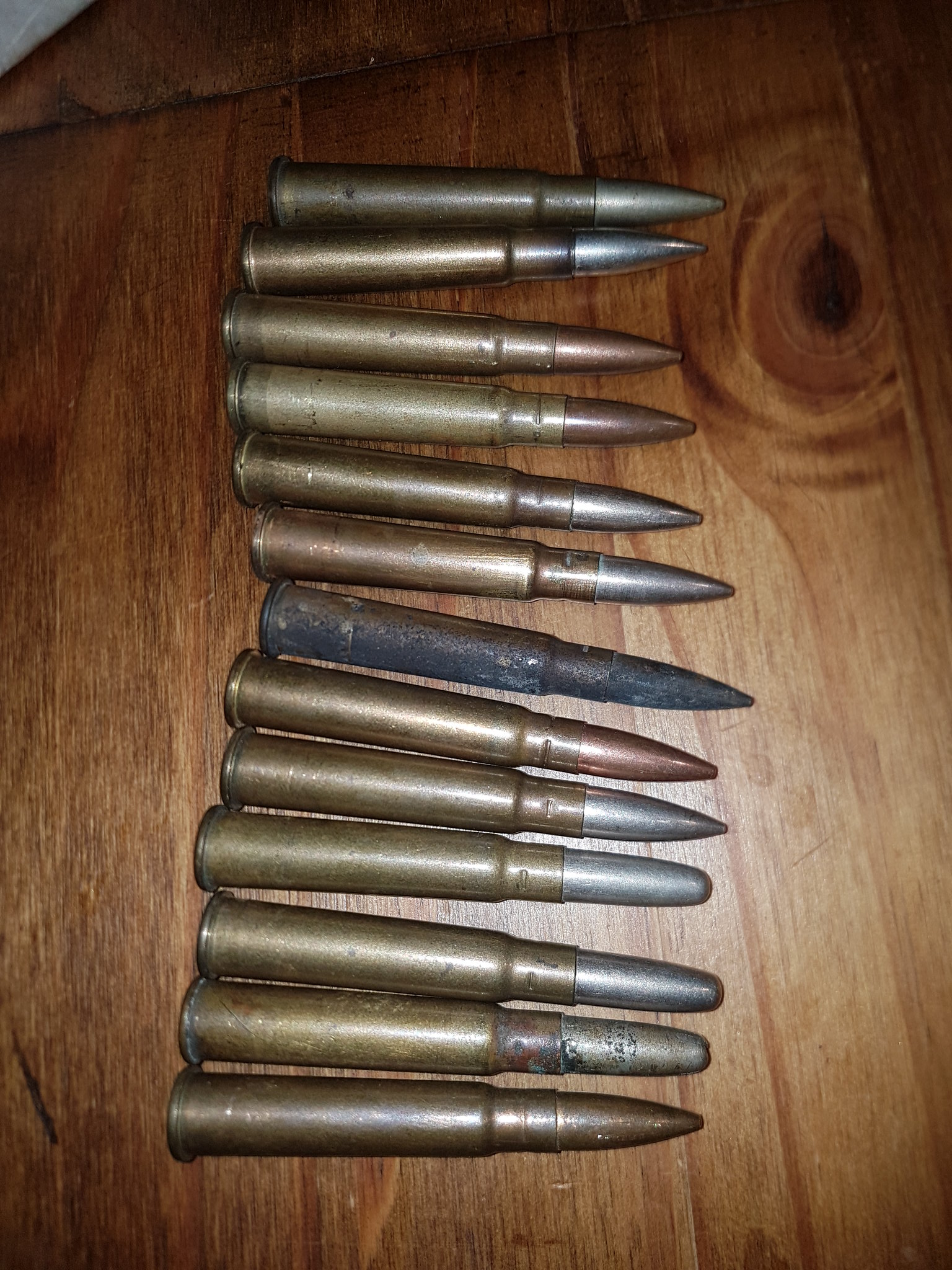
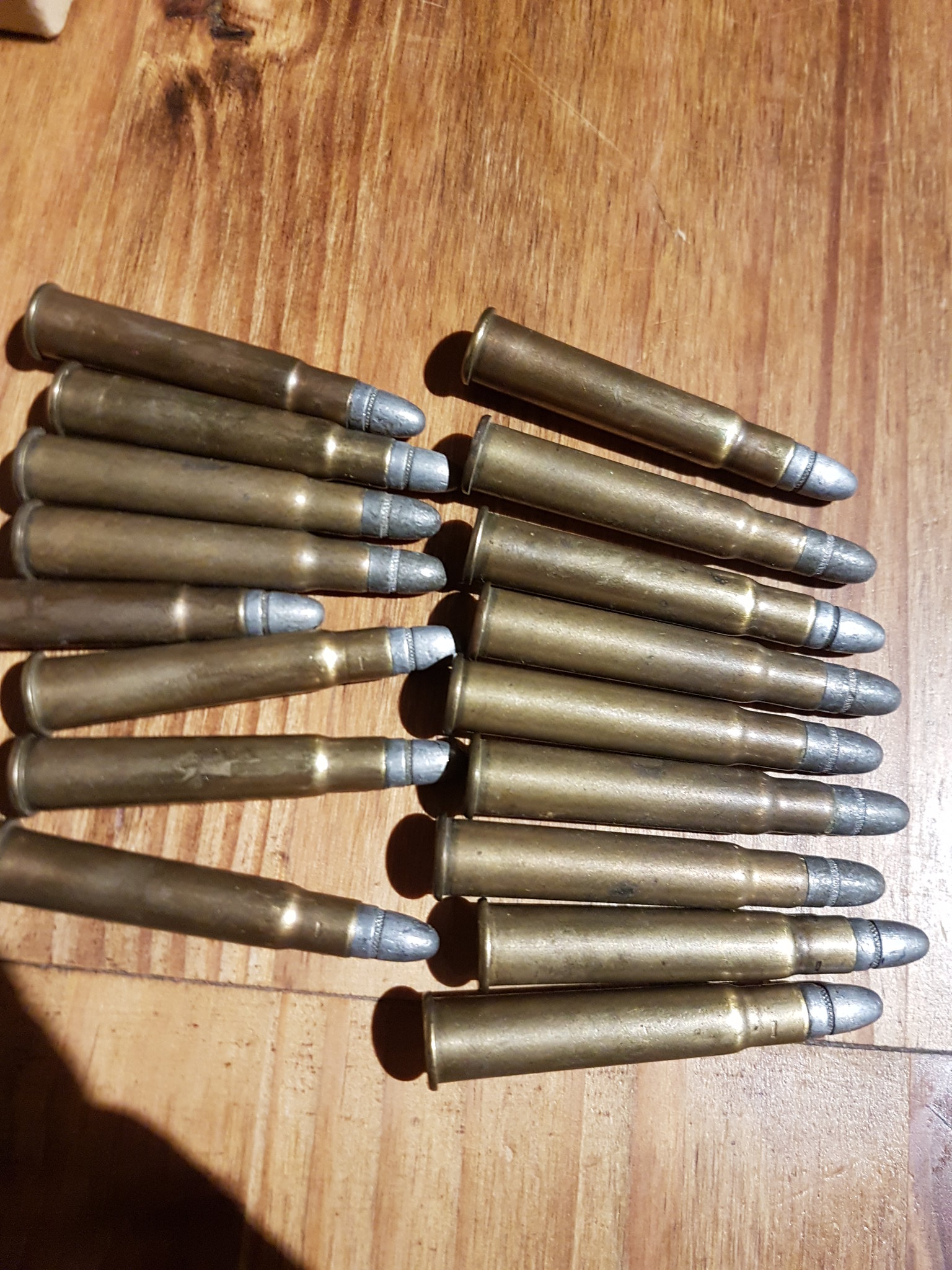
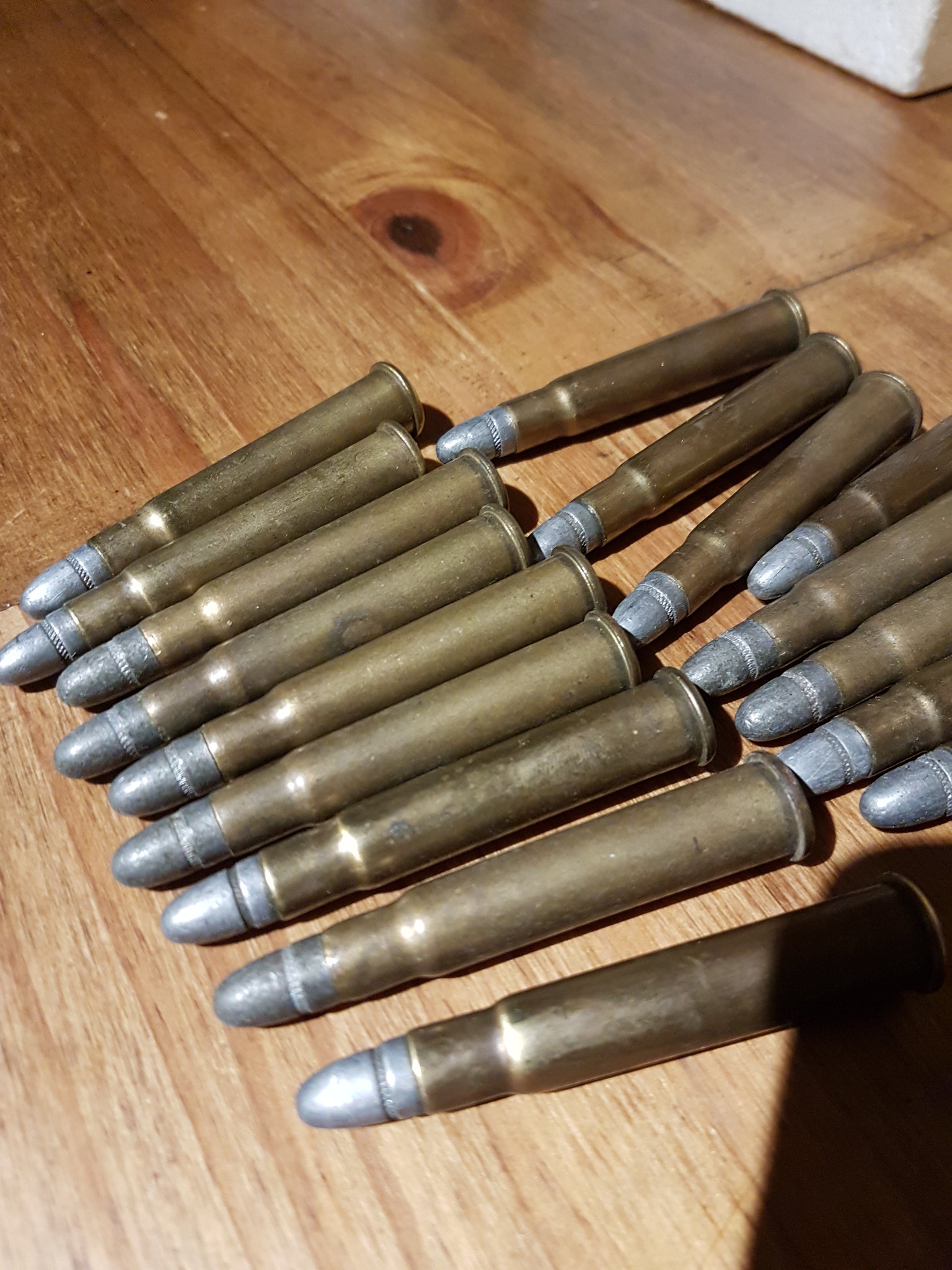
so i got about 200 rounds of surplus ammo in a trade and i got some interesting rounds in the mix, they look never fired and they are the original primer but they are cast bullet and pretty light over all weight and also bullet wight. they have no loose powder in them, i believe there is a wadding/filler in them
i have 2 ideas what they are,
one being they are a factory gallery load and
two, some one pulled down surplus ammo and reloaded their cast bullets with their cast bullets.
there are pics of the rounds and the head stamps. lots seem to be from early 1900's

what do you guys think

also in the mix i got a box of (well 55 rounds total) 48 armour piercing .303 inch W.M*1
about 40 blanks

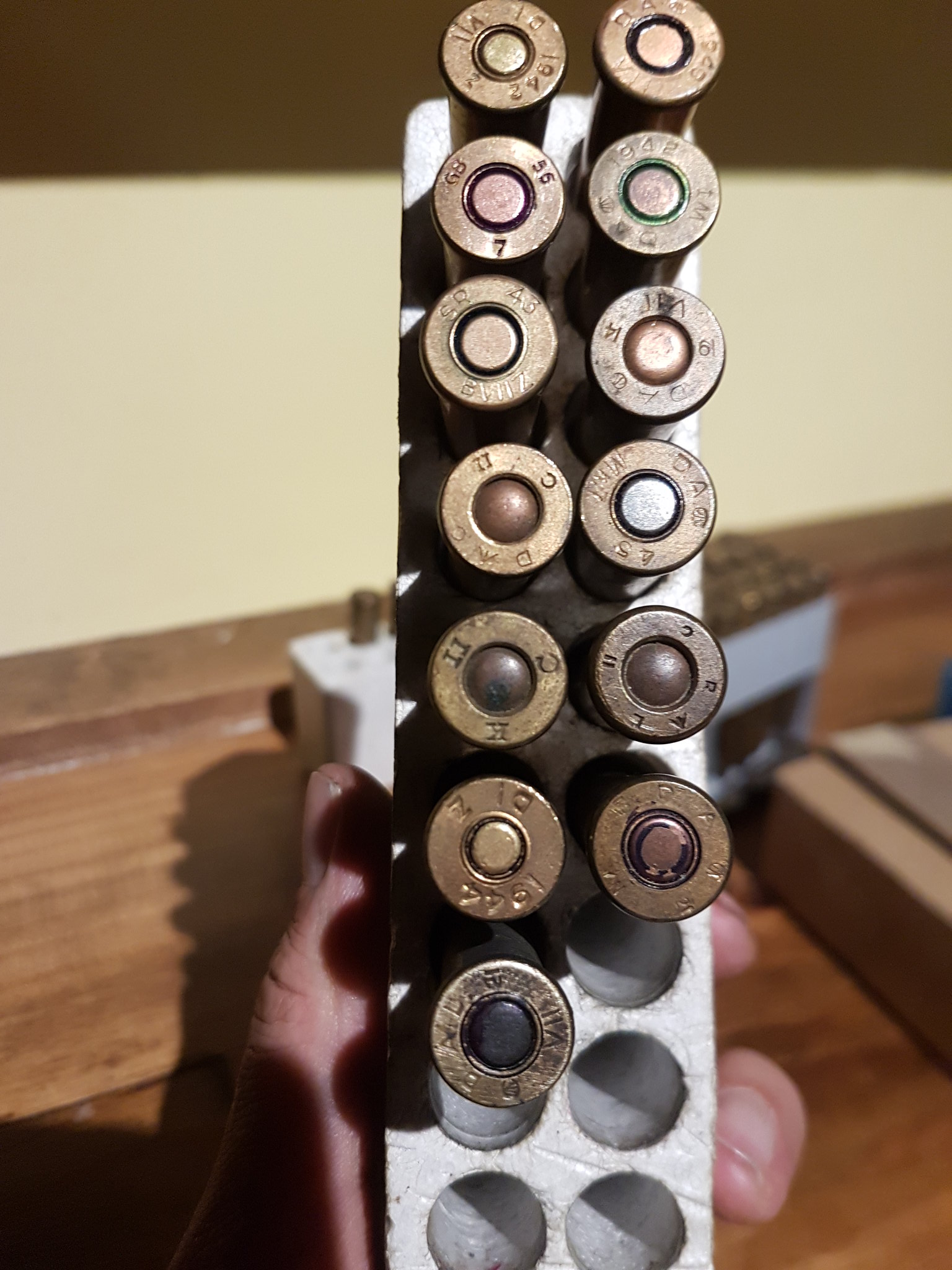
and a bunch of random loose ammo, i went through it all and picked out all the different head stamps, the last 2 pics of of the head stamps and the rounds. if anyone has anything they want to share about them feel free. one day i plan to look them all up and see what they are.
48911346441_f1a9ea996d_k.jpg

48910822373_c60bf739d2_k.jpg

48911554377_0b073676df_k.jpg


48910821563_c69fc8bc00_k.jpg

48911345636_3b97829853_k.jpg
 
Last edited:
those look like a factory cast bullet in picture number 5 the second round from the bottom is that a hollow point. looks like an ammo collection don't think id shoot any of it when I find military .303 ammo at gun shows I mostly buy it to collect but military brass is fair game to me
 
that round nose bullet, second from the bottom is a solid point but the nose was buggered by someone, although the guy i got this collection from did keep a few factory hollow points out of it. i unfortunately did not get any
 
that round nose bullet, second from the bottom is a solid point but the nose was buggered by someone, although the guy i got this collection from did keep a few factory hollow points out of it. i unfortunately did not get any

military hollow point are kind of a rare the Hauge convention banned expanding bullets in warfare so they were either used up in training or sold off as surplus. the round nose bullets are early examples and could be the 215gr loadings. the blanks I don't know what I would do with them but military brass if boxer primed is very good. British surplus can have hang fires do to the primers they even had problems when this ammo was new
 
Also the wadding or filler you mention is most likely cordite. The Brits loaded WW2 ammo with cordite load not powder so if you shake them you wont hear powder. The cordite looks like uncooked pasta before firing.
 
The bullets i mentioned that have the filler are the cast bullets with late 1800's early 1900' cases with original primers. I dont believe they are full loads. But the have no loseness so they may even be a little blackpowder and filler, not sure. Maybe ill take one apart
 
The lead bullet ctgs are "Gallery Practice Ball .303" MkII" made for short range practice made 1906-17. Made with reloaded and purpose made cases. Loaded with 125 gr bts and 5.5 gr smokeless.
 
The ones you are MOST concerned about are all Gallery Practice rounds, made in Canada for 25-yard indoor ranges.

The PROPER headstamp was GP-B BUT primed over-run casings, old primed cases on hand from old contracts OFTEN were used to make these up.

The LOOSE POWDER inside is Chopped Cordite, generally used for Pistol ammunition back in the .455 days.

Several countries experimented with gallery rounds betyween about 1900 and the Great War. Britain, for example, made TWO different loads, easily distinguished by the bullets, but did not STANDARDISE either one. Canada was happy enough with its version to standardise the loading and adopt it as a military STANDARD round for that particular use.

I almost hate to do it with century-old rounds, but I just might set up the Chrony and try to get a reading that makes sense.... if those old primers will allow me to do in a minimum number of shots. I would think a modern fast pistol powder might be persuaded to work accurately with a 115- to 125-grain bullet....

You have the beginnings there of a very NICE collection of .303 rounds. All you have to do now is fill in the blanks!
 
Hi EG. Interesting collectors group. Boer War Mk II, Mk V, several dates of Mk Vi (for the Ross) - mostly Canadian.
You might get more fun out identifying this stuff than with a new rifle. John
 
Hi Evan,
Green and smellie are, of course, right on the money. I see I missed a couple of the Mk VI rounds - good on you!
You might inquire about those blanks. I too would like to know a little more about them.
I doubt I will ever have to sharpen another endmill :rolleyes:
Enjoy
 
Awesome, thanks for all the info. I do plan on figuring out what all the cases are, who/what they were made for and who made them.

Thanks for the info on the gallary rounds..very interesting.

And yes Bnoser ill get pics of the blanks up. Most seem to be from the 40's. But all different case length and shoulder design
 
Last edited:
The ones you are MOST concerned about are all Gallery Practice rounds, made in Canada for 25-yard indoor ranges.

The PROPER headstamp was GP-B BUT primed over-run casings, old primed cases on hand from old contracts OFTEN were used to make these up.

The LOOSE POWDER inside is Chopped Cordite, generally used for Pistol ammunition back in the .455 days.

Several countries experimented with gallery rounds betyween about 1900 and the Great War. Britain, for example, made TWO different loads, easily distinguished by the bullets, but did not STANDARDISE either one. Canada was happy enough with its version to standardise the loading and adopt it as a military STANDARD round for that particular use.

I almost hate to do it with century-old rounds, but I just might set up the Chrony and try to get a reading that makes sense.... if those old primers will allow me to do in a minimum number of shots. I would think a modern fast pistol powder might be persuaded to work accurately with a 115- to 125-grain bullet....

You have the beginnings there of a very NICE collection of .303 rounds. All you have to do now is fill in the blanks!

ZhrsCAY.jpg


eknzcOQ.jpg


OBaEDug.jpg
 
The others have nailed the Gallery Practice rounds for you, but I'm kink of surprised that no one has mentioned the armour piercing and incendiary.

DAC (with a broad arrow in the C) 1942 WI - is the armour piercing. It should have a green primer annulus. This was made by Dominion Arsenals

SR 43 BVIIZ - is incendiary, it should have a blue primer annulus. It should also have a blue bullet tip but it looks like someone has removed it. This was made by ROF Spennymoor. If the cartridge is not collectible due to condition it could be fun to shoot - probably best in the winter.

That is a nice little collection you have there, among the gallery rounds I see several that are missing from my collection.

By the way, the gallery rounds with the ring through the head stamp, the ring is a cancel mark and indicates that the ammunition was sold out of service - ie: to the public.
 
I would agree with the theme that you have something different than your first impression. A few years ago I had to sort a wide assortment of military and civilian 303 rounds. The Mk 7 jacketed brass and nickle plated ones were the easiest. What you thought are cast lead reloads have been identified as gallery rounds, as I learned too. Don't even think about shooting them.
 
I was given a whole bunch of different Mks of gallery rounds loose in a bucket.

I sorted through them and put them away in cartridge boxes.

They were a mixture of Brit and mostly Canadian head stamps, Mk.II,IV, V, VI, the majority being DC Mk.II cordite.

Seeing that I literally had a bucket full, I let a few fly. Definitely black powder and not chopped cordite.

Over a hundred years in well kept storage, the things still go bang without hesitation.


37Patt, The ring is indeed a cancellation of the head stamp. Due to the gallery round no longer being Mk.II Cordite for example.

The ringed head stamps also show up on converted blank cartridges made from recycled ball cases for same reason.

It is not an SOS mark.
 
Last edited:

Seeing that I literally had a bucket full, I let a few fly. Definitely black powder and not chopped cordite.


The first MkI gallery ctg was loaded with 9 gr BP and 90 gr bt followed by second pattern MkI loaded with 6 gr smokeless and 90 gr bt.
Later MkII is shown in OP.
 
Back
Top Bottom