Fclass reloading question

MartyK2500

CGN Ultra frequent flyer
Rating - 100%
278   0   0
Location
Quebec
2020 has truly been a year of load development and fine tuning my reload process.
In absence of competitions, and having access to my 750M spot only once per 4-6 weeks, I seem to find pleasure spending time at the 200M line in this endless load dev.
My .308 has never shot so tight results are there!

One of my findings that puzzles me the most, my loads that are the best on target do not have the best SD/ES, and the loads that have the best SD/ES are not the best on target.
It got me thinking, maybe the Fclass guys (since accuracy demands are so up there) have got something in their reload process that I could use to better my experience!

Not looking to completely overhaul my process as I’ve seen good results, but am willing to spend and experiment with different products.
Here is my process for both .308/6.5x47 in a quick and dirty list...

1. Clean brass, krazy cloth
2. Anneal, AMP mkll
3. Lube cases w/Dillon lanolin lube
4. FLS/decap using Forster honed die (expander ball removed), then wipe off the lube. Using Forster co-ax press
5. Imperial graphite dry lube neck interiors
6. Sinclair expanding mandrel, 1.5 thou neck tension is the target I resize for
7. Primer pocket uniform K&M drill bit tool
8. Trim/Chamfer/Debur w/Forster 3in1 w/drill
9. Neck turn w/forster trimmer and drill
10. Primer with Lee bench prime
11. Powder with FX120 and actually use tweezers to add/remove the kernel as needed
12. Seat with Forster benchrest micrometer seater, 20 thou jump is my standard.

A few notes... My Ogive lenghts are always the same, very consistent seating.
Since ditching the Lee Collet die, I now have runout. I avg 1 thou but do get a few 1.5 thou runout.

Looking forward to some constructive feedback :cheers:
 
Last edited:

I played around with a few different loads for the 308 tried the really heavy bullets found most of them fussy, they shoot today but not tomorrow. The most consistent bullet for me was the berger 185 jugg. With stiff charge of Varget in LR lapua brass. I could get single didget and great groups. Lighter loads were berger 155.5 over N150. Nether bullet is the best but give excellent consistent results
 
Long range accuracy has a lot to do with barrel dynamics. This trumps velocity variations.

Test at 500 or 700 yards and go with what shoots the best elevation.

This would correlate with a saying often said to me.
Load develop with a target and not with a chronograph.

Which I have been doing for a few years, just wondering if there’s something to be done reload wise to have both the best target and both low single digit SD/ES
 
I played around with a few different loads for the 308 tried the really heavy bullets found most of them fussy, they shoot today but not tomorrow. The most consistent bullet for me was the berger 185 jugg. With stiff charge of Varget in LR lapua brass. I could get single didget and great groups. Lighter loads were berger 155.5 over N150. Nether bullet is the best but give excellent consistent results

The 175 SMK with 43.0gn of Varget, feels extremely soft, doesn’t show pressure until low 45.0s of Varget, 2700fps, and is repeatable sub 1/2 minute 5 shot groups at 200M.
Since adding imperial dry neck lube to the mix, I even had a hero sub 1/4 minute 5 shot group at 200M lately, but am still attributed to luck since I haven’t repeat it yet.

All in all I am not on the lookout for recipies per say, more about the reload process. Is there a step to be done differently that would yield better results?
The dry neck lube is a prime example, a mid 2020 discovery, that made my groups only better since the day a use it, I say it’s responsible for my ultra consistent neck tension/seating depth.
 
Your process is more intricate and detailed than about 75% of guys that I compete with at Nokomis SK.
Myself included as I do exactly what you do in step 11) ... I've shared this info with the other guys an they sort of shake their heads in thinking that I am being too OCD.

BTW ... IMO there is nothing wrong with 1 to 1.5 thousand TIR rounout.
I think that is pretty damn good.... I using a Forster Co-ax with Redding dies and I wish I could do as well as you.

The only thing that I might add is to sort your projectiles by bearing surface length ?
I do this using 2 Hornady Bullet Comparators.
I sort my 200 2nd gen Match Kings this way by half thousands (and some may see this as over-kill).

Might look at Meplat trimming and re-pointing too?
Personally, I used to do this until I switched to Sierra projectiles and found zero differences in de-acceleration speeds at the target versus original tip. I measured the muzzle velocity for about 30 rounds each of re-tipped versus original factory tipped and I also measured the velocity on target (we use shortmarkers here) after 1,000 yards.... the feet per second deacceleration between the groups were statistically the same.

At the end of the day if had to choose between the 308 loads below, I would choose Load A.... it comes down to group size nothing more.
The chrony might have been screwing up when recording muzzle velocity when recording Load A velocities.... who knows ?

Load A 5.5" group at 1,000 yards with 14 fps ES over 15 rounds
Load B 7.5" group at 1,000 yards with 7 fps ES over 15 rounds
 
Last edited:

Whole lot of different ways to skin the cat here. I tend to lean towards clean, FLS/decap, Giraud trim and K&M primer pocket clean before I corn cob clean again and anneal - I prefer to anneal after mechanically working the brass. Neck turning is on once fired brass. Then load. I also coat my bullets, so that simplifies some measures as I jam them to the lands.

One of the more enlightening thoughts I've come across is that a 100m load may shoot at 900m, but a load that shoots at 900m will always shoot at 100m.
 
Munkey
I do not mind having a longer process, as long as it isn’t time consuming.
I am trying to save time though, hence why I’m toying with the idea of going back to corncob tumbling, a Giraud trimmer, an amp mate for my annealer, among other things.

When Connaught was open an I’d chat with the Fclass guys that would cross over to service rifle, it was a very popular notion to sort components by weight. Primers, bullets, brass. Which is something I never had the patience for. Hence why I try to use top components, and try to eliminate variables.
I have yet to try Berger bullets, it’s something on my bucket list.
.308 has got 2500 rounds down the pipe and still got 1500 SMKs here, once I have shot these I’ll make a pry bar out of the barrel.

Will look into sorting by bearing surface for testing purposes.
It’s the sort of thing I dislike doing, but if it yields significant results, I could do it to my match ammo only, and not sort the practice stuff.

Velocities on my end are done via labradar and look pretty bang on. Yes I have this same dillema as you between load A and load B
 
Scout
On 308 I neck turn only once
In 6.5 I turn every firing as brass flows towards the base of the neck

I noticed what you say about loads being accurate at 100 but normal at 300
And accurate at 300 while being accurate at 100.
Hence why I load dev at 200.
Load deving at 300 can be tricky with wind pushing
 
Scout
On 308 I neck turn only once
In 6.5 I turn every firing as brass flows towards the base of the neck

I noticed what you say about loads being accurate at 100 but normal at 300
And accurate at 300 while being accurate at 100.
Hence why I load dev at 200.
Load deving at 300 can be tricky with wind pushing

Shoot at as long a range as possible and measure the group height. Wind has no effect.

One trick is to polish the inside of the neck each time you load.
 
I polish the inside of zero fired necks to give something to the graphite to hold on to before passing my expander mandrel.
Without knowing how to do this, I put a brass bore brush in my power drill and brushed my neck interiors.

How do you proceed with polishing neck interiors?
 
I can offer you a few things to consider...

In my testing I have found that jump affects both accuracy and velocity spread. Too much jump and you get pressure leaking around the bullet before it gets into the rifling... Too little jump and the bullet does not have a running start and you can get slight velocity spikes that causes velocity spreads.

Tuning your seating depth is really about balancing these two points.

Part of the problem with low ES is in how much you can trust your chronograph. Unfortunately the ES you want for F Class is well inside the velocity spread you can reliably measure. A good F Class load cannot be tested by a chronograh... Its quite the opposite... The load is testing the accuracy of the chronograph, not the other way around. Having said that, the chronograph is still better than nothing.

The next thing I would strongly recommend is that you do testing with large primers and compare your results to what you get with small primers. Guys will often throw a fit at just the thought of this and without testing will rush to make assumptions about what is best. This is largely based upon false confidence that Lapua knows best along with the fan boys who blindly support the brand.

All I can tell you is that I have personally done extensive testing on 308 and 6x47L and in both cases I found best results with large primers. Small primers would produce moderately good results on one day and bad results on another day and the velocity from one day to the next varied widely. Accuracy is not about maximizing brass life!!! Dont ever use brass life as justification to use a small primer over a large one with more than 38 grains of powder.

Remember this.... Primers do not make the rifle accurate!!! The barrel makes the rifle accurate. The primer is there to ignite the powder. If it does not do that well, you will get wide velocity spreads. If it does that well you will get low velocity spreads that are consistent over a wide range of conditions.

I would form some cases for your 6.5x47L using 6CX brass and compare the results to what you currently use.
 
Shoot at as long a range as possible and measure the group height. Wind has no effect.

One trick is to polish the inside of the neck each time you load.

Wind does certainly have an affect on elevation! Depending on the bullet and spin rate, bullets will follow a path between about 9:30 and 3:30. That is with a 3 or 9 o'clock wind.

A head wind will blow bullets low and a tail wind will elevate impacts.

Then there are combinations of both, like a 1 o'clock wind. It will blow you low and left but up and left due to aerodynamic jump. The impact is a little more tricky to predict once you consider that.

Doing a post mortem on bullet impacts is a bit of a guessing and speculation game if each shot is not directly corelated to wind conditions at the time of each shot. The best way to do this on during an F Class practice event where you can plot wind speed, direction and light changes to help predict where shots should have gone compared to where they did.

If you can afford an acoustic target indicator with wifi to a ereader, you can really work things out on a private range.
 
I can offer you a few things to consider...

In my testing I have found that jump affects both accuracy and velocity spread. Too much jump and you get pressure leaking around the bullet before it gets into the rifling... Too little jump and the bullet does not have a running start and you can get slight velocity spikes that causes velocity spreads.

Tuning your seating depth is really about balancing these two points.

Part of the problem with low ES is in how much you can trust your chronograph. Unfortunately the ES you want for F Class is well inside the velocity spread you can reliably measure. A good F Class load cannot be tested by a chronograh... Its quite the opposite... The load is testing the accuracy of the chronograph, not the other way around. Having said that, the chronograph is still better than nothing.

The next thing I would strongly recommend is that you do testing with large primers and compare your results to what you get with small primers. Guys will often throw a fit at just the thought of this and without testing will rush to make assumptions about what is best. This is largely based upon false confidence that Lapua knows best along with the fan boys who blindly support the brand.

All I can tell you is that I have personally done extensive testing on 308 and 6x47L and in both cases I found best results with large primers. Small primers would produce moderately good results on one day and bad results on another day and the velocity from one day to the next varied widely. Accuracy is not about maximizing brass life!!! Dont ever use brass life as justification to use a small primer over a large one with more than 38 grains of powder.

Remember this.... Primers do not make the rifle accurate!!! The barrel makes the rifle accurate. The primer is there to ignite the powder. If it does not do that well, you will get wide velocity spreads. If it does that well you will get low velocity spreads that are consistent over a wide range of conditions.

I would form some cases for your 6.5x47L using 6CX brass and compare the results to what you currently use.

In your experience, how do you tune for jump?
Do you do a powder load dev at 20 thou jump let's say and once you've chosen your node you then start making jump tests with that given powder charge?

I do run a labradar, I get it may not be perfect, but still don't get why good target loads are consistently higher in SD/ES than lesser loads that are consistently lower in SD/ES.

The primer experiment is something that interests me for 2021, if ever matches do not start over again.
As right now it's become a new hobby of mine, experimenting.
I'm sure once service rifle/field matches start over once again I'll take the best of this experimental phase of mine and leave it alone.

For the thread and experiment sake, we will focus on my 308, which is running CCI BR2 (LP).
And to think of it, yes I got lower spreads on my 308.
But this good target load and good SD/SD load happens in my .308 also, which is running LPs...

I spent time behind a Silver Mountain SOLO electronic target at the 900M line with an Fclass guy called Barry around here.
We we're testing his own personal unit.
Which was really cool as it was configured for a fig.11
If my private range space (not mine but a friends) can free up more often I would purchase such a device.

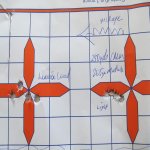
Decided to do a quick and dirty load dev in -5C weather with my 6.5 as I had never shot it in the cold yet.
Targets did open up a bit.
But still, the 37.8gn is the one with the highest SD/ES, which puzzles me once again.
200M line.

f9bMvqQh.jpg
 
I can offer you a few things to consider...

In my testing I have found that jump affects both accuracy and velocity spread. Too much jump and you get pressure leaking around the bullet before it gets into the rifling... Too little jump and the bullet does not have a running start and you can get slight velocity spikes that causes velocity spreads.

Tuning your seating depth is really about balancing these two points.

Part of the problem with low ES is in how much you can trust your chronograph. Unfortunately the ES you want for F Class is well inside the velocity spread you can reliably measure. A good F Class load cannot be tested by a chronograh... Its quite the opposite... The load is testing the accuracy of the chronograph, not the other way around. Having said that, the chronograph is still better than nothing.

The next thing I would strongly recommend is that you do testing with large primers and compare your results to what you get with small primers. Guys will often throw a fit at just the thought of this and without testing will rush to make assumptions about what is best. This is largely based upon false confidence that Lapua knows best along with the fan boys who blindly support the brand.

All I can tell you is that I have personally done extensive testing on 308 and 6x47L and in both cases I found best results with large primers. Small primers would produce moderately good results on one day and bad results on another day and the velocity from one day to the next varied widely. Accuracy is not about maximizing brass life!!! Dont ever use brass life as justification to use a small primer over a large one with more than 38 grains of powder.

Remember this.... Primers do not make the rifle accurate!!! The barrel makes the rifle accurate. The primer is there to ignite the powder. If it does not do that well, you will get wide velocity spreads. If it does that well you will get low velocity spreads that are consistent over a wide range of conditions.

I would form some cases for your 6.5x47L using 6CX brass and compare the results to what you currently use.

OK I will bite what is your desired ES for a good F class load and over what sample size?
 
Last edited:
OK I will bite what is your desired ES for a good F class load and over what sample size?

The reason why I quote Fclass, the guys I’ve met at the range doing this sport are very methodical in their reload process, but anyone can be perfectionist if they want to.

In my original post, I’m also looking if something can be bettered in my reload process, as I still wonder what would be the steps on a competing (and winning) Fclass shooter.

I do not know what are my expectations of a load to be honest, but have seen CGNers post pictures of their labradards with very low SD and single digit ES over 10+ shot groups.
Which is something I could achieve, but then my loads aren’t the most accurate when I do that.

Me too am curious as to what Maple has set himself for standard concerning velocity.
 
2020 has truly been a year of load development and fine tuning my reload process.
In absence of competitions, and having access to my 750M spot only once per 4-6 weeks, I seem to find pleasure spending time at the 200M line in this endless load dev.
My .308 has never shot so tight results are there!

One of my findings that puzzles me the most, my loads that are the best on target do not have the best SD/ES, and the loads that have the best SD/ES are not the best on target.
It got me thinking, maybe the Fclass guys (since accuracy demands are so up there) have got something in their reload process that I could use to better my experience!

Not looking to completely overhaul my process as I’ve seen good results, but am willing to spend and experiment with different products.
Here is my process for both .308/6.5x47 in a quick and dirty list...

1. Clean brass, krazy cloth
2. Anneal, AMP mkll
3. Lube cases w/Dillon lanolin lube
4. FLS/decap using Forster honed die (expander ball removed), then wipe off the lube. Using Forster co-ax press
5. Imperial graphite dry lube neck interiors
6. Sinclair expanding mandrel, 1.5 thou neck tension is the target I resize for
7. Primer pocket uniform K&M drill bit tool
8. Trim/Chamfer/Debur w/Forster 3in1 w/drill
9. Neck turn w/forster trimmer and drill
10. Primer with Lee bench prime
11. Powder with FX120 and actually use tweezers to add/remove the kernel as needed
12. Seat with Forster benchrest micrometer seater, 20 thou jump is my standard.

A few notes... My Ogive lenghts are always the same, very consistent seating.
Since ditching the Lee Collet die, I now have runout. I avg 1 thou but do get a few 1.5 thou runout.

Looking forward to some constructive feedback :cheers:

Congrats... you are now on your way to truly tuning your rifle to be competitive in the F class game. ES/SD has not and will not prove to be of benefit to tuning LR accuracy... I know I know... there is a mountain of vids, posts and shooters who feel otherwise. how many shoot on an F class target, score every shot and WIN?????

ES/SD is neither fish nor fowl... it is truly a meaningless value in the bigger scheme of things. The target does not lie, is unforgiving and like it or not, that is how you are scored.

And if you get to know top F class shooters, they will likely indicate that their ES/SD values are larger then the internet expects.

Your loading steps are just fine. I would outside neck turn every firing or two... you will understand once you start.

When annealing, try a cycle that leads to a 'stiffer' neck... over annealing is a trainwreck wrt to tuning. maybe test a batch that you dont anneal but fire 2 or 3 times... do things improve?

Glad to see you have found the benefits of the lee collet neck sizer.

If you are shooting to 900m, you need to think heavier slugs.... Berger 200-20x or Sierra new gen 200gr MK. pick your poison, they both work.

If you are shooting in the shoulder season, run LR primers... during the heat, SR is not a bad idea. Varget for powder ( I have given up testing powders for this game)

Good bipod and rear bag in a stock designed to fit both properly. If you are not able to tune and shoot into the 1/3 MOA vertical at 900m, you have work to do.

good luck...

Jerry

IMG_2008.jpg

Testing at 250yds... this is what you are competing against.
 

Attachments

  • IMG_2008.jpg
    IMG_2008.jpg
    67.7 KB · Views: 178
Munkey
I do not mind having a longer process, as long as it isn’t time consuming.
I am trying to save time though, hence why I’m toying with the idea of going back to corncob tumbling, a Giraud trimmer, an amp mate for my annealer, among other things.

When Connaught was open an I’d chat with the Fclass guys that would cross over to service rifle, it was a very popular notion to sort components by weight. Primers, bullets, brass. Which is something I never had the patience for. Hence why I try to use top components, and try to eliminate variables.
I have yet to try Berger bullets, it’s something on my bucket list.
.308 has got 2500 rounds down the pipe and still got 1500 SMKs here, once I have shot these I’ll make a pry bar out of the barrel.

Will look into sorting by bearing surface for testing purposes.
It’s the sort of thing I dislike doing, but if it yields significant results, I could do it to my match ammo only, and not sort the practice stuff.

Velocities on my end are done via labradar and look pretty bang on. Yes I have this same dillema as you between load A and load B

If you want to be competitive in FTR at 900m with the guys at Connaught, think of barrel life as mid to high teens. You might be lucky to have a barrel get into the 2000's and still hold the vertical you want but that is a big chance given all the costs involved to play.

You will always need practise barrels... match barrels should have very low rd counts.

As I said, if you have trouble keeping mechanical vertical to 1/3 MOA, something needs to change. The winds will blow you up and down enough... you dont need mechanical woes to make the task harder.

All the best

Jerry
 
Back
Top Bottom