Fclass reloading question

In your experience, how do you tune for jump?
Do you do a powder load dev at 20 thou jump let's say and once you've chosen your node you then start making jump tests with that given powder charge?

I do run a labradar, I get it may not be perfect, but still don't get why good target loads are consistently higher in SD/ES than lesser loads that are consistently lower in SD/ES.

The primer experiment is something that interests me for 2021, if ever matches do not start over again.
As right now it's become a new hobby of mine, experimenting.
I'm sure once service rifle/field matches start over once again I'll take the best of this experimental phase of mine and leave it alone.

For the thread and experiment sake, we will focus on my 308, which is running CCI BR2 (LP).
And to think of it, yes I got lower spreads on my 308.
But this good target load and good SD/SD load happens in my .308 also, which is running LPs...

I spent time behind a Silver Mountain SOLO electronic target at the 900M line with an Fclass guy called Barry around here.
We we're testing his own personal unit.
Which was really cool as it was configured for a fig.11
If my private range space (not mine but a friends) can free up more often I would purchase such a device.

Decided to do a quick and dirty load dev in -5C weather with my 6.5 as I had never shot it in the cold yet.
Targets did open up a bit.
But still, the 37.8gn is the one with the highest SD/ES, which puzzles me once again.
200M line.

f9bMvqQh.jpg

The barrel whips and flips every time you shoot it. Where the muzzle happens to be when the bullet exits matters a lot. This will correspond to a particular velocity (actually, to particular barrel time). Some muzzle positions make accuracy worse. Some make it better. By selcting the best ES you happen to be selecting a barrel time that is not best for accuracy.

Don't argue with your rifle. It is trying to tell you something.

This can best be seen at 500 yards and beyond. Testing at 100 just wastes components and barrel life.
 
Thanks for the feedback Jerry, unfortunately I’m not dipping my toes into Fclass just yet, but you would be first to know as I’d order the barrel from you!

Why I am referring to Fclass, it’s because the research and footwork towards the perfect round has already been done, instead of trying to reinvent something I just want to have a look at what the (in my opinion) the best reloaders are using.

So if I get this right, the chrono during load dev is only used to tell me where my velocity is at as another tool for pressure signs, and get a reading on my final load to be regularly used, nothing more nothing less?

As far as neck turning goes, in 308 I have tried it after 5 firings and barely any brass has skimmed.
In 6.5x47 it’s done every firing, if I neglect to do so my neck grows fatter next to the shoulder causing other undesirable problems.

When you say overannealing, does it refer to going too hot or doing it too often?
I do it every firing as the AMP YouTube videos told me to, but never had a feedback if it was really required.
Since I’m still experimenting, I will sure give it a try. As in keep a small batch that will skip an anneal out of 2 and see if it makes a difference.

As far as 900M go, it will be my 6.5 for service rifle/PRS all the way.
The point of my .308, is a beater rifle in extreme colds, a guest rifle, a 600M Barney/Petawawa event rifle.

So I’m pretty much finished tuning it many 100s/1000+ rounds ago, my going back into load dev is to experiment with the 1/3 moa territory out there if I get the time. If not no stress as it’s a solid 1/2 minute shooter.
Just this morning I took it out to shoot 10-15 shots to sight in new NF scope.
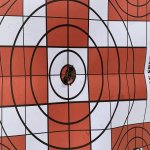
While I did stay at 100M, this was my 5 shot group at 100M.
While it definitely not stick out there (I know as it’s my usual load it opens to 1/2-5/8 minutes at 200M), it’s fun to see tight groups with the old beater rifle. Which is at 2500 rounds BTW!

58D74768-0B76-40D5-90EF-E80A4F901C65.jpg

Those are great vertical groupings for 250!
Unfortunately with my 900M shut down, I’m still in unknown territory for my 6.5 vertical at longer distances.


If you want to be competitive in FTR at 900m with the guys at Connaught, think of barrel life as mid to high teens. You might be lucky to have a barrel get into the 2000's and still hold the vertical you want but that is a big chance given all the costs involved to play.

You will always need practise barrels... match barrels should have very low rd counts.

As I said, if you have trouble keeping mechanical vertical to 1/3 MOA, something needs to change. The winds will blow you up and down enough... you dont need mechanical woes to make the task harder.

All the best

Jerry


I just saw you replied while my reply was typing.
No this beater .308 barrel is not going to any matches other than the 600M service conditions Petawawa.
 

Attachments

  • 58D74768-0B76-40D5-90EF-E80A4F901C65.jpg
    58D74768-0B76-40D5-90EF-E80A4F901C65.jpg
    86.7 KB · Views: 208
Last edited:
The barrel whips and flips every time you shoot it. Where the muzzle happens to be when the bullet exits matters a lot. This will correspond to a particular velocity (actually, to particular barrel time). Some muzzle positions make accuracy worse. Some make it better. By selcting the best ES you happen to be selecting a barrel time that is not best for accuracy.

Don't argue with your rifle. It is trying to tell you something.

This can best be seen at 500 yards and beyond. Testing at 100 just wastes components and barrel life.


This goes along what I have read recently as far as barrel whip goes.
While 200M is too close to really test things out, my 365 day access shooting spot is limited to it.
I never use the 100M other than for sight ins, as a bug hole at 100M will open un proportionally already at 200.
 
F class tuning has been in use for many years... why I giggle when so much of this is debated. But then if you never shoot and score on paper, maybe you really don't know what is going on????

In a past post you asked, how do you tune for aerodymanic jump? you don't... it is by product of the bullets dynamics vs the wind it sees during flight. You just have to learn what your bullet does under various conditions and hold accordingly. Some bullets are worst then others.... some are downright diabolical.

Yes, use velocity as a safety measure... the target to tell you how your tuning is going.

When you start running "FTR" type loads, you will remove material from your necks pretty much every firing... just like your 6.5X47L

To make it simple, when you over anneal, you make it 'soft'. The elasticity changes to the point where neck tension can vary enough to cause grief. I prefer to have a stiffer vs a softer neck... only your testing will prove what works best for you.

Vertical is easy to test at 200m... you are trying for one to two caliber tall vertical. That might be tough to do with foldy bipods... I certainly find it hard to do consistently.. but with proper FTR suitable bipods and set up, tuning for very low vertical is just a bit of time and practise. When you know what is possible, you quickly learn what matters and what is just noise.

That is a very nice 100m group... and why testing at 100m tells you nothing. You already know that this load and rifle will double in group size at only 200m despite such a nice group at 100m. How much more will it open when you get to 600m? As long as the target is sized for the accuracy of your set up, it is all good.

You will learn pretty much all you need to at 200m (300yds is best but not always available).... you will confirm it at further targets. When you get to 900m for a practise day, dont be shy to bring ammo 0.1gr increments to see what happens on target.... or if you get to shoot on an E target even better cause you will be able to record the entire string and play it back while comparing to your notes (and/or video) of the wind conditions you were shooting through.

Precision shooting in a 3 dimensional game.... most still think in 1.

Jerry
 
This is some actual good food for thought.
And now have a new 200M objective, as in shoot and keep it under 3/8-1/2’’ vertical.
Seems like a little spending is in order.
As I do have regular access to 750M, just about once per month. But I’ll do get an electronic target, I believe it would be nice to plot my exact vertical at a distance. And even do a little 0.1gn load tune at a distance and get actual feedback.
Will also contact you for a bipod setup specifically for this.

I presume an Mpod load with shoot just as well as an Atlas/Harris load, I’ll just induce more vertical?

I had kept my electronic target of this 100M tight load but can’t find it anymore.
At 800M I was well into 6-7’’, with someone else calling wind for me of course!


As for load dev, how do you guys in Fclass deal with this very briefly.
0.2gn powder increments to find the sweet spot then bullet jump tune?
 
And if you get to know top F class shooters, they will likely indicate that their ES/SD values are larger then the internet expects.

Your loading steps are just fine. I would outside neck turn every firing or two... you will understand once you start.

Hey Jerry,

Many years ago when I first got into F T/R you advised me (and I quote) "to embrace then idea of neck turning."

Which I am most certainly glad that I did!

But I have never heard about re-turning the necks... I always regarded this a once-and-done kind of step like primer pocket uniforming and flash hole deburring.

(1) Why should this be done ? Is it to remove material that may build up at the shoulder & neck junction ?

(2) I never changed the settings on my 21st Century Turner....would you advise taking an additional 0.0001 cutting depth or leave the cutting depth unchanged ?

(3) Resize the necks with my everyday Redding 0.002 under bushing die or use my Lee Collet Die before a re-turning of the necks ?

Please divulge the recipe for your interesting "secret sauce"

PS... probably going to need another couple thousand 2nd generation 200 grn Sierra MKs middle of next season.... is the supply steady or should I order soon ?

:cheers:

Mike
 
This is some actual good food for thought.
And now have a new 200M objective, as in shoot and keep it under 3/8-1/2’’ vertical.
Seems like a little spending is in order.
As I do have regular access to 750M, just about once per month. But I’ll do get an electronic target, I believe it would be nice to plot my exact vertical at a distance. And even do a little 0.1gn load tune at a distance and get actual feedback.
Will also contact you for a bipod setup specifically for this.

I presume an Mpod load with shoot just as well as an Atlas/Harris load, I’ll just induce more vertical?

I had kept my electronic target of this 100M tight load but can’t find it anymore.
At 800M I was well into 6-7’’, with someone else calling wind for me of course!


As for load dev, how do you guys in Fclass deal with this very briefly.
0.2gn powder increments to find the sweet spot then bullet jump tune?

Change in load tuning wrt to a change in bipod is only something your testing will prove. The dynamics are quite a lot different so not surprised if you have to change the load. How a rifle reacts in recoil affects how it vibrates... and how much it vibrates will affect the barrel in different ways depending on the stock, length of barrel, barrel time, etc.

Also, how you hold and follow through will change how the rifle vibrates.... and on and on and on. Don't bother trying to figure it out ... just shoot the rifle and the target will tell you real quick what you need to do.

When I am shooting PRS, I run a 22 Creedmoor, big honking brake, heavy rifle with a very front weight bias. I have been able to go from a Harris to my MPOD without any change in load tuning... only the ease of use, and grouping changes. I am still learning how to run a Harris to be as accurate/consistent as my MPOD... it is so much harder.

If you have good recoil management in your 308, there is likely little to no major change BUT you will likely be able to see very subtle changes in your load tuning and its affect on target when you learn to use an MPOD or other competitive FTR bipod. Why some F class shooters will adjust their seating depth in 3 thou increments in their final tuning... their set ups are consistent and accurate enough, they can see the affect on target.

In my final testing years ago, I could see the affects of 0.1gr on target out to 1000yds very easily. And then we could easily see the affect of primers vs temp.

In time, you will see and adjust as little as 1/2" on the target to get that bullet where you want it at 900m.. often we are shading on either side of a scoring ring and these are like 3/16" wide.

F class leads to very precise gear and set ups.... you have seen how well top shooters can hammer that V bull and it is only 1/2 MOA.

Jerry
 
Hey Jerry,

Many years ago when I first got into F T/R you advised me (and I quote) "to embrace then idea of neck turning."

Which I am most certainly glad that I did!

But I have never heard about re-turning the necks... I always regarded this a once-and-done kind of step like primer pocket uniforming and flash hole deburring.

(1) Why should this be done ? Is it to remove material that may build up at the shoulder & neck junction ?

(2) I never changed the settings on my 21st Century Turner....would you advise taking an additional 0.0001 cutting depth or leave the cutting depth unchanged ?

(3) Resize the necks with my everyday Redding 0.002 under bushing die or use my Lee Collet Die before a re-turning of the necks ?

Please divulge the recipe for your interesting "secret sauce"

PS... probably going to need another couple thousand 2nd generation 200 grn Sierra MKs middle of next season.... is the supply steady or should I order soon ?

:cheers:

Mike

If you keep up with annealing and run typical FTR pressures, brass will flow and you will see it when you touch up the necks. Leave the turner in the same setting and just run the brass over it every firing or two. You will see why this is important... the goal is consistency and varying neck thickness affects neck tension... and that is not good.

Think donuts...

I only use the Lee collet neck die and it fits my mandrel perfectly. So I bump, tumble clean, neck size, turn... etc. If I have to anneal, I will do this stage before I bump.

Given the current state of demand, if you know you need something, order it now... the worst that will happen is you will have it early for the season.

Jerry
 
Words of wisdom.

... just shoot the rifle and the target will tell you real quick what you need to do.

Given the current state of demand, if you know you need something, order it now... the worst that will happen is you will have it early for the season.
 
If you keep up with annealing and run typical FTR pressures, brass will flow and you will see it when you touch up the necks. Leave the turner in the same setting and just run the brass over it every firing or two. You will see why this is important... the goal is consistency and varying neck thickness affects neck tension... and that is not good.

Think donuts...

I only use the Lee collet neck die and it fits my mandrel perfectly. So I bump, tumble clean, neck size, turn... etc. If I have to anneal, I will do this stage before I bump.

Given the current state of demand, if you know you need something, order it now... the worst that will happen is you will have it early for the season.

Jerry

Thanks for the knowledge Jerry...that makes sense.
I've got donuts on my mind.
Will order some projectiles in Feb/Mar then.

hbNNVyL.png
 
Change in load tuning wrt to a change in bipod is only something your testing will prove. The dynamics are quite a lot different so not surprised if you have to change the load. How a rifle reacts in recoil affects how it vibrates... and how much it vibrates will affect the barrel in different ways depending on the stock, length of barrel, barrel time, etc.

Also, how you hold and follow through will change how the rifle vibrates.... and on and on and on. Don't bother trying to figure it out ... just shoot the rifle and the target will tell you real quick what you need to do.

When I am shooting PRS, I run a 22 Creedmoor, big honking brake, heavy rifle with a very front weight bias. I have been able to go from a Harris to my MPOD without any change in load tuning... only the ease of use, and grouping changes. I am still learning how to run a Harris to be as accurate/consistent as my MPOD... it is so much harder.

If you have good recoil management in your 308, there is likely little to no major change BUT you will likely be able to see very subtle changes in your load tuning and its affect on target when you learn to use an MPOD or other competitive FTR bipod. Why some F class shooters will adjust their seating depth in 3 thou increments in their final tuning... their set ups are consistent and accurate enough, they can see the affect on target.

In my final testing years ago, I could see the affects of 0.1gr on target out to 1000yds very easily. And then we could easily see the affect of primers vs temp.

In time, you will see and adjust as little as 1/2" on the target to get that bullet where you want it at 900m.. often we are shading on either side of a scoring ring and these are like 3/16" wide.

F class leads to very precise gear and set ups.... you have seen how well top shooters can hammer that V bull and it is only 1/2 MOA.

Jerry


It would seem like I just need more time behind the 900M line.
Something I did not have in 2020 because covid.
Let’s hope 2021 gets off to a better start in this regard.
I am still on the lookout to purchase 100-200 acres of private land, but this year they are selling like hotcakes above market value.

After all these good discussions we just chatted on here it has given me plenty to ponder on and experiment with.
At least I will keep the labradar at home now.
There are so many internet threads (even outside CGN) where the OP posts perfect SD/ES 10 shot strings and everyone would congratulate on having the perfect reload process.
So in a sense I was starting to think that higher than perfect SD/ES equaled a less than perfect reload process.

But still in the end, I still feel like there’s something missing for my repeatable 4x 5 shot groups sub 1/3 moa at 200M.
Is it me shooting with gloves lately?
Is my barrel too light and am not giving enough cool down time?
Is it my reloads? (First to be blamed hence this thread)
Is it my equipment?

At least if I could have a certain confirmation that the reload process/load dev method is spot on I could put this to rest and focus on other this.

Still got some good tidbits out of this thread and was entertaining to read!
 
I would congratulate the reloader if their groups at distance were nice and small. There are no trophies for Labradar data... yet :)

And often, these very low ES/SD numbers lead to terrible results way out there.... so who would you rather be 65-0V with 2fps ES/SD... or 75-10V and don't give a crap what the labradar says?

Tell me the average after 200rds... I bet it is not as good as that first 10rds.

If you are consistently averaging 1/3 MOA, then your set up is working well. There is a limit to what a shooter can do... .some will always be better then others but fear any shooter that can shoot to his/her handicap on any given Sunday. Many shooters are hot and cold... work on being consistent... then drive the conditions presented and do the best you can.

Guns and barrels have a limit to how tight they will shoot... ON AVERAGE. It is far bigger then the hero groups many talk about. Remember that F class tuning is consistent accuracy AT the target. If you can deliver 1/3 MOA at 200m and the load holds, 1/3 MOA at 900m is at the top of this game... and I do mean 1/3 MOA after the entire string is fired which may be 17 to 22rds depending on the format.

Worry less, practise more... replace that barrel often and suddenly the average groups will shrink

Pick the windiest days and drive your rifle to 1/3 MOA at 200m... that will be an accomplishment that matters!

Jerry
 
I hear you for no trophies awarded to lowest SD/ES!

I’ll try to be more honest with myself next time I go out, as I always take the shooter equation out of the picture, and probably too quickly too.
After have shot pistol competitively, I always get there with a this is easy approach to shooting rifles prone.
The hard part is figuring the wind.

Now for bullet seating depths, what do you guys think of these two YouTube videos?
Just did the test, using his exact method and tools, and results are yielding with exactly 36 thous difference, which is huge!

For measuring lands I have used both the hornady oal gauge and stripped bolt method, with very repeatable results.
I just ran 4 casings for a jam test and still have repeatable results, just all 35-36 thous longer.
As if I had some grey area between lands start and true jam that gives enough resistance to stop an oal gauge with very little pressure, but not enough resistance to actually push a bullet through cycling the bolt.


This should be fun....Marty will gladly take that Crappy Labradar off your hands for a mere $20 Electronics Environmental Disposal Fee:)
 
Last edited:
BCBrad
Yes, I have been experimenting around using Quickload and the concept of using QL to allow me to match my load's barrel dwell time to known nodes on barrels. It "seems" to be promising but only for getting you into general load weight areas. The interesting thing is that most of the known "sweet" spot loads for F-Class cartridges I play with are located in the 1/2 node zones right in the middle of the known zones. This simply maybe because the author of the OBT theory is using the wrong parameter for the "most" accurate node. However, is it interesting and shows promise.

BTW: for the reloader's that worry about the ES/SD of their loads. Try lubing the bullets a little bit before inserting them into the case. It really drops the ES a lot. Doesn't help the near distance accuracy but does help the long range accuracy!!

Good discussion BTW. Some crap but mostly good solid info. I like seeing discussions on facts rather than the usual personnal attacks typical on this board.
 
I agree on the compete more than you tune,
But let’s admit that 2020 was not a year for competition, and quite the year to experiment to ones heart desire if he wished it.
 
Back
Top Bottom