Find/gift of the day

Reflex_84

Regular
Rating - 100%
92   0   0
Location
Alliston, ON
So my father calls me up the other day and informs me that he has a small gift for me, something he picked up off of one of his neighbours. Said he would be by in a couple days. Like he said, he showed up to work today with a handful of old 303 ammo and a stripper clip. Just thought I'd share it with you gentleman.

Untitled by https://www.flickr.com/photos/157409305@N03/, on Flickr


4 of these guys from 1944
Untitled by https://www.flickr.com/photos/157409305@N03/, on Flickr

1 of these from 1940
Untitled by https://www.flickr.com/photos/157409305@N03/, on Flickr

and finally, 4 of these from 1917!!
Untitled by https://www.flickr.com/photos/157409305@N03/, on Flickr

I know they're likely not rare or anything, but I thought that's its pretty cool to be handling some 101 year old ammo! Don't know much about these, believe they were made in Canada. Just something really neat to have and a pretty cool find/gift. Ammo to match my 1918 No1Mk3!!
 
Last edited by a moderator:
When I was a teen, buddy's dad had a bunch of those nickel jacket rounds. Don't know the manufacturer but they had that stab crimp and were filled with cordite. Think Canadian production was loaded with granular powder.

n 1910, the British took the opportunity to replace their Mk VI cartridge with a more modern design. The Mark VII loading used a 174 grains (11.3 g) pointed bullet with a flat-base. The .303 British Mark VII cartridge had a muzzle velocity of 2,440 ft/s (744 m/s) and a maximum range of approximately 3,000 yd (2,700 m).[4] [16] The Mk VII was different from earlier .303 bullet designs or spitzer projectiles in general. Although it appears to be a conventional spitzer-shape full metal jacket bullet, this appearance is deceptive: its designers made the front third of the interior of the Mk 7 bullets out of aluminium (from Canada) or tenite (cellulosic plastic), wood pulp or compressed paper, instead of lead and they were autoclaved to prevent wound infection. This lighter nose shifted the centre of gravity of the bullet towards the rear, making it tail heavy. Although the bullet was stable in flight due to the gyroscopic forces imposed on it by the rifling of the barrel, it behaved very differently upon hitting the target. As soon as the bullet hit the target and decelerated, its heavier lead base caused it to pitch violently and deform, thereby inflicting more severe gunshot wounds than a standard single-core spitzer design.[17] In spite of this, the Mk VII bullet was legal due to the full metal jacket used according to the terms of the Hague Convention.

Grizz
 
You have ammunition there from BOTH World Wars, BOTH Canadian plants, BOTH types of propellant, BOTH types of priming and BOTH systems of Primer!

The DA ammo is Dominion Arsenal, the Government ammunition plant of the time. It has Berdan primers which are Mercuric and Corrosive, both, and is loaded with Cordite MD-T 5-2 behind a standard Mark VII bullet, which is 174 grains and made of 3 pieces.

The DI ammo is made by Defence Industries, a World War II plant which made ammunition exclusively for the Government but which drew most of its engineering staff from the private Dominion Cartridge Company. They made and used the components which they already were used-to, so the ammo came out with a standard .210" Boxer primer which is NON-Mercuric and NON-Corrosive. For a propellant they used a Canadian-made version of Nobel Neonite which just happens to be very similar to IMR-4895. A BONUS is that this DI ammunition likely is the best .303 brass ever made as far as handloaders are concerned; rims on every specimen I have ever measured have been so close to the perfect .063" thick that it isn't even funny. With a bit of aluminum-foil and a good micrometer, you can actually use this stuff for checking headspace on an unknown rifle: that's how consistent it was!

You might take your micrometer and measure-up that DA 1917 you show, remembering that Ross Rifles did NOT jam with this ammunition!

You have the basics of a whole cartridge collection there, all in one hand. Have fun!
 
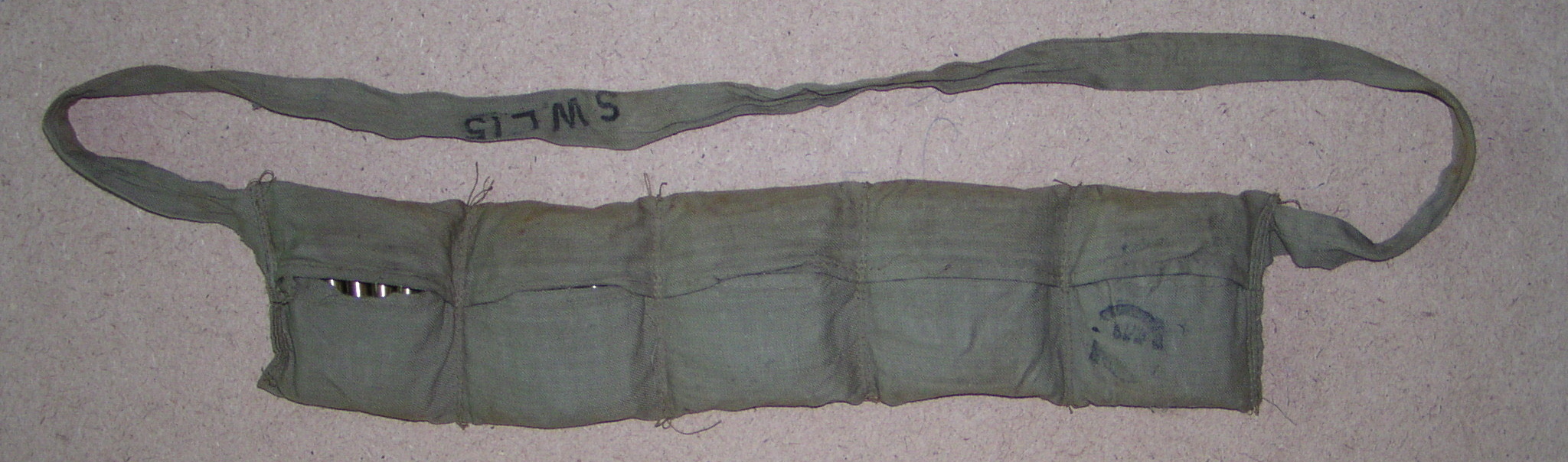
An American friend of mine, an ex-Marine Corps Huey "patcher" during Nam, mention that was looking for WW1 Canadian Lindsay Arsenal ammo. Another collector friend of his mention how rare it was and, depending on which story you believed, either the best or the worst of Canadian ammo for the Ross. So I went looking for some and found an entire Bandolier at the local gunshow some years ago. He did not want to take the risk of shipping it to the states so it stayed in the family.

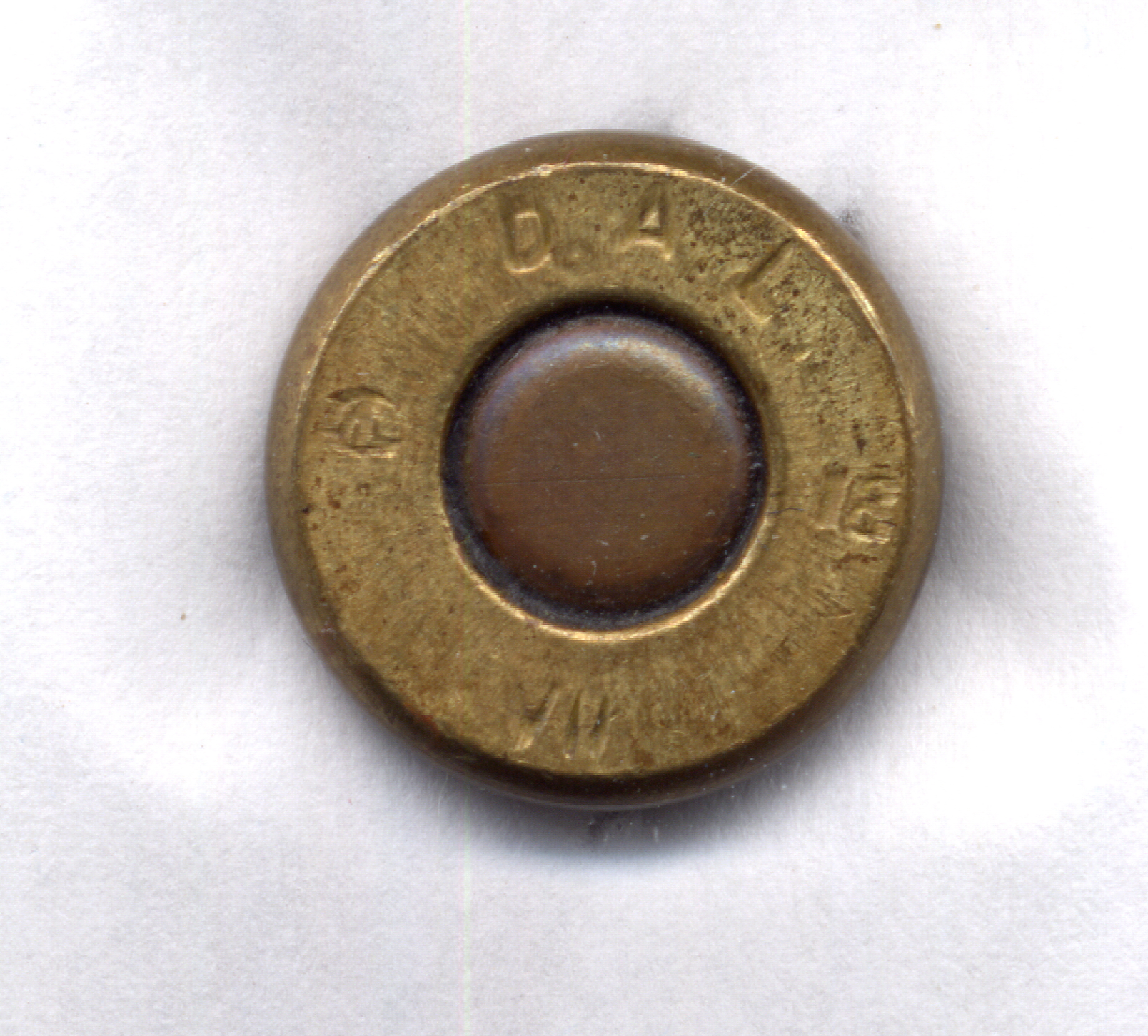
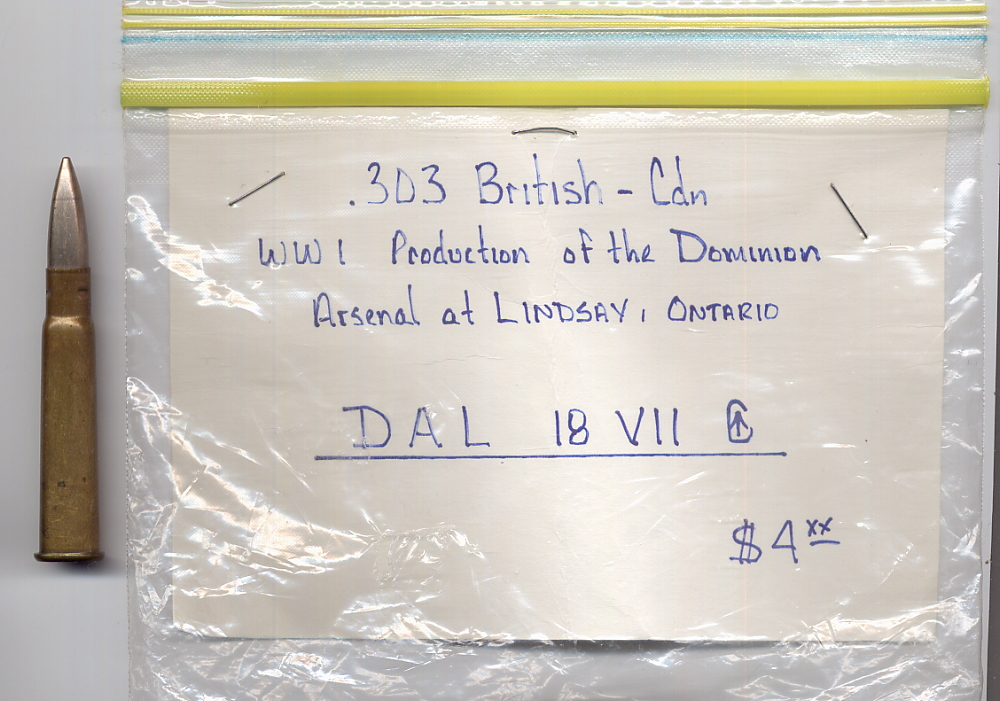
First I found one solitary DAL 18
File0004.jpg


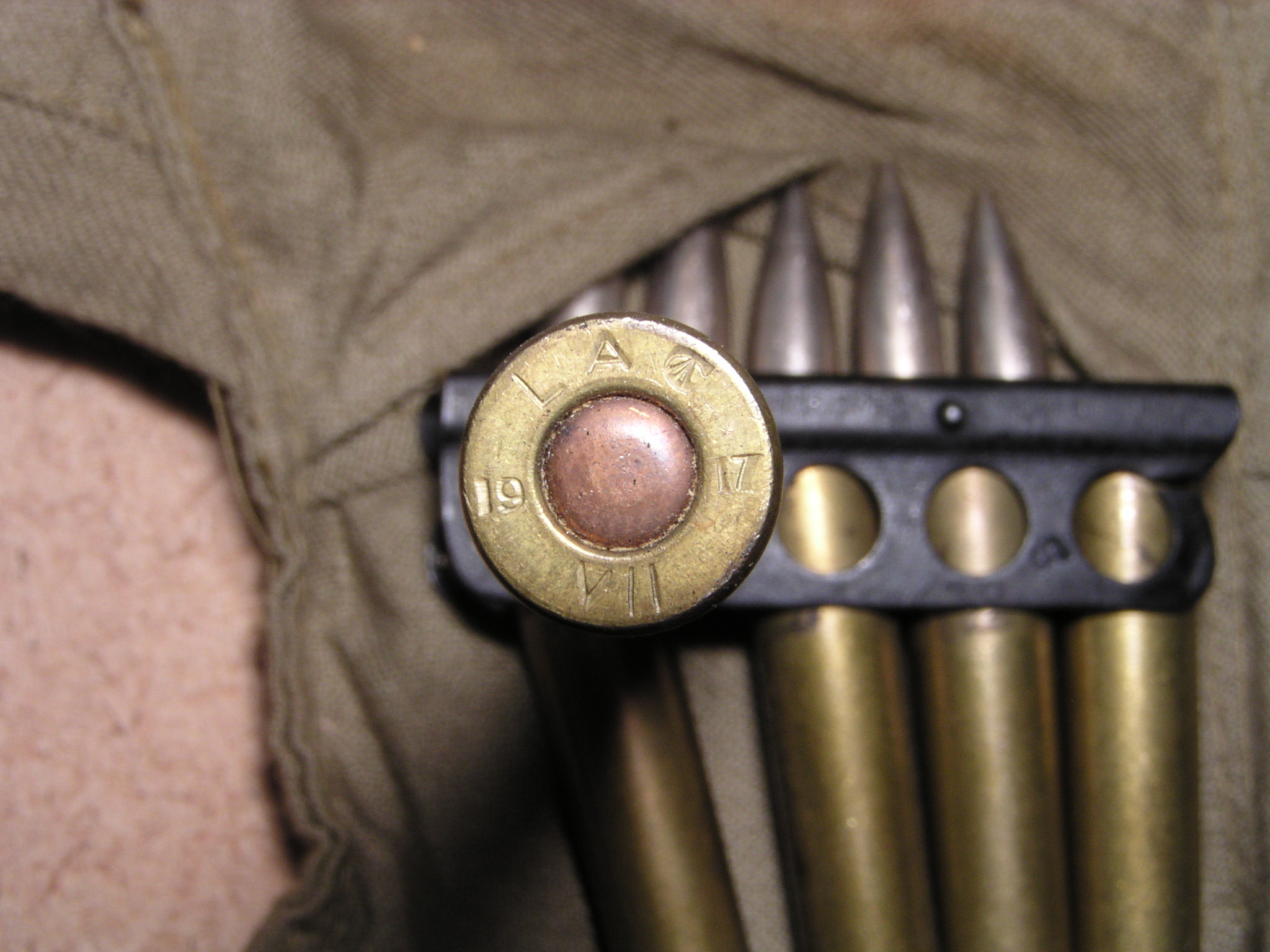
Then the bandelier of LA 17
P1010079.jpg

P1010082.jpg
 
Last edited:
Awhile back on one of my travels I found some surplus 303 in plastic bags at a gun store so I bought it because it was cheap turned out it was a mix of dal dac and da ammo from 1918 up I researched as much as I could and found an interesting sight:

http://www.dave-cushman.net/shot/303headstamps.html

Don't know if that'll work but it's an interesting sight to say the least, the fellow who started it has passed on and it's kept alive by a friend of his

Diopter how rare is that dal ammo I have a few rounds? I like learning about these things, you start with the rifles then next thing you know your collecting ammo too, funny how it works, good thread op
 
Mine was in big freezer bags it totalled 31 rounds, there was even ppu mk8 in there, about a month ago I bought another 80 rounds of da/dac dated 41/44 came in a little homemade wood box, unless you traveled to bc I doubt they came from the same batch/person
 
Back
Top Bottom