Chambers and dies vary in size, meaning in diameter and headspace length, and the SAAMI sets the plus and minus dimensions.
Anything can cause a chambering problem with these tolerances, from the shell holder, a chamber on the minus side, and a resizing die on the plus side.
A picture is worth a thousand words, and no matter what the dies instructions tell you the shoulder needs to be pushed back .002 below the red dotted line.

When I first started reloading all I had was a plastic Lyman vernier caliper and no other gauges. I would first place a .010 feeler gauge between the die and shell holder and work down with thinner feeler gauges until the case chambered freely.
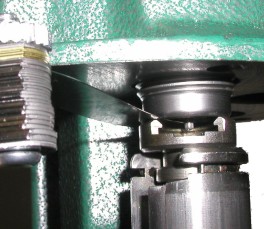
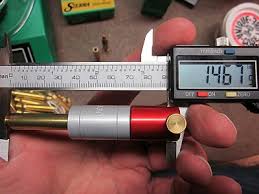
I now use a Hornady cartridge case headspace gauge and measure a "fired" case. And then adjust the die for the proper shoulder bump. On a bolt action .001 to .002 and semi-autos .003 to .006 shoulder bump.
Below a fired case from my AR15 rifle and then the die is adjusted for the proper amount of shoulder bump.
Once in 47 years of reloading I had to lap the top of the shell holder to be able to push the case further into the die. Meaning I had a chamber at the minus side and a resizing die at the plus side. And adjusted the shell holder to make the plus and minus equal, or get the case shoulder below the red dotted line above.
Anything can cause a chambering problem with these tolerances, from the shell holder, a chamber on the minus side, and a resizing die on the plus side.
A picture is worth a thousand words, and no matter what the dies instructions tell you the shoulder needs to be pushed back .002 below the red dotted line.
When I first started reloading all I had was a plastic Lyman vernier caliper and no other gauges. I would first place a .010 feeler gauge between the die and shell holder and work down with thinner feeler gauges until the case chambered freely.
I now use a Hornady cartridge case headspace gauge and measure a "fired" case. And then adjust the die for the proper shoulder bump. On a bolt action .001 to .002 and semi-autos .003 to .006 shoulder bump.
Below a fired case from my AR15 rifle and then the die is adjusted for the proper amount of shoulder bump.
Once in 47 years of reloading I had to lap the top of the shell holder to be able to push the case further into the die. Meaning I had a chamber at the minus side and a resizing die at the plus side. And adjusted the shell holder to make the plus and minus equal, or get the case shoulder below the red dotted line above.