Getting ready to shoot my Potsdam but need some help

Nabs

CGN Ultra frequent flyer
Rating - 99.6%
272   1   1
Location
Somewhere...
Hello CGN,

Last year, I acquired an 1809 Potsdam musket. She is a flint lock to percussion conversion and is dated 1834 on the lock, barrel, and bottom of the butt plate. She is unit marked to a Landwehr regiment and may have even had the distinction of serving in the U.S. civil war. I have not been able to remove the rear tang screw to check the barrel date but I have a feeling it is dater earlier than the lock and barrel based on previous web searches and other Potsdam comparisons.

I have plans to get this old girl out to the range for some shooting and I have worked carefully on making sure she is safe to shoot. So far, she checks out. I am presently working on cleaning out the flash hole and she should be close to being out to the range.

What I did want to ask from the more experienced BP shooters, are there any ways to test the flash hole being clear and that a charge could be ignited without actually putting a ball and charge down the barrel ?

Worse case scenario, I get to the range and the musket cap doesn't ignite the charge (thus leaving the musket "live"), are there any suggestions to make the musket safe ? I had a thought of carrying some bottled water with me to pour down the barrel and the flash hole if this occurs, would this be acceptable ?

I have been looking online for a suitable charge for this musket. I have reloaded smokeless ammunition in the past and I wish to develop a "light load" so to speak. Is there such a thing for BP muskets ? I do not wish to stress out the old girl but I don't want the ball to get stuck in the pipe with insufficient force. I did find a load online where one shooter, who also was shooting an antique Potsdam, used between 80 and 90 grains of FFFg powder with success. I plan to use FFg, however. Are there any thoughts on this ?

Last question, I do have a book that explains the basics of BP handling and shooting as well as suggesting some load and powder measure tools. From those that shoot BP often, what have been your experiences and what tools would you recommend ?

Thank you to anyone who can provide assistance.
 
have you checked the very back of the pore for pitting it could end up being a problem if its really deep near there. yes you can use light charges if you wanted but remember black powder and its substitutes are measured by volume and are different from smokeless powders
 
I haven't been able to look that far down the barrel. My best result was putting some gun oil down the barrel and seeing if any would come out of the flash hole while the musket was standing up. That worked somewhat well and is prompting me to work some more on cleaning the flash hole. I could see the reflection of light back up at me with a flashlight shining down the barrel.

A friend recommended using a camera on a thin cable, like that that is used to check pipes, but I would think this equipment is rather expensive. Are there any suggestions ? I am eager to see bottom of the barrel in order to determine if she is safe to shoot.
 
Hello CGN,

What I did want to ask from the more experienced BP shooters, are there any ways to test the flash hole being clear and that a charge could be ignited without actually putting a ball and charge down the barrel ?

.

For testing your nipple/channel just (after being dang certain it isn't loaded) aim it at a blade of grass or something like that (being winter & all) and fire a cap off. You will see the grass (or whatever) move if it is clear.

Good luck!
 
I haven't been able to look that far down the barrel. My best result was putting some gun oil down the barrel and seeing if any would come out of the flash hole while the musket was standing up. That worked somewhat well and is prompting me to work some more on cleaning the flash hole. I could see the reflection of light back up at me with a flashlight shining down the barrel.

A friend recommended using a camera on a thin cable, like that that is used to check pipes, but I would think this equipment is rather expensive. Are there any suggestions ? I am eager to see bottom of the barrel in order to determine if she is safe to shoot.

How thick are your barrel walls?

You could try pulling the breech plug if pitting is a concern to you. If it doesn't want to move & you've never pulled one, enlist a gunsmith. MARK the thing with a reference mark so it gets indexed correctly when you replace it.

Also, being a conversion musket, the drum should unscrew from the barrel and give you better visual.
 
I didn't realize firing a musket cap only would result in any force coming out of the barrel, thank you for the suggestion. I will try it once I feel certain the flash hole has been cleared.

Stupid question, how do I get to the breech plug if I unable to remove the barrel from the stock ? The rear tang screw is frozen in position at the moment despite numerous oiling attempts overnight. It looks like I wasn't the only one in the past to try at removing the screw as it shows screwdriver wear and light stripping. I fear any more force will just snap the screw head off. The very end of the threads comes out just forward of the trigger and has a lot of oxidization on it. I managed to chip away the some of the rust and can see the threads again but alas, no amount of additional oil or carefully applied force from my screw driver has done the trick. Has anyone encountered a stubborn screw like this ? I would very much like to get this screw out so I can inspect the breech block externally as well as the barrel.
 
I didn't realize firing a musket cap only would result in any force coming out of the barrel, thank you for the suggestion. I will try it once I feel certain the flash hole has been cleared.

Stupid question, how do I get to the breech plug if I unable to remove the barrel from the stock ? The rear tang screw is frozen in position at the moment despite numerous oiling attempts overnight. It looks like I wasn't the only one in the past to try at removing the screw as it shows screwdriver wear and light stripping. I fear anymore force will just snap the screw head off. The very end of the threads comes out just forward of the trigger guard and has a lot of oxidization on it. I managed to chip away the rust and can see the threads again but alas, no amount of additional oil or carefully applied force from my screw driver has done the trick. Has anyone encountered a stubborn screw like this ? I would very much like to get this screw out so I can inspect the breech block externally as well as the barrel.

No problem, yup snapping caps is the tried-n-true method of checking. You'll be surprised


As for your stuck screw - sorry I read that in your post & then forgot.

Since heat will damage the stock, it sounds to me like you're going to have to drill it out. Those old screws are not very forgiving & if the screw head is already damaged.... Not the end of the world. Track of the Wolf or others have screws that will be a match, it's better to maintain the head-end if possible so you can match it with a screw of the right angle.

Obviously, it will take some patience...but it is doable.

To protect the stock & trigger plate, use some heavy tape.

Good luck
 
Heck, I should have suggested to tap the trigger plate AROUND the screw with a brass drift. It might take a balance of care & violence, but try that BEFORE getting out your drill.

Also, you tried oil, but did you try Liquid Wrench or anything like that? Even diesel can work all right on frozen parts.

I'd still suggest replacing the screw, however it comes out.
 
Thank you very much for your suggestions and recommendations thus far, they are very helpful. I will keep working on this screw with the hopes of it finally coming out.

I educated myself just now and did a google search for breech plugs and now understand where it is on the musket. I take it any excessive pitting on the rear of the barrel will affect breech plug integrity ?

I plan on using some compressed air from an air compressor to push out any last crude from the flash hole into the barrel when I can remove it afterwards. That being said, the barrel interior does look like a dry rusty pipe, and I do wish to give it some cleaning passes. I was thinking of using a large bore brush with some cleaning patches. Would you guys have any recommendations ?
 
Yes excessive pitting can affect integrity; if the threads aren't tight or if it no longer butts up squarely to the interior face (I've got the name of that wrong I'm sure).

The threads can be checked visually & by feel. They usually are fairly tight threading in & out; and obviously once re-indexed there should be zero movement.

Using some inletting black, lipstick or similar equivalent on the face of the breech plug, you can confirm the mating surfaces (which if they aren't obviously rusted away, you shouldn't have to do). Cover the face of the breech plug, tighten it up to your witness marks (proper index) and then remove & inspect. The inlet black/lipstick/whatever should be evenly spread across the surface. If it is, you're good. If not, take a closer look.


For cleaning I'd suggest you don't use a bronze brush unless the breech plug is removed. They can get stuck in there.

You can try electrolysis if it looks like it's very bad, but really I'd swab it very well, you could try some fine steel wool. You'd be surprised how well a pitted barrel CAN still shoot especially with a patched round ball.
 
I think my best advice is to join a local gun club / fish and game club which has a black powder section. You should find the answers to most of your questions from them. One thing that did catch my attention was that you poured oil down the barrel; that has to be cleaned out and a couple of caps fired through the empty barrel to ensure that you get ignition when you load the gun. Firing a cap through the empty barrel before a day of shooting is a very good idea and in the case of flintlocks, fire a light blank charge to confirm the gun will go off. From personal experience, you do not want to have a gooey black mud of powder and oil in the bottom of your barrel.

I would also make sure that you can remove the nipple from the gun and that the nipple threads as well as those they screw into are in good shape. If not, you will need to chase the old threads out with an oversize tap of the same pitch and use an oversize threaded nipple to fit. One of the biggest danger points that I have seen in old original guns is badly rusted threads where the nipple screws into the barrel. Also many original nipples are badly eroded with a large hole all the way through. Modern convention is to have a moderately large hole next to the cap and a small hole closest to the powder. There is a good chance, I should add, that a series of progressively oversize taps and a correspondingly oversize nipple will have to be made on a lathe. Final observation is that a lot of people chose a replacement nipple on the basis of whatever will screw into the barrel with little regard to how loose it goes in. I would consider that a very dangerous and foolish procedure because it often leads to a nipple that is barely held in by threads of the wrong diameter and / or the wrong pitch

cheers mooncoon
 
Figure I'll toss my 2C into the discussion :p

Borescopes - these come in all manner of quality and price. You can get a USB powered borescope off ebay for $10, or a state of the art independent operating directionally controlled tip for $200-$1000. They're used a lot by mechanics and plumbers and can be found online or at home depot. Every year or so they go on sale for about $90 or so for a decent independent setup with LCD screen, camera light etc.

Removing the stuck bolt - several methods that might help here. Might have to use them all.
1) Oiling around the head and base of the bolt. If it's badly stuck, the thinnest oils you have would be a good start. Maybe even a solvent to act as a penetrant initially (acetone or the like). I've tried acetone mixed with automatic transmission fluid in the past, but in the end gave up on the ATF and just stuck with straight acetone. Beware getting too much on the wood as in very extreme cases it could cause swelling leading to the wood trapping the bolt, cracking or discoloration.
2) Tapping the bolt. Like Northcoastbigbore suggested, a soft metal rod/punch (brass is good) tapped with a hammer around the stuck bolt might help loosen up the rust. Avoid striking the bolt or metal immediately in contact with the bolt unless you know you aren't going to peen it down and trap the bolt in place.
3) Get the largest diameter handled screw driver you can. If the screw notch in the head is tapered allowing the screw driver to slip carefully square up the slot with a dremel and fit it to the largest screw driver you have while still leaving enough metal to torque against. Secure the gun in the vice with the jaws as close to the bolt as possible to provide as much support as possible. Be sure to pad the jaws to avoid marring, but remain secure. Wrap one hand around the handle, then the other hand over the first to stop your hands from slipping and gradually apply pressure. This is often my solution for stubborn bolts and I've got a set of home made screw drivers ground from big 12 inch drivers to fit various narrower screw sizes.
4) Manual impact driver. This is always my last resort and it can end up doing as much harm as good, so be careful. You will need a very very very good fit from driver to bolt head, so custom grinding some sets of driver heads and the screw to fit perfectly is a good idea. Also, since you're striking the driver with a hammer the piece has to be well supported or you'll easily bend or break the piece. All that said, in the right circumstances a manual impact driver is an absolute life saver and often you'll have a totally useable screw or bolt to use. With specially ground impact heads you can also sometimes remove totally stripped bolt heads, but that's another story.
This is the kind of driver I'm talking about:
http://upload.wikimedia.org/wikiped...erWithBits.png/800px-ImpactDriverWithBits.png
http://www.bombaydigital.com/boxster/projects/brakes/pictures/impact_driver_lg.jpeg
P.S. Make sure the driver is set to loosen the bolts or you'll have a bad day :p


Bore cleaning - you've got several options here. My first suggestion would be to soak the whole deal in hot soapy water and scrub the bejesus out of it with a brass brush. Since the bore's apparently not the greatest shape, and if I remember correctly, the potsdam was smooth bore, it should take to this relatively well. If the brush is oversized to the bore, spin it as you get near the bottom and as you reverse direction to avoid getting it stuck (Spin it counter to the brush's threading too or you'll lose it down there :p ). If the bore's really cruddy and the brush is undersized, wrap a little steel wool on until it fits the bore - I wouldn't recommend this for anything other than a rough barrel, but it'll help with cleanup on a sewer pipe.

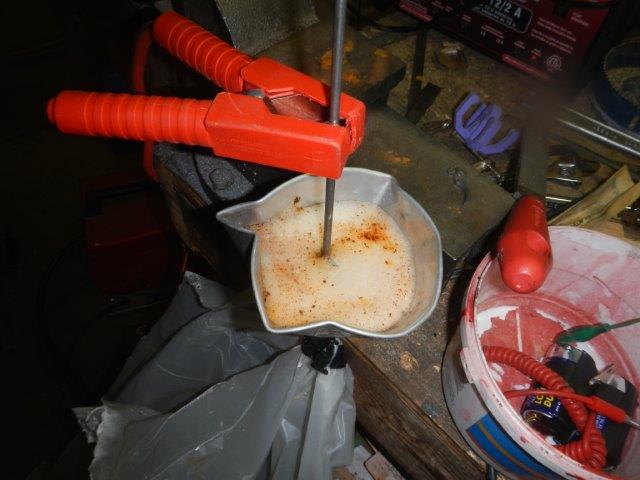
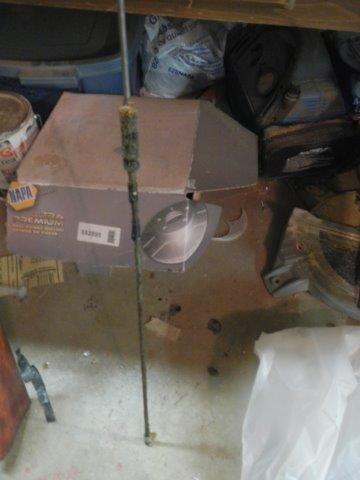
Bore cleaning using an electro cleaner. On real bad jobs these work great. Not ideal for regular cleaning, but on a gun with tons of leading/copper deposits/rust it works well. It'll take the high points out of a rifled bore, but on the guns that you're using this on... that isn't really a problem. Once you understand the theory you can improvise your own. I use a cell phone charger for my electro cleaner and it works great. Also built a tub electro cleaner for car parts. Best of all - it uses water! Environmentally friendly, clean and no stinky or caustic cancer causing chemicals!
http://www.surplusrifleforum.com/viewtopic.php?f=80&t=39312

Anyways, like I said, those're my 2. Hope something in there is helpful.
 
x2 on what mooncoon said about the nipple! A friend of mine had fired his antique musket several times with no problems - his next shot sounded "funny" and I looked over and saw him holding his ear with blood pouring down his neck. The nipple had blown out! He was lucky that it just nicked his ear.

When you do go to shoot your muzzle loader - tie it down to a tire and pull the trigger with a long string.

I've found that placing a bit of facial tissue or a leaf or something similar on the end of the barrel will show if the barrel is clear when you snap a cap on the nipple.

Sam Fadala's book "Black Powder Loading Manual" is full of good tips.
 
With the discussion in this thread around electrolytic cleaning, I'll provide this just to give you an idea of how effective it is, otherwise best placed in a separate thread. Credit goes to a post I saw last year from Tinman204 (IIRC). This was a Marlin '94 baby Carbine that I couldn't see rifling in before (but can now). Lots of tutorials, Tinman (hope that's the guy) had a good basic instruction up on it:

qvjxWgX.jpg


QAx0sPf.jpg


9tWkTI3.jpg


Just putting this up to give you some ideas.

good luck
 
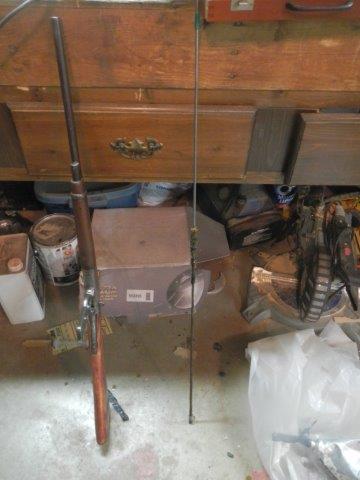
I would love to see a photo of your old Musket!!

Very often these old girls are completely safe to fire with light loads, after they are cleaned and brought back to snuff.

If she still has the original nipple I would suggest swapping it out for a new one after the bore is thoroughly cleaned.
 
Wow, a lot of very good suggestions and recommendations in such a short time, I will do my best to respond to everyone here.

I thought the front of the breech plug was flat and covered but I am guessing it is hollow ? What does the powder charge rest against ? I will have to endeavour to get the tang screw out otherwise I don't know the condition of the breech plug.

As for the "oil" I used, it actually wasn't oil, more like bore cleaner and is not very viscous. I did it to check if the flash hole was truly plugged up as it was from the top of the nipple but thankfully it is not as bad as I thought. I have had the musket sitting on her nose over a thick piece of paper towel for a day and a bit to make sure whatever is left runs out. So far, I got most of it so I am going to leave her for a little longer and see what happens.

At the moment, I do not think I can remove the nipple. The area around the nipple has very old pitting and oxidization and the nipple screw (the one that intersects at a right angle to the nipple) is missing half of the screw head. Undoubtedly, someone a long time ago tried and failed at removing the nipple screw.

I will certainly keep my eyes open for any bore snake with a camera on it so I can see the breech plug from the inside. Hopefully, I will be able to see the flash hole from the inside of the barrel as well.

As for the tang screw, I will have to jerry rig a setup in the garage so I can mount this musket and work on the stubborn screw. I do have an impact hammer but I had bad results with another rifle in a similar situation so I refrain from using it now. I do believe I have some thick blade screwdrivers that should fit with this Potsdam though.

I do not know of many active BP shooters in Toronto. One club I applied too has me on their waiting list and says it will likely be six months before I hear anything. For the moment, I use Silverdale. I am not sure they will allow me to tie the musket down to a tire or a shooting vice mounted on the bench, I will have to ask the next time I head down there.

I have toyed with the idea of electrolysis though I will admit I have never done it before. I guess I am afraid the process will harm this 200 year old musket. I know the bottom of the barrel in the stock has some very old oxidization underneath so I imagine the rest of it does too. One thing is for certain, that tang screw must come out so I can complete my inspection before I can feel safe shooting this musket. I have worked on the lock, bands, butt plate, trigger guard, and exposed section of the barrel with some 00 steel wool and she has cleaned up a little bit. The lock springs are tight and she certainly has life left in her. My hat is off to the people that contributed to her construction, I doubt many other firearms would have lasted 200 years and still have possible shooting potential.

At present, I am awaiting a replacement ramrod, sling swivels, and a companion bayonet that matches the wear and tear of the musket. I will snap a few pictures tomorrow and post them for you guys to see this musket as she is right now.

Ok I think I addressed all the new posts, let me know if I missed anything :).
 
I thought the front of the breech plug was flat and covered but I am guessing it is hollow ? What does the powder charge rest against ? I will have to endeavour to get the tang screw out otherwise I don't know the condition of the breech plug.

The breech plug is flat-faced, not hollow. Only real reason to pull it, is to give the "chamber" area a proper inspection. If you can accomplish that by some other means (i.e. pulling off the drum, a bore camera, etc). I would personally probably not pull it unless there is reason to suspect corrosion in the threads/face that could compromise it.


Definitely do speak with some other shooters; read the stickies here too. Shooting BP is a lot of fun but there are a few basic things you need (NEED) to know.

Have fun & happy shootin'.

BTW I don't know if it was brought up, but that barrel is probably pinned into the stock. If pinned, take great care not to chip the wood when you knock them out (that is, if you do decide to remove the barrel).
 
I will re-examine the rifle tomorrow for any potential pins holding the barrel in. Likely any I find will have alot of old oxidization on it like the barrel band springs do. Funny enough, the brass parts shined up very nicely after some steel wool passes, I just wish the steel would do the same :).
 
Back
Top Bottom