












































- Location
- On a resonably direct route in NS
I've seen a good number of Arisaka rifle stocks through the years which show, at first glance, abysmal wear to the wood such that many would pass them completely by at a gun show.
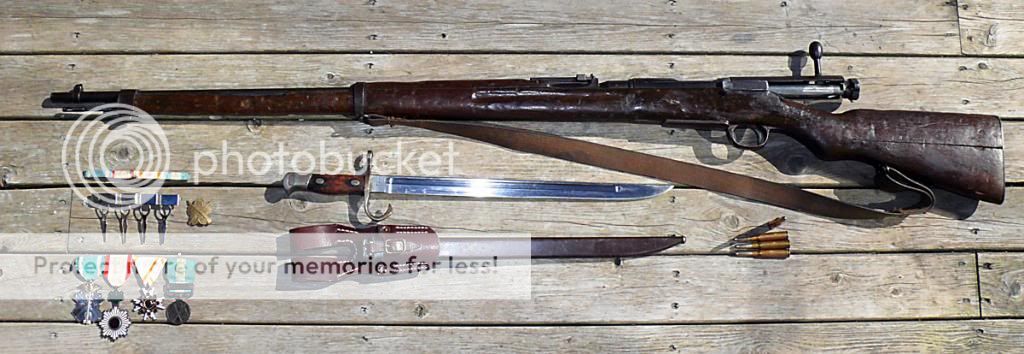
The two-piece stock is coming apart. The wood has layers of various military finishes (paint, shellac, varnish, who knows), and is dented all over. But it's complete, original, and intact, and I would never try to restore it or strip it and make it prettier. The metal-work is in great shape, so you know it was used in service and maintained, not just some relic off the beach.
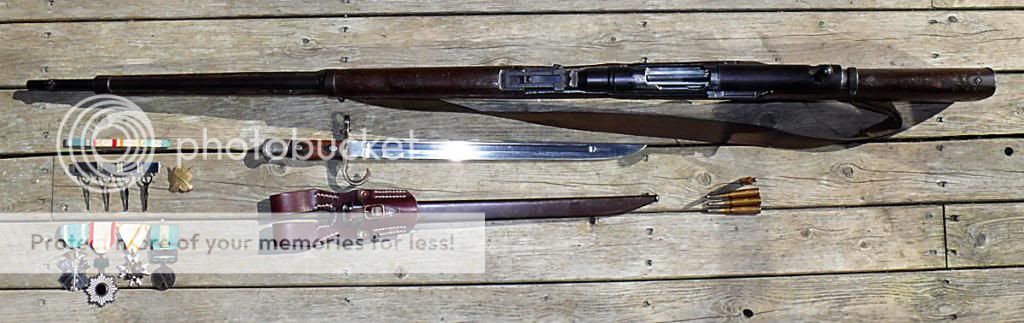
It is an original (no series) Tokyo (later Kokura) arsenal, with an array of features correct to a fairly early example. All parts are there including the dust cover. Chambered in 6,5x50SR with a good bore, she is fully functional and shoots pretty well.
Rubberized canvas sling suggests service in the later part of the Great East Asia War, when the U.S.A. had been drawn in and supplies of leather for webbing ran out.
Type 30 bayonet is also Tokyo arsenal, period correct to the rifle. Bayonet frog is reproduction (World War Supply [dotcom]).
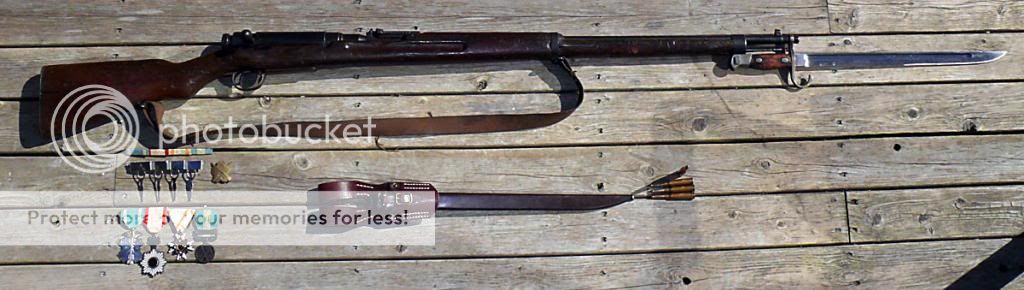
The medal group is late Meiji period from the 1894 Sino-Japanese War, with Orders of the Golden Kite (valour), Rising Sun, and Sacred Treasure. The Marksman Badge shows crossed Murata rifles, not Arisakas; the Type 30 was adopted in the 30th year of the Emperor's reign, i.e., 1897, and the Type 38 thus in 1905. This rifle probably dates to around the Siberian Intervention, certainly before the Mukden Incident (but I don't have a nice combat group to display from then).
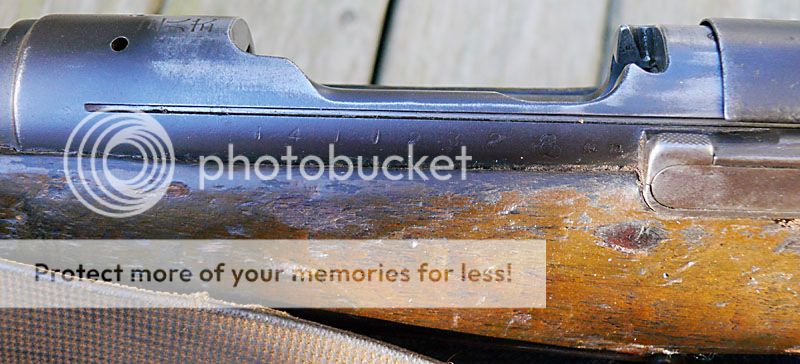
Here's the serial number on the left side of the receiver (million+ range with no series), stacked cannon balls arsenal mark, and some Japanese proofs. I should probably take a better shot with white filler in the stampings.
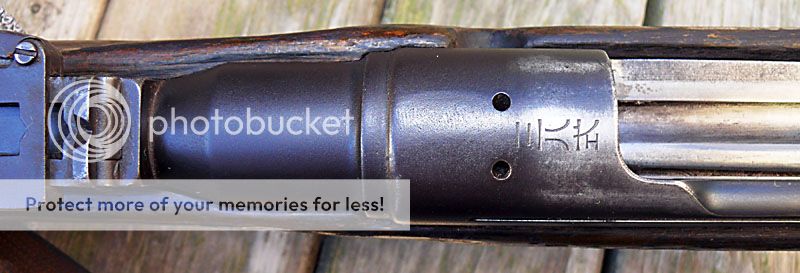
Top of the receiver, has the Imperial Chrysanthemum ground off (of course), and 3 8 Type below. Ground 'mum makes it a post-surrender piece. So she saw probably 30 years of hard life, accounting for all those dings.
What the hey, since I'm posting stuff anyway:

The two-piece stock is coming apart. The wood has layers of various military finishes (paint, shellac, varnish, who knows), and is dented all over. But it's complete, original, and intact, and I would never try to restore it or strip it and make it prettier. The metal-work is in great shape, so you know it was used in service and maintained, not just some relic off the beach.
It is an original (no series) Tokyo (later Kokura) arsenal, with an array of features correct to a fairly early example. All parts are there including the dust cover. Chambered in 6,5x50SR with a good bore, she is fully functional and shoots pretty well.
Rubberized canvas sling suggests service in the later part of the Great East Asia War, when the U.S.A. had been drawn in and supplies of leather for webbing ran out.
Type 30 bayonet is also Tokyo arsenal, period correct to the rifle. Bayonet frog is reproduction (World War Supply [dotcom]).
The medal group is late Meiji period from the 1894 Sino-Japanese War, with Orders of the Golden Kite (valour), Rising Sun, and Sacred Treasure. The Marksman Badge shows crossed Murata rifles, not Arisakas; the Type 30 was adopted in the 30th year of the Emperor's reign, i.e., 1897, and the Type 38 thus in 1905. This rifle probably dates to around the Siberian Intervention, certainly before the Mukden Incident (but I don't have a nice combat group to display from then).
Here's the serial number on the left side of the receiver (million+ range with no series), stacked cannon balls arsenal mark, and some Japanese proofs. I should probably take a better shot with white filler in the stampings.
Top of the receiver, has the Imperial Chrysanthemum ground off (of course), and 3 8 Type below. Ground 'mum makes it a post-surrender piece. So she saw probably 30 years of hard life, accounting for all those dings.
What the hey, since I'm posting stuff anyway:
























