
anybody know just in general what kind of quality SxS's these guys out of spain make. not looking for specific value just a generalization like ya decent, or low end, or ETC. not even sure they still make guns, the one i'm interested in is from late 60's.













































You are using an out of date browser. It may not display this or other websites correctly.
You should upgrade or use an alternative browser.
You should upgrade or use an alternative browser.
Gorosabel ?
- Thread starter Gldnbear
- Start date
Most Spanish makers made guns from barely acceptable eeconomy guns to elegant sidelocks.
Examine the individual gun for level of fit and finish to evaluate quality.
well its on line but from pics it looks rather nice, quite nice case colored receiver with quite abit of nice hand engraving, wood looks ok-decent. for what im going to pay for it its not a big gamble if its crap, its definitely nicer than a laurona of similar value i was looking at. maybe tharkhold will post a couple of pics for me
Last edited:

.
As mentioned, there are some pretty good Spanish shotguns, and there are also cheaper, low end ones. Back during the 1960s era, the Americans wanted economy shotguns with more to their taste features, such as larger pistol grips and beavertail fore ends. Then, engraving too. This added to the cost of the gun to the gun maker, so he had to find out a way to reduce items so he could at least make a profit. Consequently, quality suffered.
However, some of the Spanish gun manufacturers kept up a good quality firearm, along with some cheaper economy guns. The Spanish gun industry did not produce a lot of shotguns, because there was many makers, particularly in the Eibar region. Most of the shotguns turned out had a lot of hand fitting on them, so production was much lower than ones stamped out by machine such as the Remingtons, Winchesters, Stevens, and such.
You also have to look at the purpose of the shotgun you wish to buy. If you are going to bust a lot of clays, then the better quality guns were made for a lot of shooting so they are made a bit heavier and more detail went into them, and the price skyrocketed when you had one made. The ordinary shotguns were designed for game shooting, so could be made a bit lighter and trimmer, and are a joy to shoot. Today, if you walked into a Spanish gun makers shop, you had better have about 5 grand in your pocket, and that is just a start. Today, the Spanish "Best" guns are well respected and even the old time English famous name gun makers respect them as equals.
For upland game, with LEAD shot, the Spanish side by side is more than adequate, but if you are hunting WATERFOWL, using steel shot, forget it. Those barrels are not made for steel, and are a bit thinner than todays shotguns with screw in chokes. For over 40 years in the west, I used a 20 guage Spanish shotgun and when I left Alberta, the Pheasants, Hungarian Partridges, and other Upland Game birds held a big party and breathed a sigh of relief.
Also, the degree of CHOKE in the barrels differ a bit in thinking in Europe. Many times the right barrel is more open, such as Improved Cylinder, but the left barrel is a much tighter Full or Extra Full choke by our standards. I do not consider this a problem, because I pattern my shotguns so I know what to expect. In fact, I like to think of it as practical, for a close rising bird, and the second barrel for one farther out (or a second farther shot at the same bird because you missed the first one.)
If you post good close up pictures of the markings on the water table, (the flats on the action where the barrels rest) there is a lot of information there, (also the undersides of the barrels themselves.) The Spanish gun industry has some of the best proof firing tests in the world, and this information tells you the maker, the date code, and the characteristics of the barrels themselves.
Right now, there are seven Spanish double side by sides in my gun rack, with another one on the way here.
GOOGLE is your friend. Pedro Gorsabel made several models, the numbered ones were box lock and the names were sidelocks. Try the internet, Google "Gorsabel" and you will get a lot of information.
As mentioned, there are some pretty good Spanish shotguns, and there are also cheaper, low end ones. Back during the 1960s era, the Americans wanted economy shotguns with more to their taste features, such as larger pistol grips and beavertail fore ends. Then, engraving too. This added to the cost of the gun to the gun maker, so he had to find out a way to reduce items so he could at least make a profit. Consequently, quality suffered.
However, some of the Spanish gun manufacturers kept up a good quality firearm, along with some cheaper economy guns. The Spanish gun industry did not produce a lot of shotguns, because there was many makers, particularly in the Eibar region. Most of the shotguns turned out had a lot of hand fitting on them, so production was much lower than ones stamped out by machine such as the Remingtons, Winchesters, Stevens, and such.
You also have to look at the purpose of the shotgun you wish to buy. If you are going to bust a lot of clays, then the better quality guns were made for a lot of shooting so they are made a bit heavier and more detail went into them, and the price skyrocketed when you had one made. The ordinary shotguns were designed for game shooting, so could be made a bit lighter and trimmer, and are a joy to shoot. Today, if you walked into a Spanish gun makers shop, you had better have about 5 grand in your pocket, and that is just a start. Today, the Spanish "Best" guns are well respected and even the old time English famous name gun makers respect them as equals.
For upland game, with LEAD shot, the Spanish side by side is more than adequate, but if you are hunting WATERFOWL, using steel shot, forget it. Those barrels are not made for steel, and are a bit thinner than todays shotguns with screw in chokes. For over 40 years in the west, I used a 20 guage Spanish shotgun and when I left Alberta, the Pheasants, Hungarian Partridges, and other Upland Game birds held a big party and breathed a sigh of relief.
Also, the degree of CHOKE in the barrels differ a bit in thinking in Europe. Many times the right barrel is more open, such as Improved Cylinder, but the left barrel is a much tighter Full or Extra Full choke by our standards. I do not consider this a problem, because I pattern my shotguns so I know what to expect. In fact, I like to think of it as practical, for a close rising bird, and the second barrel for one farther out (or a second farther shot at the same bird because you missed the first one.)
If you post good close up pictures of the markings on the water table, (the flats on the action where the barrels rest) there is a lot of information there, (also the undersides of the barrels themselves.) The Spanish gun industry has some of the best proof firing tests in the world, and this information tells you the maker, the date code, and the characteristics of the barrels themselves.
Right now, there are seven Spanish double side by sides in my gun rack, with another one on the way here.
GOOGLE is your friend. Pedro Gorsabel made several models, the numbered ones were box lock and the names were sidelocks. Try the internet, Google "Gorsabel" and you will get a lot of information.
Last edited:

1963beretta
CGN Ultra frequent flyer
- Location
- Vaughan, Ontario
I had a Gorosobel sidelock a while back. It was a well made gun, especially for the price point. My only issue with the gun was the poor quality engraving. It looked like a 5th grader took an engraving tool and tried to create a game scene. Oddly enough, a friend of mine had a different brand Spanish sidelock with the identical engraving. It appears as though there was an engraver in Eibar that was contracted by multiple gun makers to engrave their guns. It was really unfortunate that such an elegant sidelock was downgraded with terrible engraving. I couldnt get past it and sold the gun
ya although it seems to have a bunch of engraving, my first impression was that it isn’t exactly something you’d see on a Diana browning. It seems deep and intricate but very unartistic. I dunno? Gorgeous case colored receiver with the engraving is it worth 500$? I dunnoI had a Gorosobel sidelock a while back. It was a well made gun, especially for the price point. My only issue with the gun was the poor quality engraving. It looked like a 5th grader took an engraving tool and tried to create a game scene. Oddly enough, a friend of mine had a different brand Spanish sidelock with the identical engraving. It appears as though there was an engraver in Eibar that was contracted by multiple gun makers to engrave their guns. It was really unfortunate that such an elegant sidelock was downgraded with terrible engraving. I couldnt get past it and sold the gun

There is proper engraving and then the stamped stuff. I have a Spanish SxS that is a nice light field gun. The engraving is stamped, not a lot of skill there. If the gun suits you and it is not one of the low end units they are good field guns. Mine would not last very long shooting any kind of clay, way too light.
gunsaholic
CGN Ultra frequent flyer
- Location
- Winnipeg, Manitoba
It is likely not hand engraving. $500.00 to me would be at the very top end for this gun. These guns are generally $275.00-$400.00. Really need to see pics to know otherwise. The main thing would be does the gun fit you and are you happy with the price point for what you would be getting.
Gunsaholic has about the right range for $275-$400 for the common 1960s to 1970s boxlocks that are flooding the country, imported from Scandinavia due to restrictive gun laws - see Tradeex site.
Most economy Eibar guns from the 60s had some hand engraving, but low end guns looked like they were carved with a dull axe. Every once in a while a higher end model turns up, but Canada never was a destination for many Spanish guns. A few guns from US Importers came across and CIL imported some modest guns under their brand. Importing a gun in the 60s and 70s was a much less complicated procedure, so a few guns were imported privately.
As to production numbers - AyA produced approximately 30,000 guns per year through the 60s and into the 70s, and Victor Sarasqueta produced more. Most other Eibar gunmakers were small craft shops, likely producing a few hundreds to a few thousand a year.
You will see many more Spanish guns in Britain than in our small shotgun market. The rise of British Sidelock copies from Spanish makers was the result of British importers setting the specifications for best Spanish guns.
I think that you can hardly go wrong with a gun made by AyA, though I do think the Matador is a bit of a clunk, but some Spanish gunmakers have a reputation for soft metal and poor triggers, specially single triggers. Needless to say that small bore shotguns always bring a premium price over their 12 gauge big brothers.
High quality Spanish guns rank with the best side by side shotguns in the world, IMHO.
Most economy Eibar guns from the 60s had some hand engraving, but low end guns looked like they were carved with a dull axe. Every once in a while a higher end model turns up, but Canada never was a destination for many Spanish guns. A few guns from US Importers came across and CIL imported some modest guns under their brand. Importing a gun in the 60s and 70s was a much less complicated procedure, so a few guns were imported privately.
As to production numbers - AyA produced approximately 30,000 guns per year through the 60s and into the 70s, and Victor Sarasqueta produced more. Most other Eibar gunmakers were small craft shops, likely producing a few hundreds to a few thousand a year.
You will see many more Spanish guns in Britain than in our small shotgun market. The rise of British Sidelock copies from Spanish makers was the result of British importers setting the specifications for best Spanish guns.
I think that you can hardly go wrong with a gun made by AyA, though I do think the Matador is a bit of a clunk, but some Spanish gunmakers have a reputation for soft metal and poor triggers, specially single triggers. Needless to say that small bore shotguns always bring a premium price over their 12 gauge big brothers.
High quality Spanish guns rank with the best side by side shotguns in the world, IMHO.


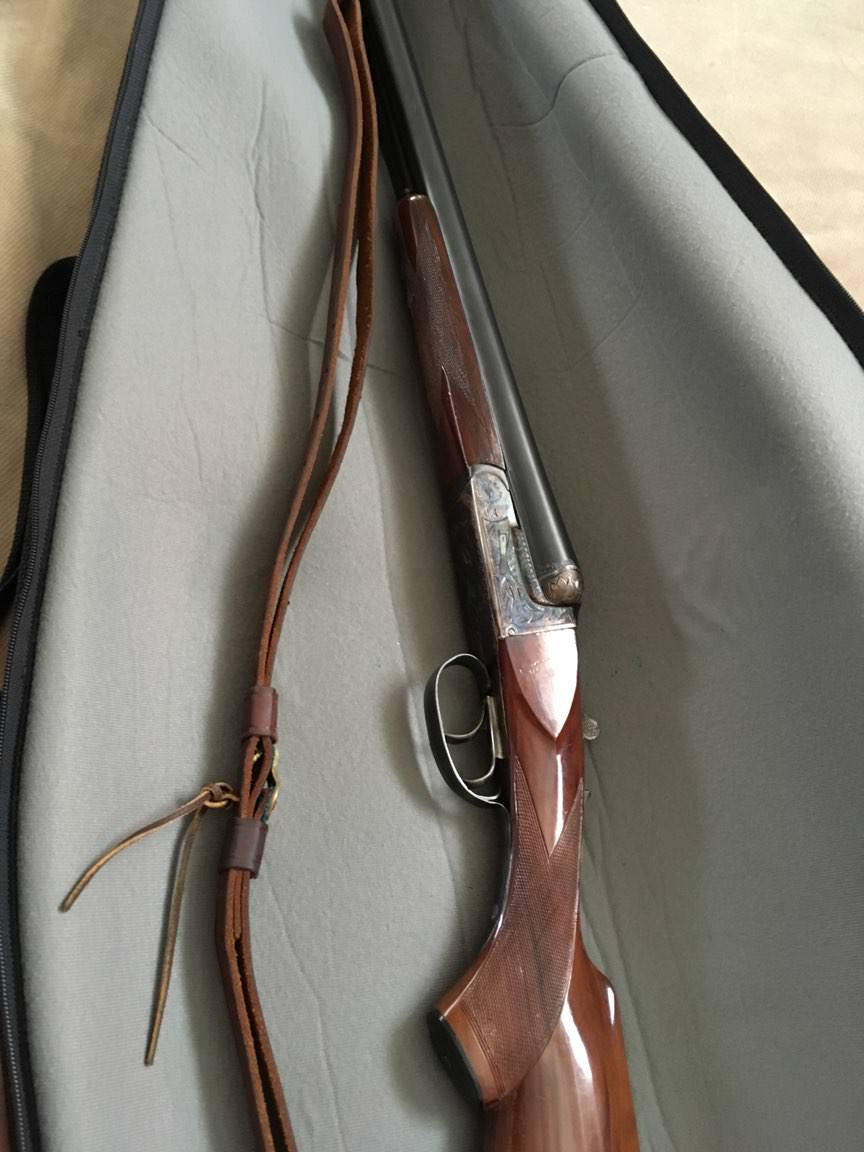
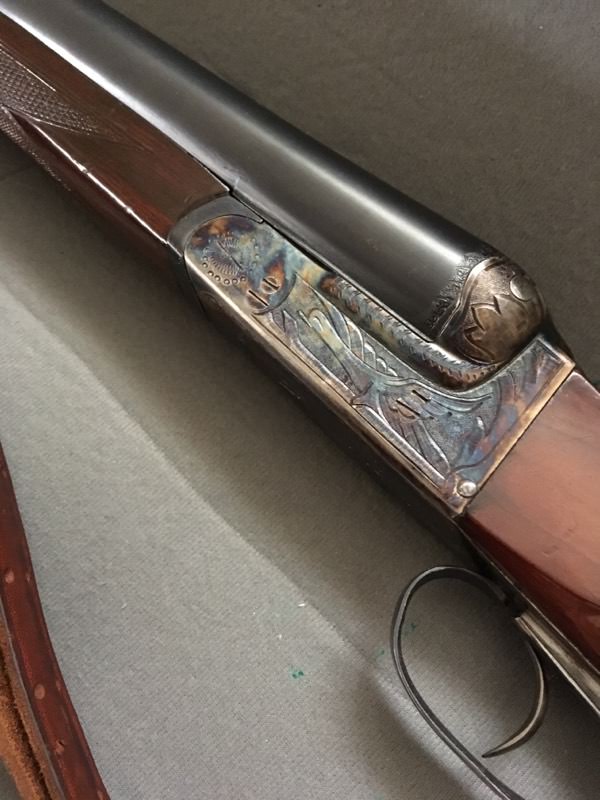
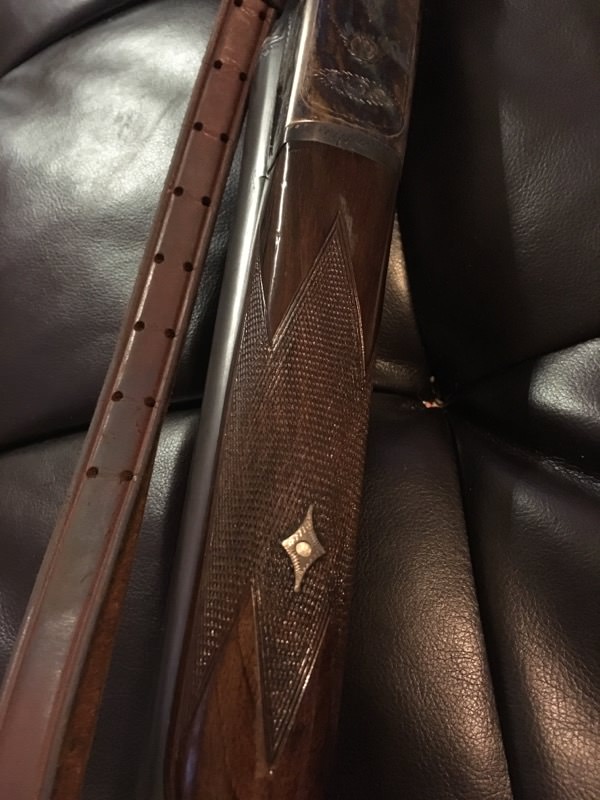
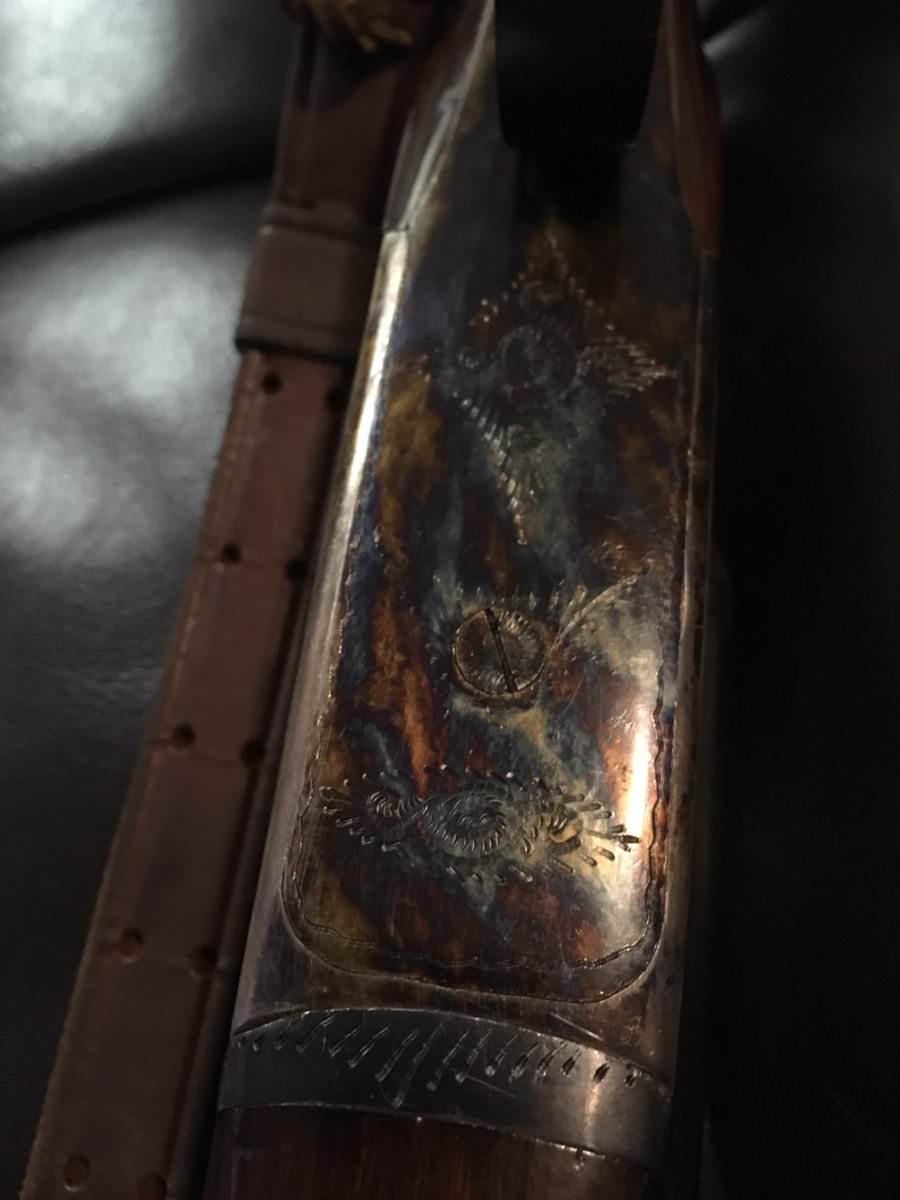
thanks again to Tharkold for posting my pics...lol ,i'll try and figure this pic /iphone thing out this weekend. This is what i'm buying, my aim is to have the wood redone with a nice oil finish, cause it looks just decent enough to bother doing so, then have a decent SxS gun for upland or the occasional duck hunt. I'm paying 500$ for it which i'm hoping is pretty fair, but in the end i'm buying it for me ,certainly not an investment .
PS ; as saskabook said , it kinda does look like it was engraved with a dull axe....lol it looks better than what i see on tradex in that price range anyway
PS ; as saskabook said , it kinda does look like it was engraved with a dull axe....lol it looks better than what i see on tradex in that price range anyway
Last edited:
Well I got the gun yesterday, I’m somewhat disappointed, the pictures looked better, it needs to be cleaned up badly, previous owner/s didn’t keep it very clean, it’s gunked up . I had no clue a SxS was so intricate to pull apart, not like an over under, I think I’ll bring it to somebody that knows what they’re doing with proper screwdrivers and tools, last thing I want to do is make a mess out of the screws. Even separating the metal from wood seems difficult. Any suggestions as to what I can soak the metal in to loosen up years of crud and possibly a little rust? Without doing any damage to the case coloring?
1963beretta
CGN Ultra frequent flyer
- Location
- Vaughan, Ontario
You dont want to start touching any of the action screws. But it shouldnt be too difficult to take the stock off. Most of the Gorosabel’s I’ve seen has the through bolt holding the stock on. If this is the case, just remove the buttplate to expose the through bolt and take that bolt off. You will also need to take the screw that is holding the trigger guard on. If this model doesnt have the through bolt, then the screws holding the stock on will be on the bottom and/or top of the action. Regardless, you’ll have to take the trigger guard off to take the stock off.
Ya removed the butt pad but there’s no bolt there, so it must all be done on the receiver, I pulled the trigger guard screw out then decided to watch a video on disassembly but there appears to be more nice screws that are perfect that I’m not willing to put a screw driver into, Ive learned my lesson doing that years ago on my Ithaca 37, made a mess of them.You dont want to start touching any of the action screws. But it shouldnt be too difficult to take the stock off. Most of the Gorosabel’s I’ve seen has the through bolt holding the stock on. If this is the case, just remove the buttplate to expose the through bolt and take that bolt off. You will also need to take the screw that is holding the trigger guard on. If this model doesnt have the through bolt, then the screws holding the stock on will be on the bottom and/or top of the action. Regardless, you’ll have to take the trigger guard off to take the stock off.


ninepointer
CGN frequent flyer
- Location
- Central Ontario
I have the exact same Pedro Gorosabel gun in 16 ga. Its waiting for me to bend the stock (its cast-off and I'm a south-paw) and to replace the tacky lacquered finish with oil.
Last edited:





















