Group size vs SD/ES

I look at it this way. Ignore the effect of wind on group size.

The 0.5moa load groups great at short range, but due to the terrible ES/SD, the groups get larger the further out you go.
The average load groups averagely at short range, but due to the great ES/SD, the groups stay the same size out at longer ranges.

At some distance, the average load is now grouping better then the 0.5moa load.

No, it does not work that way.

Low ES and SD is desirable, no doubt.

But long range vertical grouping is determined by barrel harmonics.

The barrel whips violently went shot. The muzzle is either moving up or moving down as the bullet leave the barrel. You have to find the velocity that gets the bullet leaving the barrel as the the muzzle is rising. (You see this at long range by seeing good elevation. If the barrel is moving down, you get a very vertical group.)

Lets all agree that our ES is not zero. For sake of discussion, lets say its is 25 fps.

You fire a shot, the muzzle is moving up as the bullet leaves the barrel -

If it is the fastest shot of the string, at long range it will print a bit higher, right?

Not exactly. Because it was fast, it got to the muzzle more quickly than the other shots, and the muzzle was not quite as high in its arc, so the shot was aimed a bit lower. As a result, the shot that was destined to go a bit higher than the other shots was aimed a bit lower, so the group is not as tall as it other wise would have been.

This effect is very easy to see at 800 to 1000 yards. You test various powder charges and find what shoots the best elevation group. The SD/ES are whatever they are. The group tells the story.
 
No, it does not work that way.

Low ES and SD is desirable, no doubt.

But long range vertical grouping is determined by barrel harmonics.

The barrel whips violently went shot. The muzzle is either moving up or moving down as the bullet leave the barrel. You have to find the velocity that gets the bullet leaving the barrel as the the muzzle is rising. (You see this at long range by seeing good elevation. If the barrel is moving down, you get a very vertical group.)

Lets all agree that our ES is not zero. For sake of discussion, lets say its is 25 fps.

You fire a shot, the muzzle is moving up as the bullet leaves the barrel -

If it is the fastest shot of the string, at long range it will print a bit higher, right?

Not exactly. Because it was fast, it got to the muzzle more quickly than the other shots, and the muzzle was not quite as high in its arc, so the shot was aimed a bit lower. As a result, the shot that was destined to go a bit higher than the other shots was aimed a bit lower, so the group is not as tall as it other wise would have been.


This effect is very easy to see at 800 to 1000 yards. You test various powder charges and find what shoots the best elevation group. The SD/ES are whatever they are. The group tells the story.

BINGO... and this isn't exactly new tech...

IMG_2008.jpg

With accurate rifles, loading and shooting, you can see the affects as close at 250yds. I just prefer further out as it is very obvious when things are in tune.

But... what do we know :)

Jerry
 

Attachments

  • IMG_2008.jpg
    IMG_2008.jpg
    67.7 KB · Views: 94
Not exactly. Because it was fast, it got to the muzzle more quickly than the other shots, and the muzzle was not quite as high in its arc, so the shot was aimed a bit lower. As a result, the shot that was destined to go a bit higher than the other shots was aimed a bit lower, so the group is not as tall as it other wise would have been.

This effect is very easy to see at 800 to 1000 yards. You test various powder charges and find what shoots the best elevation group. The SD/ES are whatever they are. The group tells the story.

Yes, but the problem with positive compensation is you have to tune it for a particular distance.

Capture.jpg


Closer or further then your desired distance, your large ES is creating vertical.
 
Last edited:
Hasn't shown up in 15 yrs of F class shooting from 300m to 1000yds in light to retard winds... at locations at sea level to a nice mountain top.

As I have said, real easy to prove....

Just put some lead on paper and plot your shots....

Jerry
 
No, it does not work that way.

Low ES and SD is desirable, no doubt.

But long range vertical grouping is determined by barrel harmonics.

The barrel whips violently went shot. The muzzle is either moving up or moving down as the bullet leave the barrel. You have to find the velocity that gets the bullet leaving the barrel as the the muzzle is rising. (You see this at long range by seeing good elevation. If the barrel is moving down, you get a very vertical group.)

Lets all agree that our ES is not zero. For sake of discussion, lets say its is 25 fps.

You fire a shot, the muzzle is moving up as the bullet leaves the barrel -

If it is the fastest shot of the string, at long range it will print a bit higher, right?

Not exactly. Because it was fast, it got to the muzzle more quickly than the other shots, and the muzzle was not quite as high in its arc, so the shot was aimed a bit lower. As a result, the shot that was destined to go a bit higher than the other shots was aimed a bit lower, so the group is not as tall as it other wise would have been.

This effect is very easy to see at 800 to 1000 yards. You test various powder charges and find what shoots the best elevation group. The SD/ES are whatever they are. The group tells the story.

I enjoyed reading this, and it just told me why my 900M groupings are very nice despite the lack of excellent SD/ES
 
No, it does not work that way.

Low ES and SD is desirable, no doubt.

But long range vertical grouping is determined by barrel harmonics.

The barrel whips violently went shot. The muzzle is either moving up or moving down as the bullet leave the barrel. You have to find the velocity that gets the bullet leaving the barrel as the the muzzle is rising. (You see this at long range by seeing good elevation. If the barrel is moving down, you get a very vertical group.)

Lets all agree that our ES is not zero. For sake of discussion, lets say its is 25 fps.

You fire a shot, the muzzle is moving up as the bullet leaves the barrel -

If it is the fastest shot of the string, at long range it will print a bit higher, right?

Not exactly. Because it was fast, it got to the muzzle more quickly than the other shots, and the muzzle was not quite as high in its arc, so the shot was aimed a bit lower. As a result, the shot that was destined to go a bit higher than the other shots was aimed a bit lower, so the group is not as tall as it other wise would have been.

This effect is very easy to see at 800 to 1000 yards. You test various powder charges and find what shoots the best elevation group. The SD/ES are whatever they are. The group tells the story.

I think a big piece of the puzzle just fell into place in my head.

Thank you for the layman's explanation Ganderite!
 
Yes, but the problem with positive compensation is you have to tune it for a particular distance.

Capture.jpg


Closer or further then your desired distance, your large ES is creating vertical.

Note quite.

If you are testing at 600 yards, if spread of the powder charges covers both positive and negative compensation, you will be choosing a powder charge with positive compensation. You know that some powder charges work better than others. Now you know why.

The powder charge you chose might not be the best one for 800 or 1000, but it sure will be better than using a charge that gave negative compensation, which would make the group even worse at longer ranges.

If you shoot at 1000, do an ammo test there.

I don't know what velocities or ES was involved, but I tested a rifle that had a lot of positive compensation at a given powder charge. When I shot that load, and ammo with .7 gr less powder, the bullets went to the same place at 1000 yards. In other words, a big ES did not matter, because that was the best powder charge.

So choose your loads by shooting groups at as long a distance as possible.

Little groups and a low ES at 100 means nothing.

This is all well explained and reported in the ballistics texts of around 1920. Read The Bullet's Flight by Mann.
 
JP-football.jpg

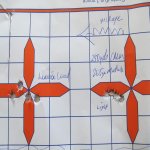
Some customer feedback using my load tuning suggestions. 200yds, 308Win, first shot out is the cold bore... then the next 4 into the "football"

image3.jpg

Combo will shoot very well as far as he wants to go. MPOD used...

Jerry
 

Attachments

  • JP-football.jpg
    JP-football.jpg
    62.1 KB · Views: 46
  • image3.jpg
    image3.jpg
    70.4 KB · Views: 42
Why should the two curves intersect? The upper curve is travelling at higher velocity....

The curves show what is called "positive compensation".

If the barrel was aimed at exactly the same place , the faster bullet would always print higher than the slower bullet. Good logic.

But in reality, the barrel cannot be aimed at the same place if the two shots are of different velocity. This is "barrel time".

The slower bullet takes longer to get to the muzzle, or

The faster bullet gets to the muzzle quicker. Also simple logic.

Here is the part that is missed. When a rifle is fired the barrel and action flex and whip violently. When the bullets leaves the muzzle, the barrel muzzle is either flexing up or down.


If it is on the way up, the slower bullet leaves the barrel aimed a bit higher. This helps compensate a bit for hitting lower on the target down range.

When you test at long range, you find the load that works. Who cares why it is better than the other powder charges? It groups well. That is all that matters.

Now that we have cheap chronographs, we can measure velocity. AN ES/SD

If you find that 56.7 gr gets the best group and that the velocity averages 2975 fps and that the ES is 37, the fine tuning should not be other powders or primers that also deliver 2975, because the barrel impulse is part of that group equation, and if you change to less of a faster power or more of a slower powder to get the same velocity, the barrel impulse is different and the barrel harmonics are different. This is starting load development all over again - not fine tuning.

If you have a good group and the ES is 37, you should try to make better ammo, using the same load data.

Should the inside flash hole be de-burred? (I made a big improvement with Winchester brass doing this. Lapua does not need it.)

Are the neck tensions variable because of dirty necks?

Are the neck tensions variable because of poor annealing?

Would FL sizing of the cases help?


https://varmintal.com/amode.htm


https://www.youtube.com/watch?v=_9ULBtsnkR0
 
Last edited:
If you are testing at 600 yards, if spread of the powder charges covers both positive and negative compensation, you will be choosing a powder charge with positive compensation. You know that some powder charges work better than others. Now you know why.

The powder charge you chose might not be the best one for 800 or 1000, but it sure will be better than using a charge that gave negative compensation, which would make the group even worse at longer ranges.

So what if you have to shoot a match with 600 and 1000yd relays? Bring two different loads? There are enough variables to control/account for in handloading as it is, adding distance as another just compounds the issue.

I'm not saying PC doesn't exist, and I'm not saying it doesn't work. Loading for minimal ES also works, and there are perfectly valid reasons why you would choose it. Hunting and field type shooting is just two.

From what I have read, tuning for PC is most common in benchrest, shooting at only one distance and frequently using a barrel tuner as well. Such circumstances are pretty unique to that discipline, other long range sports have very different situations/restrictions.
I know some also tune at the range by changing the seating depth. You can do that on a square range with timed relays, not so much elsewhere.


If you shoot at 1000, do an ammo test there.
...
So choose your loads by shooting groups at as long a distance as possible.

I agree, but not all of us are lucky enough to have easy access to a 1000yd range. I used to be a member at a range with 800m. Now I only have 300yds. With today's extremely accurate chronographs, getting a low ES load at 100m is very doable. I have developed loads at 300m using low ES that shot 1/3moa or better vertical at 500 and 800m. In my preferred sport, I'll take 1/3moa at 500 and 800 over 1/4moa at 800 and worse at every other distance every time, simply because I can't pigeon-hole my load development to a specific distance, it just won't work for me. For F-class or benchrest, it would.

Little groups and a low ES at 100 means nothing

By itself alone, it doesn't mean much. But it does indicate a very high probability that that load will shoot great at longer distances.
 
So what if you have to shoot a match with 600 and 1000yd relays? Bring two different loads? There are enough variables to control/account for in handloading as it is, adding distance as another just compounds the issue.

I'm not saying PC doesn't exist, and I'm not saying it doesn't work. Loading for minimal ES also works, and there are perfectly valid reasons why you would choose it. Hunting and field type shooting is just two.

From what I have read, tuning for PC is most common in benchrest, shooting at only one distance and frequently using a barrel tuner as well. Such circumstances are pretty unique to that discipline, other long range sports have very different situations/restrictions.
I know some also tune at the range by changing the seating depth. You can do that on a square range with timed relays, not so much elsewhere.


I agree, but not all of us are lucky enough to have easy access to a 1000yd range. I used to be a member at a range with 800m. Now I only have 300yds. With today's extremely accurate chronographs, getting a low ES load at 100m is very doable. I have developed loads at 300m using low ES that shot 1/3moa or better vertical at 500 and 800m. In my preferred sport, I'll take 1/3moa at 500 and 800 over 1/4moa at 800 and worse at every other distance every time, simply because I can't pigeon-hole my load development to a specific distance, it just won't work for me. For F-class or benchrest, it would.


By itself alone, it doesn't mean much. But it does indicate a very high probability that that load will shoot great at longer distances.

In my experience, small groups and a small ES at 100 mean almost nothing (except that you can make very good ammo) when it comes to ammo that will shoot well at long range.

YMMV
 
Back
Top Bottom