Hatcher's Notebook

BadgerDog

CGN Ultra frequent flyer
EE Expired
Rating - 100%
46   0   0
Location
Toronto, Canada
I wasn't sure if this particular book should go under Gunsmithing, Ammunition and Reloading or here .... ;)

Hatcher's Notebook
Author: Julian S. Hatcher
Publisher: The Military Publishing Service Company (1947)
ISBN: 978-0-8117-0350-5 (Hard Cover Edition)
Format: 636 pages including plates (Electronic Version)


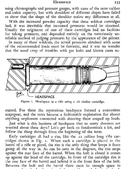
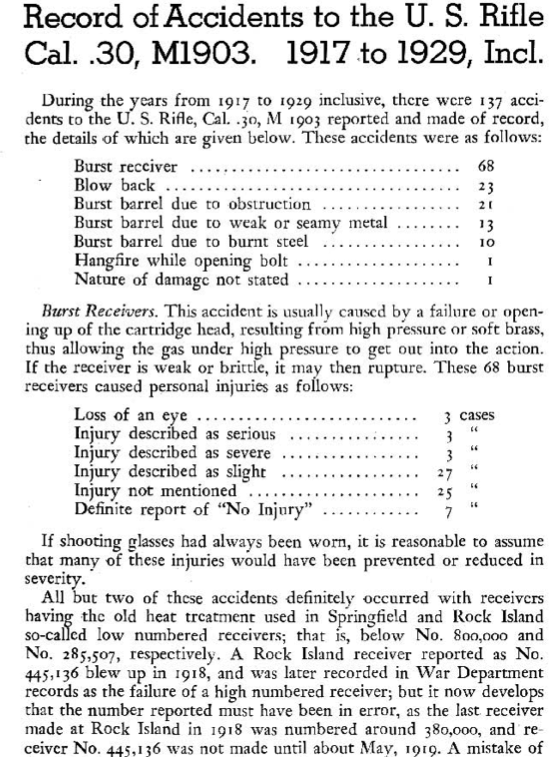
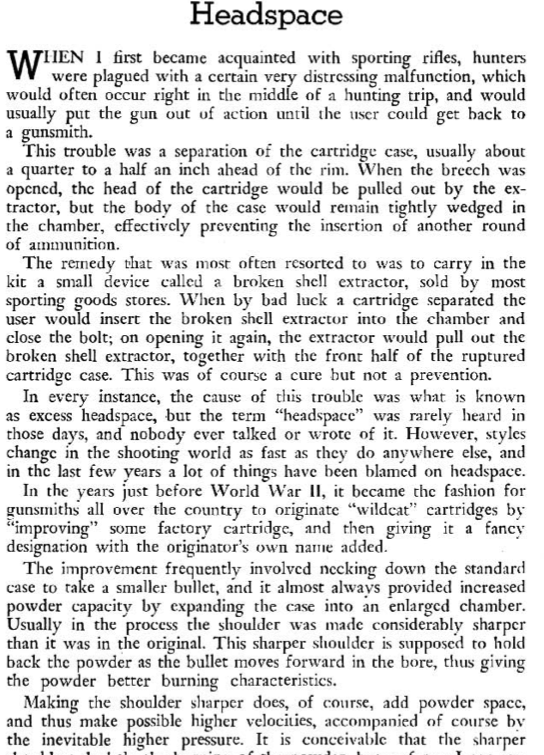
Starting with the '03 Springfield and '17 Enfield, this authoritative guide describes the development of automatic and semi-automatic weapons, explaining how they work, barrels and experiments with obstructions, strengths and weaknesses of military rifles, receiver steels and heat treatment, headspace, recoil problems, gunpowder, corrosion, triggers, and the Pederson Device. It also covers noted gun makers, tips to match ammunition, interior and exterior ballistics, velocity variation, measuring methods, weights, overloads, and ranges. Invaluable information for shooters, gunsmiths, collectors, ballisticians, and hunters.

Hatcher's Notebook Knowledge Library Entry (click here)http://www.milsurps.com/showthread.php?t=26926

(Click PIC to Enlarge)(Click PIC to Enlarge)

Note: Low quality pics shown below are for illustrative purposes only and the quality of the images and text within the content of the PDF file download are much greater.

I posted the other following two books in CanadianGunNutz's Ammo and Gunsmithing forums here:

1941 The Modern Gunsmith (by James Virgil Howe) (click here)http://www.canadiangunnutz.com/forum/showthread.php?t=545353

1937 Complete Guide to Handloading (by Philip B. Sharpe) (click here)http://www.canadiangunnutz.com/forum/showthread.php?t=544959

Regards,
Doug
 
Stop posting these books BadgerDog! (big grin) My internet satellite connection only allows so much downloading a day and I am at my limit most of the time.
The information in these books is phenomenal. There has been a lot of advances in firearms knowledge/technology in the last 40 years, however, the basics are still relevant.
Thanks
 
An awesome book. His research eclipsed anything that has been done in the past 50 years. The chapter on where bullets will land if fired straight up into the atmosphere was fascinating.
It is a MUST READ for all gun owners.
 
An awesome book. His research eclipsed anything that has been done in the past 50 years. The chapter on where bullets will land if fired straight up into the atmosphere was fascinating.
It is a MUST READ for all gun owners.

Yes, the straight up bit. The original idea was to time how long it took a service round (30-06) to come back to earth. A mathmetition could then calculate how high it had travelled.
The bottom line was even on a tidal flat of quiet water, and engineers to aim the barrel and figure out drift, with a sevice rifle, they couldn't land a bullet close enough to them to see it hit!

There once was postings on these threads pointing out how dangerous it was to shoot a rifle sraight up, because of the danger of it coming down and hitting you. I stated the above, saying how extremely remote it would be, but none the less, I got trashed for recklesness, or talking reckless, about a firearm.
 
I have it in hardcopy as well - great reference particularly wrt M1903 receiver hardness testing.
I have a very OLD copy that I got with the rest of my father's library - it's even signed!!
Also have a Copy of Ackley's first wildcats book that is signed, Roy Dunlap's that is signed, a shotgun book by Askins jr., and a few others.
i don't even like to open them up, as some are not in the best of shape!:(

Cat
 
Yes, the straight up bit. The original idea was to time how long it took a service round (30-06) to come back to earth. A mathmetition could then calculate how high it had travelled.
The bottom line was even on a tidal flat of quiet water, and engineers to aim the barrel and figure out drift, with a sevice rifle, they couldn't land a bullet close enough to them to see it hit!

There once was postings on these threads pointing out how dangerous it was to shoot a rifle straight up, because of the danger of it coming down and hitting you. I stated the above, saying how extremely remote it would be, but none the less, I got trashed for recklesness, or talking reckless, about a firearm.

That flies in the face of my recollections of reading Hatcher, where he described the bullets spinning madly in the bottom of the boat or barge they had been shot from.

That a few folks in said location could not always locate the splash of the falling projectile, does not come as a surprise to me. It's not like they could watch it go up, reach apogee, and see it fall.

Anyways, the sky is a big place, ans yet, things still collide up there once in a while.

Cheers
Trev
 
Oh, and WRT the bullets spinning in the boat, I think that was when they ended up using the Browning 1917 MG to fire straight up....

Interestingly, they tested bullets fired straight up with the bullets fired forwards (pointy end first) and backwards(pointy end into the case) to see which fell fastest.

NS
 
I found myself pondering some of Hatcher's writings on bullet fall during a long tour in Damascus, Syria where spontaneous shooting in the air is a normal method of rejoicing(weddings/funerals/etc). New Year's Eve was always a hoot with the many AK-47 armed security guards letting off celebratory fire. It would start with a few tentative bursts around 2330hrs leading up to a crescendo at midnight and tapering off over the next half-hour (kind of like the dueling banjos in "Deliverance"). I went out for a walk early one New Yrs morning watching for spent brass, but it had already been policed up. I think they used to sell it to the artisans in the craft souk who would "re-cycle" in into brass pots and the like.

One real shocker was when the Syrians beat the French (the former mandatory power) in the soccer final at the Mediterannean Games up in Lattakia. We didn't know what the hell was going on one evening when it sounded like WW3 starting.:confused: In addition to the normal pistol and AK-47 fire, the ZSU23 and 57mm AA guns on the mountain overlooking the city joined in with tracers arcing out over the city.:eek: Apparently a number of people were killed or injured that night by various bits and pieces falling from the sky.
 
It's been a while since I read about the falling bullets in my Hatchers book, which by the way, once was in the Library at the Webb Air Force Base in Texas, but I think they stated that the service, 150 grain bullet, hit with about 30 foot pounds of energy. They stated this was not too dangerous and a heavy hat would protect anyone hit in the head with it.
And yes, they did have to use a machine gun, before they could drop the bullets within sight on the water.
I suppose any of us who have done much duck or goose shooting near a pond, have been peppered with shot, both from across the water at about a 45 degree angle of hit, or from shot falling straight down. The most we ever did was to not look in the direction shot was going to come from, or at least close your eyes when the shot was expected.
 
Back
Top Bottom