












































Help me plan my reloading bench

jjr

CGN Regular
Rating - 100%
4   0   0
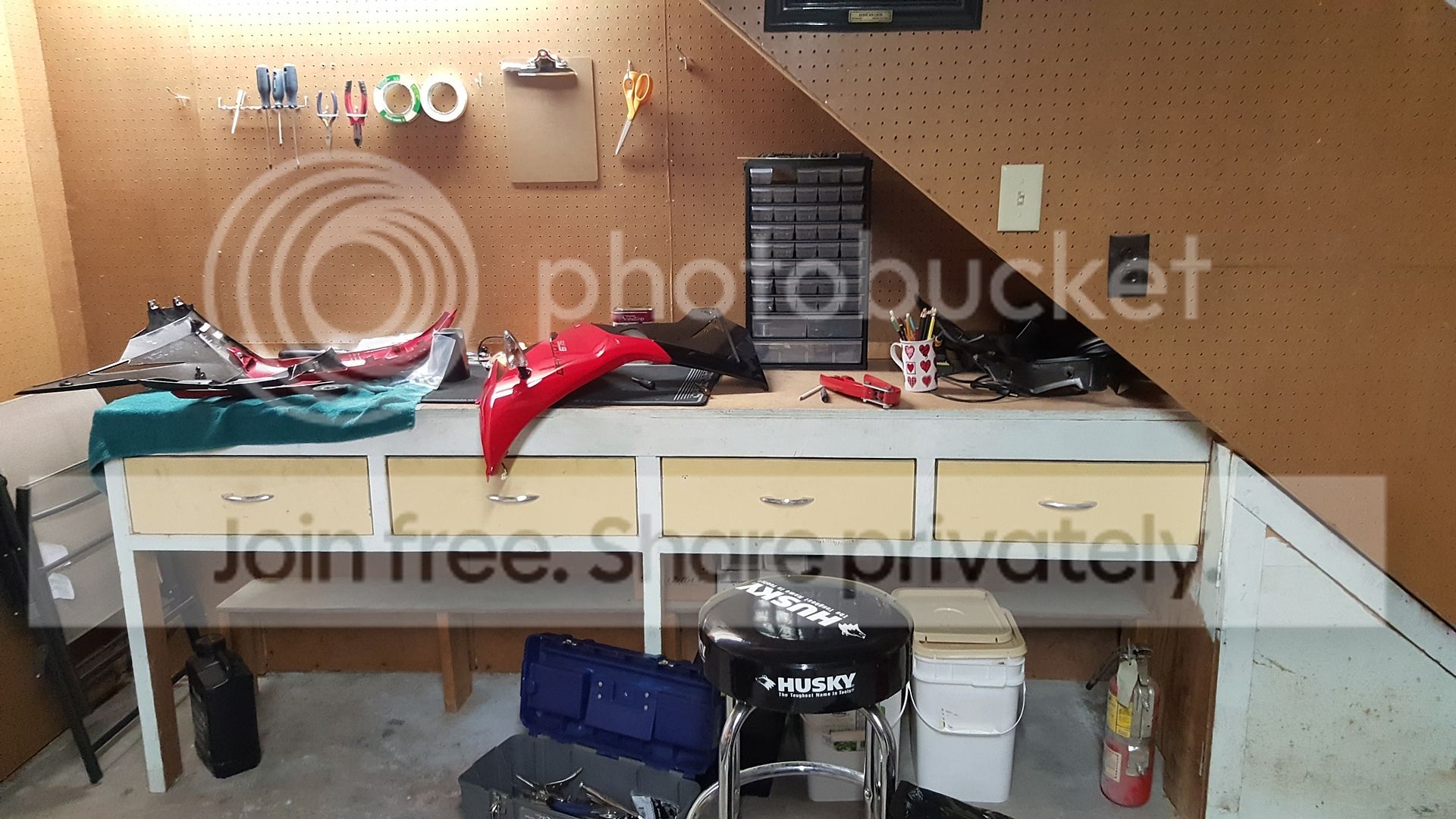
Just reloading with a hand press right now, want to get a Lee Classic Cast (eventually a progressive when I can afford it) and mount it to my work bench. This work bench was built when I bought my house a couple of years ago. Here it is, excuse the mess:


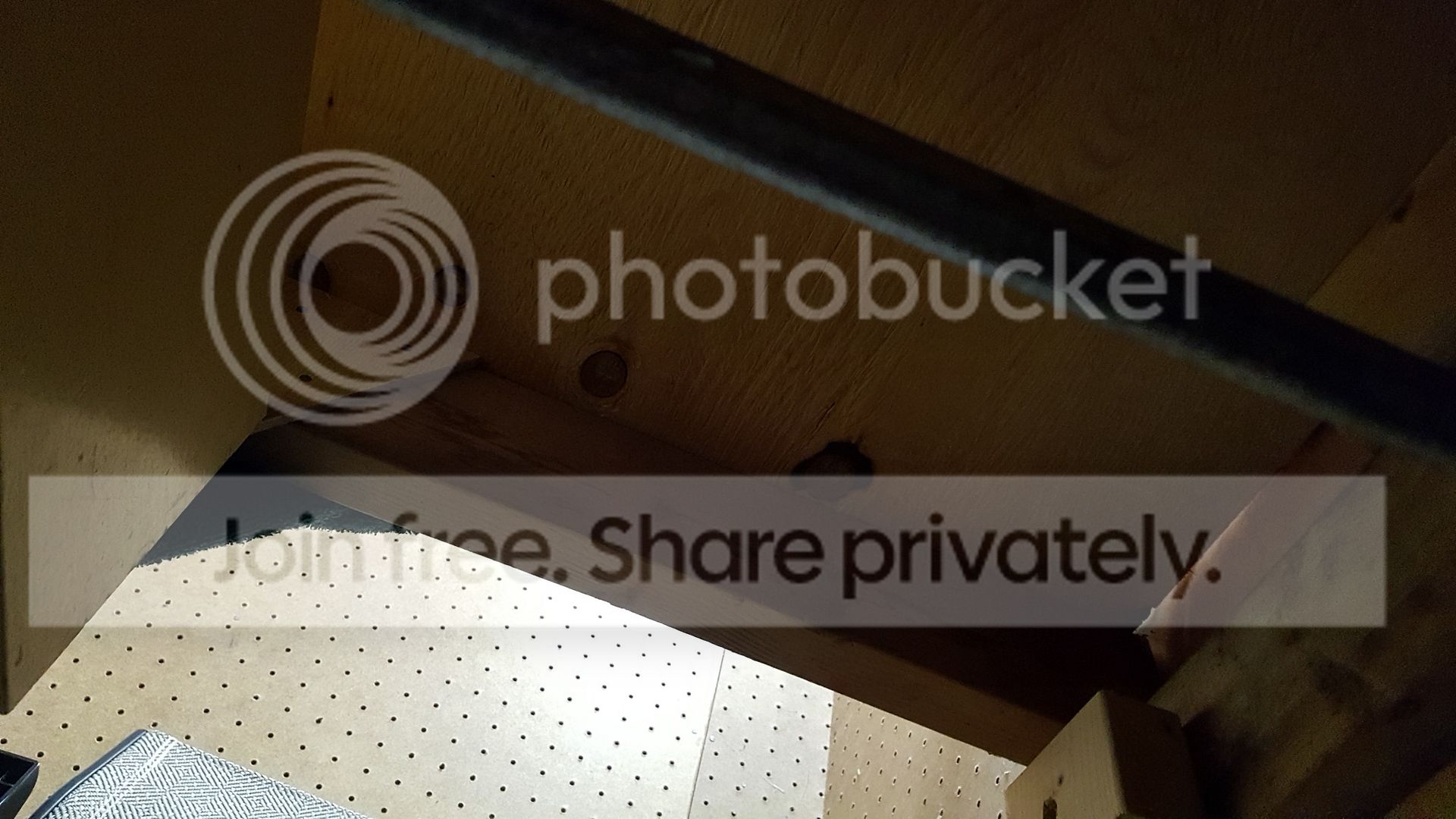
And here's the underside:


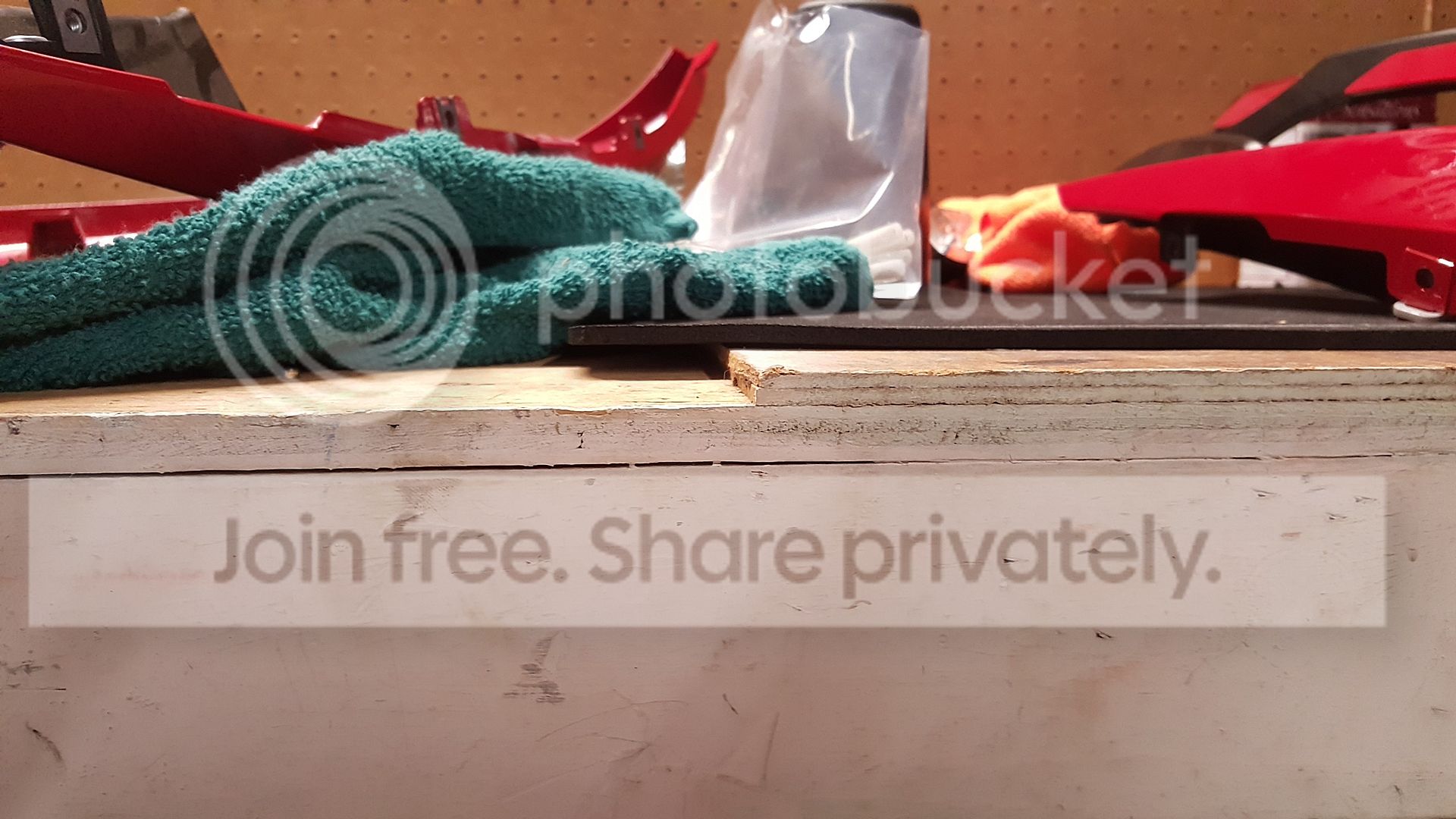
Basically, it's kind of uneven because for some reason they used 2 different thicknesses of plywood when building it.

Also, I noticed that the plywood is nailed down, not screwed, which I figure could be an issue. I'm not planning on reloading 50 BMG or anything, but I still imagine resizing .223 might be an issue if it's nailed, could start pulling it up.

There's enough clearance with the drawers for bolts to go underneath, but I plan on getting one of those Lee bench plates so I can remove the press and store it so I can still access the drawers.

One of my questions is should I go and resurface the top of this with 2 layers of plywood and screw it down vs nailing? There are cross braces underneath so I believe it should be sturdy enough. I can stand on it and there's no flex, but I honestly don't know how the top will react when I start trying to do something to twist or flex it.

I'm not handy so just looking for other peoples' thoughts on it. I figure I would put the press off to the left hand side so I can still use the rest of it for my projects and not have the Lee bench plate be too in the way.

I'm sure I'll have more questions but that's all I can think of right now.
 
Certainly you will need to brace that structure. The existing plywood should be screwed down and another sheet of plywood ..3/4' screwed to the top...an alternative would be to lift the existing top sheet and create a rigid top with dimension lumber 2x4 and then screw a 3/4 plywood sheet to the top.
More braces on the substructure might be a good idea too..sizing any cartidge exerts a lot of pressure on the surface to which the press is attached.
 
I'd probably go the route of removing the top then, I don't like that it's uneven. So basically get some 2x4, put more cross braces in, add more plywood to the top is your suggestion?

Also, when screwing down the plywood, drill pilot holes or just give 'er with the screws?
 
Also, any particular type of plywood? I'm seeing spruce, maple and oak. Should I spring for the more expensive option or will the spruce do the trick?
 
I'm not really comfortable with electrical work. I plan to get one of those 6 foot power strips and just run it to the outlet on the right. It'll look odd with the cord sticking out from the socket there, but I can always unplug it if it gets in the way.
 
Looks like a great space.

Attach a shelf with cubby holes above the bench and mounted a light under it. I saw a12" florescent at PA for cheap.

Take the existing plywood of and add 2 layers of 1/2 good one side plywood. 3/4 is even better. Make sure you have stringers to screw it into. Use nice hardware, counter sunk pilot holes and several coats of good paint. Nail an edging strip to make it look pro!

You've got good light and plenty of space. Nice
 
Yup, it's an LED light fixture, basically just one of those cheap LED light strips but in a fixture that sort of looks like a fluorescent fixture. Not too concerned with painting the bench, don't need it to look pretty.

Any thoughts on the type of plywood? Does it need to be the more expensive maple or will spruce do?
 
I would take the top two plywood boards off of the top, and 2x4 cross brace the entire thing. Use either wood glue or PL premium before screwing it together to help strengthen the structure. Screw everything together, no nails.
Personally, I would put one 3/4" spruce on top, glue it and screw it down from the top into the structure / bracing, then put a second 3/4" on top of that. Basically carpenters glue the two 3/4" plywood together, then get some 1 1/4" #8 or #10 screws and screw it up from the bottom - every 6" or so. Screw it while the glue is still wet, so it sandwiches it together.
I have three benches this way which support single stages, progressive and a Dillon 650 and they don't move at all.
Make sure the bench is bolted to the wall through studs, and ensure the feet are bolted to the floor.
 
How do you go about bolting to concrete? Is that something that a non handy person could do easily?
 
First off, you are already in a cramped area. One thing is you have, from your pic, reasonable lighting. As far as more electrical outlets go???? Not really sure why you would need more than the one you have close by. Now the big question.

Is this going to be a dedicated reloading only area or is it going to double as a work bench for other activities??

If you are lucky enough to be able to dedicate it to a single use then build it up for that use.

What sort of press are you going to use, single stage, progressive, turret??? Are you willing to block a drawer to permanently mount a press?? You don't have enough room to mount it on the end which would be the ideal location, so you will have to mount it in front of the end drawer. I would also add a shelf under the bench because things accumulate and you will need an area to store medium storage bins of brass etc.

Beefing up that top is the major thing. You want it to be rigid, without flex. That means at least two layers of 1/2 or better yet 3/4 plywood glued and screwed together. Also, look for a metal plate to use under your press. A single stage press such as a Rock Chucker will develop 20 tons of force on the ram and that translates to about 100 pounds on the mount bolts. It doesn't take long for things to compress and start flexing.

Go underneath and bolt what you have to the studs in the wall. Make the whole thing rigid. Bolting the bench to the wall is the best way to accomplish this. Bracing helps but it doesn't make things rock solid.

You are asking about bolting to concrete. Do you mean the floor or the wall?? You will need to go to the rental shop and rent a hammer drill/bit. Usually they will have the needed inserts and bolt sets you will also need. Yes, anyone can do this. If I can you most certainly can.

Now, do you have the tools needed to brace up your bench, cut the plywood, drill the holes, attach the screws and tighten the nuts to the bolts??? If not, hopefully you have a friend with those tools who is willing to help you out.
 
How do you go about bolting to concrete? Is that something that a non handy person could do easily?

Drilling into concrete is easy, with a hammer drill and a masonry bit. Home Depot sells a variety of fasteners that make it a very simple job to bolt the legs down to the floor.
 
Also, any particular type of plywood? I'm seeing spruce, maple and oak. Should I spring for the more expensive option or will the spruce do the trick?

Any type of plywood will work, Thick & smooth is the most ideal. Spruce will be suitable if you have to buy it. Like mentioned, at least two pieces of 3/4" plywood glued & screwed will make a good top. You will have to lose one of your drawers were you bolt your press down.
 
My idea was to get a Lee bench plate, basically a steel plate that you can attach a press to and remove it. Seems to get good reviews.

Luckily I have a circular saw for cutting the lumber, which belongs to my father in law but he hasn't come looking for it. I own a Ridgid drill and impact driver so I'm good there. My father in law probably has a hammer drill so probably just need to buy the masonry bit.
 
Oh, and it will be a general use work bench as well, which is why I figured I'd use the Lee bench plate.
 
I would certainly replace the top. The two thicknesses is just messed up and you'll forever hate it. So lift the old stuff and repurpose it or toss it.

Instead of spruce or other lighter wood pay a few bucks more and go with fir. I'd suggest 2 layers of sanded one side just so you have a nicer top that'll take a smoother finish. I'd screw it down and then screw the second layer to the first on a grid pattern of 8 inch spacing so it basically "stitches" the one layer to the other so it acts like a 1.5 inch solid top. You'll need to pre-drill and contersink the upper layer and then use a handful of 1 1/4 drywall screws or deck screws for this step. But the top you end up with will have noticeably less spring to it.

You may even want to spread out a thin layer of something like PL 3000 adhesive between the layers. IF you do this use a fine tooth tile adhesive spreader to give yourself a light and even coat first. Stick with the 8 inch grid pattern so you get optimum clamping of the glue. The first line in from the edges should be about 2 inches. In between the grid should not be more than 8 inches in any one direction for best performance regardless of dry or glued.

You'll want a top surface which is easier to sweep clean. Options include painting or adding some sort of sacrificial top layer. For an added top layer a common choice is a layer of prefinished hardboard paneling. You want a finish on it so it doesn't soak up solvents and oils. Another option is to lay on some cheap closeout laminate flooring. If you do this one you'll want a front edge for it to push up against. At the rear edge you can spring the flooring forward with "C" shaped spring clips made from PVC central vacuum pipe Then cover over the rear gap. I did all my own work benches this way since I had so much benchtop to do that it would have gotten too costly to use any other method. And the great thing is that it's all easily replaceable if needed.

I just read SoylentD's reply about screwing the upper layer from below. That's a great option if you plan on painting or varnishing the top. ESPECIALLY if you want to use a varnish since it won't show any screw heads or filler. And when sanded nicely smooth and given three or four coats of modern polyurethane varnish a fir plywood top would be pretty nice looking and pretty tough as well. If you have full access from below this would be a good option to consider. Just do NOT skimp on the varnish. And recoat as directed on the instructions to obtain the best bond between coats.

Whatever you do DON'T glue down the top layer. In fact since it will have seasonal movement due to temperature and humidity that is at odds with the plywood top you'll find that you need to give it some slight room to shrink and expand. Thus the mention of the spring clips above. Or in the case of hardboard you want just a couple of screws into the top that fit into slots so the hardboard can also shrink or expand without binding. If it does bind the top layer will tend to buckle and bulge up. So don't go and screw or nail it down all the way around.

You don't need to buy those Lee plates. You can use the scraps of the fir plywood to make your own. At the same time I would suggest that you plan ahead with a line of holes with top hat nuts that runs along the whole length of the bench. A good flexible setup would be a hole and top hat nut every 4 to 5 inches and spaced back from the front edge about 5 inches. You then make up plates that go on the press, powder measure and anything else which you want to attach to the bench that have mounting holes to suit this spacing. That way you have complete flexibility to adapt to whatever you're doing at the moment. Even a handy bench vise can be bolted to such a plate and then bolted to the bench when needed and put away when it would be IN the way.
 
Oh, and it will be a general use work bench as well, which is why I figured I'd use the Lee bench plate.

As an alternative to the baseplate, what I did is bolt my presses (countersunk on bottom) to a piece of 3/4 inch plywood, about 10x12 inch, and then drill through the plywood and my bench. Then attach the board/press with a large bolt and wingnut. This way I can rotate presses in and out easily and have multiple positions depending on the press.
Cheers.
 
Here's a couple of pictures of this regular pattern of holes and mounting plates in action. In the first one it's the whole reloading area in one go. The bench vise mostly lives where you see it but it too is on a 3/4 plywood plate that is a touch larger and uses three screws to the top since it's located on the corner. The Dillon, Hornady and Lyman presses further along are each on their own plates.

The second picture shows the Lyman press and one of the holes in the top of the bench. All the screws used to hold the plates down are 5/16 bolts so the holes you see are drilled through at 3/8. This has proved to be more than strong and stiff enough.

The top is done using the flooring trick I described. The front lip is maple and under the trim strip of plywood at the base of the back board is a gap where the PVC spring clips are sitting to push the top forward against the maple lip. The trim strip covers up this gap so junk doesn't just fill it up. I used about one clip per foot which is working well. Is this overkill for making it look nice? Most certainly. But hey, it's MY dream retirement shop so I went a bit nutz.... :d

The flooring as a work top is proving to be quite resistant to scuffing and regular use. It's flooring after all. And the idea of the pattern of holes and the plates on each tool is working out superb. I've even got a Lee powder measure with a single bolt down foot that I mount so it's secure and use it for rifle reloading. So it's not only the big and heavy stuff that you can use with the handy bolt holes. You could even rig up a screw down bench clamp for holding down stuff to be worked on.

Basically a pattern of holes with the top hat nuts turns the whole bench top into a clamping system. How you use it is up to you and your imagination.

P1020176.jpg


P1020177.jpg
 
What are the top hat nuts? I'm assuming it's a threaded insert I can put the bolts into, but when I Google it I get these weird push button type things.
 
Back
Top Bottom





















