The Forster bushing bump die does not size the body of the case and can be adjusted to bump or push the shoulder back for easy chambering. And you have your choice of just neck sizing or neck sizing with shoulder bump.
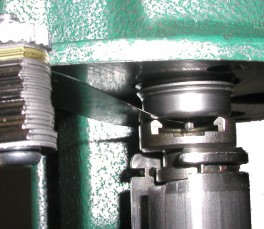
For adjustment I remove the bushing and with a case in the shell holder with the ram fully extended lower the die until you feel it just touch the case shoulder. From here I use a Hornady cartridge case headspace gauge for die adjustment and the proper .001 to .002 shoulder bump. I also use Redding competition shell holders to achieve the proper shoulder bump. If you do not have the competition shell holders after the die just touches the case shoulder you can use feeler gauges and and lower the die in .001 increments.
So forget the dies written instructions because you will end up with excessive shoulder bump far more than .001 to .002 which can cause case head separations. The first case I sized with my Forster bushing bump die following the instructions ended up in my scrap brass bucket. This first case ended up far to short and wasn't worth trying to save following the instructions.
NOTE, I tested seven different type and brand .223 dies for neck runout after sizing. My standard Forster full length dies with the high mounted floating expanders produced the least amount neck runout and neck sizing bushing dies produced the most neck runout.
And at the Whidden custom die website they tell you they get the most concentric cases with non-bushing full length dies.
When you reduce the neck diameter .004 or more with a bushing die it can induce neck runout. This is why if you reduce the neck .004 or more you should reduce the neck diameter in two steps. A bushing floats inside the die and you are told to shake the die and make sure you hear the bushing rattle. The bushing is free to move from side to side and even tilt when sizing and can cause neck runout.
Bottom line, my Forster bushing bump die and all my other neck sizing dies are never used and I full length resize my cases. This is because with standard off the shelf factory rifles with SAAMI chambers the case neck will expand "MORE" than .004. Also when sizing with bushing dies the case body is not being fully supported you end up with more neck runout. And I think this is why the Lee collet die is popular because it does not induce neck runout like a bushing die. Also note Redding bushing dies come with expanders for people who do not neck turn their brass. Bushing dies work best with neck turned brass and tight neck chambers.
Sorry for sucking on lemons but I was very disappointed with my results with bushing dies and why I prefer full length sizing with Forster full length bench rest dies. And If you do not have a runout gauge you will not know the results of the different type dies.
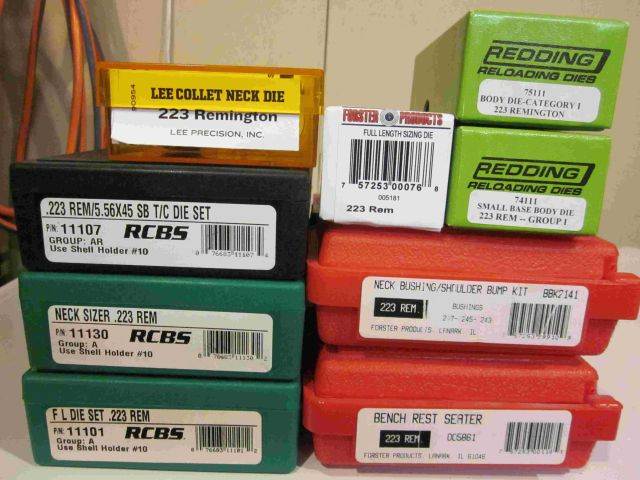
Not shown below are my Redding bushing dies and satisfying my die OCD and wondering how well the will work. Too much of what benchrest shooters do filters down to the average reloader with factory rifles that will not help. Also remember that neck turning your brass will improve your results with the Forster bushing bump die because it has no expander.
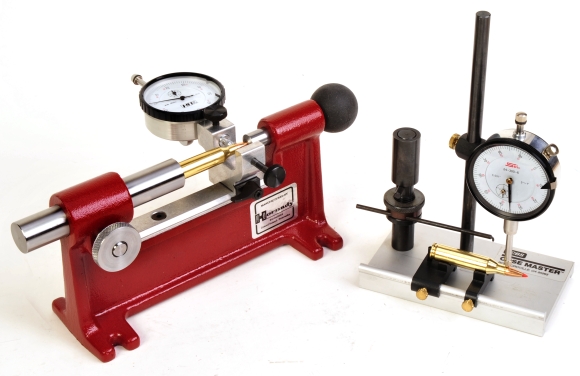
I also tested the sized cases with both type runout gauges below.