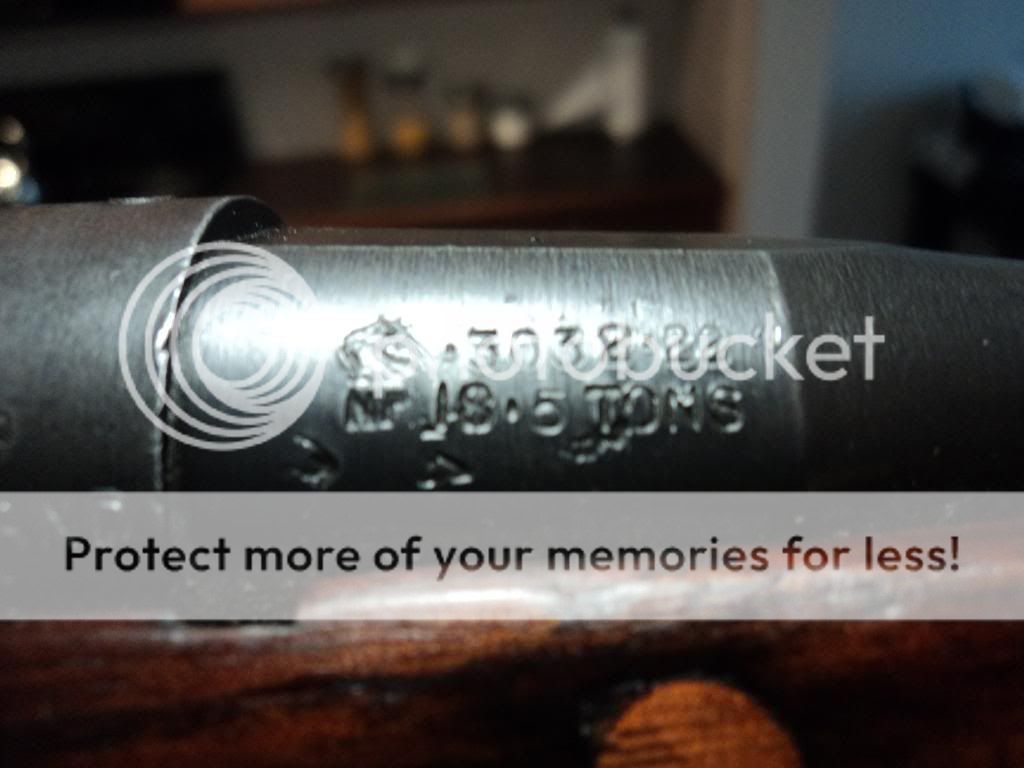
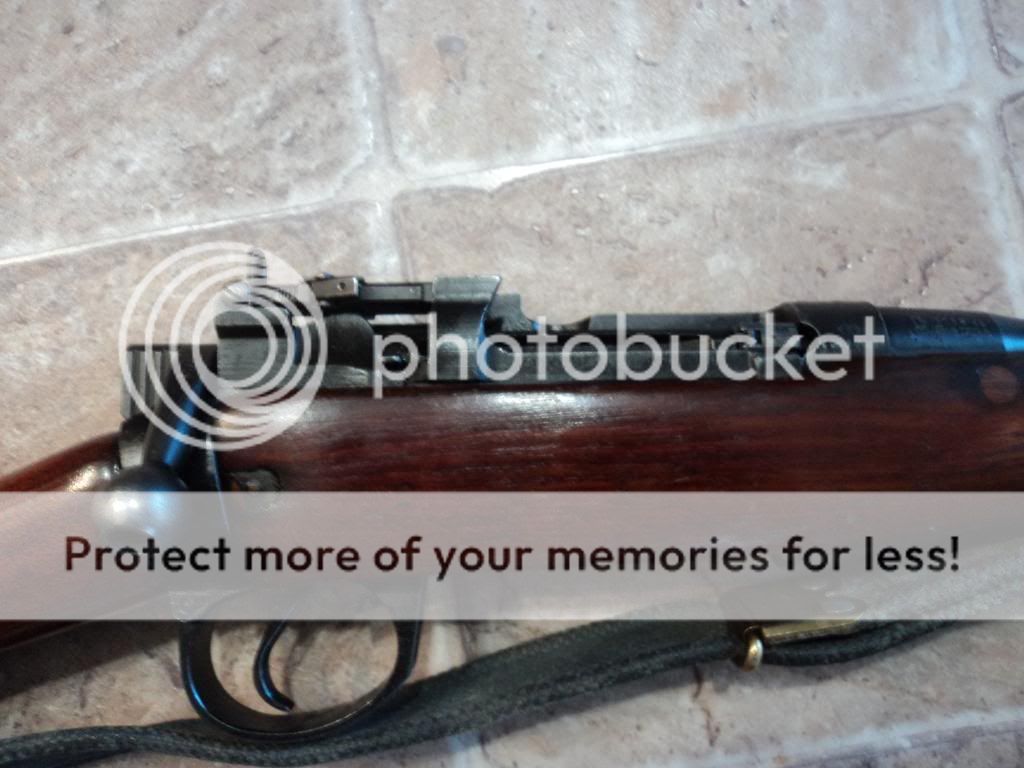
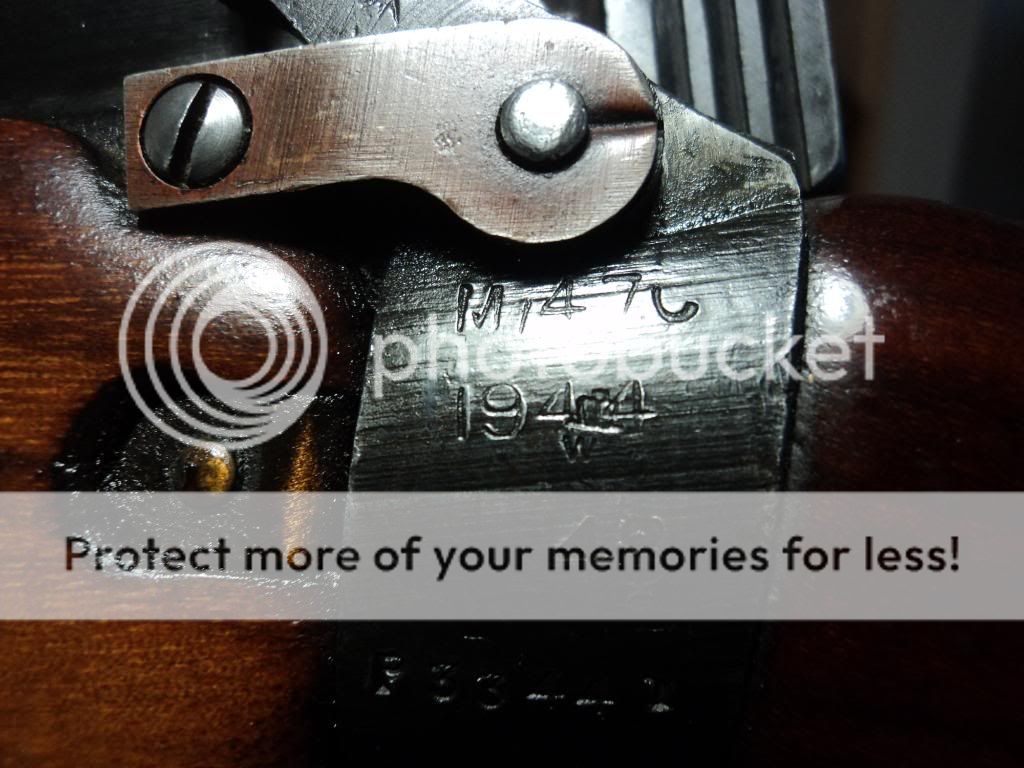
Help please. What do i have?

MikeHammer

BANNED
BANNED
BANNED
EE Expired
Rating - 100%
46   0   0
Location
Airdrie, Alberta
I'm looking for a little help in determining what i have. I know its a Lee Enfield 303, but thats about it. A family friend gave it to me, she said it was her dads and it has been sitting in the closet as long as she can remember, he's long passed away and she was doing some house cleaning. It looks in pretty nice nice shape, all i've done is clean it cause it was really dusty. The bolt functions really nice, there is a mag with it that isnt pictured. Thank you in advance.

DSC00447-1.jpg


DSC00450-1.jpg


DSC00448-1.jpg


DSC00450.jpg


DSC00452.jpg


DSC00451.jpg


DSC00456.jpg


DSC00455.jpg


DSC00454.jpg
 
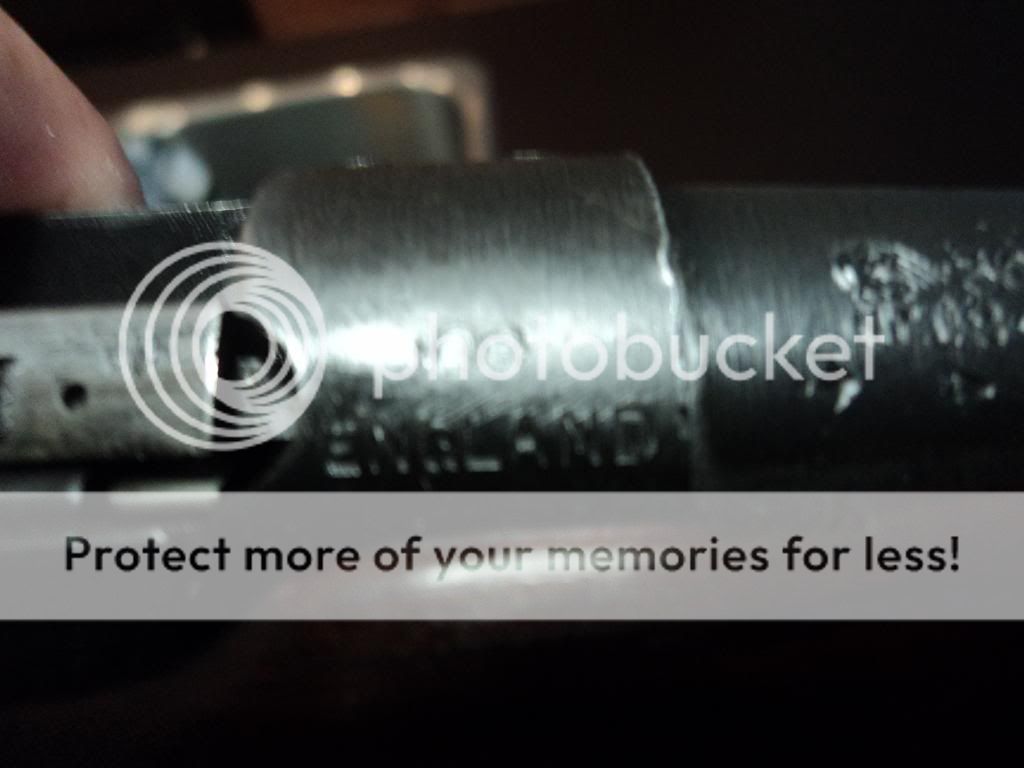
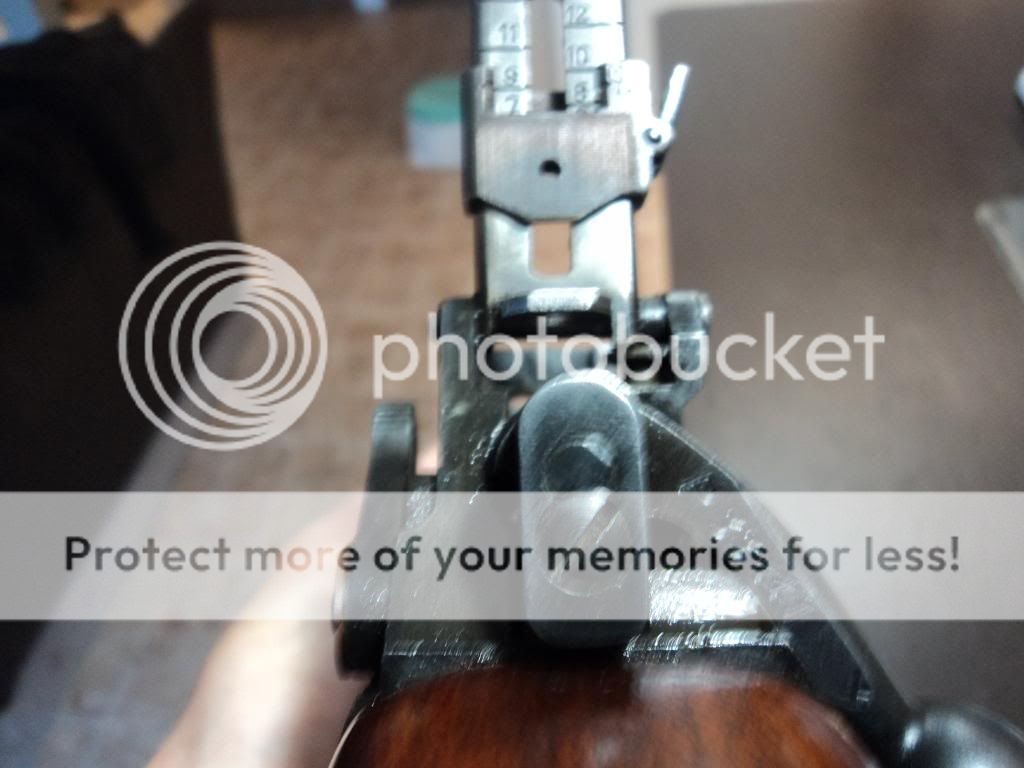
Sporterized Lee-Enfield No4. Mark 1, looks like 1944 manufacture.

Appears to have black painted cadet or parade sling...

In that condition, would say $100. See how she shoots, could very well be a decent bush/truck/deer rifle! :)

One of the few rifles in Canada that can legally have an unpinned 10 round magazine!

Brief History: Was issued to British and commonwealth troops during the second world war and after, and became a popular rifle with target shooters and hunters alike. If taken care of, will outlive you, and probably your grandchildren!

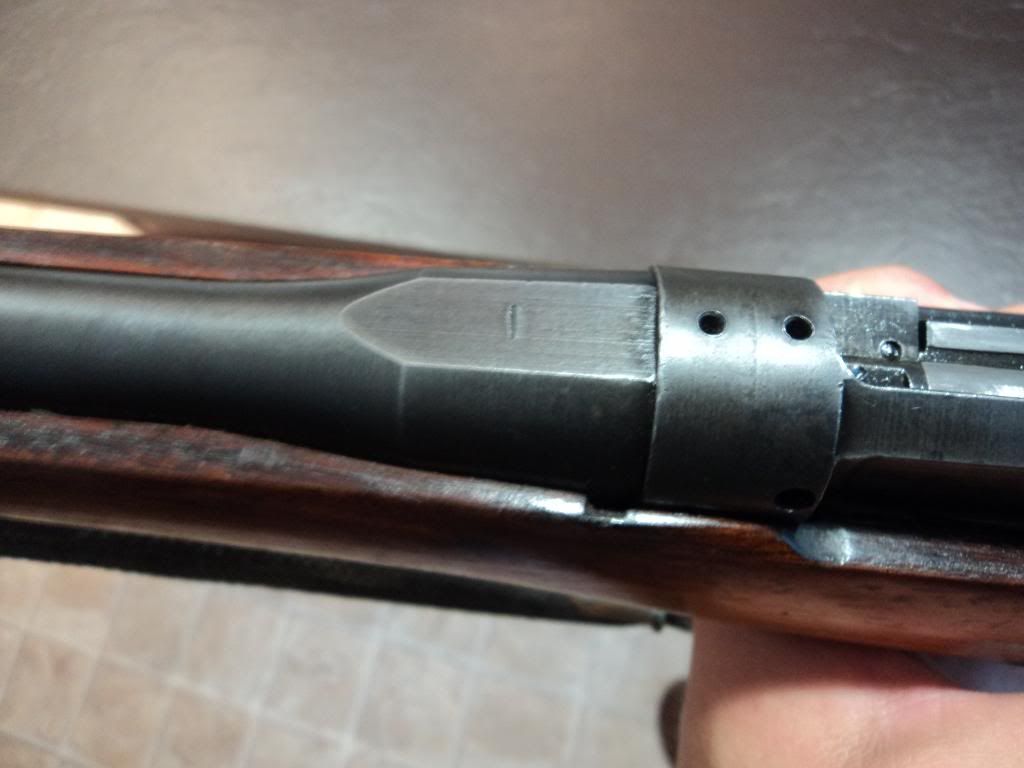
Only downside to your rifle is the "Sporter" job that it went through... The wood hacksawed off and all the the other forward steel bits thrown into the trash.. still a decent rifle though.

This is what it should look like:
Lee_Enfield_No.4.png


Enjoy.
 
Thank you

Sporterized Lee-Enfield No4. Mark 1, looks like 1944 manufacture.

Appears to have black painted cadet or parade sling...

In that condition, would say $100. See how she shoots, could very well be a decent bush/truck/deer rifle! :)

One of the few rifles in Canada that can legally have an unpinned 10 round magazine!

Brief History: Was issued to British and commonwealth troops during the second world war and after, and became a popular rifle with target shooters and hunters alike. If taken care of, will outlive you, and probably your grandchildren!

Only downside to your rifle is the "Sporter" job that it went through... The wood hacksawed off and all the the other forward steel bits thrown into the trash.. still a decent rifle though.

Enjoy.

Thanks very much for the info, im going to put a couple rounds through it today and see how it performs.
 
Thanks very much for the info, im going to put a couple rounds through it today and see how it performs.

Oh, and as a precaution/disclaimer with any "used/military" rifle, you should have it inspected by a competent gunsmith to make sure it's safe to shoot... :)

And as our octogenarian :p member "smellie" always recommends... "Check the headspace"! ;) :D

Now get out there and kill a sapling with that there rifle! :cheers:
 
not bad for a sporter, its a No4 Mk1

1944 Maltby if my memory is still working.

looks like it may have been FTR as the barrel looks like it may have been replaced (different finish) check if it has 2 lands and groves or 5.

It has been drilled and tapped for a scope base, Weaver T01, again thats if my memory is working.

overall it looks in fairly good shape but nothing really special, so the $100 estimate in my opinion is low, I've seen similar go for $100 without the mag, and the mag is worth $35-$40. A fair price would be between $125 - $150
 
^^^

I would defer to our friendly clear-cut ;) moderator here!

I was on the lower side of pricing though, because there are no pictures of barrel condition and mag etc...., and you did say it was neglected.. but, it could be because I am just a cheap Mennonite.... :p
 
Differences

What's the diff between Mk I and Mk III? I thought it was the back sight.

British Lee Enfield rifles were numbered, with modifications. Since you are asking about differences, we will assume you are asking the differences between the two Numbered rifles.

The Number 1 Mark III rifle was used during WWI and WWII. It has the open sights mounted halfway up the barrel, and the barrel is thinner than the Number 4 Rifle.

The Number 4 rifle was developed in the 1930s and used in WWII. It has a thicker barrel, the sights are a peep sight type mounted at the rear of the receiver, and it was designed for faster mass production.

Both rifles had various modifications done during their production life, and each MAJOR change became a different Mark Number. Thus, we have a Number 1 Mark I, Number 1 Mark II and Number 1 Mark III. The Number 4 Mark I and the post war Number 4 Mark II rifles had a similar system.

In addition the the Major (Mark Number) changes, there were MINOR changes that were approved. In order to speed up manufacture of the Number 1 Mark III rifle, certain items were dropped, such as the magazine cut-off, a simplified rear sight, etc. These were marked with what is called a Star but looks like this *. Also number 4 Mark I rifles with the simplified bolt release is a Number 4 Mark 1*. The Number 1 Mark III rifle with these deleted items is a Number 1 Mark III* rifle.

Further confusion is shown by the different sights, and the Number 4 rifles can be found with the Mark 1, Mark II, Mark III and Mark IV sights.

This is a very simplified explanation, as there were more variations of these two rifles, but these are the two Basic designs. It would take a book to show the variations of the different modifications to the Lee Enfield System.

Notice to the Nit Pickers! As stated, this is a basic simplified explanation of the two major models. Please do not attempt to remind me of things like "You forgot the Number 4 Mark 1/3*" and such. I am well aware of them, but as explaned, this is a SIMPLE BASIC EXPLANATION of the two most commonly found models.

The OP's rifle was made by the Birmingham Small Arms (BSA) factory in Shirley, England., Code M47C. It has Commercial proof marks on it from the London Proof House, so it was sold as surplus and exported after WWII.
.
.
 
Are my my eyes deceiving me or was the barrel cut off closer to the front sight? (Bubba with a hack saw)

Your eyes aren't lying to you Ed. It's been chopped {shame} I'm not sure of the mode of cutting though.
OP...Due to this fact IMHO the first quote of $100 is quite correct. In order to restore it to it's military configuration someone would have to change out the barrel before installing furniture. See how it shoots and enjoy. Find a scope and mount and you may indeed have a good hunting rifle there.;)
 
While the rifle has been identified, the above is not correct. Any manual action centerfire (rifle or shotgun) has no mag capacity limits set in law.


Mark

I thought there was a shotgun limit of 3 (non restricted) I've also never seen anymore than 10rds in a centerfire bolt gun......{daydream sequence}....30rd mag in an Enfield would make for a really cool {and expensive} mad minute though!:D
 
British Lee Enfield rifles were numbered, with modifications. Since you are asking about differences, we will assume you are asking the differences between the two Numbered rifles.

The Number 1 Mark III rifle was used during WWI and WWII. It has the open sights mounted halfway up the barrel, and the barrel is thinner than the Number 4 Rifle.

The Number 4 rifle was developed in the 1930s and used in WWII. It has a thicker barrel, the sights are a peep sight type mounted at the rear of the receiver, and it was designed for faster mass production.

Both rifles had various modifications done during their production life, and each MAJOR change became a different Mark Number. Thus, we have a Number 1 Mark I, Number 1 Mark II and Number 1 Mark III. The Number 4 Mark I and the post war Number 4 Mark II rifles had a similar system.

In addition the the Major (Mark Number) changes, there were MINOR changes that were approved. In order to speed up manufacture of the Number 1 Mark III rifle, certain items were dropped, such as the magazine cut-off, a simplified rear sight, etc. These were marked with what is called a Star but looks like this *. Also number 4 Mark I rifles with the simplified bolt release is a Number 4 Mark 1*. The Number 1 Mark III rifle with these deleted items is a Number 1 Mark III* rifle.

Further confusion is shown by the different sights, and the Number 4 rifles can be found with the Mark 1, Mark II, Mark III and Mark IV sights.

This is a very simplified explanation, as there were more variations of these two rifles, but these are the two Basic designs. It would take a book to show the variations of the different modifications to the Lee Enfield System.

Notice to the Nit Pickers! As stated, this is a basic simplified explanation of the two major models. Please do not attempt to remind me of things like "You forgot the Number 4 Mark 1/3*" and such. I am well aware of them, but as explaned, this is a SIMPLE BASIC EXPLANATION of the two most commonly found models.

The OP's rifle was made by the Birmingham Small Arms (BSA) factory in Shirley, England., Code M47C. It has Commercial proof marks on it from the London Proof House, so it was sold as surplus and exported after WWII.
.
.

would that rear sight be a mark 3 or did the mark4 have the same .on the .303 i had it had the same type of sight mark 3 on the top part of the sight. just wondering not nit picking
 
There is no legal mag capacity for shot guns under firearms legislation, however wildlife laws restrict magazine capacity to three rounds WHILE hunting migratory game birds.
 
I thought there was a shotgun limit of 3 (non restricted) I've also never seen anymore than 10rds in a centerfire bolt gun......{daydream sequence}....30rd mag in an Enfield would make for a really cool {and expensive} mad minute though!:D


You may be confusing provincial hunting regs with federal firearms law.

A magazine's limit is measured for the round and platform it is designed for. And hence...

Pistols 'commonly available in Canada' (centerfire and rimfire both): 10 rounds

Semi-automatic centerfire shotguns or rifles (or pistols 'not commonly available in Canada. No, I don't know what that means): 5 rounds

Rimfire rifles (Semi and manually operated): no limit
Manually operated centerfire shotguns or rifles: no limit


"But what about...?"

10 round AR magazines? - The LAR-10 magazines were a new design and the RCMP approved them as being designed specifically for the Rock River Arms LAR pistols. This goes for both the .223 and the 9mm ones

10 round limits for rimfire ARs? - The issue applies to the Chiappa and S&W magazines, and maybe others in the future. These companies sell .22 AR pattern rifles and pistols with the same magazines. The RCMP argument is that as the magazines are designed for both, the pistol rules apply, and hence 10 rounds. The Spikes and some other patterns of .22 AR mags made by companies without a .22 pistol AR or made by 3rd parties are still okay, apparently. Would the Chiappa mags have been okay if the importer had submitted it for RCMP examination before Chiappa introduced their AR pistol? That depends on how paranoid you are, but it's all hypothetical cou:

Remington 7615 magazines? - Remington's own literature calls it an AR-15 magazine, 5 round limit applies.

9mm rounds in .40 magazines? - technically legal since the magazines are marked for .40 S&W, the fact that they fit and feed over 10 rounds of 9mm is incidental.

The Garand's 8 round enbloc? - exempted by name

Clear as mud? It still is?


There are some specific exemptions:

Lee-Enfields, which by virtue of being manually operated are already exempt, but hey, you're protected twice over! ;)

Garands, as mentioned above

Original drum magazines for a .303 Lewis, .303 Vickers Mark 1, or a Bren gun

Original various 'metallic-strips' for Hotchkiss MGs

Original drum magazines for MG-13, MG-15, MG-17, MG-34, T6-200, etc.

Original belt for a MG that existed pre-1945

Luger 'snail-drum' magazines

Semi-auto pistol mags made before 1910 (The mag, not the pistol)

Integral broomhandle Mauser mag

Webley and Scott Model 12 or Model 15 pistols

 
Thanks for all the info, i took it out today and really enjoyed shooting it, functioned really well and quite accurate, i'm going to look for a scope for it and see where it takes me.

 
Back
Top Bottom