Help with Miroku SxS ID?

CoryTheCowboy

CGN Regular
Rating - 100%
110   0   0
Hey folks,

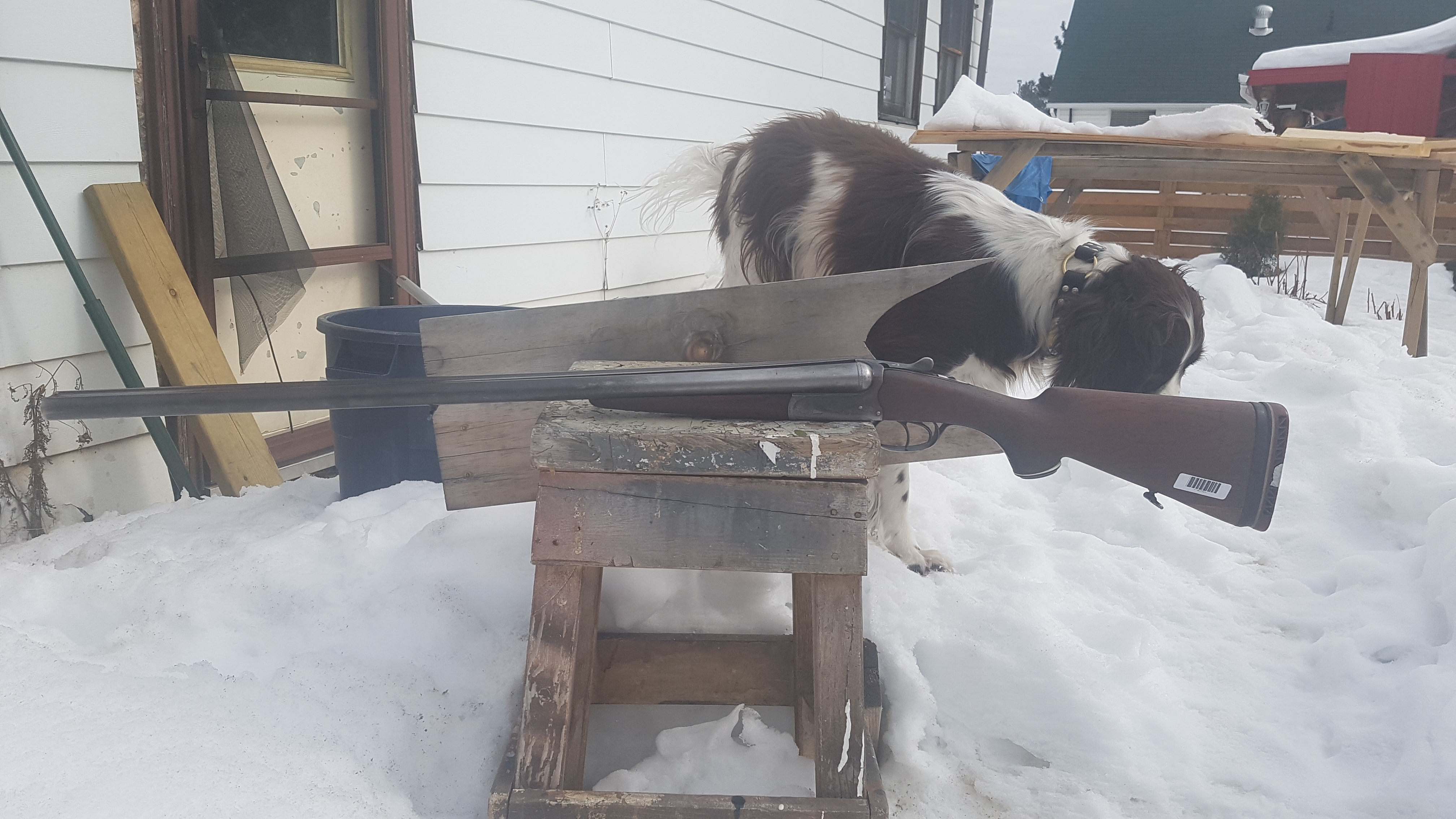
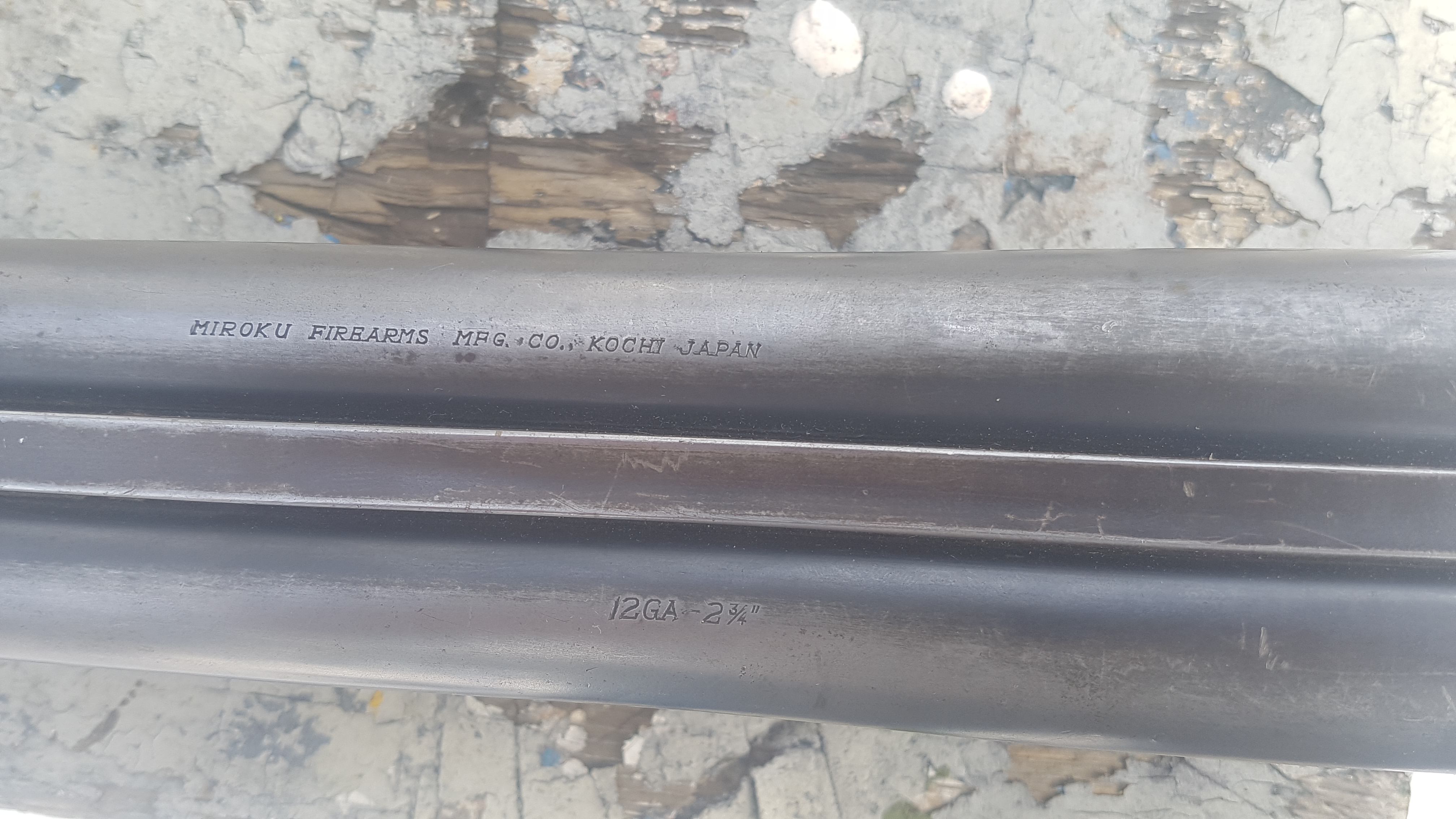
Recently picked up this project gun and was looking for some ID help. 28" tubes, a hair under 7lbs. Extractors, choked full and modified. Swamped rib.
goDvx3P.jpg


YX65zke.jpg


844uYZY.jpg


ELsCDLL.jpg


ROodECW.jpg


MkeTWdo.jpg


I've tried researching Miroku SxS and saw the ones marked Charles Daly, but not ones that look like this. I don't think it's a 500 as the inletting for the stock isn't the same as the ones I've seen. Any ideas?

Thanks,

Cory
 
What makes you think it’s not a 500 they made know other model . The Charles dialy was labeled model 500 it had the cut away in the reciver where the butt stock met the reciver
 
Last edited:
Made no other model - not true.
Model 500 was Daly's model number. Charles Daly was an importer to the US which has died and been born again, though no longer associated with quality.
Miroku made and directly marketed other models. A model M Miroku is a beautiful thing. And Miroku's sidelock is stunning.
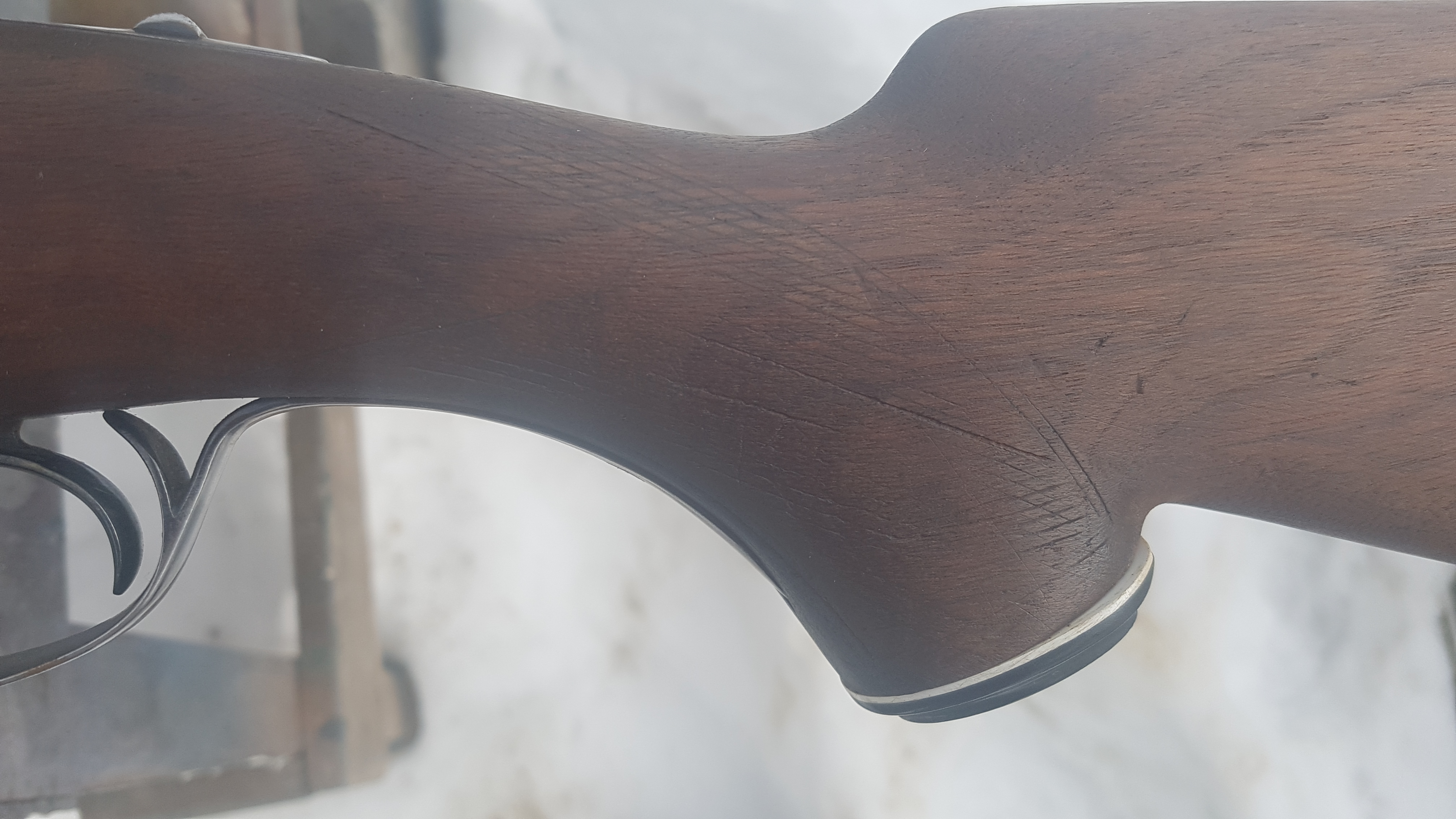
The OP gun has been rode hard, needing much work including a new buttstock.
 
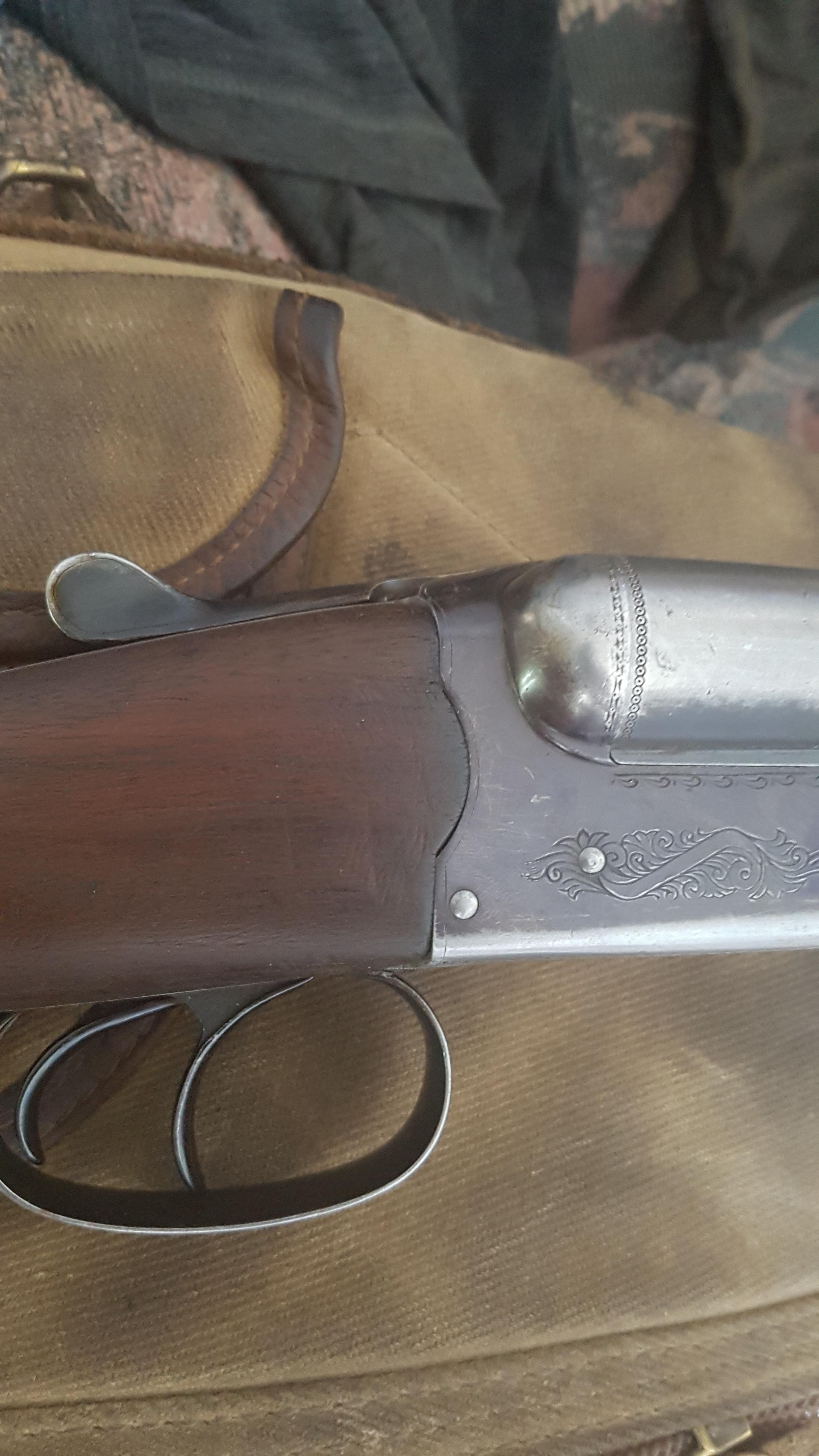
It doesn't have the scalloping where the receiver meets the rear stock like the model 500 has so I agree that it's not a 500, but I can't tell you what it is.

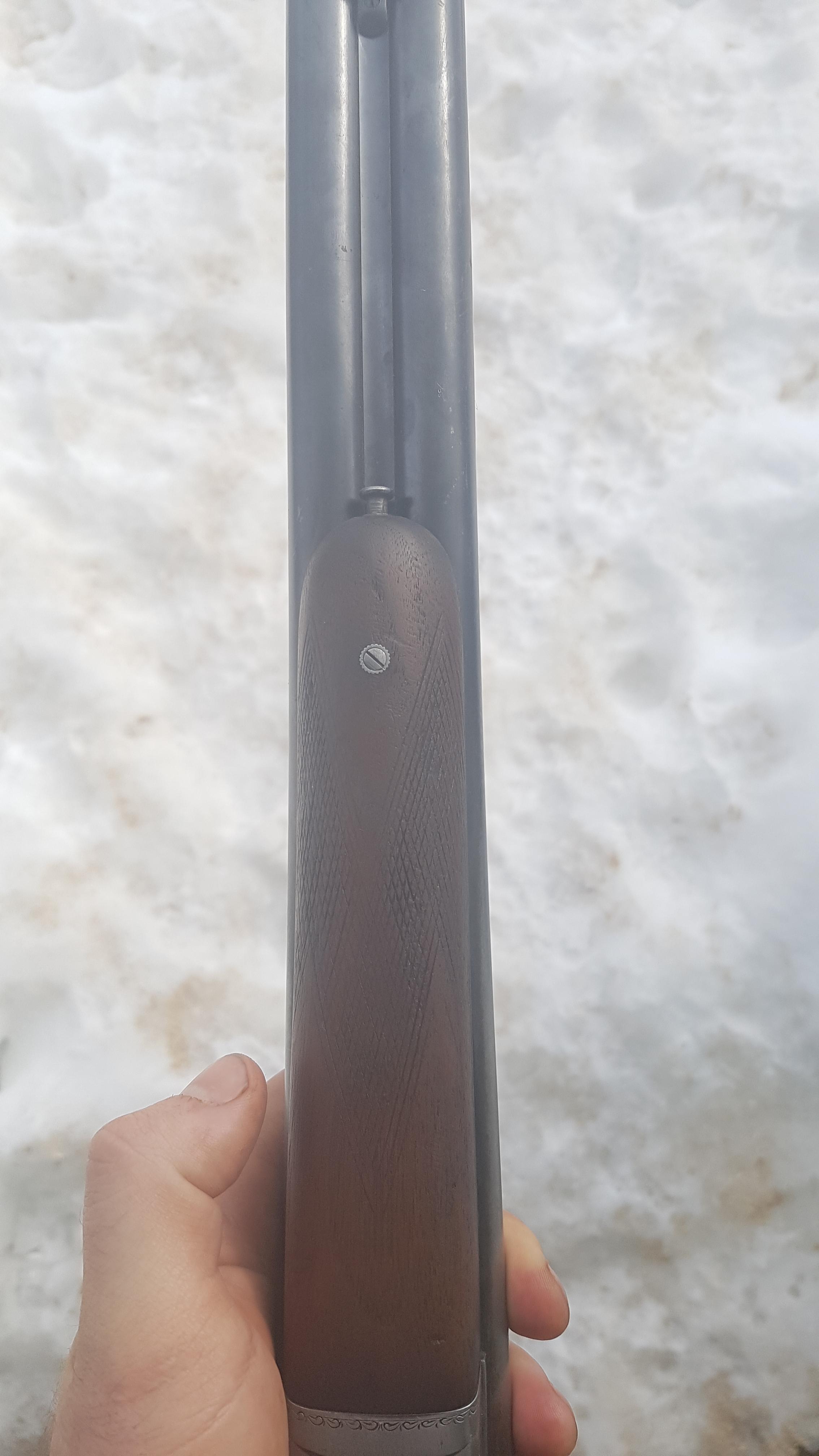
By the looks of the checkering on the pistol grip the previous owner had sand paper for hands!
 
I just googled pics of Miroku sxs's and there are pics of guns with the scalloped receiver and pics of guns without the scalloping and they are both supposedly model 500's so there you go...... maybe it is and maybe it isn't! Possibly Miroku changed it somewhere along the line.
 
You may find this interesting, a quote from The Blue Book. "Since model notations were not specified in most instances (many shotguns were made to test market demand), a model rundown is virtually impossible." To that I would say good luck in finding out the model if it isn't stamped on the gun.
 
Regardless of model designation, a little stock work and you will have a very nice field gun. The quality built into that shotgun would equal (possibly exceed) what is selling new for $2000.00 plus today.

Darryl
 
Regardless of model designation, a little stock work and you will have a very nice field gun. The quality built into that shotgun would equal (possibly exceed) what is selling new for $2000.00 plus today.

Darryl

Yup. Very good gun. What you have there is a precursor to the Browning BSS.
In the 70's Miroku (not Chas. Daily branded) guns were being imported into Canada.
 
Interesting thread.

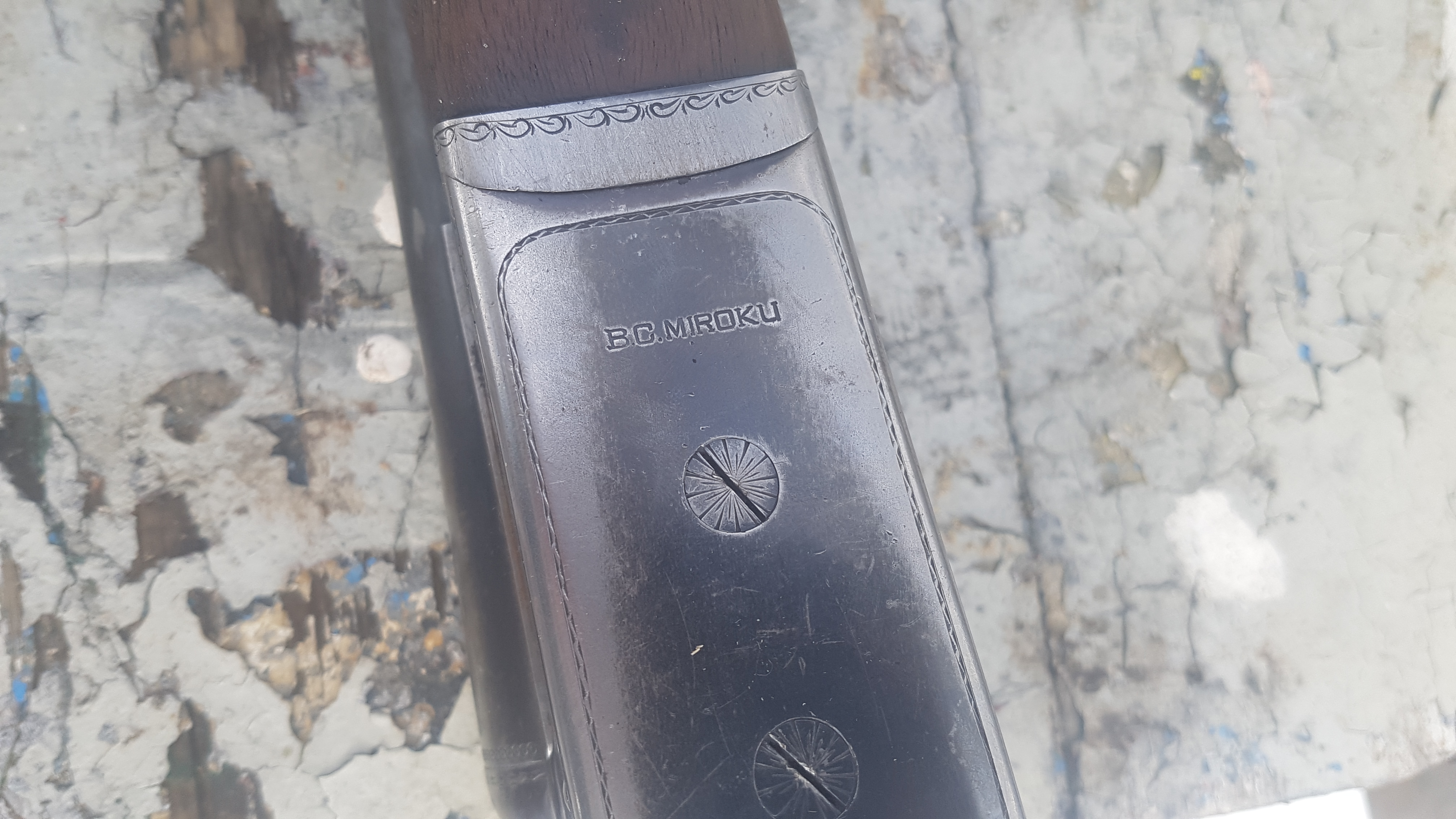
Third photo, the bottom of the receiver is stamped …….. BC MIROKU
Curious to know what the first two letters represent?
Them being BC
 
You may find this interesting, a quote from The Blue Book. "Since model notations were not specified in most instances (many shotguns were made to test market demand), a model rundown is virtually impossible." To that I would say good luck in finding out the model if it isn't stamped on the gun.

Thanks! That makes sense to me. It wasn't critical that I knew the model, I was just curious.

Cory

 
Thought I would revive this thread as I picked this gun up from Cory last April when he decided against doing the project. The toe had been repaired with what looked like a piece of oak so I removed it and replaced it with a piece of walnut. There was a fine crack behind the top tang which I repaired and pinned and is now not even noticeable. It was cost prohibitive to send it away to have the checkering recut so I stippled it. It actually gives a lot of grip. I refinished with BLO and my own concoction of wax. The barrels had some wiggle and were not tight when closed. I put the barrels back on face and refit. I just finished doing 10 cycles of slow rust bluing. While not a collector gun, it will be a fine shooter that will likely go another few decades. It is a great handling gun. I had the successor, the Browning BSS, for awhile and I can tell you this is a much finer handling gun than the BSS. It is much more suited for upland and it handles and feels more like a 20.
XYpfa6t.jpg

PDXv2OU.jpg

cYGpn6R.jpg

gVRTTVa.jpg
 
Gunsaholic, looks like a fun project. Congrats. Based on my experiences with sellers on the EE, very few know what on face means, never mind what is required in correcting a gun that is off face. Action loose or not, sure (or maybe). But an action can be tight yet gun off face. "Down on the flats"? Fugget about it!
 
Gunsaholic, looks like a fun project. Congrats. Based on my experiences with sellers on the EE, very few know what on face means, never mind what is required in correcting a gun that is off face. Action loose or not, sure (or maybe). But an action can be tight yet gun off face. "Down on the flats"? Fugget about it!

Very true. In fact, you often see an old double as listed as tight and on face when pics will show a 1/16" gap between the barrels and the face of the action. And yes, there are many of these old doubles that get listed as having very tight actions which prove to be loose or off face or both. Which of course drastically lowers the value of an already inexpensive gun. But most sellers don't understand that. Anyhow, I look at them as fun projects breathing new life back into a gun. Of course guns that might be worth the cost (to me) I send out to be professionally refurbished.
 
For those that might be describing a shotgun or heard it described, its pretty easy to assess if an action is tight. That means with the fore-end removed there is not the slightest wiggle when shaking the gun back-forth side-to-side. Holding the closed gun up to a light source from the side there should not be even the slightest bit of light showing between any part of either barrel and the standing breech. If so, it's off face and gases will escape from there (maybe into your face) when fired. There should be however a tiny bit of light between the barrel flats and the action flats otherwise the gun is 'down on the flats'. This tiny gap in properly jointed guns is because the barrels need to flex a little bit downward when gun fired. If nowhere to go (because down on the flats) the gun will soon be off face or loose. For those few guns with concavities where the barrel bottoms meet the action, this cannot be assessed by sight but rather by feel.
 
Back
Top Bottom