












































Help with removing lacquer from gunstock

Primed1

New member
Rating - 0%
0   0   0
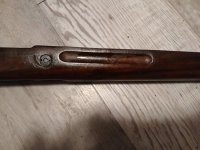
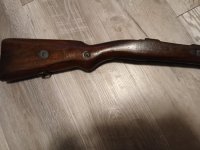
Recently got a vz-24 mauser and the entire stock is coated with a brownish lacquer or varnish. Anyone know how to remove it without destroying the finish underneath? The lacquer is flaking off in some areas and theres a nice original finish underneath don't want to damage it and have to re-stain if I don't have to. 6a9d362c-3c78-4a77-96ba-2bc63db07406 (1).jpga3dfb19c-1603-4afd-894a-ba527d8b93b9.jpg
 
The problem with removing the top coat is, you don't know what the person did under it.
You could find many places where they ground off the undercoat.
Acetone removes Lacquer and anything lacquer based. Even the original patina.
 
Rust remover from crappy tire. Can’t remember the name but it’s the green stuff.

I had a 94 that was dunked in varnish and it completely removed all the varnish

I glued a cap on a length of 4 inch sewer pipe and filled it with the liquid then put all the gun parts in there and let it soak overnight. Wiped it all off next morning
 
Recently got a vz-24 mauser and the entire stock is coated with a brownish lacquer or varnish. Anyone know how to remove it without destroying the finish underneath? The lacquer is flaking off in some areas and theres a nice original finish underneath don't want to damage it and have to re-stain if I don't have to. View attachment 985423View attachment 985424
Boiling water poured onto the lacquer should crack it all up and lift it off the wood
 
not really as long as you did not soak it, But I would take a rag and soak a corner in alcohol to start and rub a small spot and see what happens.
Then try lacquer thinner ( outside) and see if that does anything.
But I like cica 1850 stripper as well.
If it's real loose and flaking, you could try a cabinet scraper , but on this stock , would be a slow pita.
If you are brave, there is always the heat gun a small putty knife, I have done that a few times, easy on flat panels with old paint.
depends on what the crud is .could be old varnish, blo, or?
 
not really as long as you did not soak it, But I would take a rag and soak a corner in alcohol to start and rub a small spot and see what happens.
Then try lacquer thinner ( outside) and see if that does anything.
But I like cica 1850 stripper as well.
If it's real loose and flaking, you could try a cabinet scraper , but on this stock , would be a slow pita.
If you are brave, there is always the heat gun a small putty knife, I have done that a few times, easy on flat panels with old paint.
depends on what the crud is .could be old varnish, blo, or?
I did already try alcohol actually. No effect. I'll try one of these options see what happens.
 
circa 1850 is what i would try as well.
have stripped and refinished quite a few stocks over the years and has been a good product.
once that's done, clean up with alcohol, sand out any imperfections and refinish
 
OP, I seriously doubt any of the "original" finish is present on that stock or most VZ24s out there.

The original finish would have been worn off in the field with use and then touched up by the troopie and maybe the unit armorers on a regular basis.

Depending on which nation the rifle served, it may have had applications of everything from tung oil, to wax, to Linseed Oil, Pine Tar, or whatever waterproofing material was available. If the Soviets got ahold of it, it very likely had a coat of shellac applied as a preservative, over whatever was on it previously, or if it went through one of their refurbs, maybe the stock was sanded to remove the finish, then shellac was applied.

I will go along with Circa 1850, to remove all the finishes, back to the bare wood, then apply a coat of stock wax, or several coats of Linseed Oil and allow each coat to dry hard, before a very light wipe over with steel wool to rough it up a bit between coats.

I personally prefer stock wax on these rifles because it was used a lot by some nations.

The shellac you show in your pics has blended with the finish beneath it, if there was any, so there's no way to preserve it.
 
Wax is an interesting idea from the point of view of filling the pores that strippers expose. What about something like the old beeswax and linseed oil furniture polish? My dad used to make that stuff up in a double boiler.
 
The original finish is some kind of oil. Oil finishes soak in and repel water, as opposed to forming a protective coating and drying on the surface. They also allow dirt and sweat into the open pores of the wood over the years. I would strip the lacquer, steam out the dents, degrease with brake cleaner or acetone, lightly sand and wipe down with boiled linseed oil 3 times over the course of a week
 
Blow torch, followed by a belt sander, acid bath and then stick in the dish washer for a few cycles!

Seriously, they make furniture stripper designed to do this job on wood so why would you use anything else?
 
OK, might be an R/C. I see a recoil lug through the pistol grip, Is the sling loop there?. What markings are on the Chamber? Do the Sn, match on different parts? Just wondering if it's history is getting ruined.
 
Last edited:
From that heavy coating, it almost appears to be one of the Brazilian Vz24 rifles.

They slathered a heavy coat of something all over many of the rifles they refurbed. That reinforcing screw through the grip is very common on the Brazilian Vz24s as well.

The Brazilians removed all of whatever finish was remaining on the stocks with an acetone bath, before applying whatever it was they used.

Sometimes the coating has a dark, almost black mirror finish and on others it's quite rough, some more matte.

As for wax, I use Dem Bart Waxylene Gunstock Wax. Clear.

I buy it by the case, because I use quite a bit of it. I haven't bought it for years, but noticed some in our LGS last week.

I like to add die to it to enhance the grain of the stock or duplicate remaining finish during touch ups. It soaks into the wood and can be polished to a dull, but non reflective luster. I fills the pores very well and seals the wood where it's applied.

IT DOES NOT MAKE A GOOD RELEASE AGENT FOR GLASS BEDDING.

I did a sample on a broken fore stock and a piece of shotgun barrel, using AcraGlas, they're bonded for life.
 
Back
Top Bottom






















