












































You are using an out of date browser. It may not display this or other websites correctly.
You should upgrade or use an alternative browser.
You should upgrade or use an alternative browser.
Holland model
- Thread starter brybenn
- Start date


Falconflyer
CGN Ultra frequent flyer
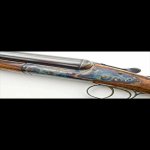
That's the RBRN model..... round body really nice! 
That's the RBRN model..... round body really nice!
Thanks. And i agree. Reallllly nice

Not a true Round Action. Just, as the name implies, a rounded body. It’s a back action side lock so the mainsprings are out of the way and they can trim the metal further forward in the action to give it a rounded feel.
My money will stay with makers like Dickson, MacNaughton and Manufrance Ideals. True round actions.
My money will stay with makers like Dickson, MacNaughton and Manufrance Ideals. True round actions.
I love the case colors and the sleekness of such a trim smooth action. Well done with minimal tasteful engraving. Being a holland is just a bonus. It was actually a holland #2 royal that got me into sxs guns and skeet. A fine gentleman offered to let me try his when i showed up with my mossberg pump. Been hooked ever since
Well i couldnt afford that holland when it came up for sell. I believe a member on here now owns it. Im hoping to find a gun built of similar design as the one i posted for upland hunting and occassionally skeet shooting. Even if it has short chambers and only proofed for black powder
Most of the back action locks ive encountered have had a narrower longer side plate such as my husqvarna hammergun. Is it common for hammerless backaction locks to resemble the look of a true sidelock such as this gun?
Most of the back action locks ive encountered have had a narrower longer side plate such as my husqvarna hammergun. Is it common for hammerless backaction locks to resemble the look of a true sidelock such as this gun?

There seems to be a language barrier at work here... hammerless back action locks are true side locks. The difference between back action and bar action is the positioning of the mainspring. Then you have trigger plate actions like the Dickson Round Action, and of course, box locks.
Other lesser known makers also made back actions with the full size sideplate. The Lancaster 12-20 is a prominent one. If you study the positioning of the pin heads visible on the exterior of the sideplate, you can usually distinguish back action and bar action with out taking the locks off.
Not knowing what your budget is, your best bet is to look for a lesser known name but don't get hung up on whether it's a back action or bar action.
Other lesser known makers also made back actions with the full size sideplate. The Lancaster 12-20 is a prominent one. If you study the positioning of the pin heads visible on the exterior of the sideplate, you can usually distinguish back action and bar action with out taking the locks off.
Not knowing what your budget is, your best bet is to look for a lesser known name but don't get hung up on whether it's a back action or bar action.
There seems to be a language barrier at work here... hammerless back action locks are true side locks. The difference between back action and bar action is the positioning of the mainspring. Then you have trigger plate actions like the Dickson Round Action, and of course, box locks.
Other lesser known makers also made back actions with the full size sideplate. The Lancaster 12-20 is a prominent one. If you study the positioning of the pin heads visible on the exterior of the sideplate, you can usually distinguish back action and bar action with out taking the locks off.
Not knowing what your budget is, your best bet is to look for a lesser known name but don't get hung up on whether it's a back action or bar action.
LOL, I was just about to answer Bryben's question when I read this perfect response.
IIRC and don't quote me, but I think in British sidelock design, there was a general move away from the back action sidelock because A) the sideplate positioning resembled hammer guns too much and that won't do in the marketing departments back then and B) the excuse to move to bar action was better geometry.
Bar lock, back lock, these distinctions go back to muzzleloading guns when both types were available at the same time, sometimes from the same maker, particularly as percussion guns. In the final quarter of the nineteenth century (late 1800's) most of the prominent and stylish makers had settled on a single flagship action for their best guns and in the class conscious Britain of this time it was popular to follow the lead of the celebrity shooters of the day including the King and other nobility. These people and the guns they used were the sports stars of their day and if the King, or one of these top guns was using a Purdey or a Holland and Holland then this must be considered the best and to be strived for. Purdey with their Beesley self opening action, Holland and Holland with their Royal, Boss, Woodward, Grant and other prestigious makers all went with bar action guns for their best guns,Lancaster, Blanch and others settled on the back action as the way to go. The supposed advantage of the bar action was advertised as quicker lock time, crisper trigger pulls, less wood removal resulting in a stronger stock at the head. Back actions claimed stronger actions
because of less metal removal to accomodate the main spring, and sometimes sleeker lines. Generally back action guns could be manufactured a little cheaper than bar action guns because inletting metal was more laborious than inletting wood, so these guns could be priced a little lower in the line if a maker offered both types, leading again to the idea that the bar lock must be 'best' because it costs more. Generally both types made to the same standard will show no quantifiable advantage of one over the other. It is worth noting that for sidelock rifles where maximum strength is a factor as opposed to shotguns, the back action was and is preferred by most makers, especially in heavy calibers. Boxlocks are considered stronger than sidelocks in general and are seen much more frequently. Because back action guns can easily made with a bar action profile this has always been a popular version for those that prefer this style but few British makers make back action guns any more.
because of less metal removal to accomodate the main spring, and sometimes sleeker lines. Generally back action guns could be manufactured a little cheaper than bar action guns because inletting metal was more laborious than inletting wood, so these guns could be priced a little lower in the line if a maker offered both types, leading again to the idea that the bar lock must be 'best' because it costs more. Generally both types made to the same standard will show no quantifiable advantage of one over the other. It is worth noting that for sidelock rifles where maximum strength is a factor as opposed to shotguns, the back action was and is preferred by most makers, especially in heavy calibers. Boxlocks are considered stronger than sidelocks in general and are seen much more frequently. Because back action guns can easily made with a bar action profile this has always been a popular version for those that prefer this style but few British makers make back action guns any more.

Generally both types made to the same standard will show no quantifiable advantage of one over the other.
I agree! As to hammergun aesthetics, I prefer back-action locks and rounded bodies.

Trimmer 905
CGN Ultra frequent flyer
View attachment 348434
Can anyone tell me what model this is? Above my means but ive been curious. Cant seem to find an exact match
Man,if I ever win the lottery................






















