













































Let's hope I don't get massacred for this post.
I'm in the market for an old Spanish side-by-side in 20 GA. They appear to be pretty rare compared to the 12 GA, and even 16 GA. The ones I find that are affordable have many issues, cracks in the stock, rusting, worn bluing, etc. I started watching many of Larry Potterfield's videos on how to restore old rifles and shotguns. I know that watching a video and doing something yourself are two very different things, but at least it gives you an idea of how it can be done.
I decided to find an old gun that was destined for the trash, to use as a guinea pig in my trials. I found on the EE here an old Hopkins & Allen from the early 1900s for cheap (I believe it is a 1905 H&A 720), and rather than let it become a lamp, I decided to attempt to make a nice wall hanger out of it.
I am just at the first stages, still haven't really scratched the surface of what I want to do, but will take a break for a few months so I decided to post what I've done so far.
The wood was pretty banged up, missing some finishing.
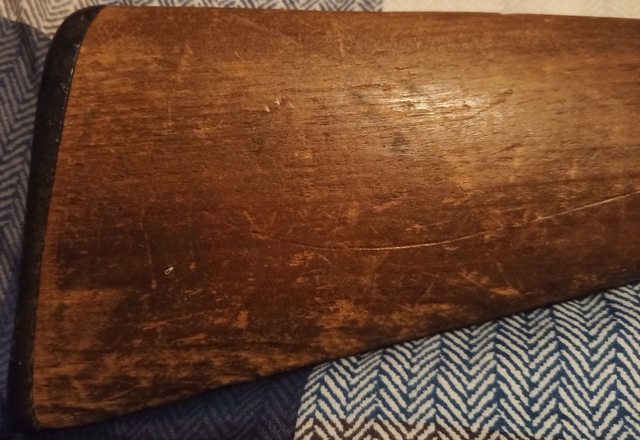
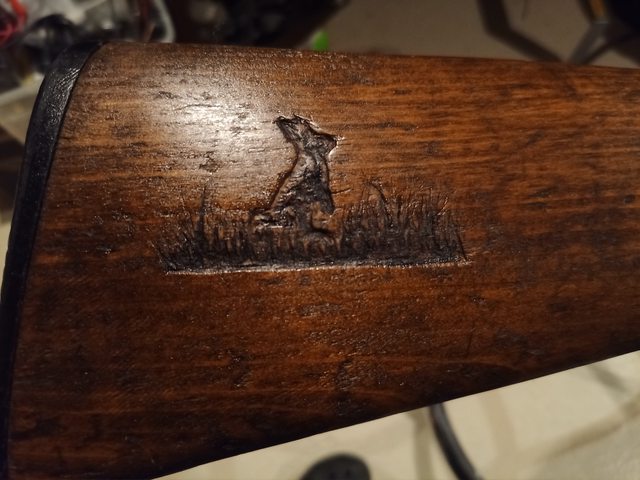
I cleaned and added some tru-oil... but also tried my hand at carving. This is the first time I have every tried anything like this, so be gentle.
There was quite a bit of rust and pitting, made is hard to even read the brand. The barrel was almost only rust.
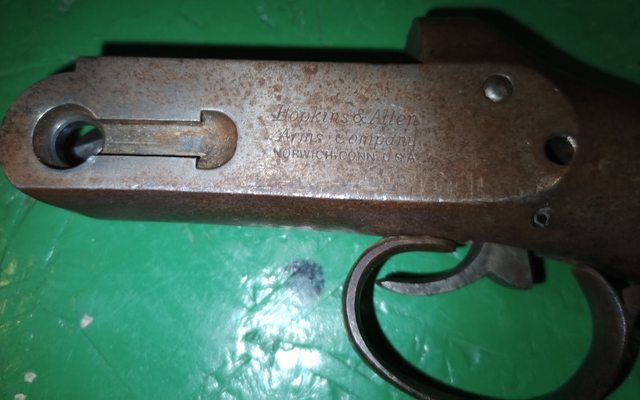
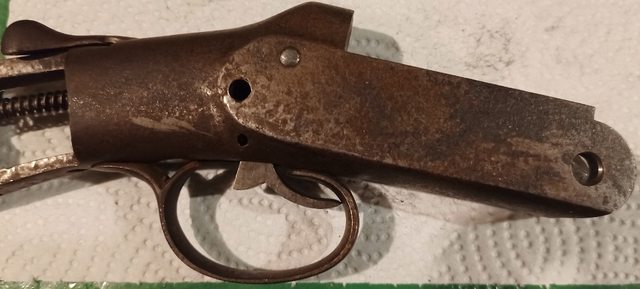
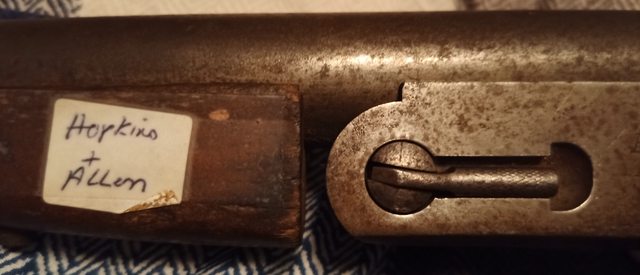
I cleaned, and cold blued the barrel. I heat blued the receiver (torch then quench) but the colors did not come out as vibrant as I had hoped, and do not really show well in these images.
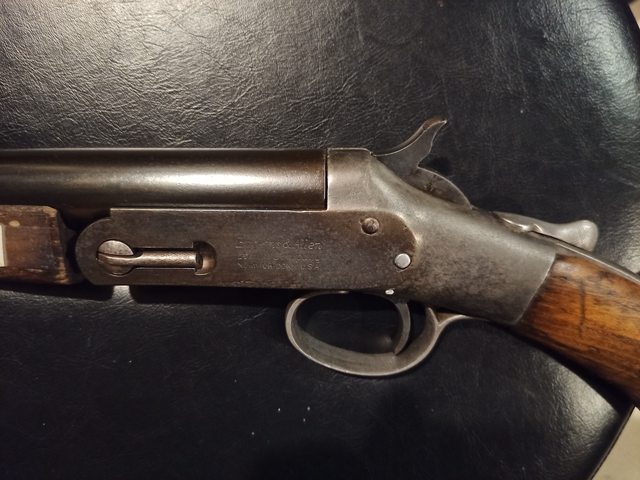
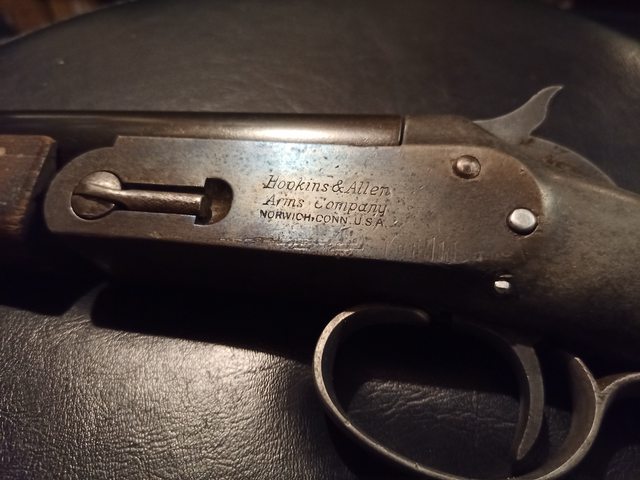
There were missing pins, which I made new ones for. Still need to finish them, but they are functional for now. I left the forend original for comparison, and to do the checkering later on. I think what came out the best is the bluing on the barrel. The pitting is still all there, but the cold blue really worked well and is very even.
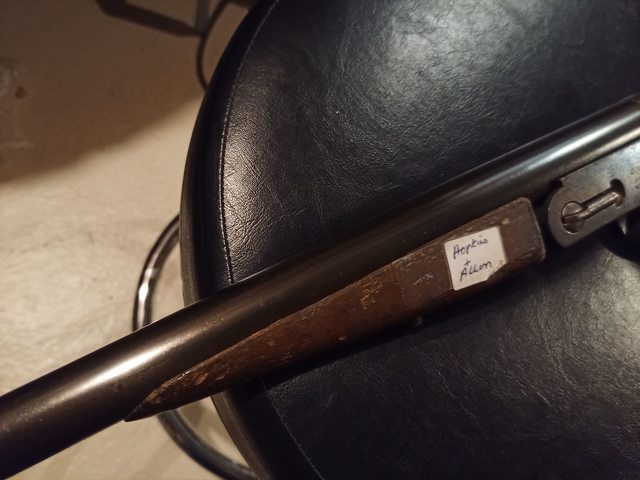
On my list of things still to do:
- Make a trigger spring (heat treat, temper, shape, install).
- Try some simply checkering on the forend.
- Polish the new fabricated pins and blue them.
- Add a bead where there is now only a hole at the end of the barrel.
- Fabricate the missing forend tip.
One important thing I learned so far, is to be careful when fixing cracks.
I drilled, glued, pushed the glue through until it came out of the crack, but my dowel was too large and when it dried it opened the crack even more. Next time I might put in a looser dowel, and use stronger medical tubing to hold the crack together.
The bluing process is also not always obvious. You need to keep things clean, and heating the parts slightly helps the bluing take. Carving is fun, but can get away from you. I will practice a few more things, but now I know what I can maybe tackle and what I should stay away from.
I'm in the market for an old Spanish side-by-side in 20 GA. They appear to be pretty rare compared to the 12 GA, and even 16 GA. The ones I find that are affordable have many issues, cracks in the stock, rusting, worn bluing, etc. I started watching many of Larry Potterfield's videos on how to restore old rifles and shotguns. I know that watching a video and doing something yourself are two very different things, but at least it gives you an idea of how it can be done.
I decided to find an old gun that was destined for the trash, to use as a guinea pig in my trials. I found on the EE here an old Hopkins & Allen from the early 1900s for cheap (I believe it is a 1905 H&A 720), and rather than let it become a lamp, I decided to attempt to make a nice wall hanger out of it.
I am just at the first stages, still haven't really scratched the surface of what I want to do, but will take a break for a few months so I decided to post what I've done so far.
The wood was pretty banged up, missing some finishing.
I cleaned and added some tru-oil... but also tried my hand at carving. This is the first time I have every tried anything like this, so be gentle.
There was quite a bit of rust and pitting, made is hard to even read the brand. The barrel was almost only rust.
I cleaned, and cold blued the barrel. I heat blued the receiver (torch then quench) but the colors did not come out as vibrant as I had hoped, and do not really show well in these images.
There were missing pins, which I made new ones for. Still need to finish them, but they are functional for now. I left the forend original for comparison, and to do the checkering later on. I think what came out the best is the bluing on the barrel. The pitting is still all there, but the cold blue really worked well and is very even.
On my list of things still to do:
- Make a trigger spring (heat treat, temper, shape, install).
- Try some simply checkering on the forend.
- Polish the new fabricated pins and blue them.
- Add a bead where there is now only a hole at the end of the barrel.
- Fabricate the missing forend tip.
One important thing I learned so far, is to be careful when fixing cracks.
I drilled, glued, pushed the glue through until it came out of the crack, but my dowel was too large and when it dried it opened the crack even more. Next time I might put in a looser dowel, and use stronger medical tubing to hold the crack together.
The bluing process is also not always obvious. You need to keep things clean, and heating the parts slightly helps the bluing take. Carving is fun, but can get away from you. I will practice a few more things, but now I know what I can maybe tackle and what I should stay away from.























