
Well, I have to thank this thread for motivating me to grab one of the Russian SKSs we're up to our ears in at the moment... I never thought I'd have an interest in owning one again, but given their ubiquity during the Vietnam war and my interest in said conflict, it seemed crazy not to get one while they're widely available. That, and I'm sitting on some Norc 7.62x51 that I no longer have use for, so it should make for an easy trade hopefully.













































You are using an out of date browser. It may not display this or other websites correctly.
You should upgrade or use an alternative browser.
You should upgrade or use an alternative browser.
How come we never see any real SUT/LI training with SKS's ?
- Thread starter DAJA
- Start date
In Canada, I could see this sort of firearms combat training being potentially illegal...
If there were schools offering this type of training in Canada, this might apply...not sure, but sounds like it to me...
If there were schools offering this type of training in Canada, this might apply...not sure, but sounds like it to me...
Unlawful Drilling
70. (1) The Governor in Council may, by proclamation, make orders
(a) to prohibit assemblies, without lawful authority, of persons for the purpose
(i) of training or drilling themselves,
(ii) of being trained or drilled to the use of arms, or
(iii) of practising military exercises; or
(b) to prohibit persons when assembled for any purpose from training or drilling themselves or from being trained or drilled.
Marginal note:General or special order
(2) An order that is made under subsection (1) may be general or may be made applicable to particular places, districts or assemblies to be specified in the order.
Marginal noteunishment
(3) Every one who contravenes an order made under this section is guilty of an indictable offence and liable to imprisonment for a term not exceeding five years.
In Canada, I could see this sort of firearms combat training being potentially illegal...
If there were schools offering this type of training in Canada, this might apply...not sure, but sounds like it to me...
how so? it says "70. (1) The Governor in Council may, by proclamation, make orders" not that they DID
Sure, could be made so, but isn't... Lots of things are potentially something. I mean, Parliament could also make a bunch of actions illegal by invoking the War Measures Act, but they haven't.
Never really thought about it that way, but 70 (1) (a) (2) could be just as readily interpreted to include the Canada Firearms Safety Course too - that's being trained in the use of arms also.
Never really thought about it that way, but 70 (1) (a) (2) could be just as readily interpreted to include the Canada Firearms Safety Course too - that's being trained in the use of arms also.

Well, that may be. Admittedly I only spent the entirety of my twenties and some of my thirties taking or teaching courses incorporating small unit tactics, and employing them in both training and operational environments. So I could certainly be all wet on this, but whether the candidates or soldiers were armed with SKS or ARs, or even No 4 Mk 1s would matter not one whit, only the weapon specific portion of the instruction would change. And I suppose, "change magazines, fix bayonets" would have to become "charge magazines, extend bayonets" if you had SKSesssss. Seriously, if Red Dawn happened tomorrow and I found myself leading a section of guerillas (aka fantasy world where you get your pick of rifles) I'd take my Sako 85 Black Bear in .30-06 just for the LCF, and poops and giggles. That's how much it really matters. Also, the protagonist in Robert Ruark's "Something of Value" carried a .416 Rigby bolt gun during the Mau Mau uprising, and I always thought that was as cool as sh*it.
Section battle drill hasn't, in fact, significantly changed since the advent of the LMG into the rifle section, which is where the real firepower comes from, and the Canadians were using bolt action rifles at the time. A Canadian rifleman from WW2 would blend nearly seamlessly into modern infantry section and platoon tactics, though I'm sure they'd marvel at the LAV III. The basic battle drill, truly, has not changed since WW2. The seven infantry section battle drills of Prep for Battle, React to Effective Enemy Fire, Locate the Enemy, Win the Firefight, Approach (and here's decision time, you have two big choices; frontal or flanking. Well, three I guess if you count left or right flanking as two separate choices), Assault and Consolidation would be as familiar to an infantryman in Normandy, 1944 as they would be to one in Pashmul, 2006.
That's not quite correct, at all. There seems to be some conflation here between tactical, operational and strategic doctrine. The US did overhaul it's small unit tactics POST Vietnam, but certainly not during or upon adoption of the AR. The key changes post Vietnam were the codification (in FMs) of patrolling, ambushes, etc (in other words enshrining the lessons learned from small unit fighting in the jungles and paddies) - but most specifically the changes that came with the adoption of a true LMG, the M249. The cornestone infantry section and platoon manual used during the Vietnam war, 7-15 Rifle Platoon and Squads, was revised just prior to the initial introduction of the AR, and nearly two years prior to the adoption of the XM16E1 as the M16A1. The M16 most emphatically did not drive either small unit tactics or larger operational or strategic doctrine, the nature of the war in Vietnam did.
The terms used above (momentum, set piece engagements, etc) are a bit confusing to me - they resemble but aren't quite the "kosher" terminology I'm used to, so I may be misunderstanding what you mean. If so, forgive me... That in mind, the US Army has absolutely not maintained or expanded on the same doctrine since Vietnam. The doctrine adopted immediately post Vietnam was called Active Defence, and was still attritional in nature; that is, it emphasized manoeuvering to bring fires to bear. By 1981 - 2 it had changed again to AirLand Battle, and was the first manoeuver warfare doctrine the US adopted - that is, it emphasized bringing fires to bear to enable manoeuver. AirLand Battle has itself been replaced by Full Spectrum Operations and Network Centric Warfare.
As mentioned above, the keystone FM relevant during Vietnam was FM 7-15. It was replaced by FM 7-8 which was in use from the mid 70s to 2001, and the current one is FM 3.21-8. If you delve into them and compare the tactics, you'll see that it really wont matter in the slightest if the rifleman concerned is armed with an AR, SKS, AK or for that matter a K98K.
Thanks for the clarifications, and I don't mind being corrected on my own bad info.
Well, I have to thank this thread for motivating me to grab one of the Russian SKSs we're up to our ears in at the moment... I never thought I'd have an interest in owning one again, but given their ubiquity during the Vietnam war and my interest in said conflict, it seemed crazy not to get one while they're widely available. That, and I'm sitting on some Norc 7.62x51 that I no longer have use for, so it should make for an easy trade hopefully.
If nothing else, the SKS is a fun little rifle. Decently accurate, for what it is, and cheap to run with surplus ammo, and even some of the commercial options.
For me, overall, all the tactical talk is just academic, mental spit-balling. Part of the reason why I don't mind being wrong - I don't expect my life to ever depend on my ability with arms, except maybe (and even this is a remote chance) having to keep an over-interested bear from swatting me away from my trout line. And an SKS isn't my first choice for that.
Great fun at the range, though.

I shoot my SKS sometimes in CQB. This involves snap, rapid and firing on the move. Good fun. Try it.
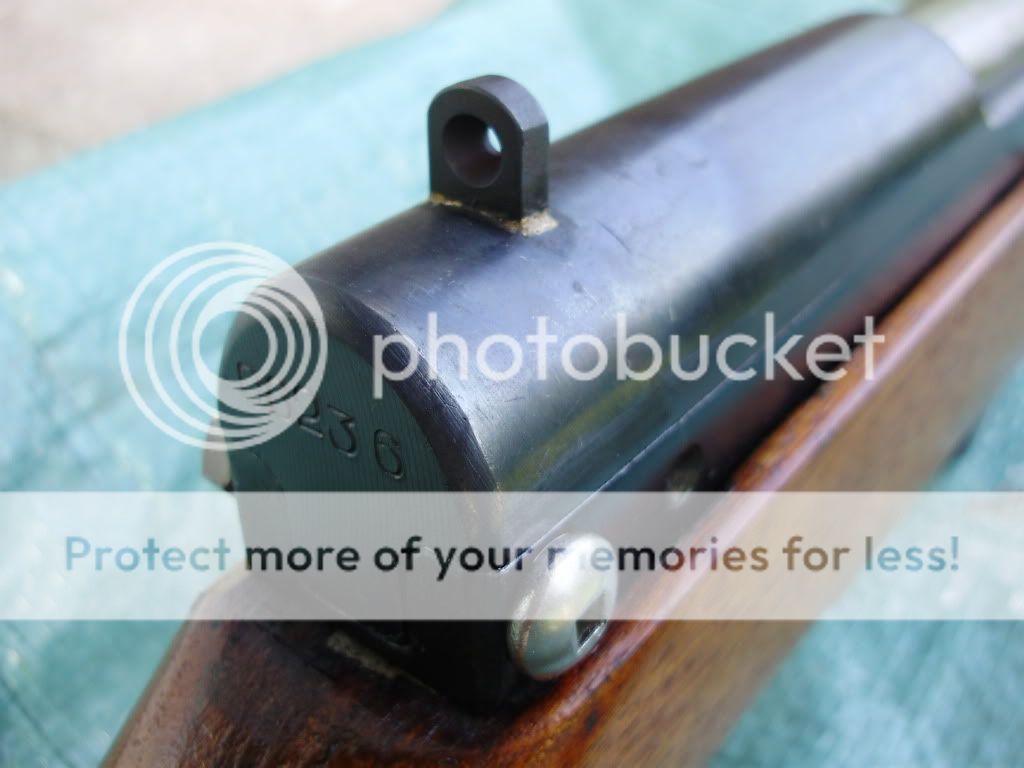
With a Mosin dog collar sling attached to the SKS' rear sight??
If nothing else, the SKS is a fun little rifle. Decently accurate, for what it is, and cheap to run with surplus ammo, and even some of the commercial options.
For me, overall, all the tactical talk is just academic, mental spit-balling. Part of the reason why I don't mind being wrong - I don't expect my life to ever depend on my ability with arms, except maybe (and even this is a remote chance) having to keep an over-interested bear from swatting me away from my trout line. And an SKS isn't my first choice for that.
Great fun at the range, though.
They sure are! And you're right, that's all that really matters. Been a while since I've owned one, I kind of subscribed to the "only accurate rifles are interesting" notion too rigidly I think. Accurate enough is accurate enough.
Even for soldiers in combat, the odds of individual ability with arms making the difference between life and death are very slim. Most casualties are produced by artillery and MG fire; shooting back with a rifle won't really help you there. Indeed, the effect you have to achieve during the approach and assault is merely suppression, not destruction. You don't even really have to hit the enemy, just keep them from effectively returning fire on you, and that's primarily achieved by LMG and GPMG fire. Rifles are basically for self defence.
Not to say soldiers shouldn't strive to be accurate shooters, rather that there are many many more significant factors conspiring against you, and sometimes individual marksmanship may appear to give one more control over one's fate than it really does.
And I love being shown where I'm wrong when one's life DOES depend on it... Imagine the consequences of having it wrong, and not knowing you were wrong!
Last edited:

Travis Bickle
CGN Ultra frequent flyer
- Location
- Upper Lower Middle Alberta
"Up and running" to what?
The SHTF TEOTWAWKI Bear Defense Scenario!?!?
The real answer to your question though is that noone takes the SKS seriously enough to shoot it while wearing MultiCam with Oakleys on while wearing their best "I'm a hard ass" face....
The SHTF TEOTWAWKI Bear Defense Scenario!?!?
The real answer to your question though is that noone takes the SKS seriously enough to shoot it while wearing MultiCam with Oakleys on while wearing their best "I'm a hard ass" face....

Several people/companies like Max Velocity, John Mosby etc. offering excellent civilian training for small unit tactic/light infantry skills.
Of course the standard is some AR variant and I get that.
However, there are many people out there who want to prepare but will never be able to afford a battle rifle (and the large amount of ammo to train with) beyond an SKS with fixed mag, strippers and a Chinese chest rig.
Common sense says you would rather have these people in the fight and TRAINED with what they have than not in fight at all.
We all know there are many old school gun competitions but thats obviously not what I'm referring to.
This is not meant to stir up a bunch of silly responses so please do not turn it into that.
It would be nice to see one of these cats like Max Velocity offer a course amongst all his courses restricted to the SKS for those who can only afford that platform.
Point being a squad of well trained men with SKS's can still do a lot of damage or put up a serious resistance if/when the need ever arises.
Any respectful thoughts? Someone else must have had this thought before ..
Mean teaching fundamentals? Skills will only get there after 10000s time doing that your able to do it without thinking.
If you can afford the class and only want to bring a SKS for SHTF then you can save the money and just go thru drills and drills ..Skills like muscle memory, I can shoot the same no matter what gun is in my hand.
Only way is doing it over and over..
it takes more than a weekend class on being a soldier. Join the reserves for infantry training if you don't want to do it full time. Otherwise go rambo.
I wonder how many people in a 3rd world country would agree? I mean point and shoot. Pretty simple action, 10 min to show you how to reload the rifle. USA got handed in Vietnam and Iraq from civilians with "outdated" rifles.

I wonder how many people in a 3rd world country would agree? I mean point and shoot. Pretty simple action, 10 min to show you how to reload the rifle. USA got handed in Vietnam and Iraq from civilians with "outdated" rifles.
Point and shoot is not what he or I am talking about.
the guy is talking about section attacks and light infantry assaults training. you don't see that in 3rd world countries do you. And I'm not speaking about the SKS, I'm speaking to the training.

BeaverMeat
CGN Ultra frequent flyer
- Location
- Nanaimo, B.C.
"Light Assault" training for...

Infantry training is more than rifles. Navigation is vital. Radios are vital. You don't see 300lb guys with shaved heads, goatees and camo oakleys on YouTube showing you what commo they "run" in their tactical training videos. Skill at Arms is just one part of the puzzle.rifles
how so? it says "70. (1) The Governor in Council may, by proclamation, make orders" not that they DID
If groups of people started training for "light assault" don't you think they'd make this proclamation in about two seconds?
I don't know, I'm just suggesting possible answers to the original question.

"Up and running" to what?
The SHTF TEOTWAWKI Bear Defense Scenario!?!?
The real answer to your question though is that noone takes the SKS seriously enough to shoot it while wearing MultiCam with Oakleys on while wearing their best "I'm a hard ass" face....
*Ahem*...
Well, we were wearing winter camouflage... but yeah, the SKS was on weapons fam.
-S.

Seriously. That looks like a blast.
We shoot this about 8 times a year at Camp Borden. I see you are in Toronto. You should come out and shoot with us. bring whatever rifle you want to use. You need a pistol, too.
With a Mosin dog collar sling attached to the SKS' rear sight??
You have a good eye. The rifle has a rear peep, so the sight base was a handy place to put the sling. I originally had it at the front loop, put the sling was too short to allow the rifle to be slung properly. In transition to pistol, we have to drop the rifle, and it has to hang out of the way. The cross bolt keeps everything solid so the rear sight does not wobble.
I wonder how many people in a 3rd world country would agree? I mean point and shoot. Pretty simple action, 10 min to show you how to reload the rifle. USA got handed in Vietnam and Iraq from civilians with "outdated" rifles.
The PLAF (main force VC) and PAVN (NVA) were every bit the full time professional army the Americans were. Civilians? Not even close. The PLAF were very highly motivated - moreso than the Americans - well trained, well led, highly capable tacticians. Some of the things they did were superior to what the US did; I'm thinking of self criticism sessions, which today we know as after action reviews. Only a small portion of the communist forces could really be called "civilians"; the regional force and popular force VC. To say they were the ones primarily fighting the war is like saying the South Vietnamese RFPF led the fight against the communists.
All that said, and for all that organization, equipment, support and training, the PLAF were effectively wiped out as a fighting force during the Tet offensive. It was an absolutely devastating military defeat, and they never really reconstituted themselves. That's the key lesson from Tet - it was a tremendous psychological victory, and an utter military defeat. Even the most capable insurgent force on the planet was simply no match for the coordinated firepower the US could bring to bear, and the Tet offensive for all it's impressiveness violated several key principles of warfare that cost the communists dearly.
This is an excellent introduction to how the PAVN and PLAF conducted the war - http://en.wikipedia.org/wiki/NLF_and_PAVN_battle_tactics
I don't know that I've heard the Iraq war be characterized as a defeat for the US before. They did manage to mop the floor with the Iraqi Army, and defeated the insurgency as well.
The lesson I draw from Vietnam and the Afghanistans are that even the best insurgent forces on the planet are no match militarily for modern, professional armies, but that alone isn't really relevant to defeating an insurgency. The US strategy in Vietnam was to attrit the communists until they gave up. The communist strategy was to keep fighting regardless of casualties until the Americans left. With the benefit of hindsight, we know which one will ultimately prevail.
Infantry training is more than rifles. Navigation is vital. Radios are vital. You don't see 300lb guys with shaved heads, goatees and camo oakleys on YouTube showing you what commo they "run" in their tactical training videos. Skill at Arms is just one part of the puzzle.
Perfectly said. Skill at arms is one small (very small) part of what makes armies effective. Command, control, communication and coordination are far far more important, and what make armies armies and not a collection of fighters. An army comprised solely of Jerry Miculek clones, acting individually, would have their clocks cleaned by a force of Mr Magoos acting in a coordinated, controlled manner.
Last edited:
We shoot this about 8 times a year at Camp Borden. I see you are in Toronto. You should come out and shoot with us. bring whatever rifle you want to use. You need a pistol, too.
Many thanks for the invite sir. I used to shoot at ORA matches frequently years ago when I was my unit's musketry officer; to be honest, after some years of shooting on DND ranges, these days I relish the freedom of shooting sans commands on austere "field firing ranges." I'm sure the pendulum will swing back one day. I divested myself of my restricted collection some years back too... but of course, any excuse... I'm thinking of hauling myself out to Winona for the 17th though.






















