By Lee A. Silva
10/13/2017 • Wild West Magazine
Tending one’s gun was a ritual now rarely depicted on-screen.
With the demise of Wild West shows during the Great Depression, Western movies— melodrama and all—have been about the only way to see the Old West in action as it supposedly was. But one Old West movie scene almost as rare as seeing horse poop in the streets is the depiction of a frontiersman cleaning and oiling his trusty pistol, rifle or shotgun.
In the real Old West, a man who lived by the gun—whether lawman, outlaw, hunter, rancher, soldier, shotgun guard, storekeeper or hardscrabble farmer trying to put food on the table—knew the importance of keeping his weapons clean and well oiled. It was the best insurance that he would die in bed with his boots off, not from hunger or an overdose of “galena pills” (bullets).
No matter how good or bad the quality of a gun, a diligent owner had to continually clean and lubricate all internal parts, especially when the gun was exposed to harsh elements. Dirt and dust could muck up the internal parts. A dirty or rusty bore could alter a rifle’s accuracy. Cold weather could turn lubricant into glue. Hot weather could thin it into uselessness. And moisture could create internal rust. So common sense and gun oil were the greatest assets a 19th-century gun owner could have.
Plain old water and soap was the handiest and cheapest cleanser. Hot water was preferable, as it would dry quickly before rust could set in, whereas cold water could start the rusting process if the gun wasn’t oiled right away. Any greasecutting agent like kerosene, alcohol or machinist’s penetrating oil was also commonly used for cleaning.
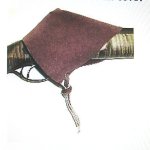
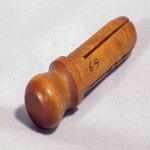
The best way to clean the bore of a muzzleloading rifle was to first cover the nipple hole with a piece of leather, letting down the hammer to keep it in place, and then to pour warm water down the barrel, put a wood plug into the muzzle and vigorously shake the rifle. An easy way to clear the nipple of any accumulated water or oil was to simply blow through it before reloading the gun, or to detonate a percussion cap on the nipple of the empty gun.
By most accounts, sperm oil (from the head cavity of a sperm whale) was the best gun lubricant, if and when available. Second choice was other whale oil, although an 1878 U.S. Army manual warned that whale oil could become “gummy and hard on exposure to the air.” Neat’s-foot oil (boiled from the shinbones and feet of cattle) was also recommended, for oiling both guns and gun leather. An 1862 Pennsylvania scientific journal noted that “armor oil [mineral oil]…is intended especially for gun-locks.” Even a temporary dab of olive oil, castor oil, lard, tallow, other animal fat or wagon wheel grease was better than no lubricant at all.
For a side income, many gun manufacturers concocted their own brands of lubricants, available in most dry goods stores on the frontier. And when the waning heyday of Manifest Destiny coincided with the waning heyday of whaling toward the end of the 19th century, the booming petroleum oil industry provided a new, seemingly endless supply of gun lubricants now generically identified simply as “gun oil.”
No matter whether a gun owner used a pistol or a long gun, he was wise to carry along basic tools wherever his profession took him. The most important tool of all, of course, was a cleaning rod with an attached brass wire brush to keep the bore of the gun barrel/barrels scoured for better accuracy and dependability. This was especially important for longrange rifles like buffalo guns.
During the cap-and-ball era of the 1830s–70s—when the shooter had to separately load powder, ball and percussion cap—black powder corrosion, dust and dirt often clogged the nipple holes, thus preventing the primer charge of the percussion cap from igniting the main charge of powder in the barrel or revolver cylinder. So wise gun toters usually carried a pick or straight needle to clear the nipple hole. They also kept on hand a supply of new nipples and a nipple wrench in order to replace any damaged nipples. Colt, in fact, offered nipple wrenches for sale from the first Paterson Colts of the 1830s through the entire cap-and-ball era.
One or more small screwdrivers were also a must-have for any gunman in the field, so that he could partially disassemble his gun to clean and lubricate its interior working parts. Owners of the popular large-caliber Colt Single Action Army cartridge revolvers faced one common problem: The constant recoil from repeated firing would cause screws to back themselves up and “shoot loose,” potentially disabling the gun. Frontierwise pistoleers learned to dip the threads of the screws in varnish before screwing them back down again, so the dried varnish would “glue” the screws firmly into place. (Through most of the 19th century Colt produced an L-shaped screwdriver with differentsized blades at each end that fit all Colt single-action screws.)
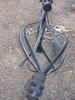
During the cap-and-ball rifle era, the easiest way to unload an unignited powder charge was to use a “worm.” Like a small corkscrew, the worm could be attached to the end of a cleaning rod, poked down the barrel, threaded into the unfired ball and pulled out—like a cork from a wine bottle—so that the powder charge could be removed.
Towns and gunsmiths in the halcyon days on the frontier were often few and far between. So the trail-hardened gun packer also learned to carry spare parts with him, especially springs, which often lost their tension strength or broke from hard use. This was especially important with outside-hammer, double-barreled shotguns. The protruding tops of the hammers often broke off if the gun was dropped against a hard surface, so the shotgunner was wise to carry a few replacement hammers.
These simple “housecleaning” precautions were most critical for pistoleers and buffalo hunters—those whose lives and livelihood depended on guns that functioned properly. Some buffalo hunters faithfully cleaned their Sharps or Remingtons every night even if they had not been fired that day. Stories conflict about whether old-time cowboys wore their six-shooters all the time or kept them wrapped up in bedrolls, saddlebags or in the chuck wagon. Legend has them “packing iron” day and night, but some big cattle outfits like the famed XIT Ranch forbade their drovers from carrying guns on trail drives. So some memoirs tell of six-shooters that got rusty from storage or lack of oiling.
Last, but certainly not least, was the legendary frontier warning to “keep your powder dry.”
Originally published in the June 2011 issue of Wild West. To subscribe, click here.