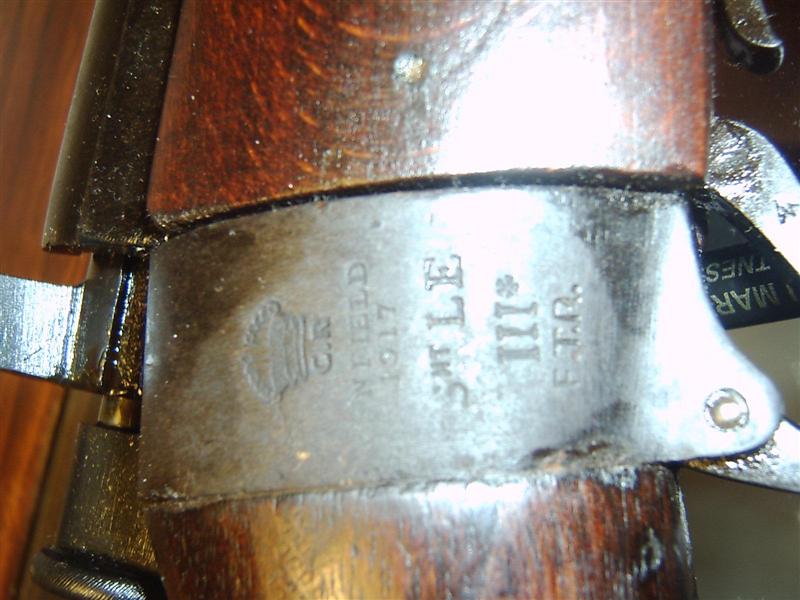
Khyber Pass Copies (click here .. scroll near bottom)http://en.wikipedia.org/wiki/Lee-Enfield
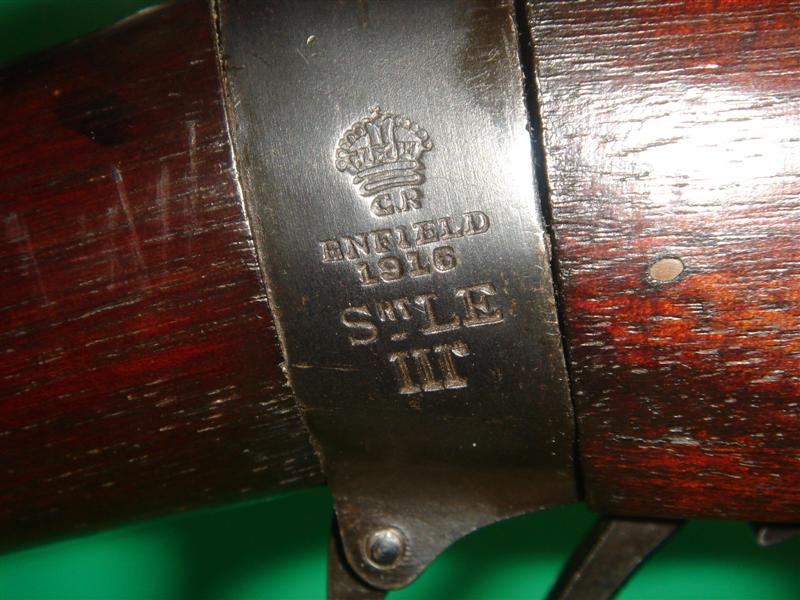
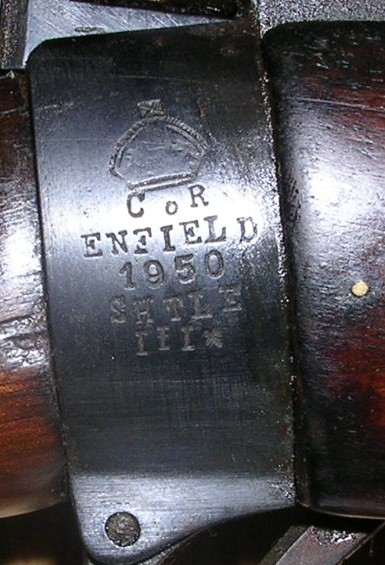
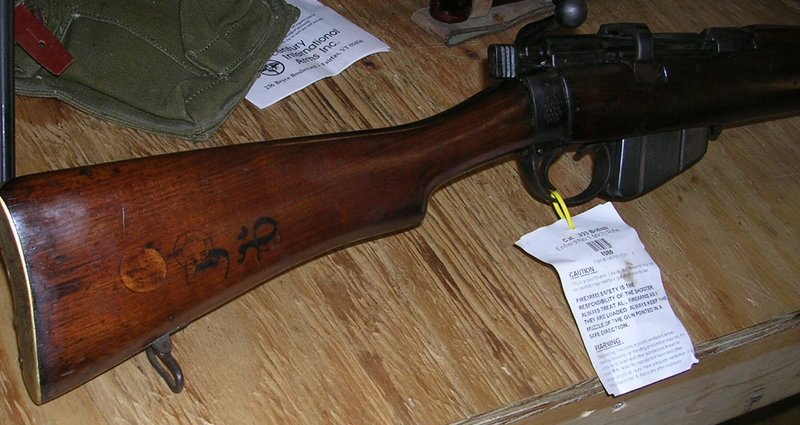
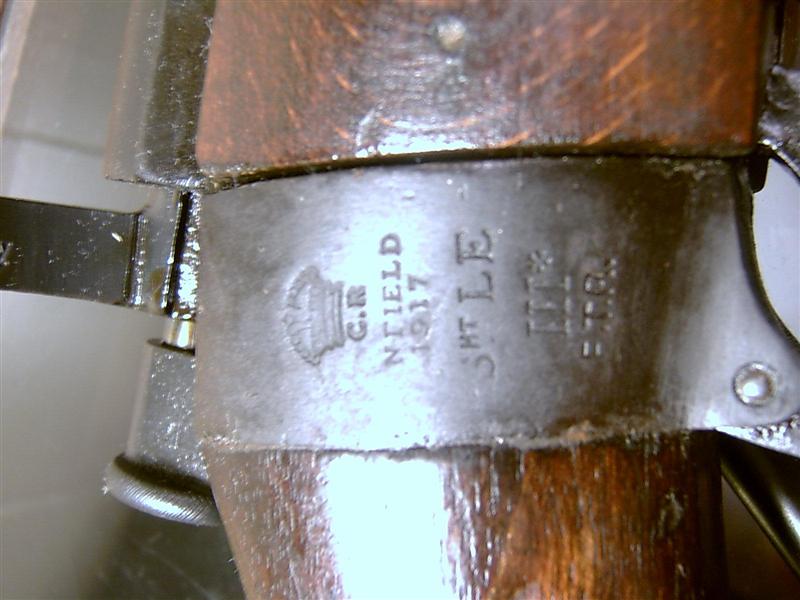
A number of British Service Rifles, predominantly the Martini-Henry and Martini-Enfield, but also the various Lee-Enfield rifles- have been produced by small manufacturers in the Khyber Pass region of the Indian/Pakistani/Afghani border. "Khyber Pass Copies", as they are known, tend to be copied exactly from a "Master" rifle, which may itself be a Khyber Pass Copy, markings and all- which is why it's not uncommon to see Khyber Pass rifles with the "N" in "Enfield" reversed, amongst other things.
The quality on such rifles varies from "As good as a factory-produced example" to "Dangerously unsafe", tending towards the latter end of the scale. The ammunition used in the region is often underloaded, being made from a variety of powders -or even old film (which contains nitrocellulose, a key component of smokeless powder), and as such, Khyber Pass Copy rifles cannot generally stand up to the pressures generated by modern commercial ammunition.
It is generally advised that Khyber Pass made firearms NOT be fired under any circumstances.
Although there are a few collectors out there who have made extremely mild handloaded cartridges for their Khyber Pass rifles, this practice is not recommended, as there is nonetheless a high element of risk involved.
Khyber Pass Copies can be recognised by a number of factors, notably:
Spelling errors in the markings; as noted the most common of which is a reversed "N" in "Enfield")
V.R. (Victoria Regina) cyphers dated after 1901; Queen Victoria died in 1901, so any rifles made after 1901 should be stamped "E.R" (Edwardius Rex - King Edward VII or King Edward VIII) or "G.R" (Georgius Rex, - King George V or King George VI).
Generally inferior workmanship, including weak/soft metal, poorly finished wood, and badly struck markings.