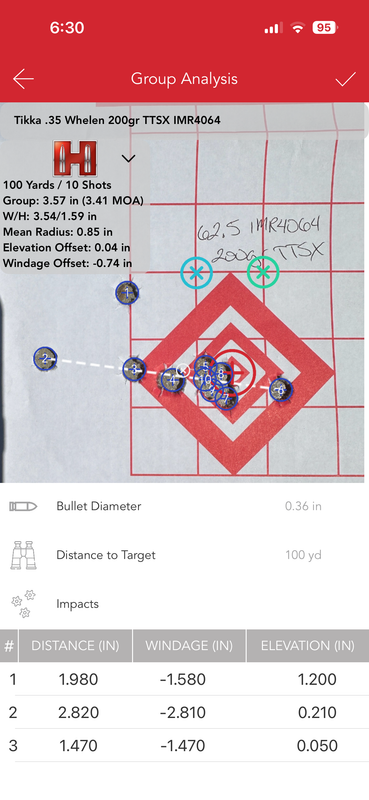
I'm new at reloading but can honest;y say that I've definitely caught the bug and having blast learning this fascinating and challenging hobby. I began reloading one caliber and have now graduated to 4. There's nothing more rewarding than seeing tiny little ragged holes made by your hands and recipe as a result of hours and hours research patience trial and error.
But the other day I was thinking that if someone didn't want to spend the money, or simply couldn't afford at this time, to setup to reload, there is a very viable and reasonably inexpensive way to achieve similar goals without the buying the entire package. Basically avoiding sliding down that inevitable rabbit hole of "acquiring" a pile of items and loading supplies. I mean let's face it, many of us simply strive to load accurate ammunition for hunting. Not the BR or competition shooters, that to me is an entirely different movie, but with the same goal in mind.
So here's my thoughts: there's gotta be someone here that has slimmed down the needed components to accurize or improve factory ammunition. My guess is that all you would need is an inexpensive press like the Lee press that is often used a second to de prime only - under 100 bucks used, I see them often. A set of calipers and maybe comparator kit - however I've seen reloaders much smarter and certainly more clever than myself use sockets or straight walled cartridges as stand-ins for a comparator. And of course you'll need a set of caliber specific dies.
We have all seen factory ammo perform with very acceptable results - and occasional ragged holes depending on caliber and such. But I've come to learn that you can often tweak factory ammo by simply seating the bullet to a place where YOUR rifle likes it to be. Often you'll notice a box of factory ammo will have about 10 rounds (more or less) that stand out and are extremely accurate compared the rest in that box.
Example: if you buy a few boxes of ammo (with same bullet weight to help reduce variables) to determine which brand and bullet your rifles responds to, you then can buy several of those and measure each cartridge (coal, bto, datum) record the data, and then shoot them in small groups recording the results of each shot. And if for example you discover a certain bto that performs better than the rest half way through a box, you could then try seating the remainging catridges and record the results. You may just find an less expensive way of shooting accurately tuned factory ammunition.
What do you think? Has anyone here tried it?
But the other day I was thinking that if someone didn't want to spend the money, or simply couldn't afford at this time, to setup to reload, there is a very viable and reasonably inexpensive way to achieve similar goals without the buying the entire package. Basically avoiding sliding down that inevitable rabbit hole of "acquiring" a pile of items and loading supplies. I mean let's face it, many of us simply strive to load accurate ammunition for hunting. Not the BR or competition shooters, that to me is an entirely different movie, but with the same goal in mind.
So here's my thoughts: there's gotta be someone here that has slimmed down the needed components to accurize or improve factory ammunition. My guess is that all you would need is an inexpensive press like the Lee press that is often used a second to de prime only - under 100 bucks used, I see them often. A set of calipers and maybe comparator kit - however I've seen reloaders much smarter and certainly more clever than myself use sockets or straight walled cartridges as stand-ins for a comparator. And of course you'll need a set of caliber specific dies.
We have all seen factory ammo perform with very acceptable results - and occasional ragged holes depending on caliber and such. But I've come to learn that you can often tweak factory ammo by simply seating the bullet to a place where YOUR rifle likes it to be. Often you'll notice a box of factory ammo will have about 10 rounds (more or less) that stand out and are extremely accurate compared the rest in that box.
Example: if you buy a few boxes of ammo (with same bullet weight to help reduce variables) to determine which brand and bullet your rifles responds to, you then can buy several of those and measure each cartridge (coal, bto, datum) record the data, and then shoot them in small groups recording the results of each shot. And if for example you discover a certain bto that performs better than the rest half way through a box, you could then try seating the remainging catridges and record the results. You may just find an less expensive way of shooting accurately tuned factory ammunition.
What do you think? Has anyone here tried it?