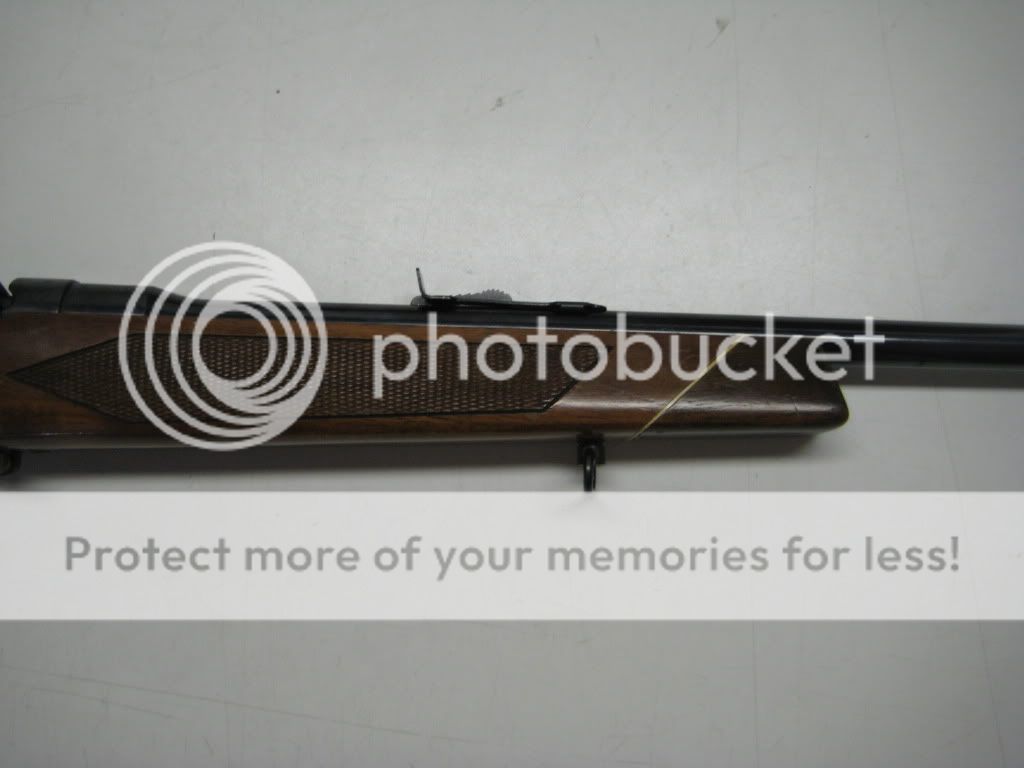
A factory chooses a front sight height and a rear sight that are compatible. That is, the rear sight has enough adjustment in it to zero the rifle.
Because of many different tolerances, including the shooter and his ammo of choice, each rifle has to be zeroed. H4831 made a good suggestion. Boresight the rifle at home, so that your first shot at the range is on paper.
I do it in the living room, looking out the window of the house. (I live on a farm. You might be better off looking out a window at the back of your house.) If you boresight the rifle to be on target (bore and sights on the target) at 25 to 30 yards, you will be on paper at 100.
When I take an un-zeroed rifle to the range, I don't start shooting at 100. My first shot is at 25 yards. I make a rough adjustment for wind and elevation (elevation should have the bullet in the center of the aiming mark) and then fire a shot at 50 yards. Bullet should be zero for wind and close for elevation. Then I fire shot at 100, make an adjustment and let barrel cool.
For the rear sight, raising the rear raises the bullets. For the front sight (wind adjustment) move the sight the opposite direction you want the bulllets to go. Take something to the range with you to move the front sight.
A rule of thumb I use. The close range zero of a rifle is the bullet velocity plus 1. That is, a 2500 fps bullet will zero at 26 yards. A 3000 fps bullet will zero at 31 yards.
This works with low mounted sights. Won't work for an AR-15.