I'm still using the RCBS Rockchucker press I bought in 1973 and it has a little slop in the linkage.
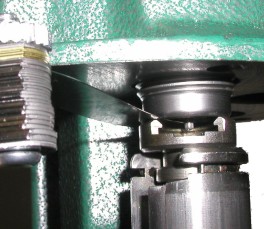
After reading the above post by Keithjohn I wanted to see the difference between using a +.004 Redding competition shell holder and placing a .004 feeler gauge between the shell holder and die. I knew using the feeler gauge method vs the competition shell holders I would get larger variations in shoulder location because of the slop in the press linkage.
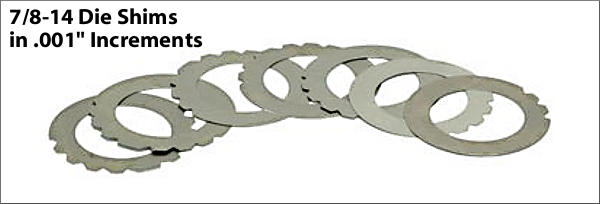
When I first started reloading I used feeler gauges and then bought some headspace shims you place under the dies lock ring for adjustments. Then later I bought the Redding competition shell holders and these are far easier to use and more accurate for adjusting shoulder bump.
When using the Redding competition shell holders and adjusting the press to cam over, meaning screw the die down until it contacts the shell holder plus 1/8 to 1/4 of a turn more on the die.
When the standard RCBS shell holder is used for the above setup the die is never touched to adjust the shoulder bump with the competition shell holders.
All you do is change the competition shell holder to change and adjust the amount of shoulder bump.
The main advantage to the competition shell holders is it allows the press to cam over and the die make hard contact with the shell holder and remove all the slop in the press.
Bottom line, I sized a case using the +.004 competition shell holder and sized a case using a .004 air gap between the shell holder and die. And got .003 case shoulder variations using the feeler gauge method. Meaning when the die and shell holder make hard contact any slop in the press is eliminated and the shoulder location is more constant.
NOTE, I'm sizing once fired Lake City cases fired in many different chambers and the Redding competition shell holders help greatly with shoulder location uniformity.