https://www.jns.org/97-civilian-defense-squads-in-north-re-equipped/
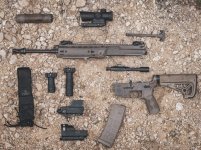
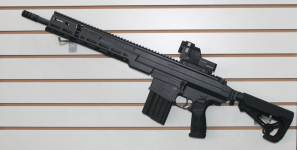
In the article it is said that over 9000 IWI ARAD rifles are purchased for local response teams.
In another article it is said that the M4s from the US are transitional and ultimately X95 and US made M4s will be completely phased out.
The future of IDF small arm will be based on some sort of M16FOW derivative and produced locally in Israel, and most likely the IWI ARAD will make up a large part of it.
We will see how this will turn out down the road.
https://www.ynetnews.com/article/hju8hfrat?utm_source=ynetnews.com&utm_medium=Share&utm_campaign=mail&utm_term=hju8hfrat&utm_content=Article
In the article it is said that over 9000 IWI ARAD rifles are purchased for local response teams.
In another article it is said that the M4s from the US are transitional and ultimately X95 and US made M4s will be completely phased out.
The future of IDF small arm will be based on some sort of M16FOW derivative and produced locally in Israel, and most likely the IWI ARAD will make up a large part of it.
We will see how this will turn out down the road.
https://www.ynetnews.com/article/hju8hfrat?utm_source=ynetnews.com&utm_medium=Share&utm_campaign=mail&utm_term=hju8hfrat&utm_content=Article
Following an extensive testing process by the IDF, two of these manufacturers will be awarded the tender. The new rifles will be based on the widely used American M4 and will serve as an advanced version of the Colt M16, featuring various attachments to enhance accuracy and optical capabilities for extended range.As an interim solution, the Tavor rifles will be reassigned to non-infantry units such as armored corps, artillery and potentially engineering. Additionally, due to the wear and tear on existing weapons during the war, the DoPP has placed an order for approximately 20,000 American M4 rifles and an additional 3,000 Tavor rifles.
The Defense Ministry emphasizes that the two Israeli manufacturers who win the tender will have to comply with strict conditions, despite their weapons having already been successfully sold to security units within Israel, including the police and the Shin Bet internal intelligence agency, as well as foreign armed forces.
"The Tavor is based on a bullpup mechanism, which is less common in Western armies, less suitable for operating certain restraints, and has relative disadvantages in combat in closed spaces, as we have seen in the fighting in Gaza," a senior IDF officer leading the military buildup project told Ynet.
The ambition to rely on indigenous Tavor rifles marks the third attempt by the Israeli military in the past few decades to achieve self-reliance, following the Galil rifles in the 1970s and 1980s and the Tavors introduced in the early 2000s, both of which came short of the desired goals.
"This transition will provide significant maintenance flexibility, reduce the reasons for soldiers to transition from active duty to reserves, establish a standardized supply system, and generate long-term logistical cost savings," the officer explained.
"Our objective is to allocate the new M4 rifles received from the U.S. to Givati and Golani forces this year, enabling them to familiarize themselves with and begin utilizing the same weapon technology that will eventually be manufactured in Israel."
The standard rifles left, along with the M4 rifles gradually phased out by the IDF, will be moved to the army's newly established emergency stockpiles, an uncommon practice for various combat units.
As an example, Home Front Command soldiers can often be seen in city centers equipped with 50+-year-old M16 rifles. The IDF believed this phenomenon would have disappeared by now as it had moved away from the use of "long rifles" nearly twenty years ago.
Last edited: