












































You are using an out of date browser. It may not display this or other websites correctly.
You should upgrade or use an alternative browser.
You should upgrade or use an alternative browser.
Jim Kibler's Brown Bess update.
- Thread starter Painkillers
- Start date


Painkillers
CGN Ultra frequent flyer
This is great news. I found a Bob Seymour made India Pattern that is now getting lonely and needs a flintlock friend
How many grains is generally loaded behind the enormous .75 ball?

Think its 100grs of ffg max charge for modern Pedersoli's. The original charges were much larger ive read, but powder was also weaker back then according to some sources.
With 100gr charge behind a .715" ball I was getting over 1500ft/lbs of muzzle energy from my Bess.
With 100gr charge behind a .715" ball I was getting over 1500ft/lbs of muzzle energy from my Bess.
I havnt even had a chance to fire it yet. I picked up the bullet mold at a recent auction, just have to find some time to cast some up and take it out. I have read between 80-100 grains of BP for themHow many grains is generally loaded behind the enormous .75 ball?
The standard ball was around .69" diameter and it was contained in a paper cartridge. I know modern shooters are sometimes inclined to use larger balls and load with a patch, but the historical charges are for the loose-fitting cartridges. Original flintlock charge sizes were around 168 grains or even larger. After the switch to percussion, charge sizes were reduced, but still listed as 4.5 drams (126 grn). That's what I use in various 1840s percussion muskets (with paper cartridges) and it's a comfortable and accurate load to shoot. If I were to use a tight-fitting ball/patch, I would reduce the charge dramatically and play with charges to find something that shoots well.How many grains is generally loaded behind the enormous .75 ball?
milsurpo

I always use 110 in mine.Think its 100grs of ffg max charge for modern Pedersoli's. The original charges were much larger ive read, but powder was also weaker back then according to some sources.
With 100gr charge behind a .715" ball I was getting over 1500ft/lbs of muzzle energy from my Bess.
Mike Béliveau has recently passed away from pancreatic cancer.He was a wealth of knowledge for the black powder communityMike Beliveau uses 165 gr of 1F in his BB.
I use 80 gr of FFG under a rolling .69 ball.
Confortable charge, the goal being not coming out with a bruised shoulder, but a couple hours of fun.

The fowler kit in walnut is US$1785. The Bess is more complex; wouldn't be surprised if the kit is well over US$2000. 2500 wouldn't shock me. Delivered here, going to exceed 3k beaver bucks.
Probably the best Brown Bess reproduction ever made available in commercial quantity. It is going to be right.
Service cartridges had powder for both priming and propulsion. Half ####, prime the pan, close the frizzen, dump the balance of the charge down the barrel, ram the ball with cartridge paper. Ramming a charge with the lock half cocked and primed isn't current practice, but 18th century concerns were different.
Probably the best Brown Bess reproduction ever made available in commercial quantity. It is going to be right.
Service cartridges had powder for both priming and propulsion. Half ####, prime the pan, close the frizzen, dump the balance of the charge down the barrel, ram the ball with cartridge paper. Ramming a charge with the lock half cocked and primed isn't current practice, but 18th century concerns were different.
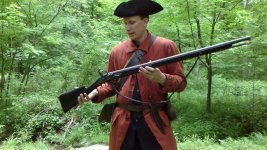
I would be tempted to buy one and convert to the shortened Ranger versionView attachment 1183698
I think you should buy two, convert one and keep the other original

Good idea ,I ll just run it by my wife.Though once I do I might have to wait until the divorce is settled to buy them .If I have any money left by then lolI think you should buy two, convert one and keep the other original
Last edited:






















