












































Almost Twins:
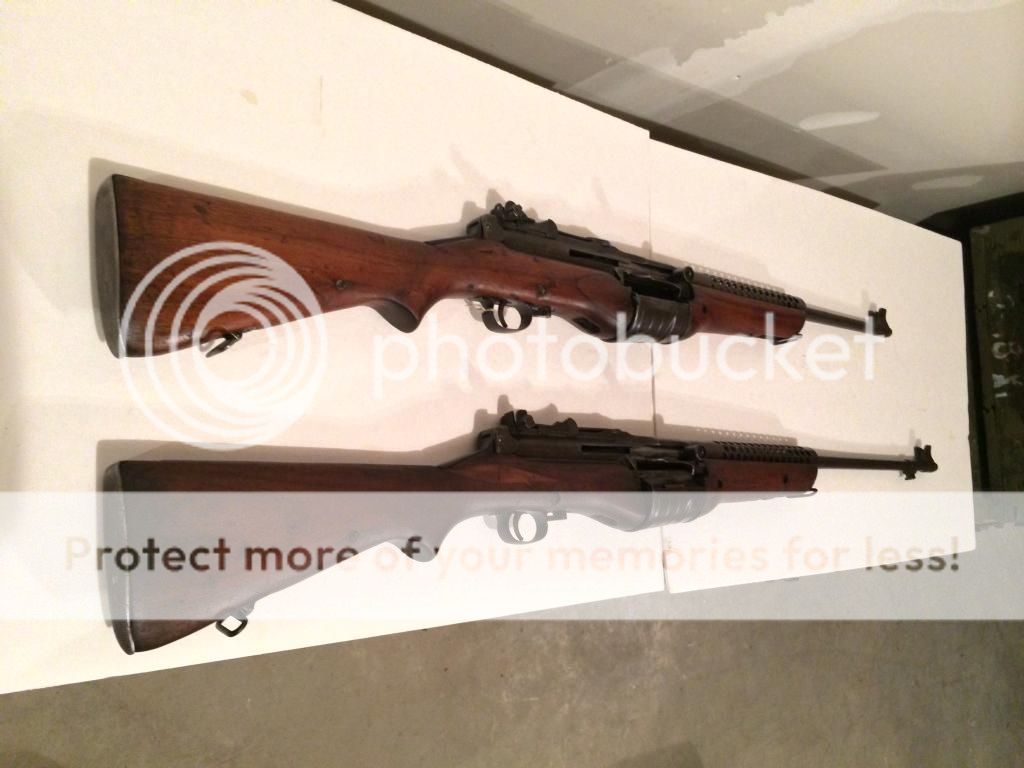
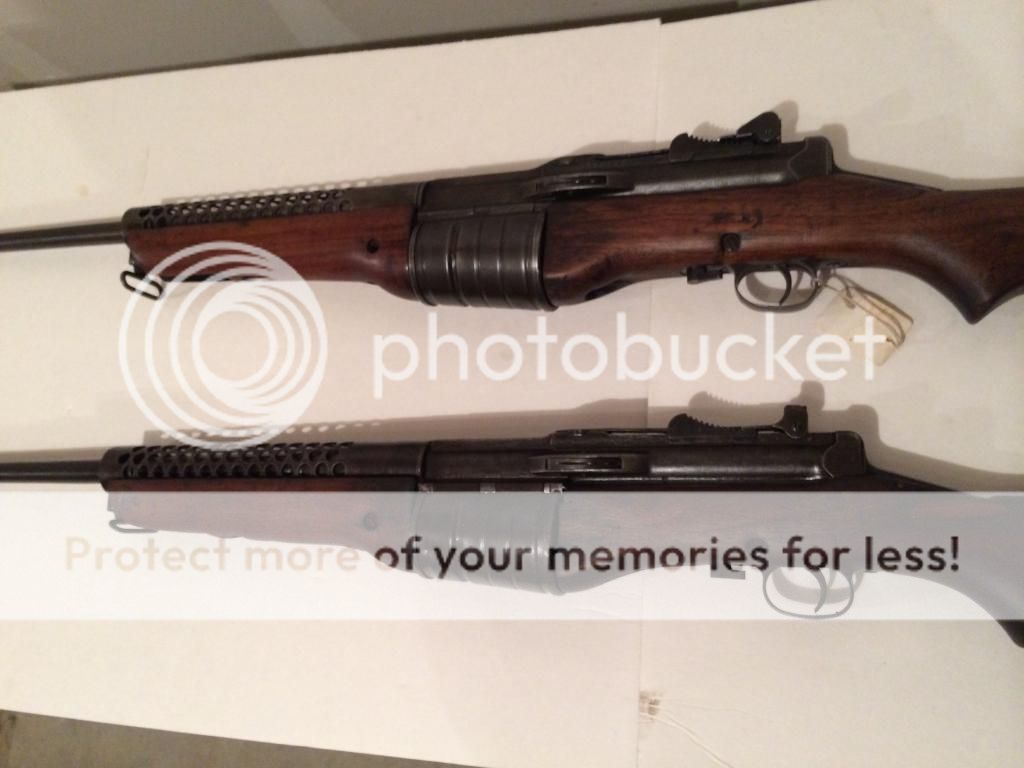
Serial Numbers 1216 and 1276 (both no letter suffix).
Rifle 1216 - This one has most likely seen combat. Note that the barrel does not have the bayonet lug and appears cut down/re-crowned. From the markings, I suspect this was done at the arsenal level, however there were unofficially at least three different barrel lengths for these rifles, so who knows? The barrel is pretty worn as typical with these rifles, unless you were lucky enough to buy an un-issued example.
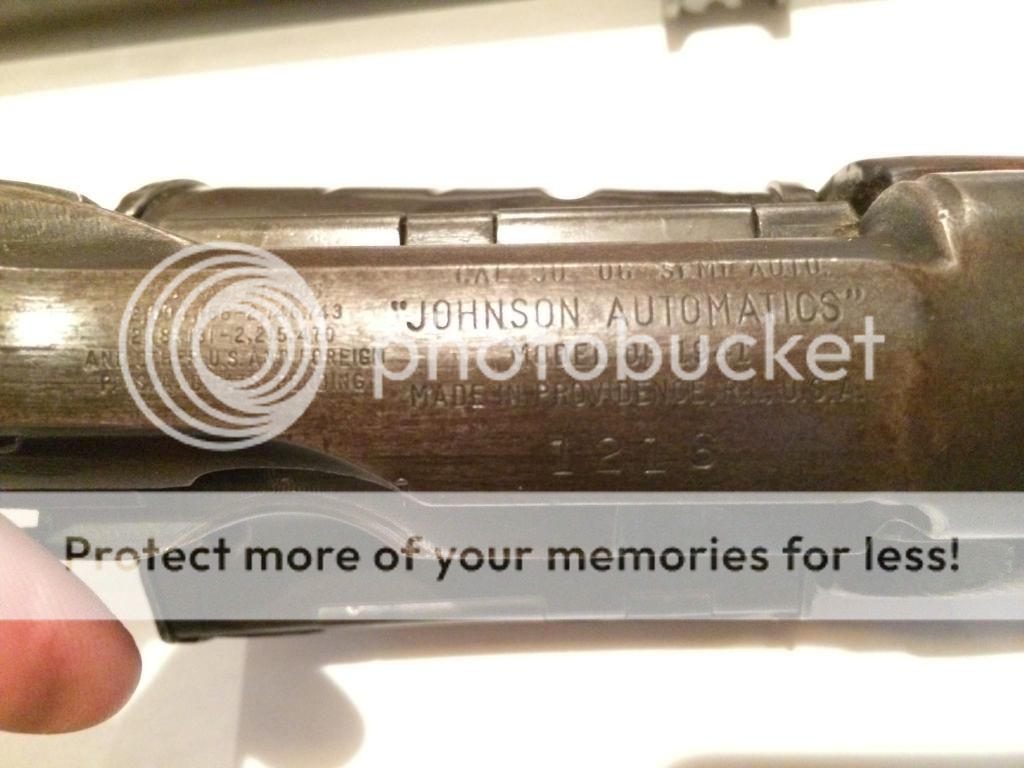
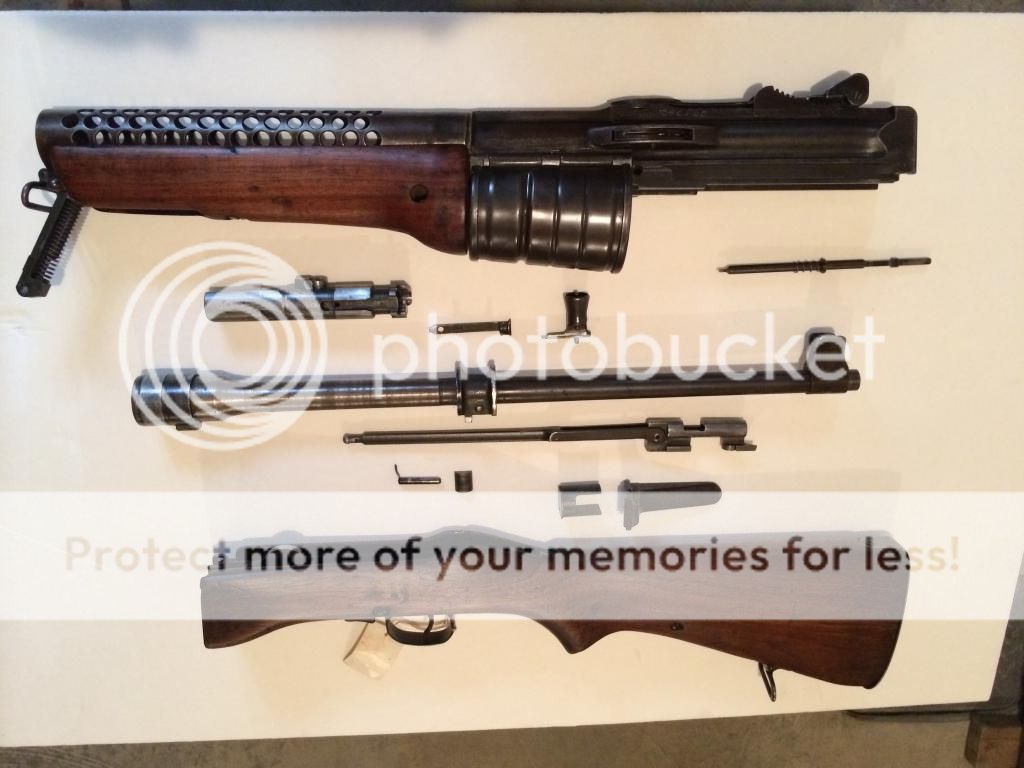
Rifle 1276 - Happy story on this one. I found this rifle in a gun shop just last week and it was rode hard and put away wet. With some TLC this rifle really came back to life. I do need a magazine cover spring and a forearm screw. Anyone happy to donate or sell these parts?
The barrel is also pretty worn and the stock was arsenal repaired on both sides. This one almost certainly saw combat.
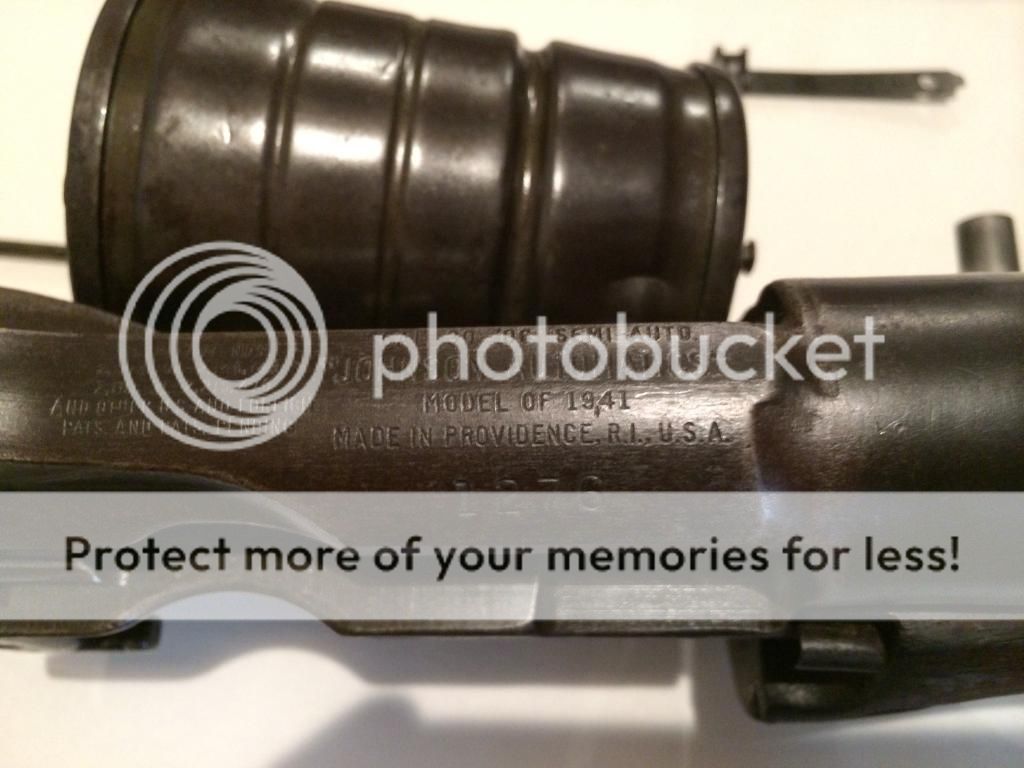
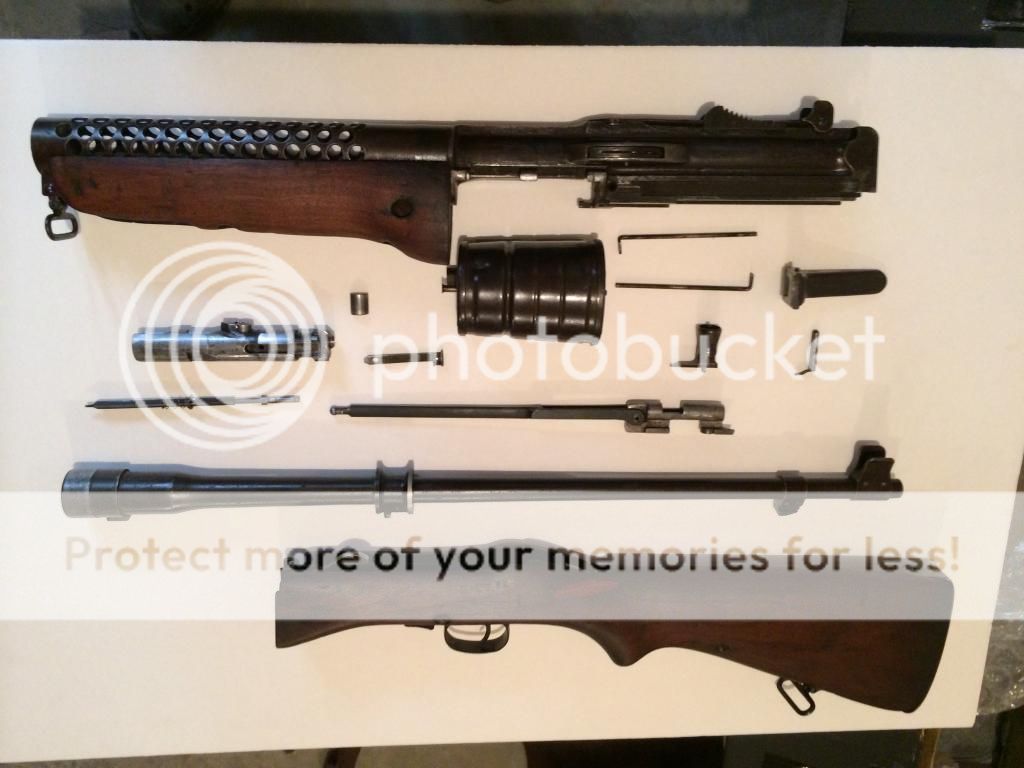
I forgot one part on the work desk before taking the last photo...anyone can tell which part?
I didn't realize how much misinformation was out there on these rifles until reading The Marine Model 1941 Johnson Semi Automatic Rifle (http://foxtrot666.hubpages.com/hub/The-Marine-Model-Johnson-M1941-Semi-Automatic-Rifle).
Despite the Netherlands/Dutch order of 30,000 rifles, less than 30,000 rifles were ever produced (not the previously presumed 70,000 rifles). Some of these rifles went to Dutch Indonesia, some to the Marines in the Pacific and some reportedly to the First Special Service Force "Devil's Brigade" (this is debatable but they were issued Johnson LMG's).
These rifles were also not delivered in patterned number blocks (for example K98 production for Snipers, Navy, Marine, SS issue rifles etc), so you cannot tell whether you have a Dutch or US rifles unless it is marked with a Dutch Crown or 'US' property mark.
Anyone familiar with these rifles knows that the receiver was serialized but not one serial numbered part matched the receiver or any other part assembled on the rifle. Serial numbered parts included the hammer, barrel, extractor, bolt body, bolt locking cam, firing pin, magazine, etc. All these parts were serialized and assembled randomly, but what is even more interesting is the company recorded the receiver serial number and listed all random serial numbered parts assembled on that rifle, which was recorded on an assembly record.
It is regrettable that the documents with the delivery/rifle assembly data are currently held by the Johnson family and have not been released to the general public.


Serial Numbers 1216 and 1276 (both no letter suffix).
Rifle 1216 - This one has most likely seen combat. Note that the barrel does not have the bayonet lug and appears cut down/re-crowned. From the markings, I suspect this was done at the arsenal level, however there were unofficially at least three different barrel lengths for these rifles, so who knows? The barrel is pretty worn as typical with these rifles, unless you were lucky enough to buy an un-issued example.


Rifle 1276 - Happy story on this one. I found this rifle in a gun shop just last week and it was rode hard and put away wet. With some TLC this rifle really came back to life. I do need a magazine cover spring and a forearm screw. Anyone happy to donate or sell these parts?
The barrel is also pretty worn and the stock was arsenal repaired on both sides. This one almost certainly saw combat.


I forgot one part on the work desk before taking the last photo...anyone can tell which part?
I didn't realize how much misinformation was out there on these rifles until reading The Marine Model 1941 Johnson Semi Automatic Rifle (http://foxtrot666.hubpages.com/hub/The-Marine-Model-Johnson-M1941-Semi-Automatic-Rifle).
Despite the Netherlands/Dutch order of 30,000 rifles, less than 30,000 rifles were ever produced (not the previously presumed 70,000 rifles). Some of these rifles went to Dutch Indonesia, some to the Marines in the Pacific and some reportedly to the First Special Service Force "Devil's Brigade" (this is debatable but they were issued Johnson LMG's).
These rifles were also not delivered in patterned number blocks (for example K98 production for Snipers, Navy, Marine, SS issue rifles etc), so you cannot tell whether you have a Dutch or US rifles unless it is marked with a Dutch Crown or 'US' property mark.
Anyone familiar with these rifles knows that the receiver was serialized but not one serial numbered part matched the receiver or any other part assembled on the rifle. Serial numbered parts included the hammer, barrel, extractor, bolt body, bolt locking cam, firing pin, magazine, etc. All these parts were serialized and assembled randomly, but what is even more interesting is the company recorded the receiver serial number and listed all random serial numbered parts assembled on that rifle, which was recorded on an assembly record.
It is regrettable that the documents with the delivery/rifle assembly data are currently held by the Johnson family and have not been released to the general public.
























