You are using an out of date browser. It may not display this or other websites correctly.
You should upgrade or use an alternative browser.
You should upgrade or use an alternative browser.
Just Nice Butts!
- Thread starter Londonshooter
- Start date


maple_leaf_eh
CGN Ultra frequent flyer
Stunning! Figured wood, tight engraving, attention to detail for the smallest surfaces.
Did I see a comment that some gunsmiths installed heel and toe plates? Two small pieces of metal versus a large one piece butt plate. What would that serve? (And a sheepish second thought comes to mind - because.)
Did I see a comment that some gunsmiths installed heel and toe plates? Two small pieces of metal versus a large one piece butt plate. What would that serve? (And a sheepish second thought comes to mind - because.)
Stunning! Figured wood, tight engraving, attention to detail for the smallest surfaces.
Did I see a comment that some gunsmiths installed heel and toe plates? Two small pieces of metal versus a large one piece butt plate. What would that serve? (And a sheepish second thought comes to mind - because.)
When a shotgun slips from your grasp and slides to the floor a little fast, it can typically chip either the heel or the toe (which hits first) of either a wood butt end or the butt plate if it’s not metal. Thus heel and toe plates. Besides, they look good.

1963beretta
CGN Ultra frequent flyer
- Location
- Vaughan, Ontario
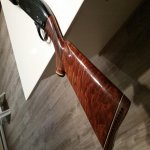
I’ll be the first to submit an entry of a semi-auto shotgun...a 28g Franchi 48AL Deluxe...




fishslinger
CGN Regular
- Location
- southern ontario
Ashcroft, amazing little Beretta 28ga. Would love to own that gun for grouse and woodcock.
 Browning Model 12, 28ga Grade V.

Falconflyer
CGN Ultra frequent flyer
There's some pretty spectacular lumber here guys, and some very nice butts too!
I have a nice hammer double with British proofs, but a French gunmakers name and location on the locks. Anyway, the butt is a restock, not badly done. Unfortunately, the pull and pitch are totally unsuitable. Photos in this thread are excellent references showing how I could alter the stock.

OK, I think I might be better at the rules today, less wood and more butt.
With pinfires you see gunmakers starting to move away from iron butt plates, a necessity on a muzzle-loader but of no particular purpose in a breech-loader. The change in butt finishing was slow, and almost all pinfires, and certainly all the early ones, will have iron butt plates. The fashion on muzzle-loaders was an iron butt plate with a long upper tang, and this followed on with the early breech-loaders.
This 14-bore by Hugh Snowie of Inverness, Scotland dates from before 1860, and it has the iron butt plate with a long tang. Of interest, the gun has the early Lang-type forward underlever with a single bite, and a grip safety (another hold-over from muzzle-loaders).
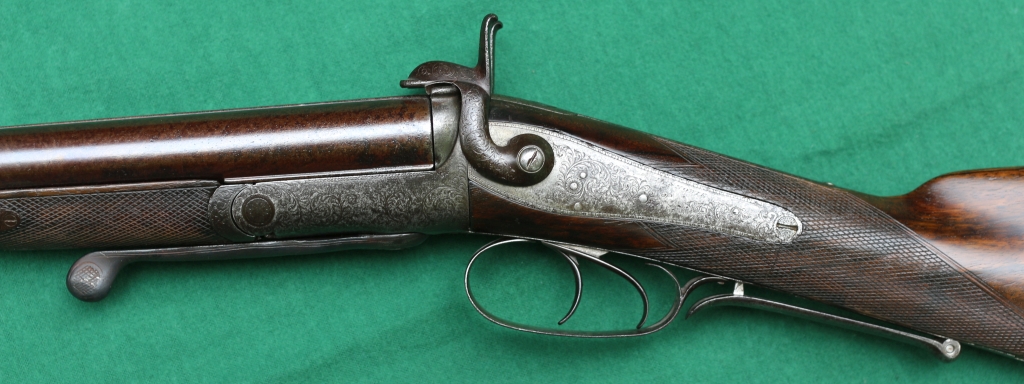
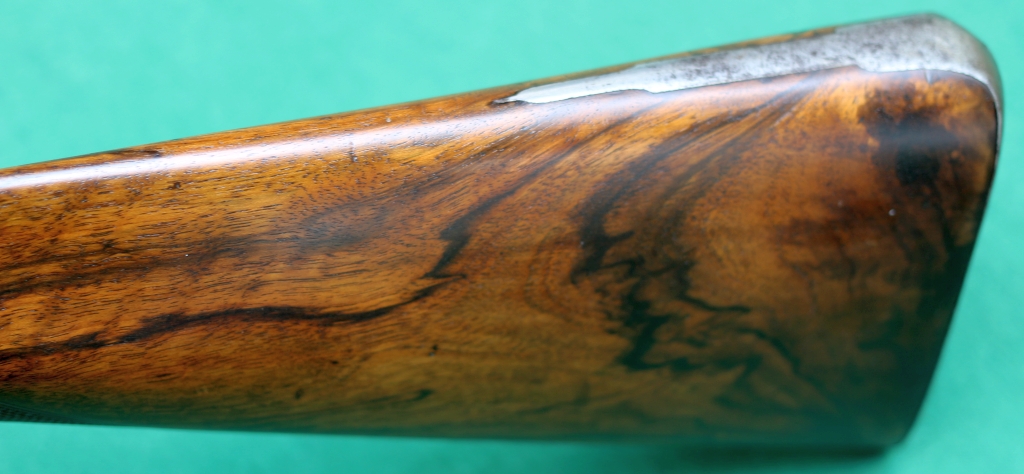
With pinfires you see gunmakers starting to move away from iron butt plates, a necessity on a muzzle-loader but of no particular purpose in a breech-loader. The change in butt finishing was slow, and almost all pinfires, and certainly all the early ones, will have iron butt plates. The fashion on muzzle-loaders was an iron butt plate with a long upper tang, and this followed on with the early breech-loaders.
This 14-bore by Hugh Snowie of Inverness, Scotland dates from before 1860, and it has the iron butt plate with a long tang. Of interest, the gun has the early Lang-type forward underlever with a single bite, and a grip safety (another hold-over from muzzle-loaders).
Next in pinfire butt development is the iron butt plate with a short tang or finial. This is the most common form that is encountered.
Showing this is a 12-bore by Benjamin Woodward of Birmingham, made around 1864. It has the typical Jones-type double-bite underlever.
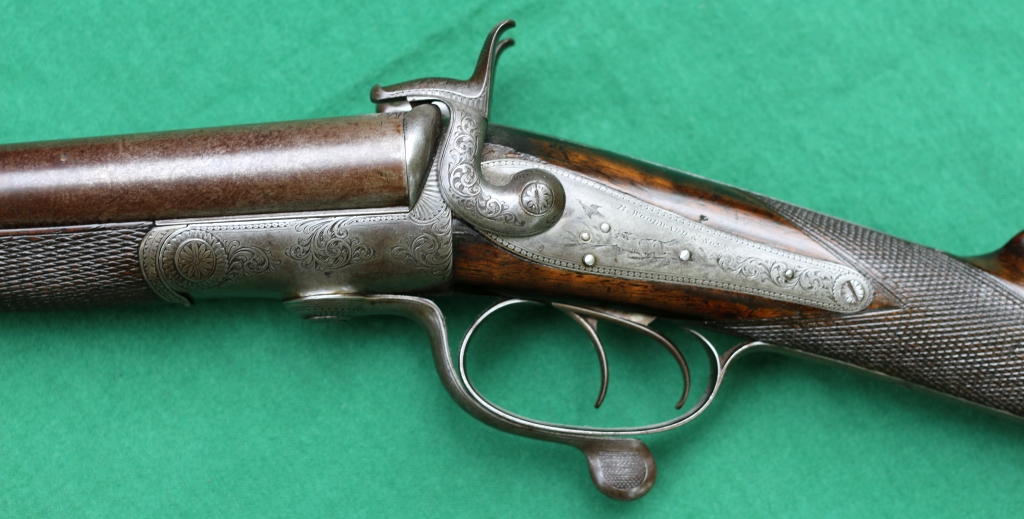
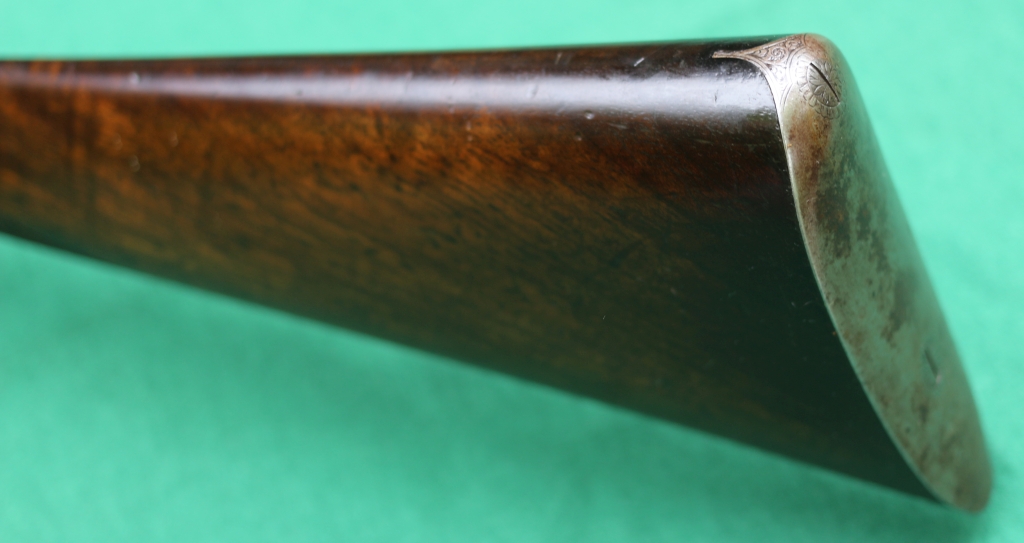
Showing this is a 12-bore by Benjamin Woodward of Birmingham, made around 1864. It has the typical Jones-type double-bite underlever.
Now that the full iron butt plate is out of the way, here is where it gets interesting.
Throwing all convention to the wind is doing away with the plate all together, and leaving just the smooth wood.
Demonstrating this is a 12-bore by Charles Frederick Niebour of Uxbridge, made before 1859 (so a very early example). No expense was spared on this gun, as it was actioned by Edwin Charles Hodges, the first to have copied Casimir Lefaucheux's pinfire presented at the Great Exhibition of 1851. He was the best and most sought-after actioner in his day, so any Hodges pinfire is a gem. The gun is near identical to two Boss & Co. pinfires in my collection, which is not surprising since he actioned Boss guns for Stephen Grant. The butt is left smooth, without any chequering.
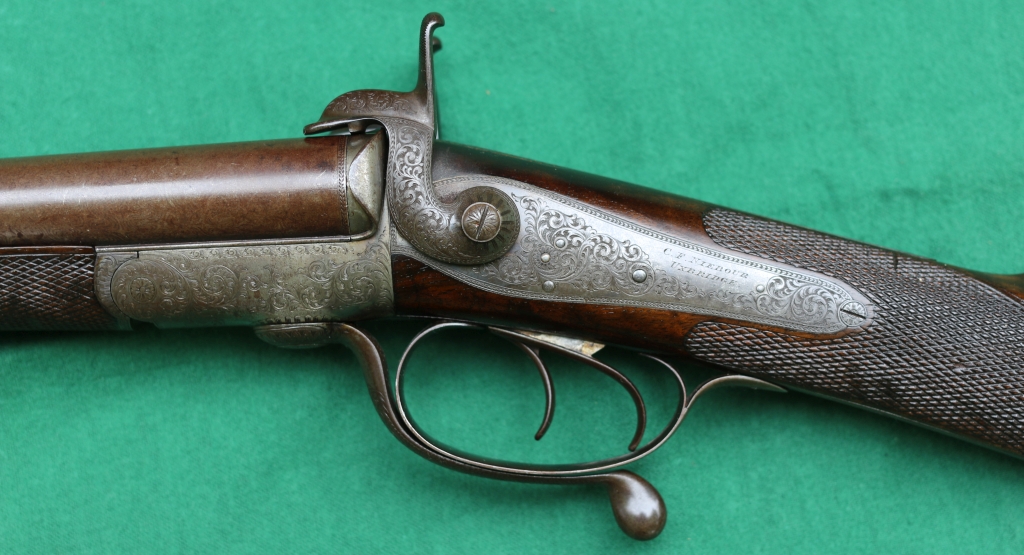
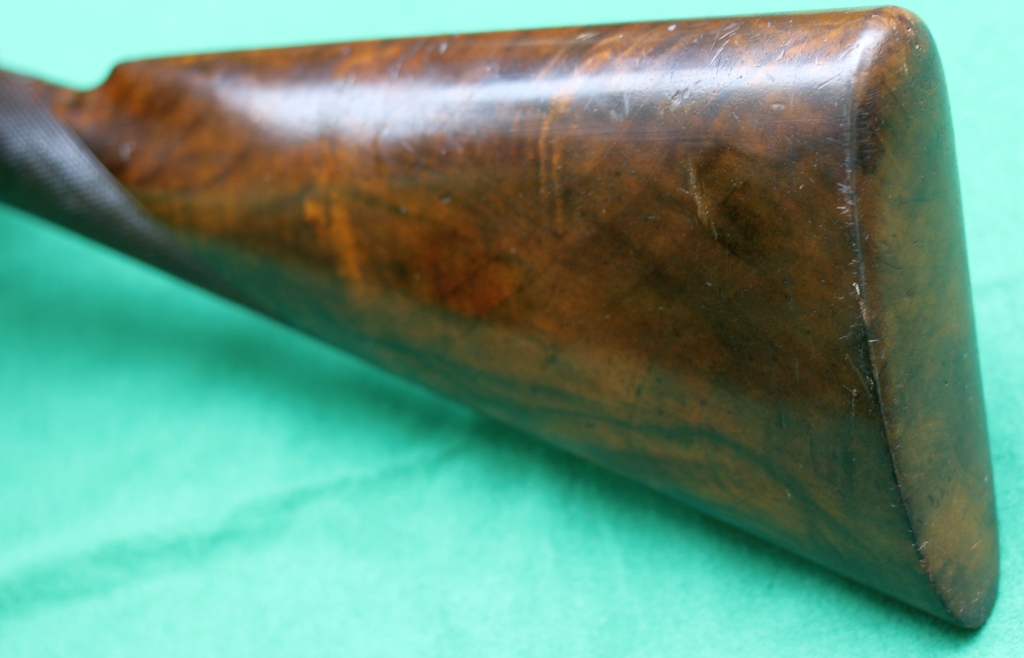
Throwing all convention to the wind is doing away with the plate all together, and leaving just the smooth wood.
Demonstrating this is a 12-bore by Charles Frederick Niebour of Uxbridge, made before 1859 (so a very early example). No expense was spared on this gun, as it was actioned by Edwin Charles Hodges, the first to have copied Casimir Lefaucheux's pinfire presented at the Great Exhibition of 1851. He was the best and most sought-after actioner in his day, so any Hodges pinfire is a gem. The gun is near identical to two Boss & Co. pinfires in my collection, which is not surprising since he actioned Boss guns for Stephen Grant. The butt is left smooth, without any chequering.


Having plain wood left smooth is perhaps similar to having a polished iron butt plate. It must have been tempting to do something with that smooth surface, and the most logical progression is to chequer the wood.
Showing a wood butt with chequering is a very worn 12-bore by Joseph Lang of London, made in 1867. I hope that by the end of my hunting days I will have have had as many days in the field as this gun has had.
Showing a wood butt with chequering is a very worn 12-bore by Joseph Lang of London, made in 1867. I hope that by the end of my hunting days I will have have had as many days in the field as this gun has had.
With so many sportsmen switching to the new-fangled pinfire breech-loader, there must have been a certain amount of peer pressure. What to do if you couldn't afford the 10-25 guineas to buy a decent pinfire from one of the popular makers? Well, you could take your trusty muzzle-loader to Thomas George Sylven of London, and have him convert it to a pinfire, one of his specialties. A much cheaper option until a showy new gun could be had, and that old muzzle-loader wasn't going to get much use anymore!
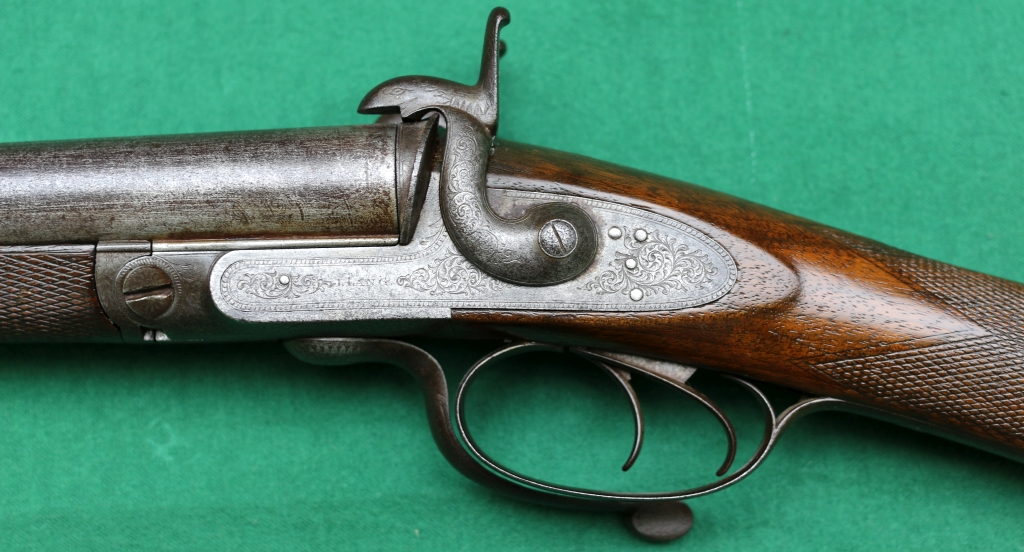
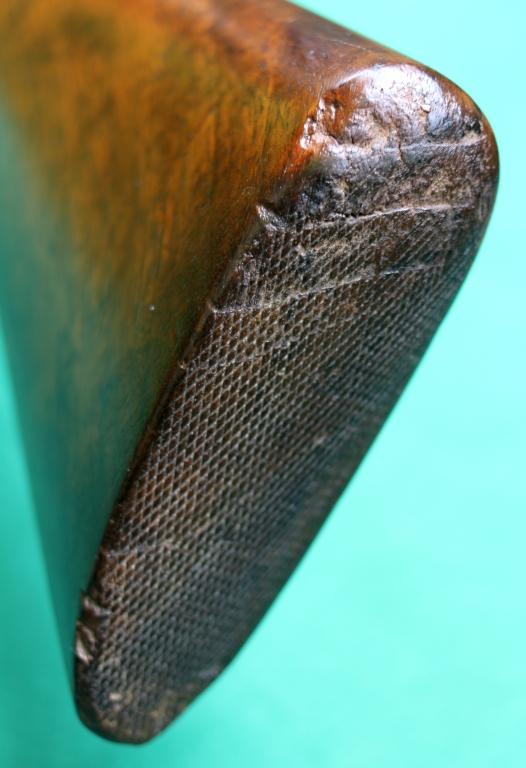
This gun is a 16-bore converted around 1865 with a muzzle-loader barrel by Richard Seffens, who was in business in London in the 1820s (the original Seffens gun might have been a flintlock). What is interesting is that Sylven uses what we now know as the skeleton butt plate, with iron top and bottom and wood visible in the centre. This is the only pinfire I have ever seen with a skeleton plate.
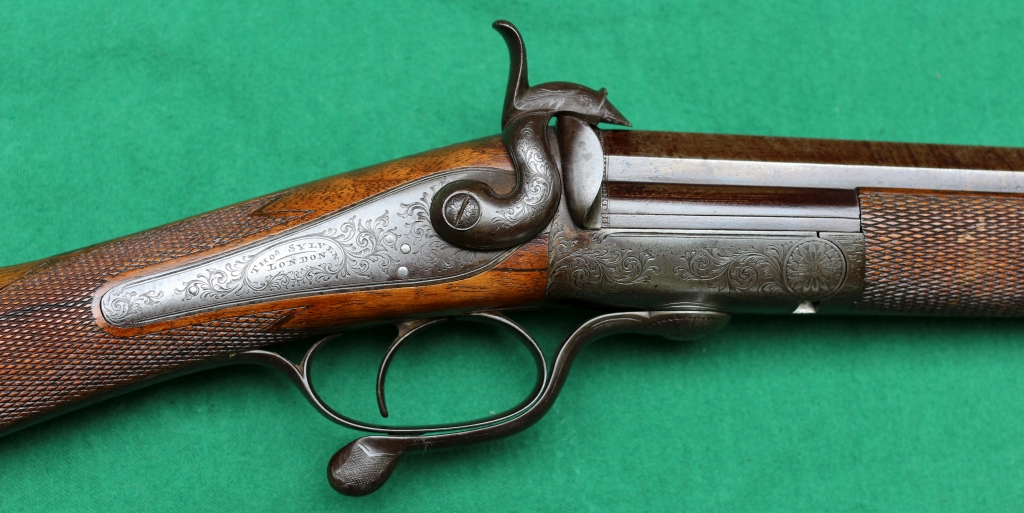
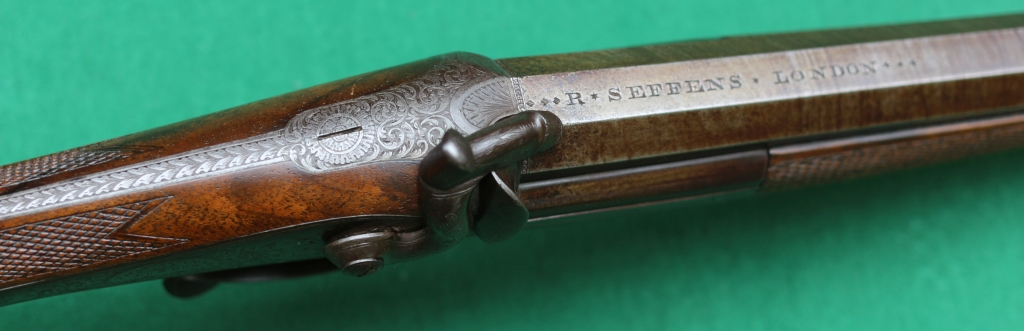
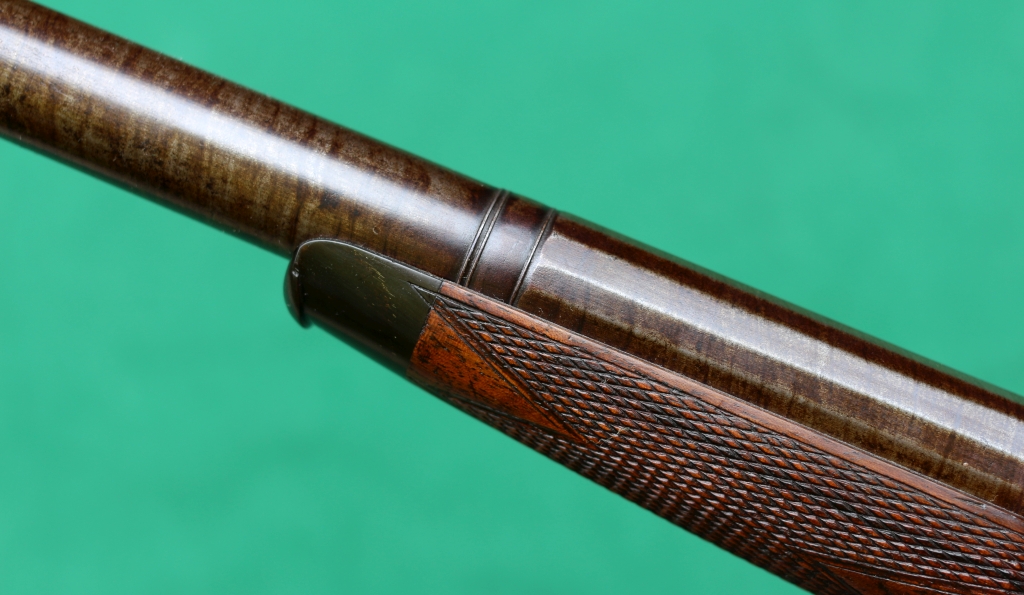
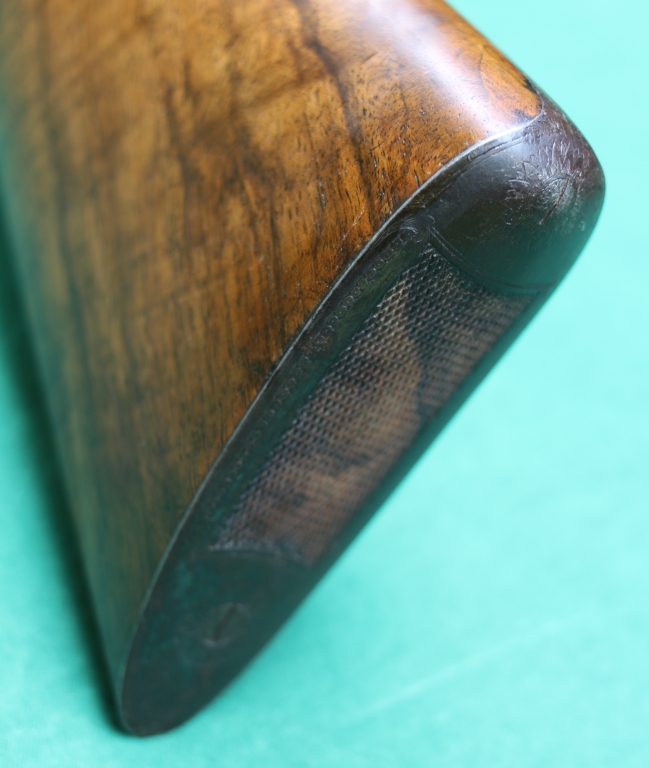
This gun is a 16-bore converted around 1865 with a muzzle-loader barrel by Richard Seffens, who was in business in London in the 1820s (the original Seffens gun might have been a flintlock). What is interesting is that Sylven uses what we now know as the skeleton butt plate, with iron top and bottom and wood visible in the centre. This is the only pinfire I have ever seen with a skeleton plate.
Next in the development of butt furniture is the use of heel and toe caps. Probably easier to fit than a skeleton plate, and it leaves much wood to be admired. All pinfires with heel and toe caps that I've seen have chequered butts.
A very typical use of heel and toe caps can be seen on this 12-bore by James Erskine of Newton Stewart, Scotland, made around 1865. Erskine is not a name frequently encountered, but he was highly regarded in Victorian Britain, having made guns for Prince Albert’s father and other eminent persons. A pair of J. Erskine percussion guns won a bronze medal at the Great Exhibition of 1851.


A very typical use of heel and toe caps can be seen on this 12-bore by James Erskine of Newton Stewart, Scotland, made around 1865. Erskine is not a name frequently encountered, but he was highly regarded in Victorian Britain, having made guns for Prince Albert’s father and other eminent persons. A pair of J. Erskine percussion guns won a bronze medal at the Great Exhibition of 1851.
When you've gotten to the point of toe and heel caps, where do you go from there? I suppose fancy shapes are an option, as well as letting the engraver have a go.
This 12-bore by John Blanch & Son of London, made around 1866, has an interesting teardrop-shaped heel cap, along with a standard toe cap. Both have acanthus scroll engraving, though little remains of the engraver's work.
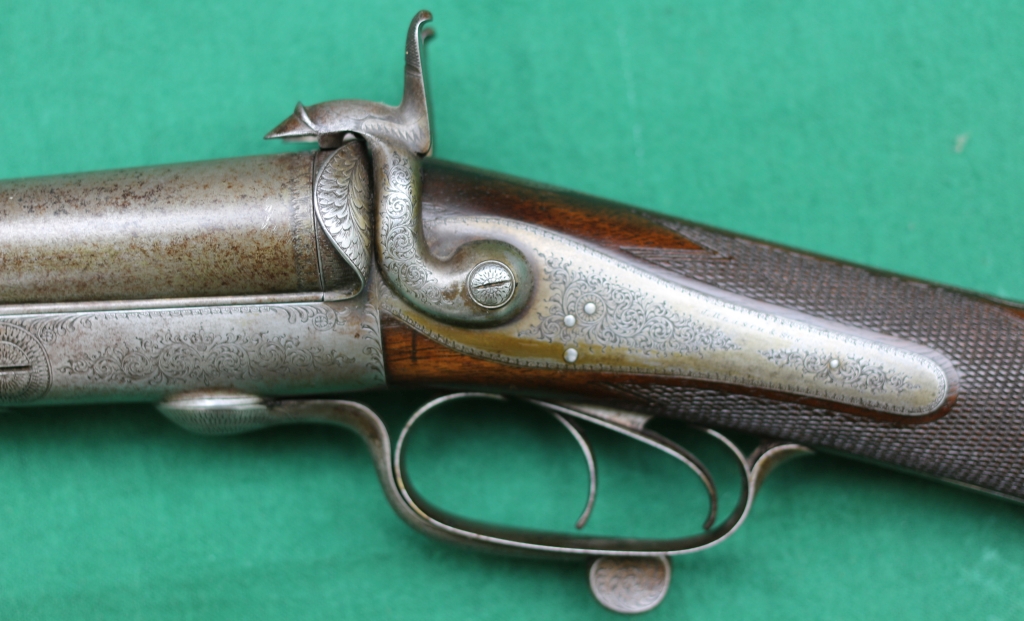
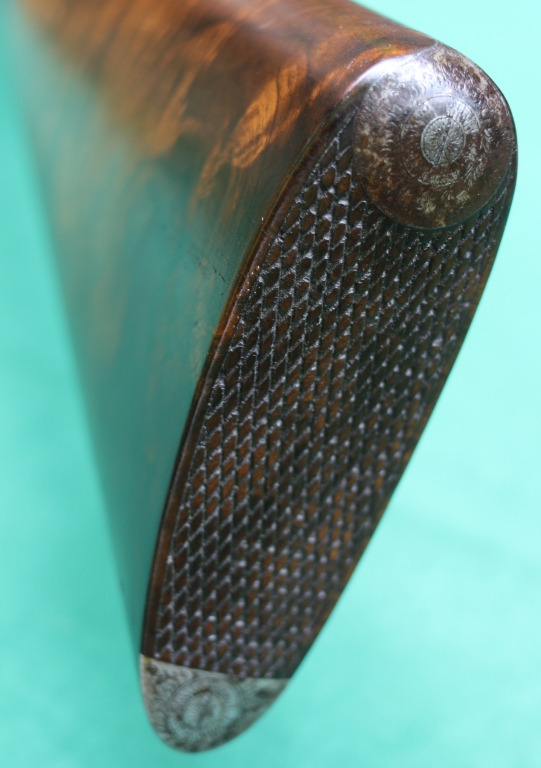
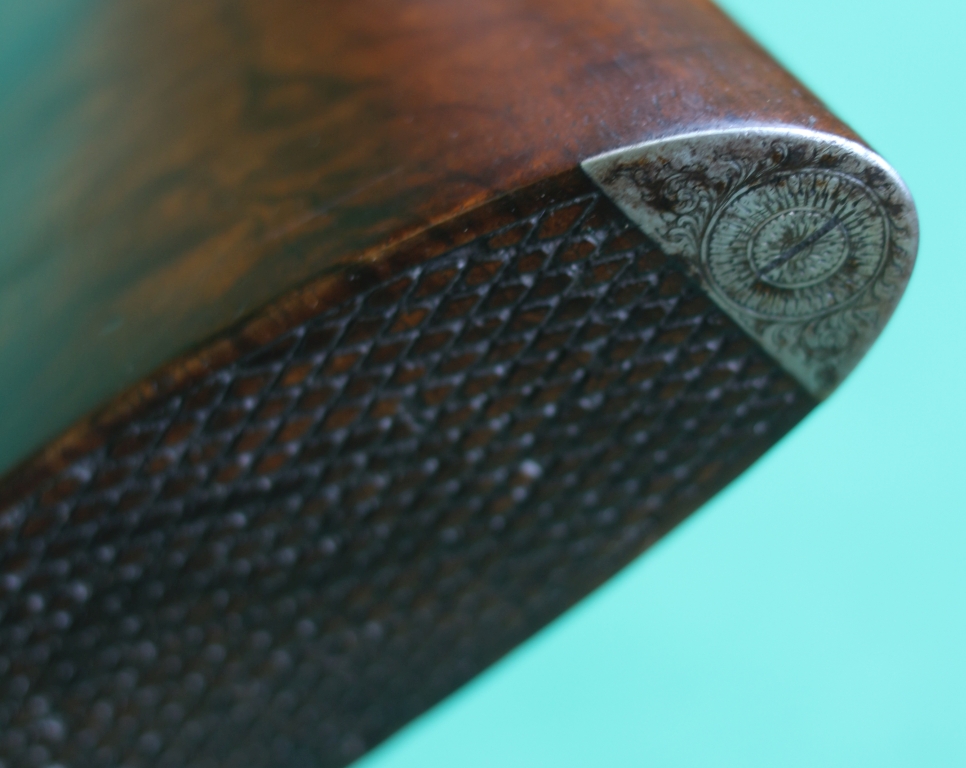
This 12-bore by John Blanch & Son of London, made around 1866, has an interesting teardrop-shaped heel cap, along with a standard toe cap. Both have acanthus scroll engraving, though little remains of the engraver's work.
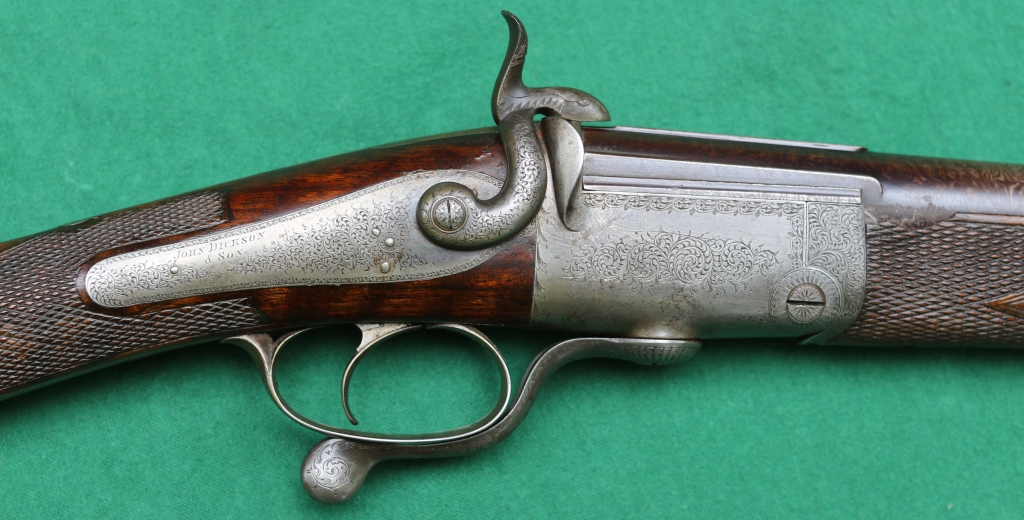
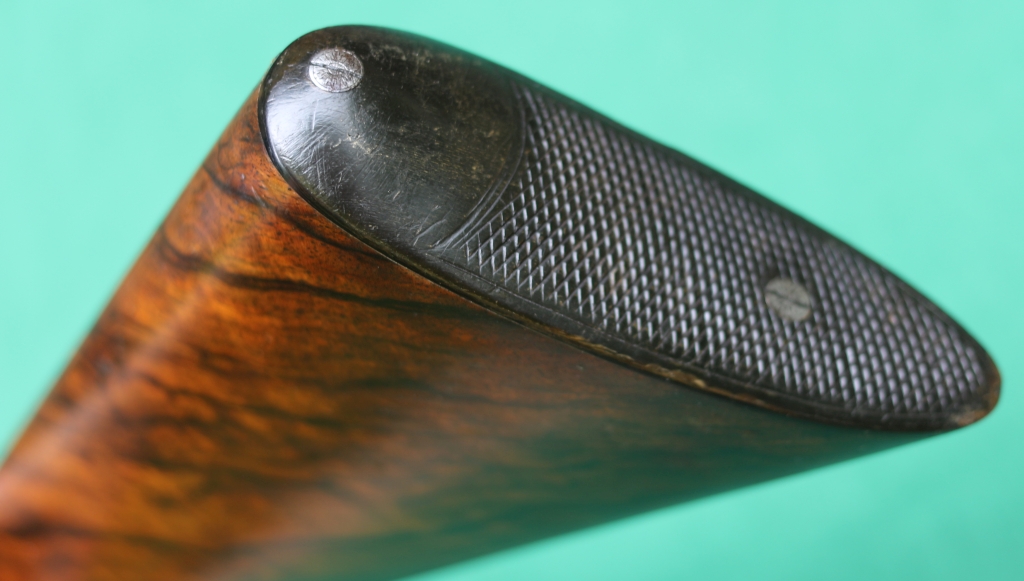
And finally for today, the last of the butt furniture to be found on pinfires, the horn plate. It is hard to think of so common a piece of double gun furniture as having a beginning, but I suspect the horn plate first appeared on pinfires, and not before. It is also unusual, as I've only ever encountered one - on a 12-bore pinfire sporting gun by John Dickson & Son of Edinburgh, made in 1867. Horn fore-end tips and finials are a very common, almost universal, on pinfires. Horn is also used extensively on continental pinfires for underlevers and trigger guards, but using horn butt plates is a real rarity, if it is original. Of course, there is always the possibility that it was added to the Dickson later in its life. One thing I've learned with mid-Victorian gunmaking, anything is possible.