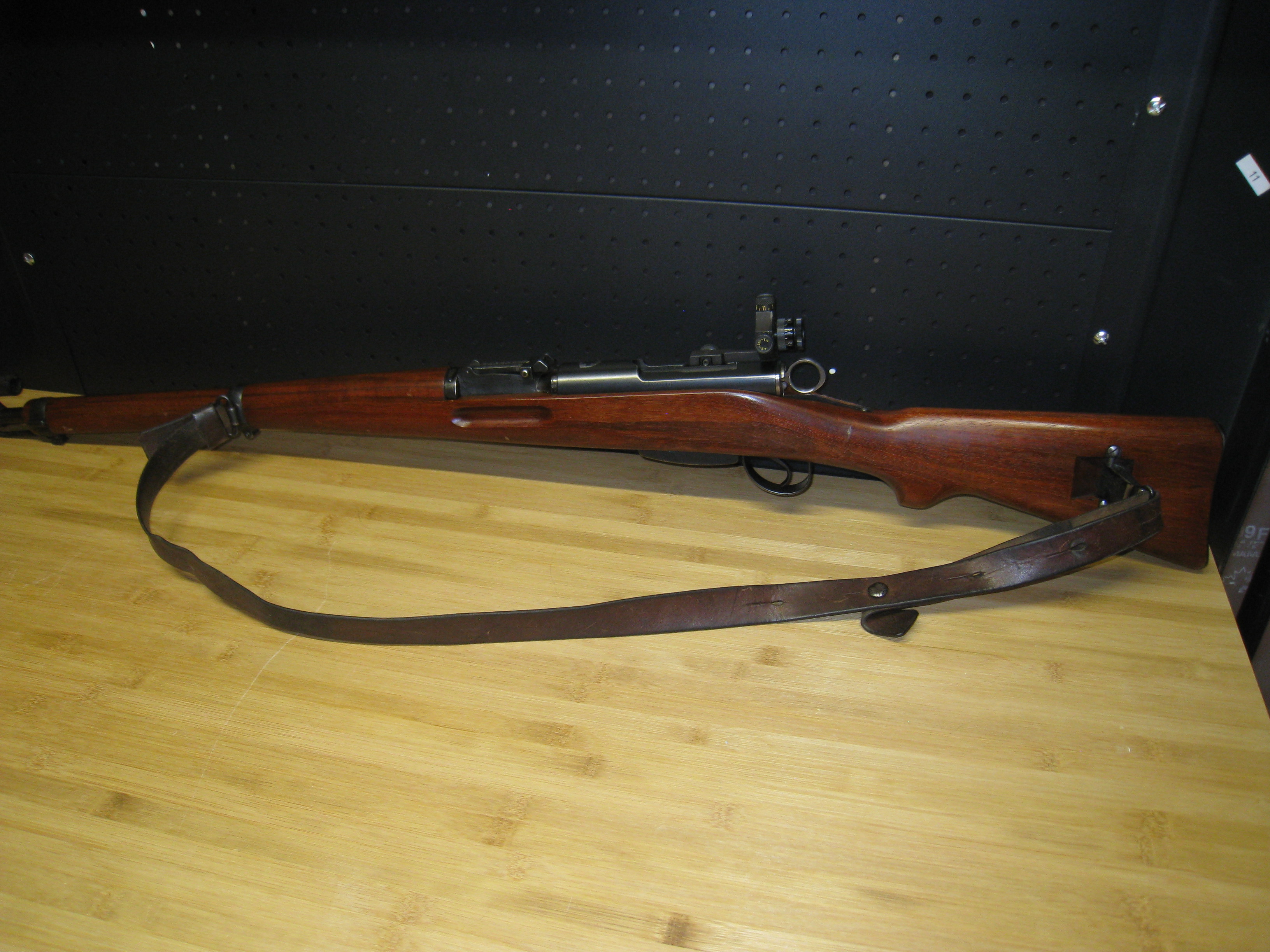
Pre sight-in routine is important.
Everyone get caught not checking for loose action screws before the first shots.
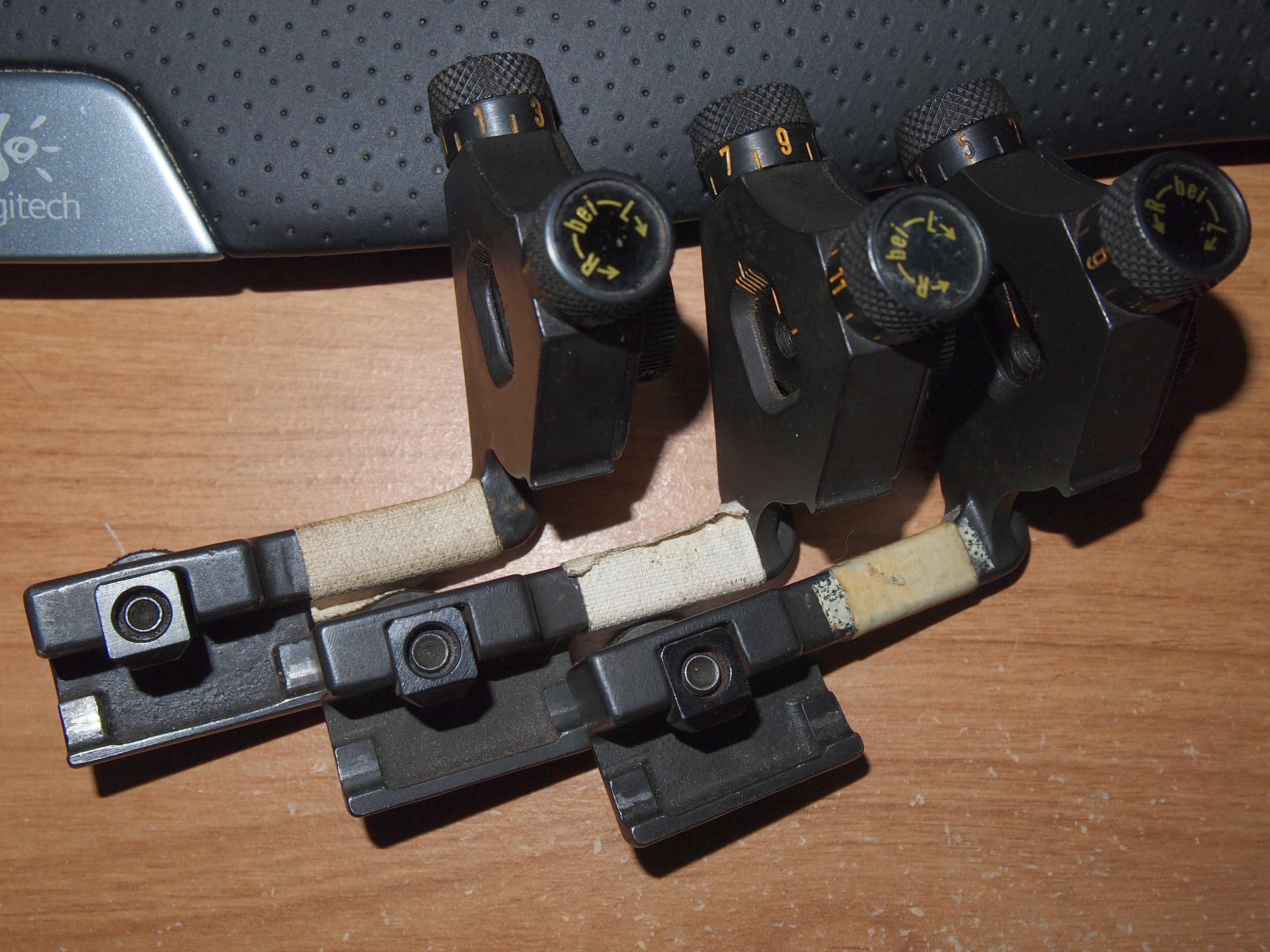
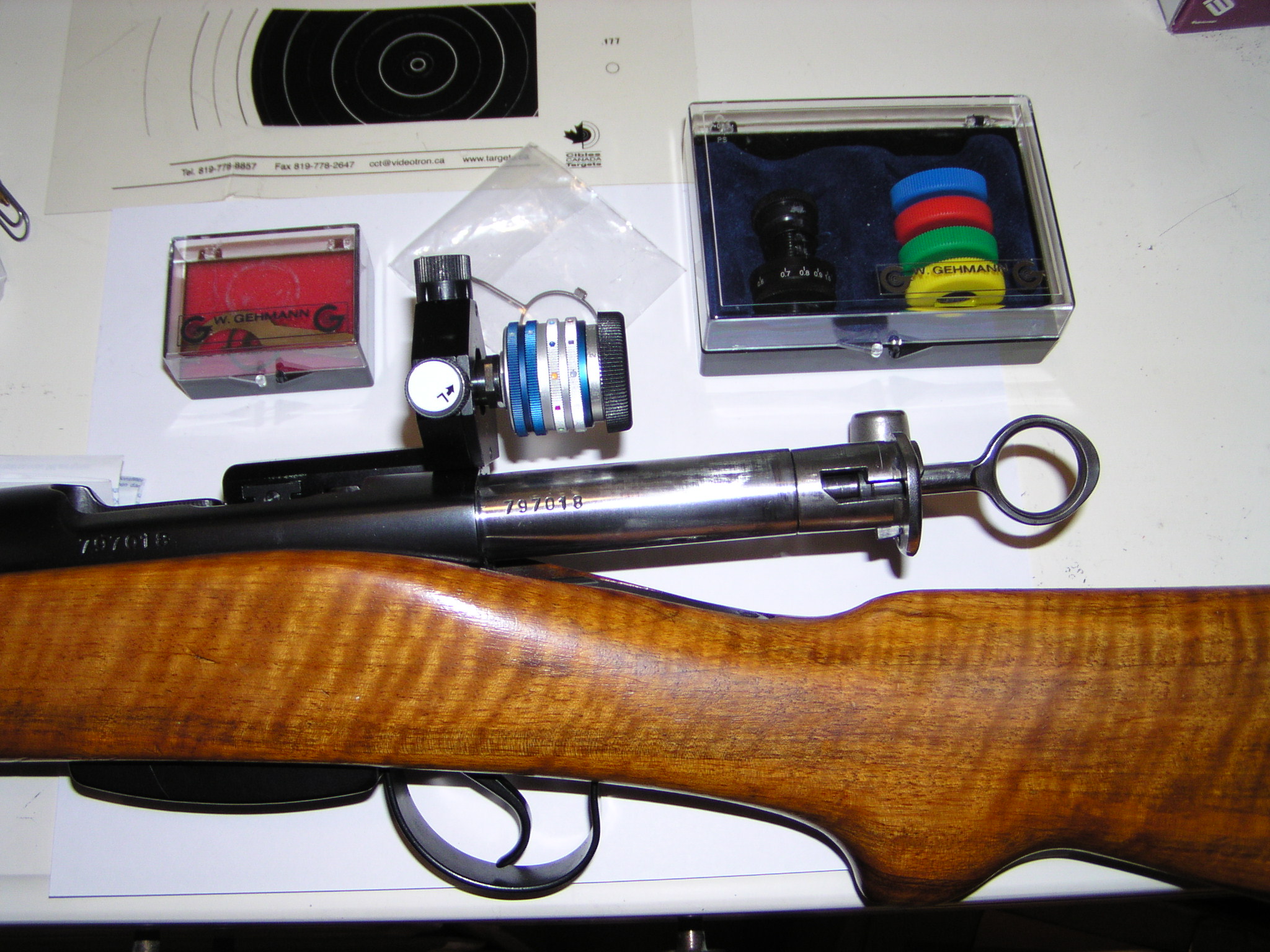
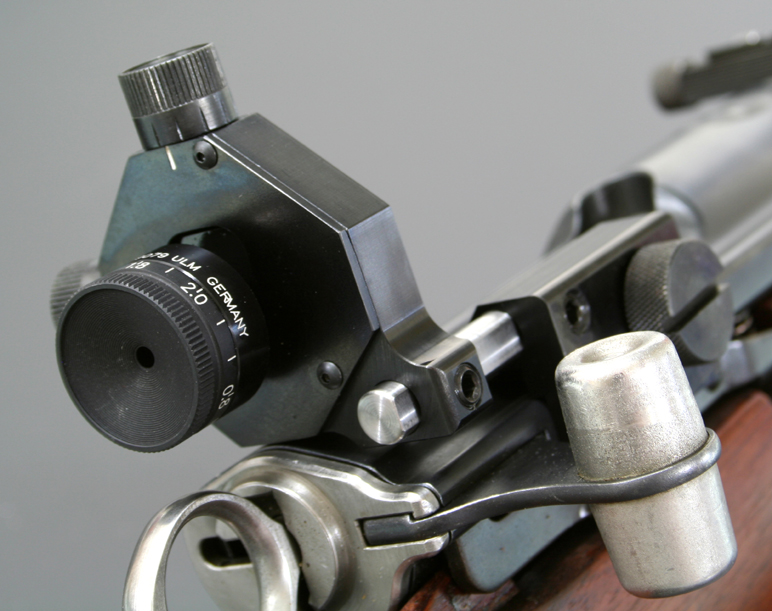
Sighting in a W&F diopter set:See notes at end for a Swiss Products Diopter
Pre-sight in:
1) Make sure rifle is unloaded.
2) Install diopter set properly on to the rifle. Make sure all the diopter screws are tight.
3) Loosen both action screws and both barrel band screws.
4) Hold rifle vertically with its butt plate against the ground, grab barrel and push towards butt.
5) Tighten front action screw first, then tang screw. Some rifles are better if you back off tang screw slightly.
6) Tighten front barrel band. Barrel should be centered in stock. Leave slightly loose for most rifles.
7) Tighten sling barrel band only enough so that the spring detente can still be moved when you press on it.
Sight in:
1) Get into shooting position with unloaded rifle. Everything you will need to shoot should be within arms reach. Do not get up or move your elbows too much.
2) Find the best place for your cheek on the stock. You should be fairly close to the safety ring. I use my thumb as a spacer between the ring and my nose to get the same cheek position time after time. I of course lower my thumb before firing.
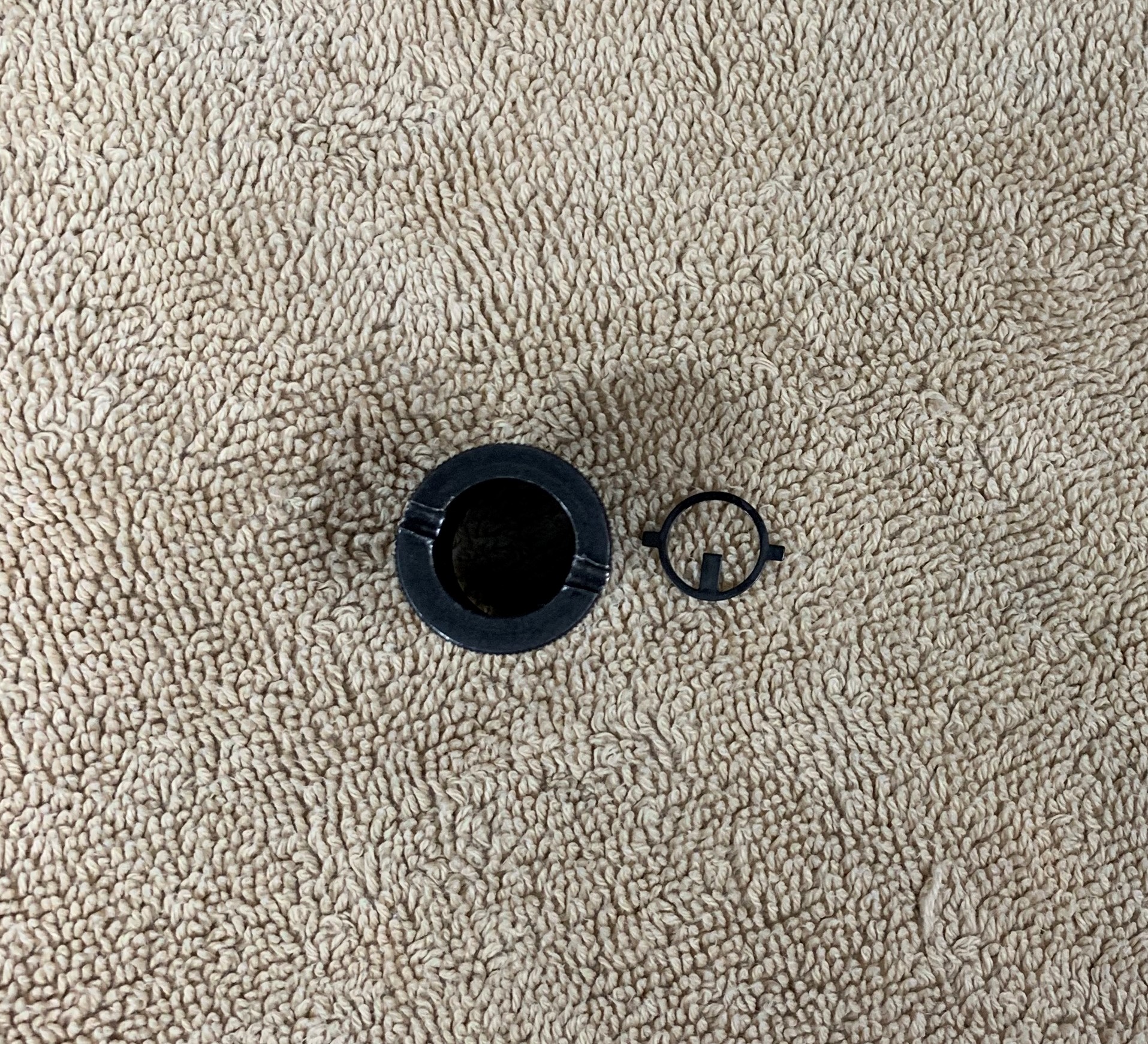
3) Center the front sight hood in rear sight. Should have equal amount of space all around the outside of the front side hood.
4) Aim at target, center it in the middle of your front sight ring or on top of the front sight post with a slight gap between the top of the post and the bottom of the target.
5) You should always be focusing on the front sight, not the target.
6) Dry fire a couple times.
7) Move to the third smallest hole available on the rear diopter sight.
8 ) See how sharp the front post or aperture is.
9) Compare the sharpness of the front sight using smaller and larger rear diopter hole sizes. Look for the clearest possible setting for the light conditions you have that day.
10) Now you can load the rifle! I just saved you a lot of money in ammo.
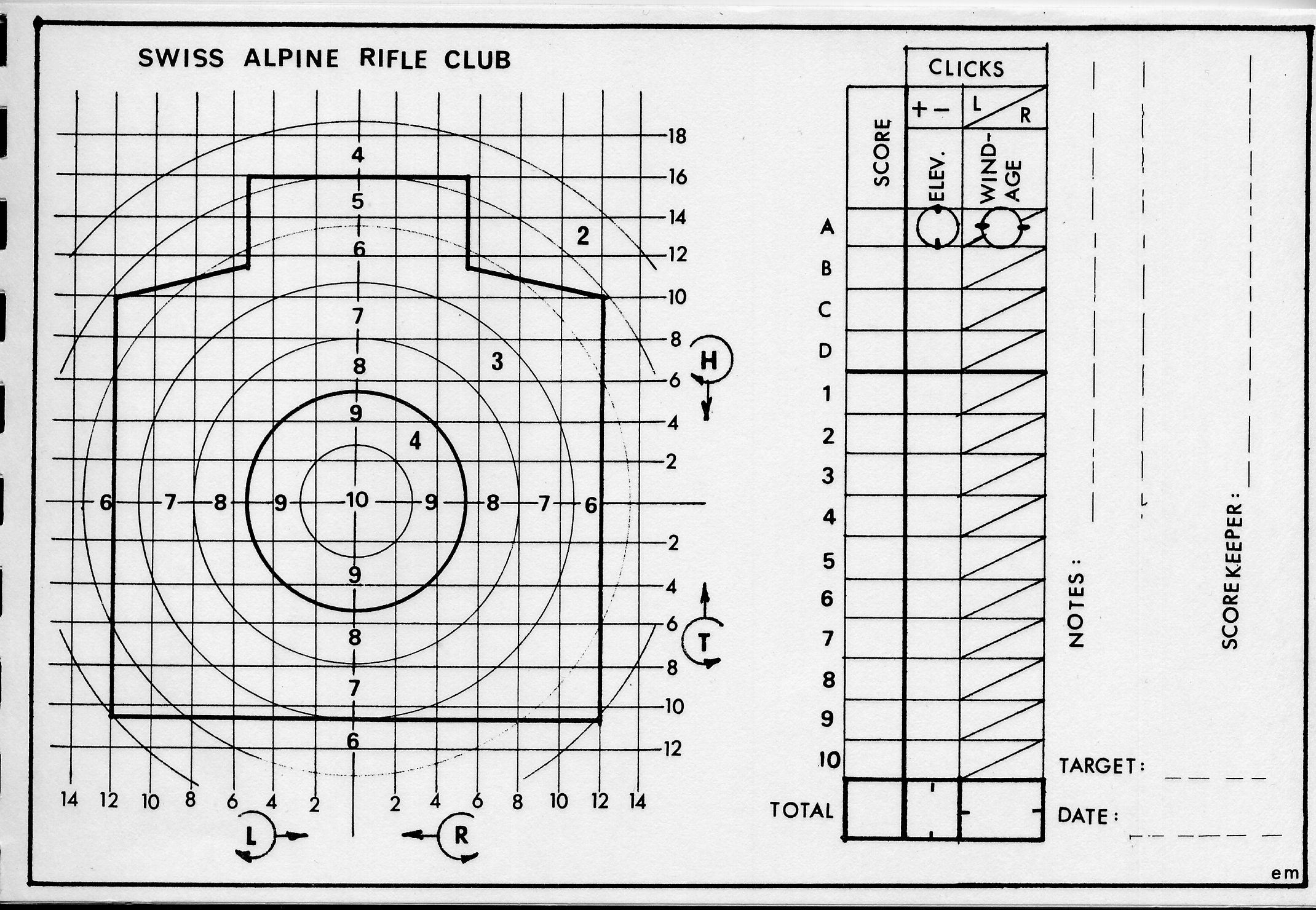
11) Keep a sheet of paper and a pencil handy. Keep track of every shot.
12) First shot is a fouler. Write:"1- F", and its clock position.
13) Fire three more shots and write down their clock positions.
14) Estimate where the center of shots 2, 3 and 4 is and correct accordingly. Remember each click is 1/4 MOA.
15) Repeat from 13 until you are sighted in.
Notes:
All of the following are more noticeable as the shooting distance increases.
1) Expect your point of impact to change during the course of the day as the sun changes it position relative to the target.
2) If you change aperture size after sight-in, you most likely will have re-sight it again.
3) Changes in cheek position WILL affect your sighting.
4) Changes in body positions WILL affect you sighting.
5) Do not mix ammo, I always try to use the same lot of ammo in a session, even with GP11.
W&F diopter adjustments are by where the shot was.
Example
If you shooting high at 12 o'clock, correct by turning the knob in direct H, for High.T= Low( remember: Stop, you LOW down THIEF),
R= Right, L= Left.
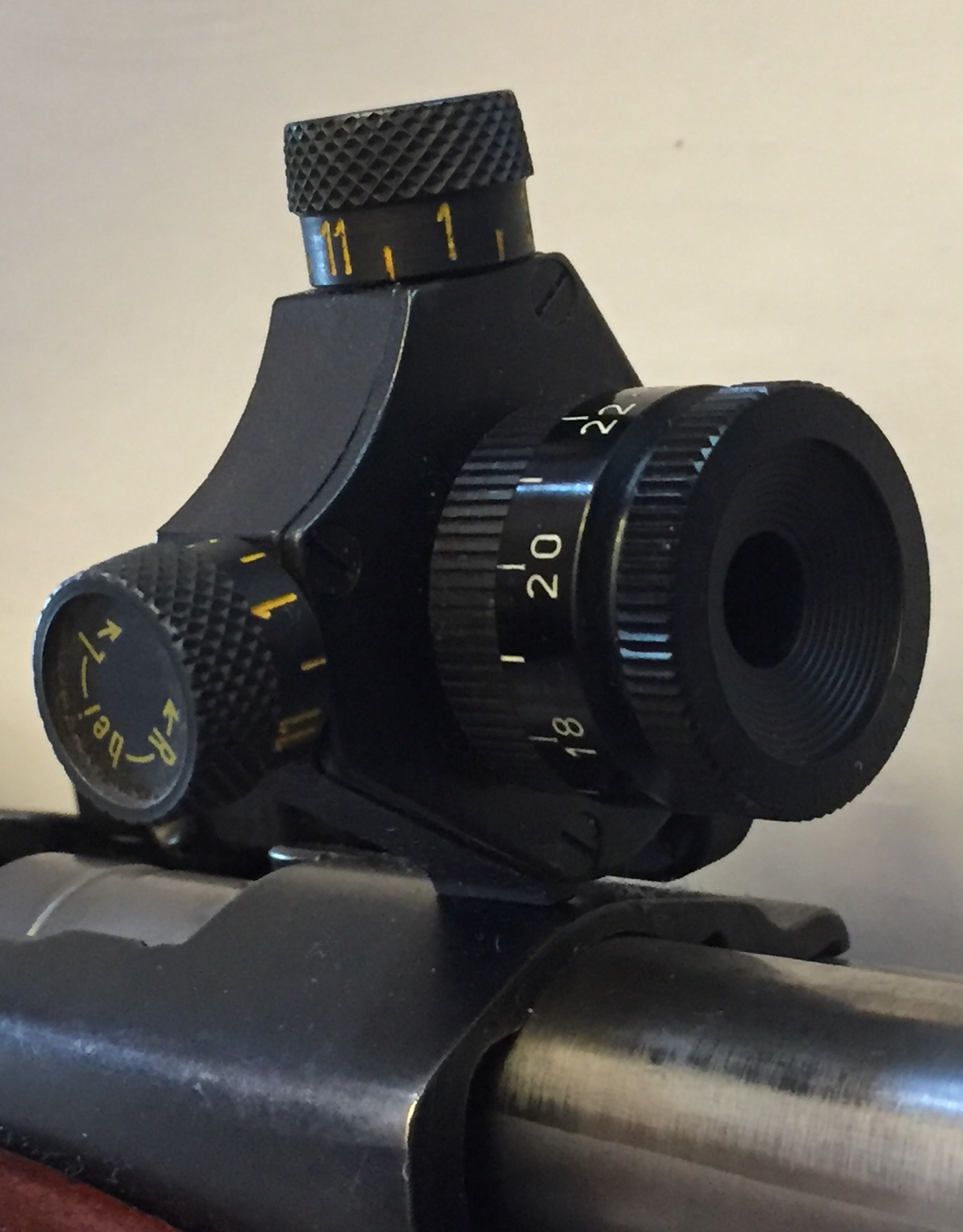
Swiss Products diopter corrections are by where you want the shot to go.Iris uses leaf type blades.
Suggestions for the latest version:
a) Center the left/right adjustment before mounting the rear sight. and
b) Lower the elevation all the way down GENTLY, no need to show off your strength here and strip the thread.
c) leave the front sight slightly loose to to adjust left /right more easily with the most adjustment range still left on the rear sight.
Front sight must be move in the opposite direction you to move the impact to g

nce you are reasonable close, tight the front sight down all the way.The problem MOST of the people I have helped with shooting a K31, or any other sizable rifle, have is flinching.The best way to overcome it is by calling your shots. If you have no idea where you last shot went, then either your eyes were closed or the sights were moving too much from jerking the trigger. Should this happen to you( It does to EVERYONE now and then), dry-fire until you see the sights are stable during the firing process.