LC Smith value question

Chuck

CGN Regular
Rating - 99.3%
144   1   1
Location
Deep River
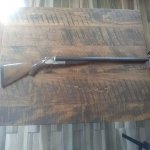
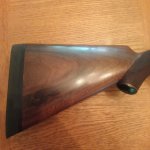
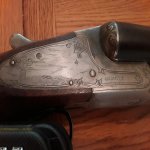
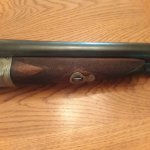
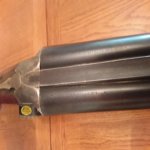
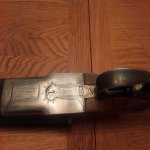
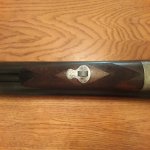
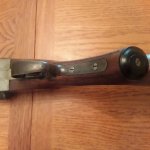
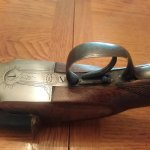
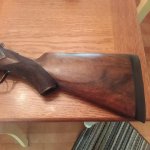
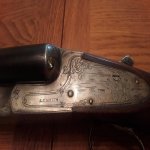
I've got an LC Smith Long Range 12 gauge. It has 32" barrels with full chokes on both barrels. It has ejectors and a single trigger. I should also mention that it is a Trap Grade with 3" chambers and it dates to 1926. It has been skillfully refinished and is otherwise original except for the recoil pad.

Does anyone have an opinion as to the value of this shotgun? Otherwise does anyone have a suggestion about how I might get a reasonable assessment of its value.

FB_IMG_1590635788813.jpg
 

Attachments

  • FB_IMG_1590635788813.jpg
    FB_IMG_1590635788813.jpg
    34 KB · Views: 261
I have a idea, but there are 2-3 here that are way better than I am on these, But your picture sucks , if you want a detail assessment, I see lots of glare from the window. And if I blow it up , gets fuzzy,
what is stamped on the frame and barrel flats? The single trigger and ejectors are a big +, recoil pad and a refinish are be a big -, depending who did. and how. Good for a shooter.
Collectors just hate refinished guns.
 
Last edited:
Well, if you are an LC Smith fan, this is a fairly desirable model. Introduced in 1924 (there is some argument about this) to compete with the new AH Fox HE model, both designed for extra long range and to maximize the new SuperX powder from Winchester. The Foxes, often called Super Foxes, are generally more desirable than the Smiths, all else being equal.

As a Trap grade, this would put the gun at an ornamentation level similar to a Fox B grade or a Parker PH. If Elsies are anything like Foxes, most of these long range guns would have had very basic ornamentation/engraving. They were really made for waterfowl hunting, not showing off. So there is the possibility that the Trap grade, while kinda common for regular Elsies, is quite rare on a Long Range. IDK.

As a 32" barrel, full choked and 3" chambers you have the most desirable configuration. The Hunter One single trigger, standard on all Trap grades, would be desirable for collectors, less so for those intending to use the gun. And having been refinished, this is no longer a collectors gun.

The fact that it has been refinished will reduce the value somewhat. It would help to know who did the refinishing and exactly what was done. This info can affect value.

For vintage SxS values, I typically (along with some others here who have come to the same conclusion) start by understanding that our market is not nearly as vibrant as the US market. So realized prices are always lower. Typically, I look at an equivalent model in equivalent condition and see what it is selling for in the US. Selling for, not listed at. I then consider that number to be the top end of the range in Canadian dollars in Canada. It means that if the gun is valuable enough it may be worth it to go through the headache of exporting to the US for sale. But most are not.

You have a reasonable unique gun. But that doesn't mean it is worth a ton. A Fox HE in the 32" / 3" config in good, refinished condition will sell in the $4-6K range. The Smith will sell for noticeably less. Just how much less I am not sure.

The very best ways to determine value start with understanding just where this gun fits into the world of LS Smith guns. How rare in this configuration. To do that, go to the LC Smith Collectors Association website and ask some questions there. Do not expect to get a accurate value from them, just info about what exactly you have. Then scour US auction sites for similar guns and look at their prices, both sold and asking. Because this is relatively rare, there won't be a lot. You will have to make some assumptions. But also know, the market is off right now and a gun like this is only ever worth what someone will pay for it on the day you try to sell it.


Edit to add: Just looking at realized prices in Morphy's February auction. A French gun I am familiar with, which had a pre auction estimate of $1800 - $3000 USD, got a hammer price of $780. The market is soft.
 
Last edited:
I have a idea, but there are 2-3 here that are way better than I am on these, But your picture sucks , if you want a detail assessment, I see lots of glare from the window. And if I blow it up , gets fuzzy,
what is stamped on the frame and barrel flats? The single trigger and ejectors are a big +, recoil pad and a refinish are be a big -, depending who did. and how. Good for a shooter.
Collectors just hate refinished guns.

I will see if I can get some better quality pictures taken today and get back to you. When I got it the gun showed about a hundred years of honest use as a good gun but it was mechanically perfect, the bores were good, the checkering was still good and there wasn't any pitting. On the downside it had a Remington butt plate and the stock finish was in poor shape. I small time but talented local guy rust blued the barrels and refinished the stocks with a blend of beeswax, linseed (or tung) oil and turpentine if I remember he blend correctly. He really did a very nice job of it.
 
Well, if you are an LC Smith fan, this is a fairly desirable model. Introduced in 1924 (there is some argument about this) to compete with the new AH Fox HE model, both designed for extra long range and to maximize the new SuperX powder from Winchester. The Foxes, often called Super Foxes, are generally more desirable than the Smiths, all else being equal.

As a Trap grade, this would put the gun at an ornamentation level similar to a Fox B grade or a Parker PH. If Elsies are anything like Foxes, most of these long range guns would have had very basic ornamentation/engraving. They were really made for waterfowl hunting, not showing off. So there is the possibility that the Trap grade, while kinda common for regular Elsies, is quite rare on a Long Range. IDK.

As a 32" barrel, full choked and 3" chambers you have the most desirable configuration. The Hunter One single trigger, standard on all Trap grades, would be desirable for collectors, less so for those intending to use the gun. And having been refinished, this is no longer a collectors gun.

The fact that it has been refinished will reduce the value somewhat. It would help to know who did the refinishing and exactly what was done. This info can affect value.

For vintage SxS values, I typically (along with some others here who have come to the same conclusion) start by understanding that our market is not nearly as vibrant as the US market. So realized prices are always lower. Typically, I look at an equivalent model in equivalent condition and see what it is selling for in the US. Selling for, not listed at. I then consider that number to be the top end of the range in Canadian dollars in Canada. It means that if the gun is valuable enough it may be worth it to go through the headache of exporting to the US for sale. But most are not.

You have a reasonable unique gun. But that doesn't mean it is worth a ton. A Fox HE in the 32" / 3" config in good, refinished condition will sell in the $4-6K range. The Smith will sell for noticeably less. Just how much less I am not sure.

The very best ways to determine value start with understanding just where this gun fits into the world of LS Smith guns. How rare in this configuration. To do that, go to the LC Smith Collectors Association website and ask some questions there. Do not expect to get a accurate value from them, just info about what exactly you have. Then scour US auction sites for similar guns and look at their prices, both sold and asking. Because this is relatively rare, there won't be a lot. You will have to make some assumptions. But also know, the market is off right now and a gun like this is only ever worth what someone will pay for it on the day you try to sell it.

I did get the impression that this shotgun would be quite unique. My interest and knowledge of things gun related runs more strongly towards rifles so while I'm not so familiar shotguns I do understand what your are saying about Canadian gun values versus American prices, especially in the current market. It is interesting that you mention the L.C. Smith Collectors Association. I joined a couple months ago and I am planning to get a research letter from them, I just haven't do so yet.

What I can say for sure is that it is a really beautiful gun and one that I shot well from the first time busting clays with it last September. I expect that it will be my goose gun for many years to come.
 
Well, if you are an LC Smith fan, this is a fairly desirable model. Introduced in 1924 (there is some argument about this) to compete with the new AH Fox HE model, both designed for extra long range and to maximize the new SuperX powder from Winchester. The Foxes, often called Super Foxes, are generally more desirable than the Smiths, all else being equal.

As a Trap grade, this would put the gun at an ornamentation level similar to a Fox B grade or a Parker PH. If Elsies are anything like Foxes, most of these long range guns would have had very basic ornamentation/engraving. They were really made for waterfowl hunting, not showing off. So there is the possibility that the Trap grade, while kinda common for regular Elsies, is quite rare on a Long Range. IDK.

As a 32" barrel, full choked and 3" chambers you have the most desirable configuration. The Hunter One single trigger, standard on all Trap grades, would be desirable for collectors, less so for those intending to use the gun. And having been refinished, this is no longer a collectors gun.

The fact that it has been refinished will reduce the value somewhat. It would help to know who did the refinishing and exactly what was done. This info can affect value.

For vintage SxS values, I typically (along with some others here who have come to the same conclusion) start by understanding that our market is not nearly as vibrant as the US market. So realized prices are always lower. Typically, I look at an equivalent model in equivalent condition and see what it is selling for in the US. Selling for, not listed at. I then consider that number to be the top end of the range in Canadian dollars in Canada. It means that if the gun is valuable enough it may be worth it to go through the headache of exporting to the US for sale. But most are not.

You have a reasonable unique gun. But that doesn't mean it is worth a ton. A Fox HE in the 32" / 3" config in good, refinished condition will sell in the $4-6K range. The Smith will sell for noticeably less. Just how much less I am not sure.

The very best ways to determine value start with understanding just where this gun fits into the world of LS Smith guns. How rare in this configuration. To do that, go to the LC Smith Collectors Association website and ask some questions there. Do not expect to get a accurate value from them, just info about what exactly you have. Then scour US auction sites for similar guns and look at their prices, both sold and asking. Because this is relatively rare, there won't be a lot. You will have to make some assumptions. But also know, the market is off right now and a gun like this is only ever worth what someone will pay for it on the day you try to sell it.

I did get the impression that this shotgun would be quite unique. My interest and knowledge of things gun related runs more strongly towards rifles so while I'm not so familiar shotguns I do understand what your are saying about Canadian gun values versus American prices, especially in the current market. It is interesting that you mention the L.C. Smith Collectors Association. I joined a couple months ago and I am planning to get a research letter from them, I just haven't do so yet.

What I can say for sure is that it is a really beautiful gun and one that I shot well from the first time busting clays with it last September. I expect that it will be my goose gun for many years to come.
 
Here are some pictures.

20200528_145252.jpg

20200528_145313.jpg

20200528_145321.jpg

20200528_145357.jpg

20200528_145432.jpg
 

Attachments

  • 20200528_145252.jpg
    20200528_145252.jpg
    60 KB · Views: 198
  • 20200528_145313.jpg
    20200528_145313.jpg
    64 KB · Views: 197
  • 20200528_145321.jpg
    20200528_145321.jpg
    64.3 KB · Views: 197
  • 20200528_145357.jpg
    20200528_145357.jpg
    45.8 KB · Views: 197
  • 20200528_145432.jpg
    20200528_145432.jpg
    62.5 KB · Views: 196
And a few more.

20200528_145440.jpg

20200528_145447.jpg

20200528_145500.jpg

20200528_145519.jpg

20200528_145541.jpg
 

Attachments

  • 20200528_145440.jpg
    20200528_145440.jpg
    65 KB · Views: 199
  • 20200528_145447.jpg
    20200528_145447.jpg
    48.5 KB · Views: 197
  • 20200528_145500.jpg
    20200528_145500.jpg
    58.8 KB · Views: 197
  • 20200528_145519.jpg
    20200528_145519.jpg
    67.5 KB · Views: 200
  • 20200528_145541.jpg
    20200528_145541.jpg
    63.2 KB · Views: 196
Looking at those pictures and imagining you actually using the gun as you suggest.

What comes to mind is that while the stock may have been refinished, it does not look like the wood was properly prepared for the refinish. And by that I mean the oil removed from where it has seeped in over time where the action meets the wood and, once removed, having the inletted surfaces glass bedded.

This is typically a problem with vintage guns. The decades of oil seep weakens and then ruins the strength of the wood where it is most needed. At the metal/wood interface where the forces of recoil have their greatest impact. This is doubly true on LC Smiths because the design requires inletting that can rightly be called "way too much". There just isn't enough wood left in the head of the stock unless things are perfect. And the natural shrinkage of wood contribute to the problem by focusing the recoil force, not distributing it.

If it were mine and I intended to use the gun, I would have the stock removed, the oil removed (can be up to a few weeks process) and then the inletted area glass bedded to both strengthen the wood and to build up those areas of shrunken wood back to where they are properly making contact with the metal and able to properly distribute the recoil load. Otherwise you will soon have a ruined stock. If that process then meant you needed a complete refinish, so be it. That's the cost of having the work done by someone who really doesn't know vintage SxS. I don't mean to be too presumptuous here but there are lots of skilled gunsmiths. There are few skilled vintage SxS gunsmiths. If I sound a little snarky on the subject of smiths, it's because I've seen too many fine guns buggered by smiths who may have been competent in other areas of guns but should have understood when they were in over their head with SxS.

While these guns are made for waterfowl and 3" shells using modern powders, they are still close to 100 years old. With full chokes they were never meant for steel. The heavier the load, the shorter the lifespan of the wood will be. I would have a gunsmith measure the barrel walls for thickness. That will give you some indication of the current strength of the barrels. The smith can explain it to you. If your gunsmith can't do this, don't let him work on a vintage SxS...he's not in that business. When you understand the gun's limitations, you can explore it's strengths and have a wonderful time with it.

 
Last edited:
Although I’m not an L.C. Smith guy, that is a unique and interesting gun Chuck. Very nice. I think Canvasback gives you good advice. I wouldn’t be able to put a price on it for you. Sorry.

 
Not so sure 3 in shells were made in 20’s maybe wrong but I never saw any until early 80 just an old guy’s thought
 
Not so sure 3 in shells were made in 20’s maybe wrong but I never saw any until early 80 just an old guy’s thought

They were made.

The Fox HE and the LC Smith Long Range were both designed specifically with their use in mind. Both could be ordered in either 3” or 2 3/4” chambers.
 
When I said there are guys that are more up on these than I am, Canvasback is who I was thinking about.
I will add , I restock a gun just like this many yrs ago (50?) with no power tools other than a band saw to rough out the shape.
Part time about 3 months, never again, 2 months after I returned the gun, he climbed though another fence, got tangled up in the wire , again and broke the stock, again.
I just don't know how you can do crap like that.
I would just shoot it, but,I would be not shooting heavy loads. I kind off understand the big pad, but looks like the stock was cut back.
I know you don't want to hear this stuff.
I love the old stuff. Good luck, O and as stated never ever put steel in that . kind of buggers your the goose hunt.
 
I certainly wouldn't put steek through it. I picked up tungsten matrix last fall and a have motion to start loading bismuth for it. On the other hand selling it and buying a used Ruger Red Label 12 gauge and having money left over might be a good option as well.

 
I certainly wouldn't put steek through it. I picked up tungsten matrix last fall and a have motion to start loading bismuth for it. On the other hand selling it and buying a used Ruger Red Label 12 gauge and having money left over might be a good option as well.

To be clear, it's not a gun that interests me. Not only do I already have a couple long range, tightly chokes waterfowl guns, but my taste currently runs more toward Europeans. That said, unless you are prepared to deal with the gun's limitations I would think you are better off selling and buying something a little more modern and a little more versatile. If you want top dollar you are going to have to wait for the guy who has been looking for an Elsie Long Range, not someone looking for a SxS duck gun.

If it were me, I would start a thread on the gun on the LC Smith Collectors site, judge interest and get feedback on US value and sell down there.
 
Back
Top Bottom