Lee Enfield Barrel, help needed identifying sporter

Frost Cracked

CGN Regular
Rating - 100%
40   0   0
Location
My house
I picked up a sporterized 4T enfield a couple years ago, and managed to do a (near complete) restoration of it to what would be close to issue condition. When I got the rifle there were no distinct marks of a parker hale or other recognized conversion. The wood was also a simple cut off without any sort of work done on the buttpad or otherwise.

The barrel however, reminds me of some other conversions I had seen and was hoping the experts here might know if this was a barrel that was professionaly converted, or just a good job by a smith.


0odj5Ze.jpg


ZpGmET3.jpg
 
Looks like Parker Hale or similar. Although they often have that stamped on the front sight base.

The only thing on the barrel is some old military proof marks, and the serial # that matches the receiver... no other markings. But knowing it could be a Parker Hale is nice to know... I would have thought though the wood it came with would have been nicer... as it was just a standard "Sporter" style forestock without much effort put into it.
 
Look really hard on the receiver and the barrel for a PH proof.

But anyway...why does it matter?

How's the collimation for the base pads is a much bigger issue.
 
That front sight ramp could have been a product offered for people that worked on guns - either with two screws that would be drilled/tapped into the barrel, or it was soldered to the barrel. Marble and other USA suppliers come to mind. My 2013 Zastava has one screw under the front sight element and then epoxy or Loctite under the length of it. Caustic Bluing is done before or after, depending how it got attached. The barrel could be sawed off to current length, then a crown formed on a lathe or with a hand crowning tool as is/was sold by Brownell's. So could have been done in a factory, should have been able to be done by most any gunsmith, and many "at home - gun tinkerers" could likely do that - and would be pretty much impossible to tell afterwards which one did it.

An old "gunsmithing" text book here - by Clyde Baker - would likely expect an apprentice to be able to file that ramp out of a piece of bar stock. And then cut the dovetail, and file out the front sight element as well. From the days when labour, especially apprentice's labour, was very inexpensive.
 
Last edited:
Parker Hale did offer front sights to the gunsmithing market years ago, along with a variety of other products. Sile stocks, as used by Parker Hale, were also available. So it was possible to build a complete replica of a Parker Hale, if one was so inclined...
 
For sure I have seen loose front sight ramps with the Parker Hale name on them, that were not on a rifle - had heard they were offered for sale, but can not find them in either the 1940 or the 1968 Parker Hale catalogues that I have here. I found fairly "squared" looking ones, not to this shape, on p. 100 of their 1958 Catalogue. On the several Parker Hale 303 No. 4 conversions that I have had, they stamped the letters "PH" on the receiver, behind or under the bolt handle - if you shoot right handed, could probably place your right thumb on them from a shooting grip.
 
Another vote for parker hale too, I have two sister rifles that are identical, parker hale delux, one has a PH stamp and one does not. But they look very similar to that
 
The front sight ramp is cut for a military pattern dovetail, not the 3/8" dovetail which is pretty much industry standard in North America. For that reason I would assume the barrel work was done in the UK. P-H is obviously a possibility.
 
The front sight is not a Parker Hale. The front sights on the .303 series of Lee Enfield rifles were made and silver soldered on the Lee Enfield barrels. they utilize the same front sights as the Military Lee Enfields.
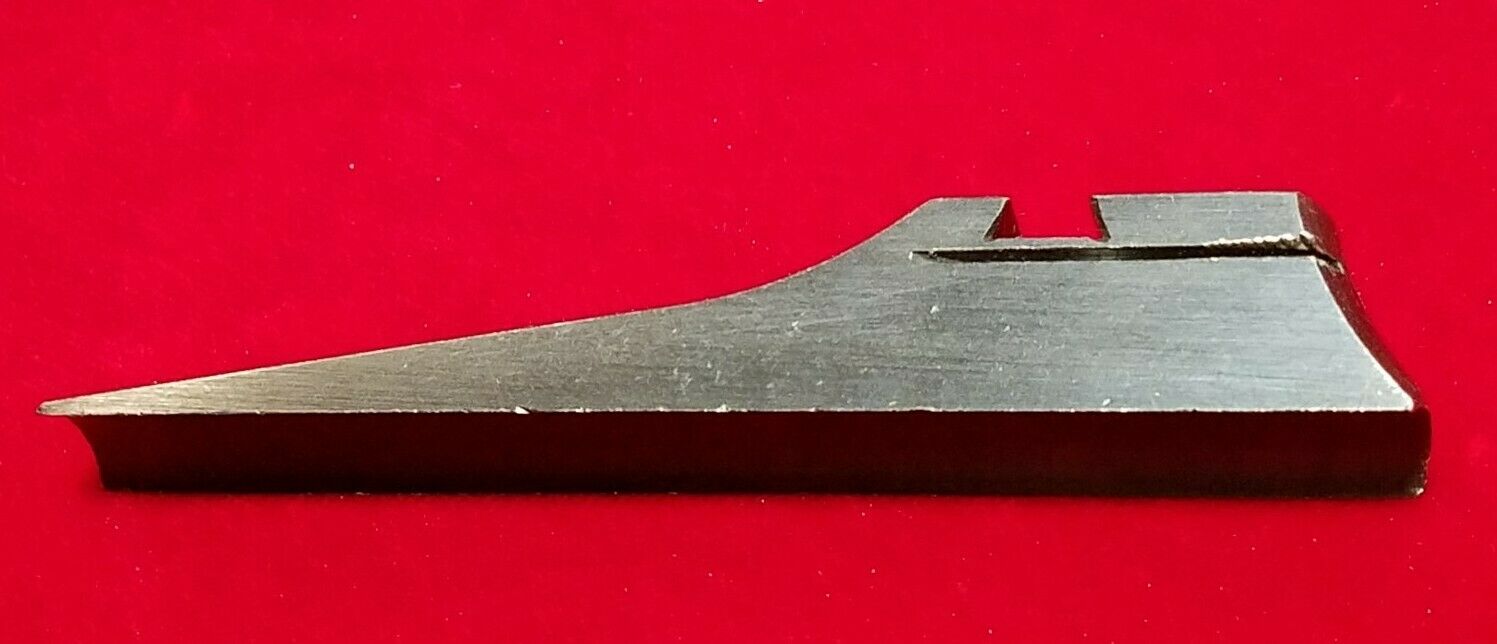
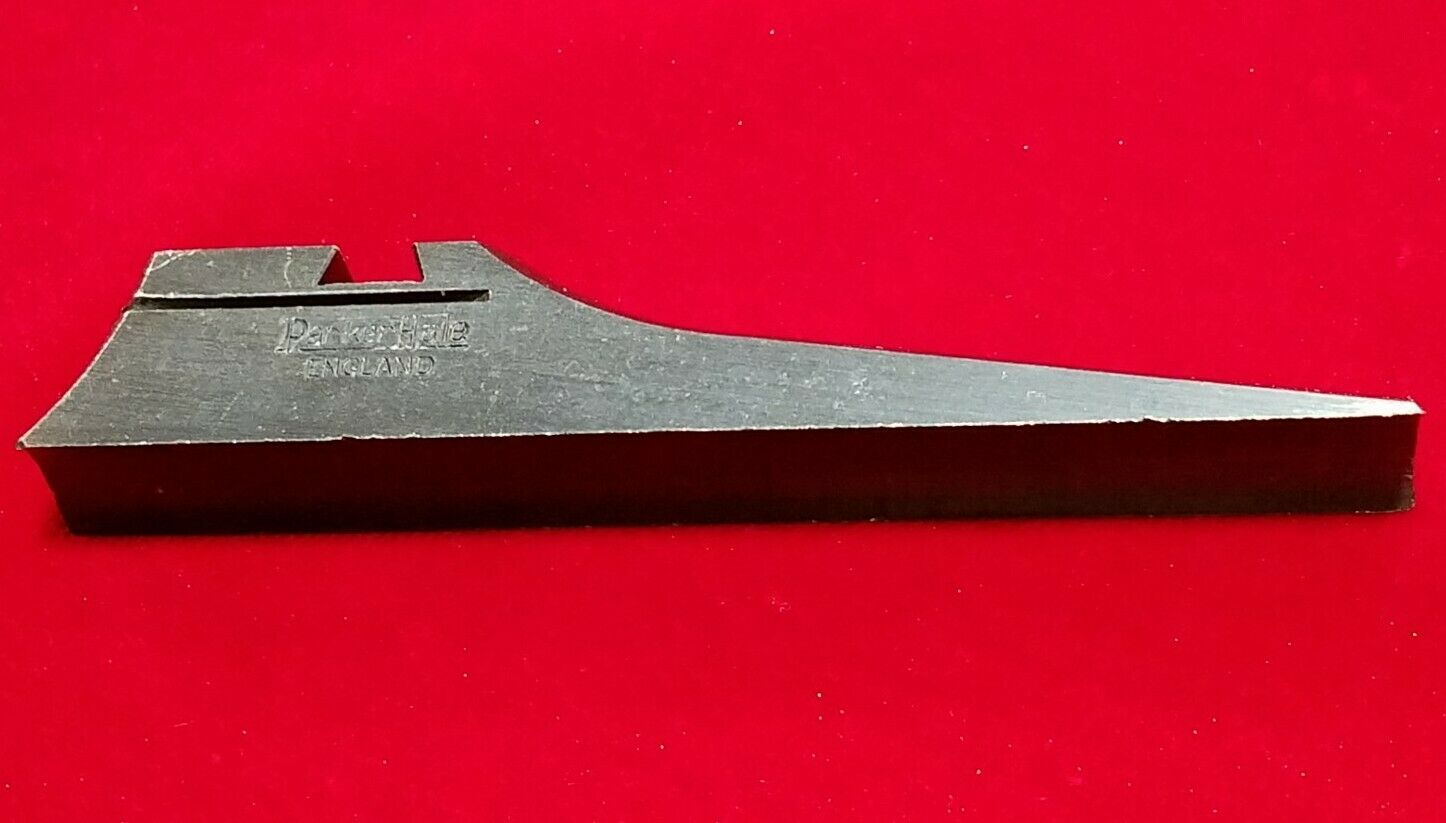
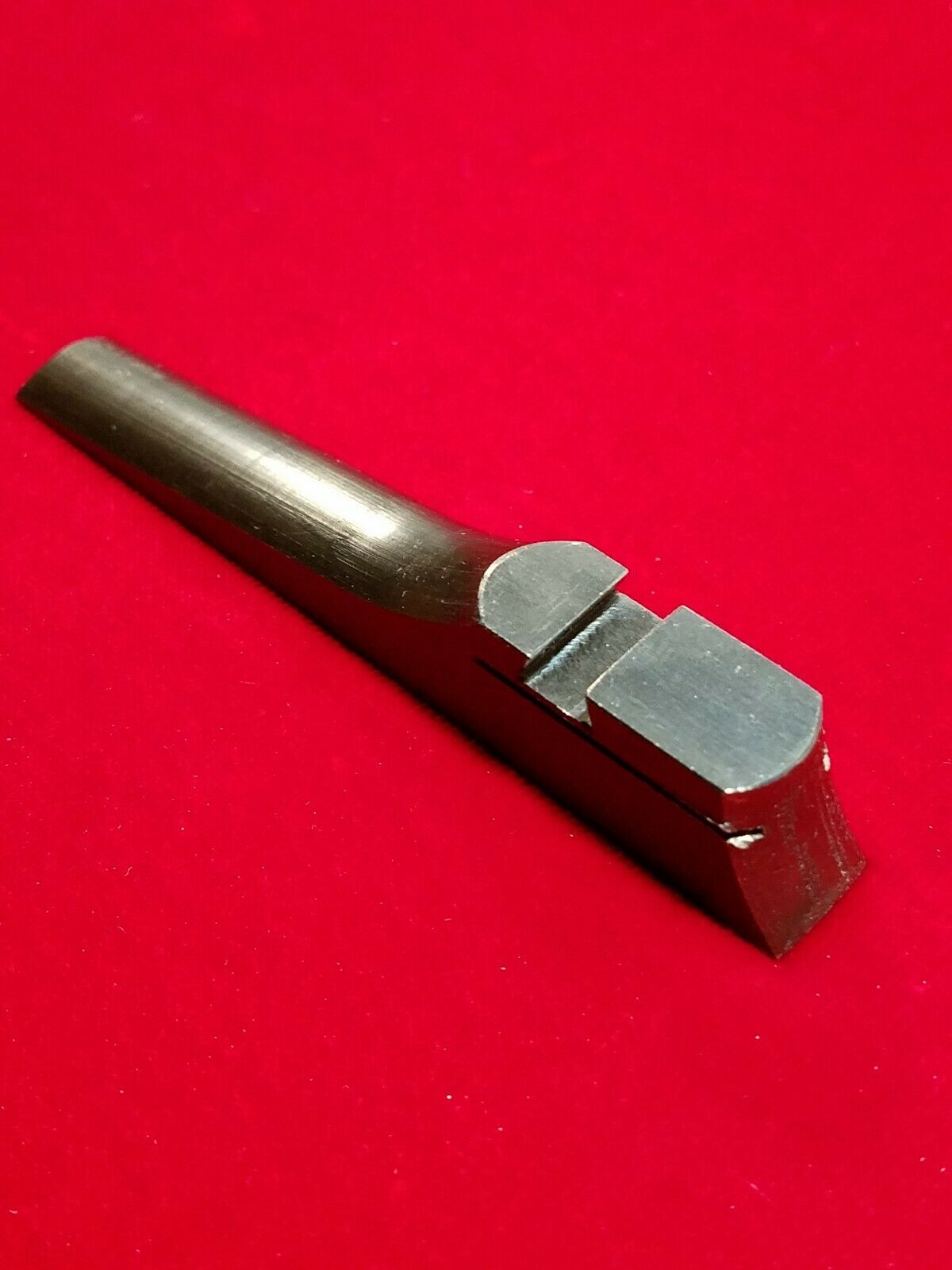
They are very distinct, milled convex top and front with larger top for front sight and hood, stamped "Parker Hale England" on the left side. See images:

Right side

XO6NbXl.jpg


Left side

ppSSUyd.jpg


A very distinct top, they always were grooved for the unique PH "swept-back" front hood.

fjNTnpM.jpg
 
Hmm.... So what I have is a rifle that was sporterized... possably in the UK because of the military sight installed in the sight ramp... but by many indications, (lack of stamping, non-professional cut-down of the wood,) not the work of a professional company, but, still likely the work of someone with some amount of skill... The bolt is as well, mis-matched so...

As for if the sight-pads line up, I dunno... didn't come with a scope. The stamping on the receiver all seems to be 'proper' for a T, including the markings near the top for the scope it originally came with.

Interesting.
 
Not to make too fine a point, but if barrel was sawed off and re-crowned, then the person who did that had the military sight insert in hand - as mentioned, not terribly unexpected, for many years, to be able to make one of those ramps in your workshop with a few files - especially if "soft-soldered" to the barrel, then do not even need to drill and tap into barrel.

From an acquaintance, that collimation was done with the rings that go with those pads - was a "set" that were fitted together - from what I took of that, a ring mount is needed to establish whether it is collimated or not - why the scope serial no. was stamped onto the top of wrist of original stock. And various numbers / marks stamped on the pads and the rings to show that they were fitted together. I could definitely be corrected on that! Are there holes for the cheek rest screws, that should have been installed on the butt's comb?
 
Last edited:
Not to make too fine a point, but if barrel was sawed off and re-crowned, then the person who did that had the military sight insert in hand - as mentioned, not terribly unexpected, for many years, to be able to make one of those ramps in your workshop with a few files - especially if "soft-soldered" to the barrel, then do not even need to drill and tap into barrel.

From an acquaintance, that collimation was done with the rings that go with those pads - was a "set" that were fitted together - from what I took of that, a ring mount is needed to establish whether it is collimated or not - why the scope serial no. was stamped onto the top of wrist of original stock. And various numbers / marks stamped on the pads and the rings to show that they were fitted together. I could definitely be corrected on that! Are there holes for the cheek rest screws, that should have been installed on the butt's comb?

No holes on the butt, no. I think it was re-butted at some time.
 
Back
Top Bottom