Lee Enfield On-line Knowledge Libraries (Index of Articles)

With thanks to Advisory Panel member Peter Laidler, an interesting new article presented in two parts has been added to the Technical Articles for Milsurp Collectors and Re-loaders (click here)http://www.milsurps.com/forumdisplay.php?f=25.

Spotting/Observers Telescopes (by Peter Laidler) (click here)http://www.milsurps.com/showthread.php?t=7785

Here is an article by Peter Laidler from the Small Arms School at Warminster on his observations over many years of the spotting/observers telescopes that found their way into the sniper rifle CES. Peter asks me to remind you that this isn’t exhaustive and as it’s based on memory and some of his old workshop notes, it does truly reflect the trials and tribulations of the times. Naturally, he'd welcome any feedback and comments.

Article Extract .....

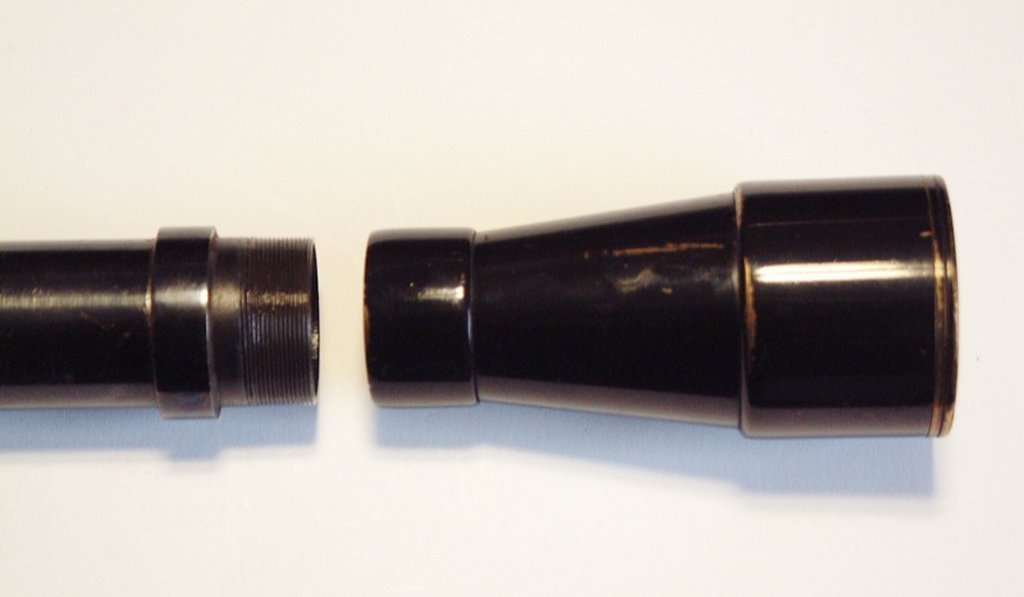
By remarkable coincidence, even this GS telescope, borrowed just to photograph for the article had been repaired by using a what looks to be shorter Scout Regiment telescope front shade!


(Click PIC to Enlarge)

Regards,
Badger
 
"Phoenix Rising from the Ashes" - Part 2 (by Peter Laidler)

With thanks to Advisory Panel member Peter Laidler, a new article has been added to the Technical Articles for Milsurp Collectors and Re-loaders (click here)http://www.milsurps.com/forumdisplay.php?f=25.

"Phoenix Rising from the Ashes" - Part 2 (by Peter Laidler) (click here)http://www.milsurps.com/showthread.php?t=8161

This interesting article is the second in a continuing series and it's accompanied by a photo montage, detailing the complete rebuild of a totally unserviceable, scrap Watson No.32 Mk2 telescope.

Article Extract .....

The Erector Assembly

Exactly the same as the ocular lenses only this time, the erector focuses the graticle and inverts both the grat and image to present you with your x3 image. This time, it’s the shallow large diameter convex radius curvature that goes into the cell first, followed by the spacer followed by the next lens, small diameter curvature followed by the counter cell that seats onto the FLAT surface of the outermost erector lens. But that’s not all….. Some lens sets were ground with BOTH outer surfaces slightly convex. If this is the case with yours, then it’s the shallowest convex that faces the OG or graticle, thus Shallow curvature, deep curvature, spacer, deep curvature, flat or shallowest curvature, counter cell.


(Click PIC to Enlarge)

As with reading any kind of article, whether it be traditional paper magazine based, or in this case an electronic format, it's sometime difficult to gauge the reader'sinterest level. Peter has requested that if anyone has any questions on his current series of articles, comments or additions for inclusion in his articles under the "Collectors Comments and Feedback" section of the MKL article, or ideas for future topics, that they please leave feedback for him in the appropriate announcement thread.

Regards,
Badger
 
WW1 Periscopic Prism Co Ltd London Telescopic Sight Strip Down (by Valleysniper)

:cheers:

With thanks to member Valleysniper, a new article has been added to the Technical Articles for Milsurp Collectors and Re-loaders (click here)http://www.milsurps.com/forumdisplay.php?f=25.

WW1 Periscopic Prism Co Ltd London Telescopic Sight Strip Down (by Valleysniper) (click here)http://www.milsurps.com/showthread.php?t=9064

This interesting article is accompanied by a very nice photo montage, detailing the complete "strip down" of a WW1 Periscopic Prism Co Ltd London Telescopic Sight.


Article Extract .....


(Click PIC to Enlarge)


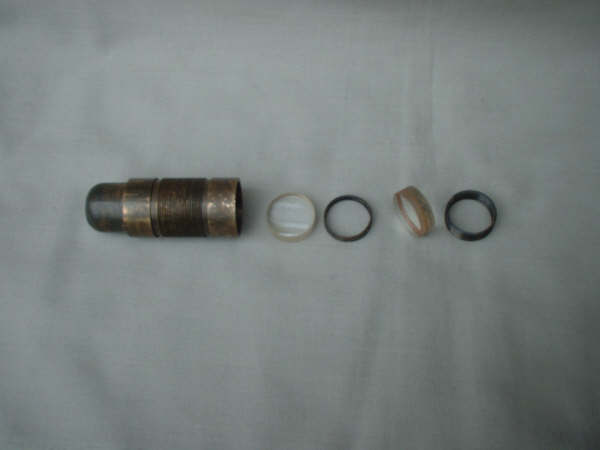
1. Unscrew the brass ocular lens housing from the tube thread. If it is tight borrow the wife’s dishwashing rubber gloves for some purchase on the tube and housing. If it is really, really tight, then you might have to warm the threaded joint area up a little with a hot air gun or hair dryer. With the Stepped tapered variant, if you are unlucky, sometime the brass collar of the brass ocular housing will unscrew from the brass ocular housing and stay on the tube threads. If this happens you will have to remove collar clean up threads and Loctite it back to the brass ocular housing.


If anyone has any questions, comments or additions for inclusion under the "Collectors Comments and Feedback" section of the MKL article, or ideas for future topics, that they please leave feedback for Valleysniper in the appropriate announcement thread.

Regards,
Badger
 
Last edited:
Reproduction No.32 Scope Brackets (Article by Nigel Greenaway)

With thanks to Advisory Panel member Nigel, a new article has been added to the Technical Articles for Milsurp Collectors and Re-loaders (click here)http://www.milsurps.com/forumdisplay.php?f=25

"Reproduction No.32 Scope Brackets" by Nigel Greenaway (click here)http://www.milsurps.com/showthread.php?t=9939

repron032brackets.jpg


This is an article about how to make reproduction No.32 scope brackets, originally written by Nigel for the May 2009 edition of Target Shooter Magazine (click here).

Regards,
Badger
 
Fultons of Bisley; Enfield accuracy secrets revealed. (By RJW NZ)

:cheers:

With thanks to member RJW NZ, a new article has been added to the Technical Articles for Milsurp Collectors and Re-loaders (click here)http://www.milsurps.com/forumdisplay.php?f=25.

Fultons of Bisley; Enfield accuracy secrets revealed. (By RJW NZ) (click here)http://www.milsurps.com/showthread.php?t=13677

Article Extract .....

Prestigious shooting contests held in the UK from the 1860’s were designed raise the standard of accuracy in the shooting fraternity and by assimilation, in the army. As the 1890's gave way to the 20th century one name began to stand out as an extraordinary shooter and as an insightful gunsmith; Fulton. An historic anecdote states that G E Fulton's alterations to Enfield rifles improved their accuracy so much that the official bulls eyes on targets had to be reduced in size, twice. Would that we were all such good shots and could make a claim to fame like that!


(Click PIC to Enlarge)

If anyone has any questions, comments or additions for inclusion in this article under the "Collectors Comments and Feedback" section of the MKL article, or ideas for future topics, please leave feedback for RJW NZ here.

Regards,
Badger
 
Shortened No. 1 Mk III* Rifle

:cheers:

With thanks to Advisory Panel member Terry Hawker, we've added a new entry to the England - Milsurp Knowledge Library (click here) http://www.milsurps.com/forumdisplay.php?f=12

Shortened No. 1 Mk III* Rifle (click here)http://www.milsurps.com/showthread.php?t=14056


Article Extract .....

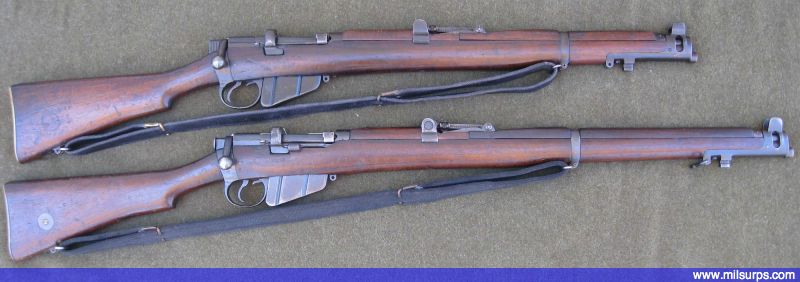
This article was inspired by an interesting thread started by Peter Laidler on Jouster's Lee-Enfield forum on the Military Surplus Collectors Forumshttp://www.milsurps.com/ on April 21, 2009, titled, "1916 Shortened SMLE Enfield?" (click here)http://www.milsurps.com/showthread.php?t=8611, in which Peter asked if anyone could shed some light on shortened SMLE rifles, as one was housed in the Weapons collection at Warminster. Reading this thread prompted me to dig my example out of the safe for a closer look, which, in turn, prompted a quest for further information to try to answer the basic journalism questions of the Who, What, When, Where and perhaps even Why, regarding the creation of these odd little rifles.

This article is therefore written in hopes that it will lead to other collector's sharing information on any of these variants they may have in their collections, to see if some common link between them can be established, and, more importantly, with fervent hopes that some documentation will be forthcoming so we can have something other than just conjecture, speculation and unverifiable examples to base opinions on.


(Click PIC to Enlarge)

Terry has requested that if anyone has any questions on his current series of articles, comments or additions for inclusion in his articles under the "Collectors Comments and Feedback" section of the MKL article, or ideas for future topics, that they please leave feedback for him in the appropriate announcement thread.

Regards,
Badger
 
Lee Enfield No. 4 Mk. 1

Can somebody place my Lee Enfield in terms of the year, manufacturer and origin? I have "No. 4 Mk. 1" stamped on the left side of the receiver and a Serial Number D25xx2A stamped on the left side of the receiver tang as well as on the bolt handle. No more visible markings.

Thank you.
 
The Vickers-Pedersen (Part Two)

With thanks to Advisory Panel member Terry Hawker, we've added a new entry to the England - Milsurp Knowledge Library (click here) http://www.milsurps.com/forumdisplay.php?f=12

The Vickers-Pedersen (Part Two) ... (click here) .....http://www.milsurps.com/showthread.php?t=16665

(Click PIC to Enlarge)

This is a follow up to Terry's first article in this series titled The Vickers-Pedersen (Part One) …. (click here) .....http://www.milsurps.com/showthread.php?t=3521

Regards,
Badger
 
"Worn draws in your No1, 4 or 5 fore-end .... " (by Peter Laidler)

With thanks to Advisory Panel member Peter Laidler, a new article has been added to the Technical Articles for Milsurp Collectors and Re-loaders (click here)http://www.milsurps.com/forumdisplay.php?f=25.

"Worn draws in your No1, 4 or 5 fore-end .... " (by Peter Laidler) (click here)http://www.milsurps.com/showthread.php?t=16824

This interesting article about the correct way to replace the worn draws on your fore-end

Article Extract .....

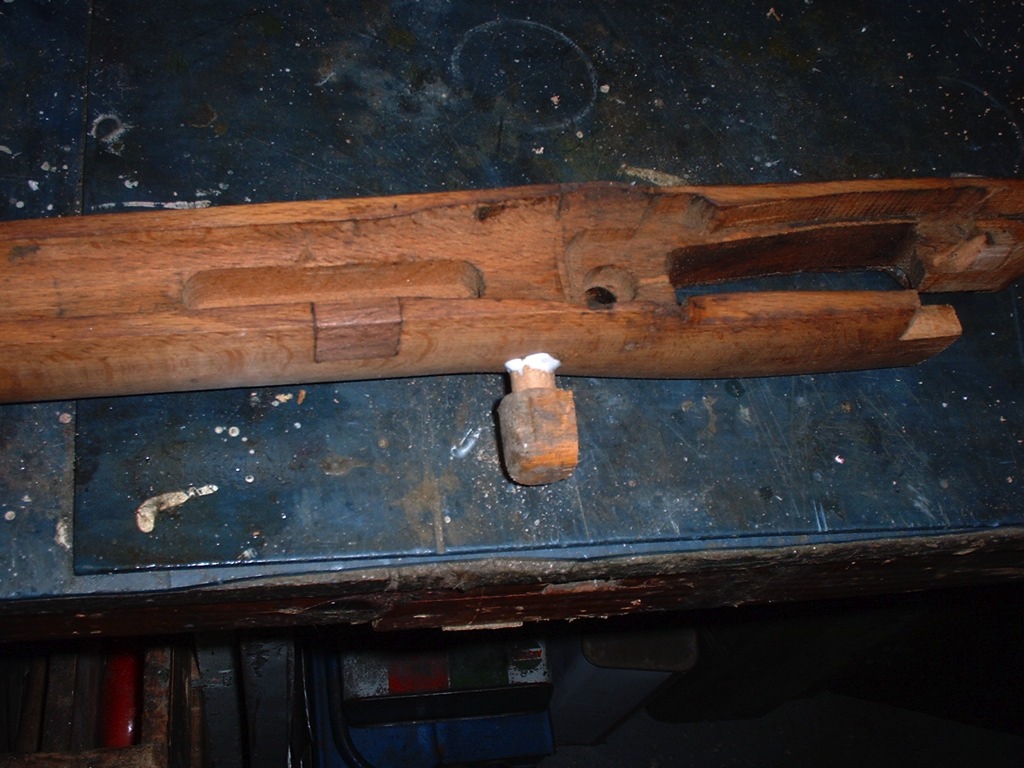
In this article I hope to be able to advise you the correct way to replace the worn draws in your fore-end. Worn draws can usually be identified by you visibly noticing the group pattern opening up over a period of a couple of weeks. The SCREW, front trigger guard remains tight but the fore-end is able to slide fore and aft very slightly. …..……………..


The top, rear of a No4 fore-end with a set of worn out draws, in need of patching.

(Click PIC to Enlarge)

As with reading any kind of article, whether it be traditional paper magazine based, or in this case an electronic format, it's sometime difficult to gauge the reader's interest level. Peter has requested that if anyone has any questions on his current series of articles, comments or additions for inclusion in his articles under the "Collectors Comments and Feedback" section of the MKL article, or ideas for future topics, that they please leave feedback for him in the appropriate announcement thread.

Regards,
Badger
 
"GETTING RID OF YOUR ‘Ishy’ Screw" (by Peter Laidler)

With thanks to Advisory Panel member Peter Laidler, a new article has been added to the Technical Articles for Milsurp Collectors and Re-loaders (click here)http://www.milsurps.com/forumdisplay.php?f=25.

"GETTING RID OF YOUR ‘Ishy’ Screw" (by Peter Laidler) (click here)http://www.milsurps.com/showthread.php?t=16940

This interesting article about the correct way to perform a correct Armourer's patch to replace an 'Ishy' screw.

Article Extract .....

Firstly, I have to admit that while we didn’t see many Ishy screws on British Service No4 and 5 rifles, they did exist and you might already know, that this was a British Army innovation to save fore-ends that would have previously been condemned because a split had developed up, from the magazine housing and past the front handguard screw and collar. Later in the like of the rifles, if a split was apparent we’d just drill a small hole at the end of the split then open the split up, press wood glue into the split and squeeze the split together with a wood cramp. Then when you’d got a few together, you’d drill a hole across the fore-end, under the knox form. In exactly the place that the canny Indian Armourers placed their screw. Then clean out the split-stop hole and do the same. Make good after a few days and that was the end of the problem forever. …..……………..


(Click PIC to Enlarge)

As with reading any kind of article, whether it be traditional paper magazine based, or in this case an electronic format, it's sometime difficult to gauge the reader's interest level. Peter has requested that if anyone has any questions on his current series of articles, comments or additions for inclusion in his articles under the "Collectors Comments and Feedback" section of the MKL article, or ideas for future topics, that they please leave feedback for him in the appropriate announcement thread.

Regards,
Badger
 
New forums ...

During the last several months, we've received several requests to add new forums.

Last month we brought on-line the Soviet Bloc Rifles Forum (click here)http://www.milsurps.com/forumdisplay.php?f=133 and The Ross Rifle Forum (click here)http://www.milsurps.com/forumdisplay.php?f=134.

This month, upon request by a number of members, including Peter Laidler, we've added The Bren LMG Forum (click here)http://www.milsurps.com/forumdisplay.php?f=136 for discussion by serious collectors of Bren LMG (Light Machine Gun), accessories, ammunition, and accoutrements, as well as German Service Pistols Forum (click here)http://www.milsurps.com/forumdisplay.php?f=135 for discussions about German service pistols. ie: Lugers and P-38's etc .....

Let's try these new forums for a few months to see if there's enough interest to maintain them on-line. Their future will depend upon the membership promoting and utilizing them, so do whatever you can to find and post interesting discussion material to build content.

We hope you enjoy these new additions to the Military Surplus Collectors Forums.

Regards,
Badger
 
The Mk1 and Mk1* Bren Barrel (by Peter Laidler)

:cheers:

With thanks to Advisory Panel member Peter Laidler, a new article has been added to the Technical Articles for Milsurp Collectors and Re-loaders (click here)http://www.milsurps.com/forumdisplay.php?f=25.

The Mk1 and Mk1* Bren Barrel (by Peter Laidler) (click here)http://www.milsurps.com/showthread.php?t=17682

Peter Laidler has accessed the whole Bren archive and pictorial library plus their magnificent collection of fully serviceable and operational Bren Guns at the Small Arms School and as a result, has written the whole 'warts an' all story of the the Bren from the first note from Major Oxley, the Military Attache in Prague (where it was undergoing trials with the Hungarian Army) to the last guns being withdrawn from front line service in February 2002. Astonishingly, a further 6 guns were found, oiled up and still in working order in a secure store 2 years ago.

The whole 260,000 word story plus never before seen archive photographs, flow charts and line drawings are in the process of being published by Small Arms Review as we speak.

Peter tells the story of the Mk1 barrels...............


Article Extract .....

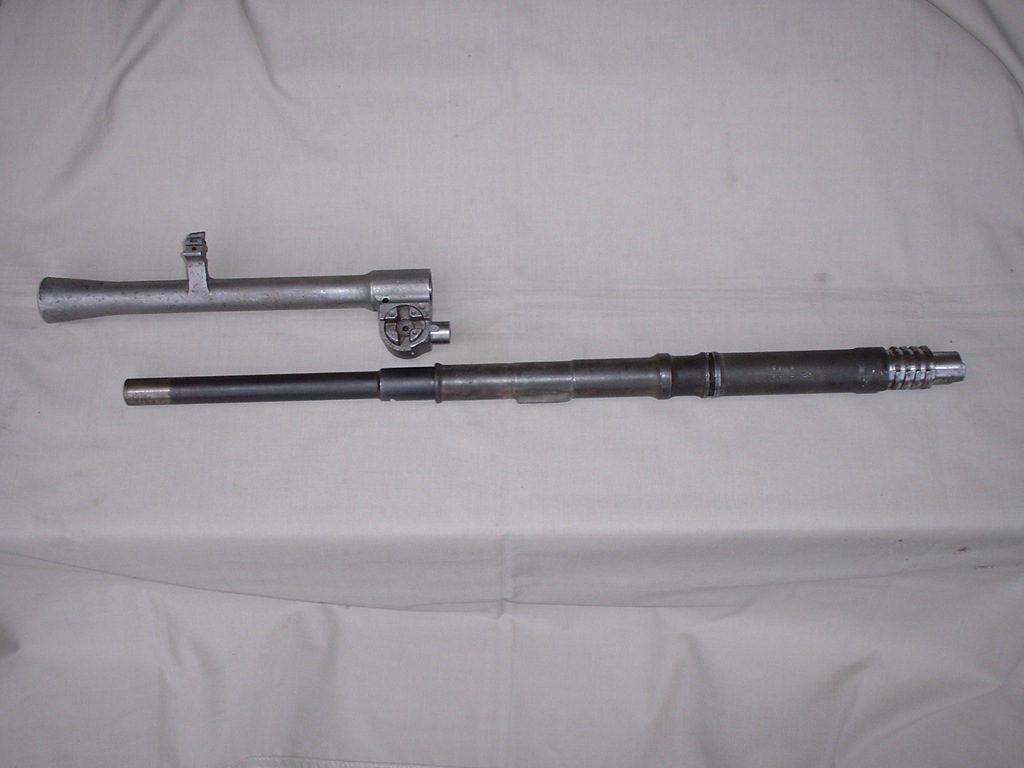
Shown in the photos that accompany this article are a couple of things that you don’t see very often. It’s a Mk1* Bren gun barrel with the ‘stainless’ steel flash eliminator sleeve removed. And like me, many of you are probably wondering and ask yourselves just WHY do you put a glaring stainless steel flash eliminator on the front of a black Bren gun? Well I’m going to let you into a little secret. Not just ONE little secret, but during the course of this note, quite a FEW little secrets.

The Mk1 barrel with the flash eliminator sleeve removed and positioned alongside the barrel.

(Click PIC to Enlarge)


As with reading any kind of article, whether it be traditional paper magazine based, or in this case an electronic format, it's sometime difficult to gauge the reader's interest level. Peter has requested that if anyone has any questions on his current series of articles, comments or additions for inclusion in his articles under the "Collectors Comments and Feedback" section of the MKL article, or ideas for future topics, that they please leave feedback for him in the appropriate announcement thread.

Regards,
Badger
 
Last edited:
Index has been updated with addition of Reference Thread - J.C. Devine, Inc. Auction (August 10th, 2008) ...........

Regards,
Badger

Fantastic job and contribution to the History and preservation of the milsurp heritage.

Huge thanks to the whole crew for making all of this wonderful things happening like magic for all of us.

BB
 
Updated No.4(T) Scope Pad and Mount Blueprint Drawings

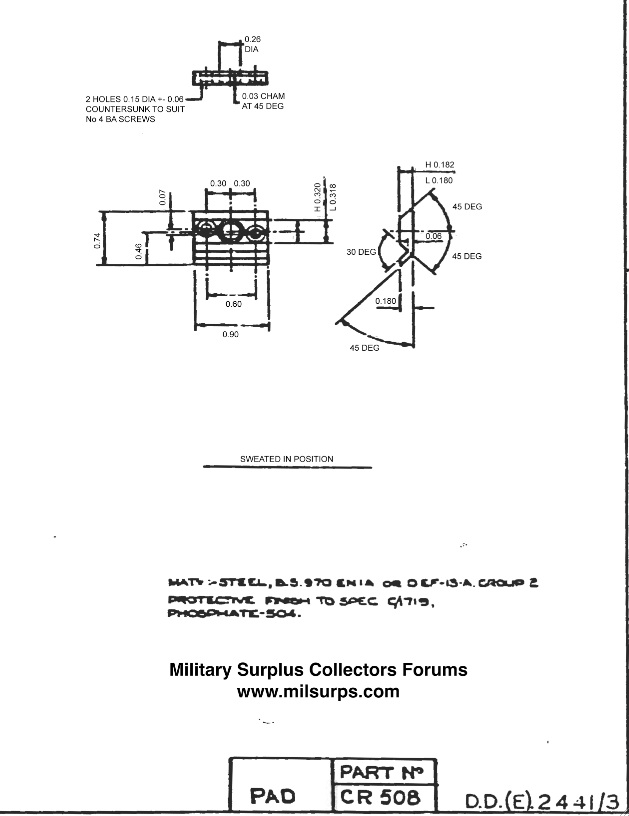
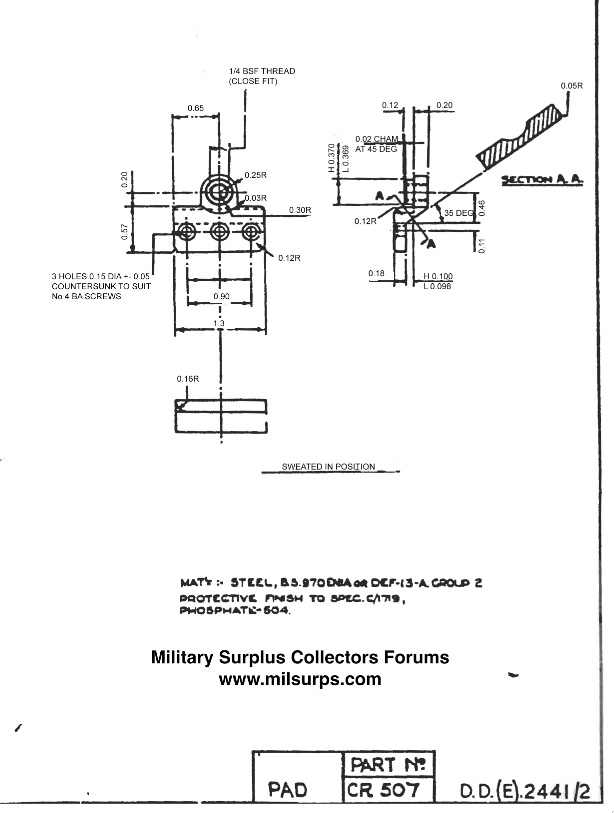
With thanks to member mudpuppy, we've updated the article titled Mechanical Blueprints and Specifications for the Enfield No.4 Mk1(T) Sniper Rifle (click here)http://www.milsurps.com/showthread.php?t=1623 in the Technical Articles for Milsurp Collectors and Re-loaders (click here)http://www.milsurps.com/forumdisplay.php?f=25.

Low quality pics shown below for illustrative purposes only

(Click PIC to Enlarge)(Click PIC to Enlarge)

Due to the poor quality of the originals, some of the drawings were challenging to read the very small print dimensions after digitizing, so Mudpuupy requested better quality versions from the "Pattern Room". Unfortunately, they weren't a lot better and as he wrote me, "I had to sit down with a caliper, my copies of the drawings, an original set of pads and rifle to confirm what was on the drawings. I edited the drawings and re-typed all the relevant information so it is clear now."

The addition to his original article, which included drawings and specifications for the scope mount, pads, pad screws, thumb screws and cheekpiece, now provides these additional higher quality digitized images of the No.4(T) scope pads and their receiver mountings. Refer to Note #1 under the Collectors Comments and Feedback section of the article to obtain these new updated blueprint drawings. If you want to get the best images, download the PDF file versions and then use the Adobe PDF reader to "zoom in" and blow them up so you can read the fine dimensions and specs.

Regards,
Badger
 
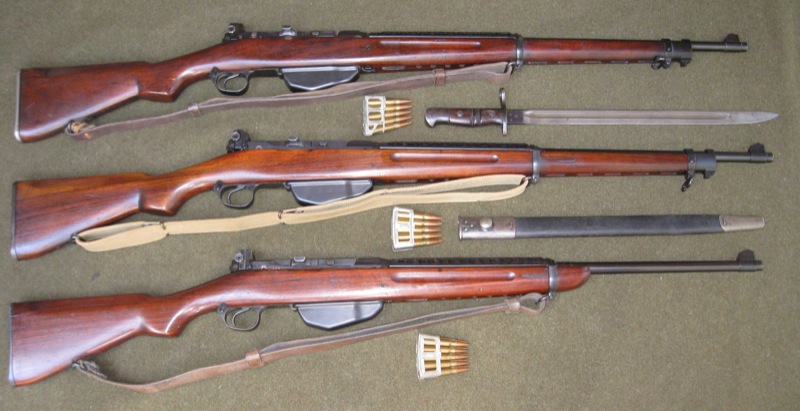
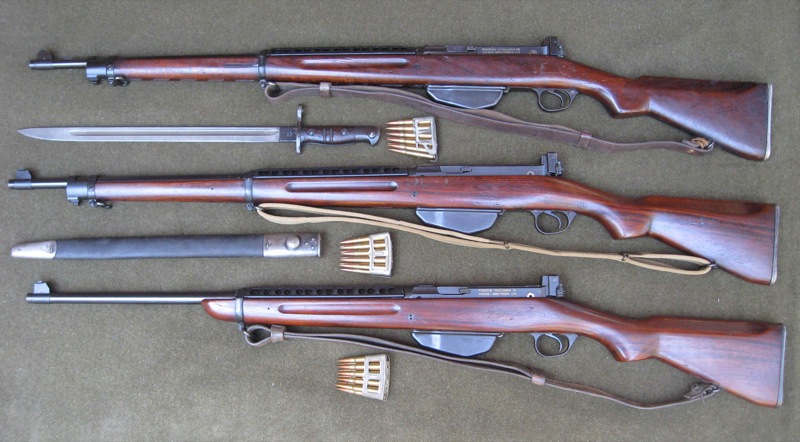
.22 Enfield's (Collection Photo Essay)

With thanks to Advisory Panel member Lance, there's an excellent new series of photo essay posts which may be found in the The Lee Enfield Knowledge Library Collectors Forum (click here)http://www.milsurps.com/forumdisplay.php?f=72

.22 Enfield's Part 1 (click here)http://www.milsurps.com/showthread.php?t=17815

.22 Enfield's Part 2 (click here)http://www.milsurps.com/showthread.php?t=17821

.22 Enfield's Part 3 (click here)http://www.milsurps.com/showthread.php?t=17835

.22 Enfield's Part 4 (click here)http://www.milsurps.com/showthread.php?t=17844

.22 Enfield's Part 5 (click here)http://www.milsurps.com/showthread.php?t=17861


Article Extract from Part 1 .....

A collector could concentrate on just .22 versions and never run out of variations to find. Combination's of different conversions, different makers, different years and even different manufacturing contracts are endless. I once started collecting every different .22 Enfield rifle I could find, then stopped and sold off many pieces when I saw that my collection would be endless. Oh I wish I would of continued.

As this is a collectors forum I have decided to share some of the pieces I kept, hopefully to start conversation, and maybe encourage some others to focus on these great pieces of history. I do have some gaps in my collection, please forgive, maybe I will be able to correct that in the future. ... (continued)


(Click PC to Enlarge)

Regards,
Badger
 
Last edited:
No.4(T) Scope Pad and Mount Blueprint Drawings

A common hot topic for discussion by Lee Enfield rifle owners, relates to taking a standard No.4 Mk1 and converting it to a pseudo No.4(T), by either using reproduction pads and mounts, or manufacturing their own pads and mounts from contemporary technical blueprints and drawings.

As the result of the recent Knowledge Library entry where we updated the article titled Mechanical Blueprints and Specifications for the Enfield No.4 Mk1(T) Sniper Rifle (click here)http://www.milsurps.com/showthread.php?t=1623 in the Technical Articles for Milsurp Collectors and Re-loaders (click here)http://www.milsurps.com/forumdisplay.php?f=25, a really interesting thread has developed with some excellent input on this subject from Peter Laidler, Brian #### and others.

It discusses the challenges and vagaries one can face when attempting to create their own "faux" No.4(T), even using period drawings which provide the correct specifications.

Good thread and worth a read … ;)

No.4(T) Scope Pad and Mount Blueprint Drawings Discussion Thread (click here)http://www.milsurps.com/showthread.php?t=17823

Regards,
Badger
 
BREN Mk1 Carrying Handles (by Peter Laidler)

:cheers:

With thanks to Advisory Panel member Peter Laidler, a new article has been added to the Technical Articles for Milsurp Collectors and Re-loaders (click here)http://www.milsurps.com/forumdisplay.php?f=25.

BREN Mk1 Carrying Handles (by Peter Laidler) (click here)http://www.milsurps.com/showthread.php?t=17954

Peter Laidler has accessed the whole Bren archive and pictorial library plus their magnificent collection of fully serviceable and operational Bren Guns at the Small Arms School and as a result, has written the whole 'warts an' all story of the the Bren from the first note from Major Oxley, the Military Attache in Prague (where it was undergoing trials with the Hungarian Army) to the last guns being withdrawn from front line service in February 2002. Astonishingly, a further 6 guns were found, oiled up and still in working order in a secure store 2 years ago.

The whole 260,000 word story plus never before seen archive photographs, flow charts and line drawings are in the process of being published by Small Arms Review as we speak.

Peter tells the story here of how to repair Mk1 carrying handles ...............


Article Extract .....

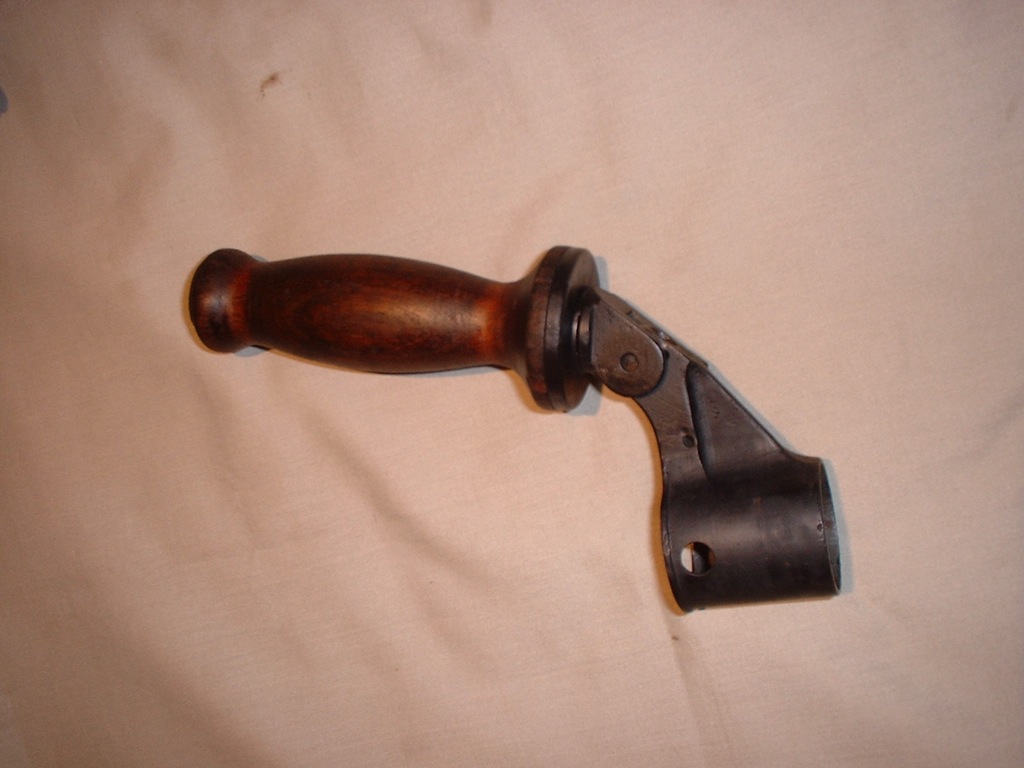
This short article is to show those Bren owners just how we were taught to repair the early Bren carrying handles. As you know, the Mk1 wooden handle was much wider at the front end and protruded out from the left side a bit more than it really needed to. As a result, the front edges got well and truly battered. As apprentices, we were taught how to repair these with the use of wood patching and a bit of lathe work.

Another method of repair I learned of recently was what I’m going to call ‘the Ishapore’ method. As you’re aware, the motto of the Indian REME must surely be ‘….waste not, want not’ because they don’t seem to waste anything…….and quite right too!


Here it is, a complete handle assembly as removed from a Bren barrel. This is a Mk1 grip with the distinctly curved female form. To the purist, this grip was paired with a Mk1 barrel but Armourers didn’t bother too much about the niceties, a grip was a grip! What is interesting is the thought that this handle assembly contains 14 individual parts including two springs, two nuts a screw and two pins… phew!


(Click PIC to Enlarge)


Regards,
Badger
 
Back
Top Bottom