












































You are using an out of date browser. It may not display this or other websites correctly.
You should upgrade or use an alternative browser.
You should upgrade or use an alternative browser.
Live Sambar Pictures
- Thread starter WhelanLad
- Start date

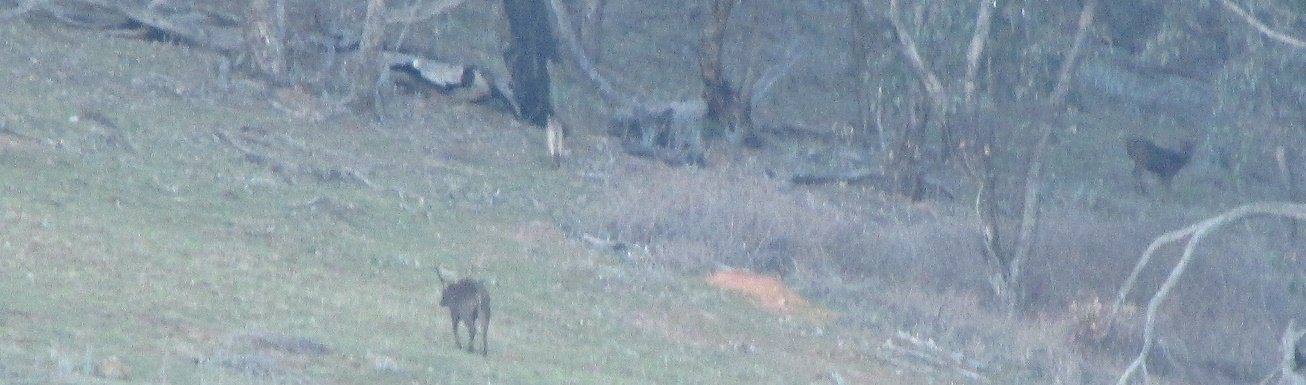
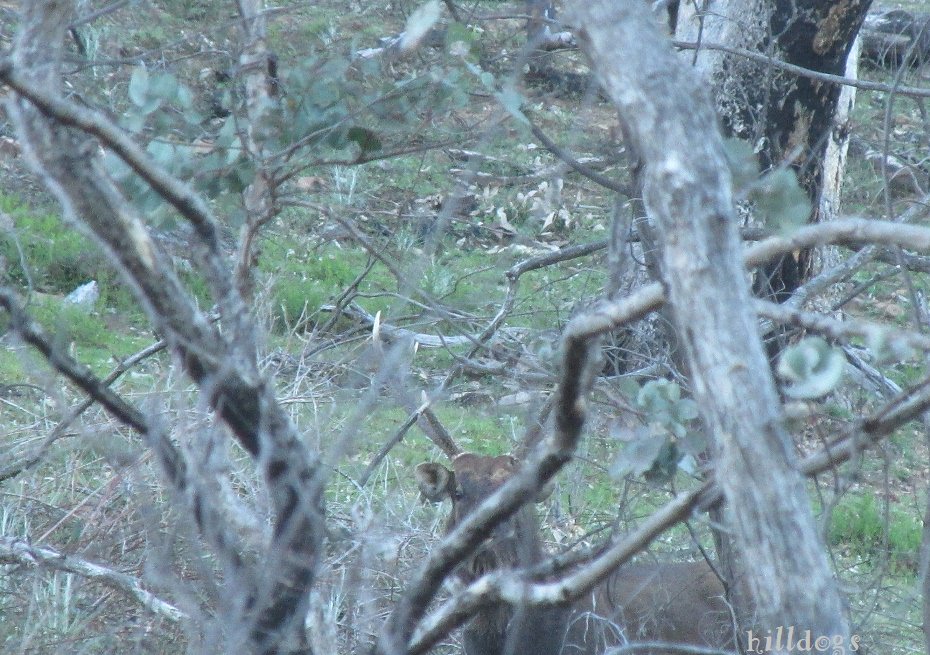
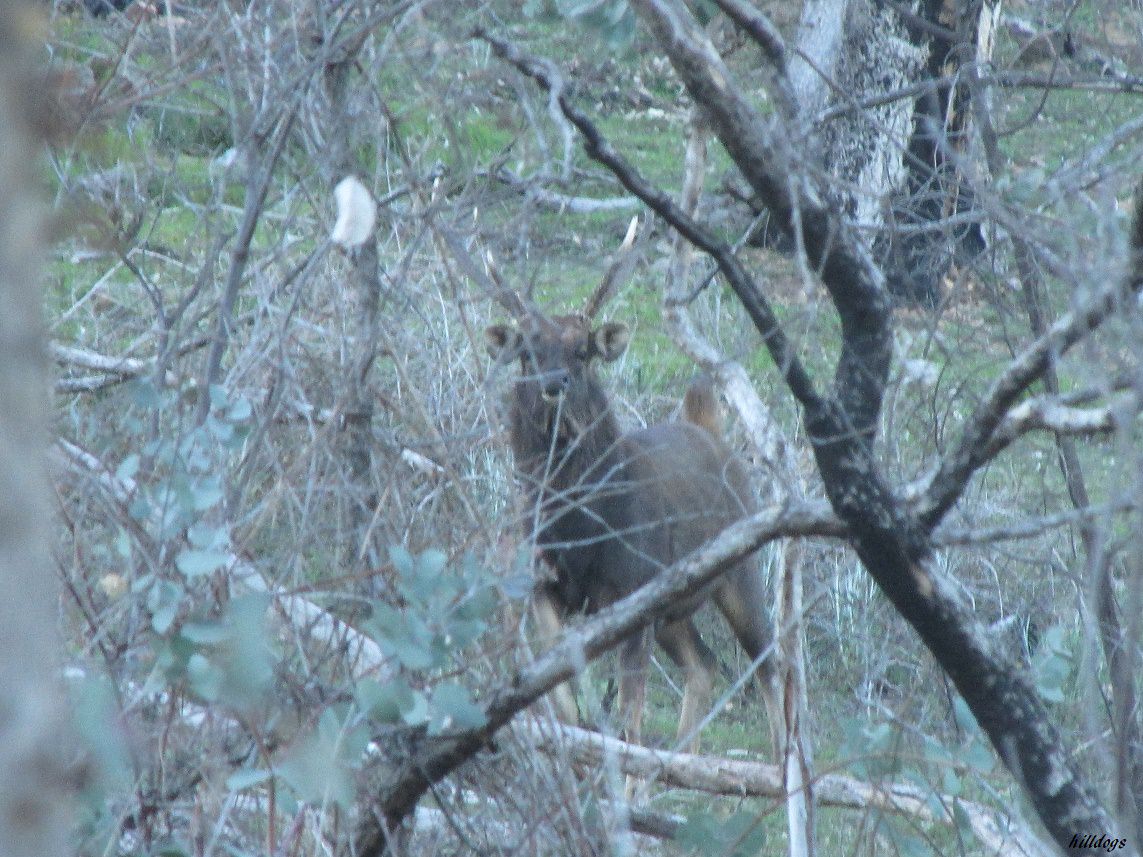
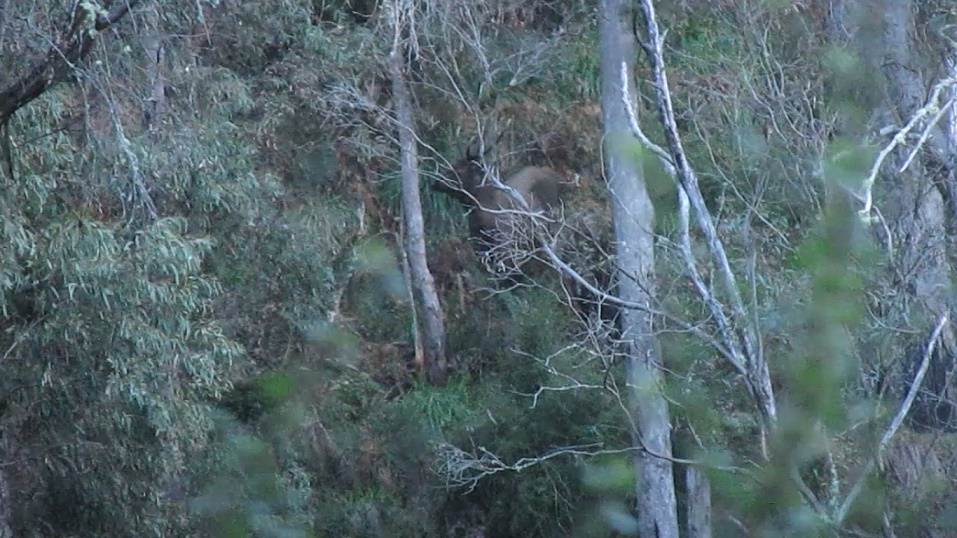
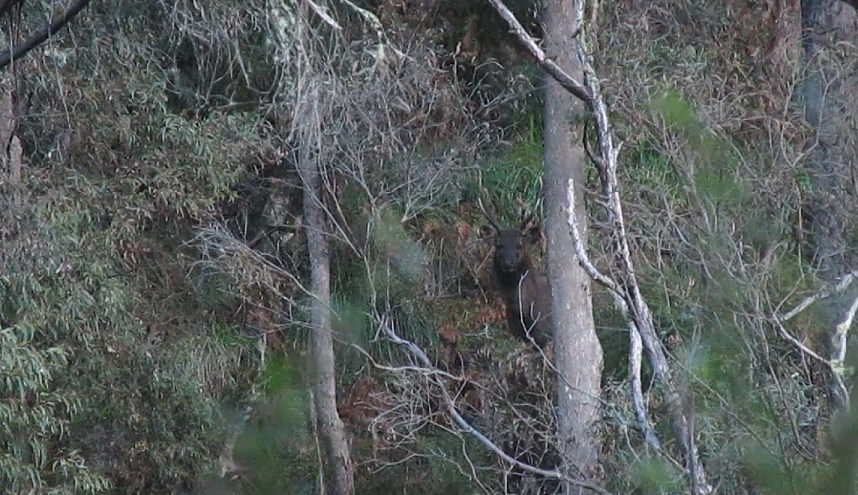



Size wise about as big as a goat ? Kinda have a look of a elk .what would one dress out to in weight ?
here is some wiki info on the Sambars..... lot bigger than a Goat... tough as an Ox, more solid than a Elk but not long legs or long in general.
The appearance and the size of sambar vary widely across their range, which has led to considerable taxonomic confusion in the past; over 40 different scientific synonyms have been used for the species. In general, they attain a height of 102 to 160 cm (40 to 63 in) at the shoulder and may weigh as much as 546 kg (1,204 lb), though more typically 100 to 350 kg (220 to 770 lb).[2][3] Head and body length varies from 1.62 to 2.7 m (5.3 to 8.9 ft), with a 22 to 35 cm (8.7 to 13.8 in) tail.[4] Individuals belonging to western subspecies tend to be larger than those from the east, and females are smaller than males.[5] Among all living cervid species, only the moose and the elk can attain larger sizes
The large, rugged antlers are typically rusine, the brow tines being simple and the beams forked at the tip, so they have only three tines. The antlers are typically up to 110 cm (43 in) long in fully adult individuals. As with most deer, only the males have antlers.[5]
The shaggy coat can be from yellowish brown to dark grey in colour, and while it is usually uniform in colour, some subspecies have chestnut marks on the rump and underparts. Sambar also have a small but dense mane, which tends to be more prominent in males. The tail is relatively long for deer, and is generally black above with a whitish underside.[5]
Introduced animal
Sambar deer have been introduced to various parts of the world including Australia, New Zealand, and the United States.[16]
Australia
In Australia, hunting sambar is a popular sport. Australian hunting fraternities prize large sambar trophies.[17] Excessive numbers of sambar deer affect native plants, threatening some species with extinction.
Sambar were introduced into Victoria at Mount Sugarloaf in the 1860s, in what is now Kinglake National Park, and at Harewood Estate near Tooradin.[18] They quickly adapted to the Koo-Wee-Rup Swamp and thereafter spread into the high country, where in 2017, numbers were estimated at between 750,000 and one million animals.[19] Later releases were at Ercildoune Estate near Ballarat, Wilsons Promontory, and French Island in Western Port. Another release occurred on the Cobourg Peninsula in the Northern Territory.[20] They are now found throughout Australia's northern and eastern coasts, in the states of Victoria, South Australia, Queensland, the Northern Territory, and the Australian Capital Territory.
In Victoria, sambar deer have been listed as a threat to biodiversity under the Flora and Fauna Guarantee Act 1988 because they reduce the number of native plant species.[21] The animals feed on some rare and endangered plants. More than 60 plant species have been identified as directly or indirectly threatened by sambar within Victoria.
Adult male sambar deer can significantly damage plants, removing most branches on some shrubs and sometimes girdling trees by thrashing their antlers on shrubs and sapling trees. They also feed on seedlings, fruit, or seeds of many plants. They leave territorial marks to advertise their territory.[22]
The spread of sambar has been steady in both NSW and Victoria, with animals being seen on many southern Victorian beaches since 1980, and as far east as Western Port and the outer suburbs of Melbourne.
Considerable debate exists about how they should be managed. Conservation groups believe their environmental effect outweighs their social value. Hunting organisations disagree and want to preserve deer populations for future generations. Sambar deer are protected wildlife game species in Victoria and New South Wales, and a game licence is required to hunt them. In Victoria, recent provisions have been made for landowners to control problem deer without having to obtain a Game Licence or Authority to Control Wildlife permit[23]. This allows a landowner or other authorised persons to remove problem deer within private property at any time and with no bag limits. They are declared pest species in all other Australian states and territories and can be hunted at any time with no bag limits. Environmental and conservation groups want them declared a feral species in all states, due to their exploding populations and the harm to biodiversity and native species.
In 2008/2009, 35,000 sambar were removed from public land in Victoria, many from national parks, by amateur hunters. This is a small fraction of the 40% of individuals in a sambar population that need to be removed to stop population growth
***Not exactly a PEST yet but not far off it.... will not be ideal and detrimental to the herd/hunting oppertunities...

- Location
- The Conservative part of Ontario
Need some of those type of conservationists here, (if we need any at all) so we could shoot more Canada Geese, and Cormorants. I read recently that there's an Arctic Tern population that is in jeopardy because gulls are eating the eggs, but OH NO don't shoot the gulls! Hundreds of deer starved to death a few years back north of Peterborough because they would not open the crown game preserve to hunting when the deer had a population explosion.
Thanks for the Sambar education.
Thanks for the Sambar education.
Ok thanks ! Soo are they good eating !Marinate them and throw one on the barbie ! With numbers ( population) like that there not to hard to hunt ?
yeah mate the Animal itself is Hard to hunt, natural instinct to elude Tigers etc...... makes GREAT stalking and hunting!!
however these are 'golden years' as far as anyne with half an idea and some perseverance will find or run into a sambar an perhaps a shot may arise! like all the deers the males are real elusive an act different.. no real pronounced rut period but july to october is a good time to find stags tailing does.
great eating! jus gota cook it right being so lean but im sure u guys with alot of big game menu would be all over that anyway!
they are so widespread but do not mob up so to speak, small family groups, so it certainly isnt like a red deer hunt or fallow deer hunt etc....... if i had too, id say similiar charachteristics to a big ol wiley mule buck in the back woods.... atleast fromwhat i see on youtube mule vids
Need some of those type of conservationists here, (if we need any at all) so we could shoot more Canada Geese, and Cormorants. I read recently that there's an Arctic Tern population that is in jeopardy because gulls are eating the eggs, but OH NO don't shoot the gulls! Hundreds of deer starved to death a few years back north of Peterborough because they would not open the crown game preserve to hunting when the deer had a population explosion.
Thanks for the Sambar education.
We have ALOT of GREENS in the Vic parks / National parks / an other organisations which 'regulate' the hunting an rules etc..
No problemo, would be cool too see some Canadians down under chasen big brown deer in near future... its certainly fairly easy to do an go about doing.
We have ALOT of GREENS in the Vic parks / National parks / an other organisations which 'regulate' the hunting an rules etc..
No problemo, would be cool too see some Canadians down under chasen big brown deer in near future... its certainly fairly easy to do an go about doing.
do you have any links to the info a canadian would need to hunt there and the regulations on bringing in firearms to hunt with?
Sambar hunting looks a lot to me like black tail deer hunting , except the sambar appear much bigger.
every time you share your hunts I get the "I wish I was there" feeling hehehe
do you have any links to the info a canadian would need to hunt there and the regulations on bringing in firearms to hunt with?
Sambar hunting looks a lot to me like black tail deer hunting , except the sambar appear much bigger.
every time you share your hunts I get the "I wish I was there" feeling hehehe
haha!! thats awesome.yeah ill dig up the info for internationals....... quite easy to be honest. some customs paper work before you leave, checks when you;re here and over the counter type of game license for internationals in victoria
but il link you too real info shortly
cheers mate






















