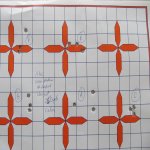
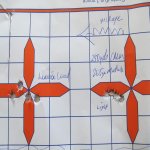
Ganderite...is there a relationship between barrel harmonics and velocity for a given rifle and bullet weight? In other words if I am noticing repeated accuracy nodes at a window of velocity range in a rifle with same weight bullets, that looking for that velocity window (with same weight bullets ) in the same rifle is probable or predictable for accuracy? EDIT, or is this thinking false and I am fluking it off or the rifle is an anomaly?
Pardon any ignorance of my part, just trying to follow along with the information presented.
Noted on your comments regarding ES and SD. As well, to note: I load for hunting and to produce the most accurate ammunition I can with the tools I have, the locations available, and the knowledge I am gaining. Ranges I am comfortable in the field is up to 300 "ish" depending on circumstance and the rifle I have in my hands at the time. Side project is to see how well I can apply what I am retaining for plus 300 accuracy. Don't have the location to test at longer distances...yet.
Regards all,
Ronr
EDIT. I need to acknowledge the photo posted. I tip my hat to that.
I started off working in a ballistics research lab in 1964. My boss eventually stopped me from assigning a reason to each thing I saw.
If something worked better than something else, I would say something like "Oh, that is because this twist is more appropriate." My boss would explain that to prove that theory (e.g. the twist was the important variable) we would have to run a test on 10 samples of each twist with several thousand rounds of ammo - and he was not going to do that.
So when you ask about why something happens, I have learned to think "I don't care why. All that matters is that I find out what works best."
There are those who need and want 100 yard good groups. Benchrest shooters and many hunters, for example, don't shoot beyond 100. All they have to do is find a load that reliably shoots well. Not a difficult thing to do.
For those who want a rifle that shoots well to 300, or 500 or 1000 (target rifle shooters regularly shoot to 1000) I have learned that the only way to find a load that shoots well at 300, or 500, etc. is to test at that distance. There are lots of us who learned the hard way that 1000 yards is special for a 308 and the load that works at 800 might be poor at 1000.
Let's keep it simple and assume that you are hunter in the West, or an Eastern hunter that sometimes hunts the power line cuts and you want a rifle that is accurate to 300.
There are many variables in accuracy. Rifle bedding, action screw tension, quality of chamber and barrel, parallax of the scope. But for load development discussion we have just powder charge & seating depth and the resulting ES and barrel harmonic.
ES you can measure and see and it is obvious that less is better.
But you can't see barrel harmonics and it tends to get ignored. You can't see it at 100 yards on the target, but by 300 it is probably already the biggest and most important variable and becomes more important at the longer distances.
If I test at 500, I shoot a series of loads in 0.3 gr increments at choose the load that got the best vertical size. I typically develop loads solely on the basis of group size at a longer distance and have no idea of the velocity or ES until after the project. Then I chrony the final load for the note in the log book.
A two foot bar of steel that is hit with a 50,000 psi impact whips like a snake. If the ammo is consistent and the bedding is good, the whipping is consistent and the bullet exits the muzzle at the same place of its arc. There are just 2 possibilities. The barrel is on the way up when the bullet exits or on the way down.
At longer range the former will shoot a good vertical and the latter will shoot a tall vertical.*
If you understand this - good. If you don't, it does not matter. At 300 find the load that shoots well. What you are doing is finding the barrel vibration node for that bullet. When you try 43.0 gr and 43.5 gr and discover that 43.5 is much better, the reason for improved accuracy is most likely due to barrel harmonics, and not a better ES, etc.
If you change bullet (same weight) or change powder the node will be a bit different because the impulse will be a bit different.
I see guys developing loads at 100 and then testing at longer range. My comment is stop wasting time and powder. If you want a 300 yard load, you have to test there.
*Ammo varies in velocity. Other things being equal, the slower rounds will print lower and the faster rounds will print higher.
But other things are not equal. The muzzle is whipping - one way or the other.
If the muzzle is moving up, the slower round will exit a bit later and will be aimed a little more "up", offsetting the slower round printing lower. And the faster bullet will exit sooner, and be aimed a little lower. The result is a smaller group than otherwise.
And if the muzzle is moving down when the bullets exit, the group will be made even worse.
This is why we test a variety of loads to find what gets the best results.
If you don't handload, try several different bullet weights or brands of ammo, etc. and find the one that shots better than the others. It is probably the load that suits your barrel harmonics.
Conversely, if you have to shoot a given ammo, try it in different rifles and find the rifle it works best in.
Last edited: