













































Jerry have you ever used a Forster full length benchrest die with its floating expander?
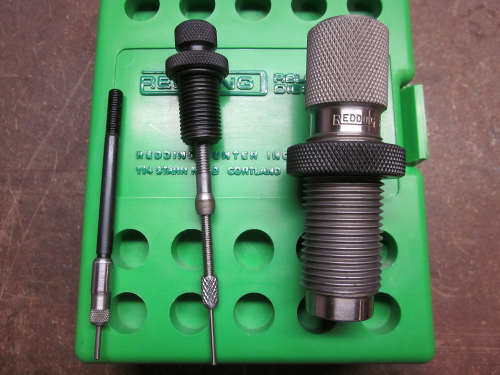
Simply installing a Forster spindle and expander assembly on the Redding die below reduced neck runout to .001 or less. Too many people think that using a expander is the end of the world when its not. Just polish the expander and lube the inside of the case neck and it will be slicker than snot on a door knob.
Care Feeding and Maintenance of Precision Rifles Part III – Making Ammo
https://rifletalk.org/2015/05/24/care-feeding-and-maintenance-of-prcision-rifles-part-iii-making-ammo/
"I recommend that newer shooters Full Length resize – if you really want to, you can always neck size down the road as you get more experienced with reloading. With neck sizing you can run into feeding issues and so, especially for a hunting or tactical rifle where you certainly want the round to easily chamber every time, FL sizing is the better choice. As a matter of fact while I neck size for my F-Open and F/TR rifles, I do FL resize for everything else and to be perfectly frank I am actually leaning towards the view that I am not able to see any appreciable difference in accuracy using a neck die over a FL die. On this issue some pretty knowledgeable guys ( like Kevin Thomas of Team Lapua USA for example ) are quite strongly of the view that neck sizing of brass gives no advantages at all."
Full Length Resizing vs Neck Resizing
http://www.larrywillis.com/resizing.html
"The main goal for most reloaders is to make the most accurate handloads possible, and that often leads shooters to see how benchrest shooters are reloading. After all, nobody gets better accuracy than a good benchrest shooter. One question for reloaders is deciding whether to Neck Size (NK) or Full Length (FL) resize their cases. I used to neck size (decades ago), but I now prefer to FL resize all rifle calibers. Most benchrest shooters today use FL dies, because when full length resizing is done accurately . . . . there are no advantages to neck sizing."
On the flip side of this I do neck size my .303 British cases and use a case forming and trim die to bump the case shoulder. "BUT" this is because SAAMI full length dies are so much smaller than the Enfield chamber.
Also all my rifles are off the shelf factory rifles and I do not shoot in any form of competition. Meaning my replies are for the average reloaders that do not have expensive custom rifles and shoot in competition.
Bottom line I have five Lee collet dies but prefer using the Forster full length benchrest dies and benchrest seating dies.
Simply installing a Forster spindle and expander assembly on the Redding die below reduced neck runout to .001 or less. Too many people think that using a expander is the end of the world when its not. Just polish the expander and lube the inside of the case neck and it will be slicker than snot on a door knob.
Care Feeding and Maintenance of Precision Rifles Part III – Making Ammo
https://rifletalk.org/2015/05/24/care-feeding-and-maintenance-of-prcision-rifles-part-iii-making-ammo/
"I recommend that newer shooters Full Length resize – if you really want to, you can always neck size down the road as you get more experienced with reloading. With neck sizing you can run into feeding issues and so, especially for a hunting or tactical rifle where you certainly want the round to easily chamber every time, FL sizing is the better choice. As a matter of fact while I neck size for my F-Open and F/TR rifles, I do FL resize for everything else and to be perfectly frank I am actually leaning towards the view that I am not able to see any appreciable difference in accuracy using a neck die over a FL die. On this issue some pretty knowledgeable guys ( like Kevin Thomas of Team Lapua USA for example ) are quite strongly of the view that neck sizing of brass gives no advantages at all."
Full Length Resizing vs Neck Resizing
http://www.larrywillis.com/resizing.html
"The main goal for most reloaders is to make the most accurate handloads possible, and that often leads shooters to see how benchrest shooters are reloading. After all, nobody gets better accuracy than a good benchrest shooter. One question for reloaders is deciding whether to Neck Size (NK) or Full Length (FL) resize their cases. I used to neck size (decades ago), but I now prefer to FL resize all rifle calibers. Most benchrest shooters today use FL dies, because when full length resizing is done accurately . . . . there are no advantages to neck sizing."
On the flip side of this I do neck size my .303 British cases and use a case forming and trim die to bump the case shoulder. "BUT" this is because SAAMI full length dies are so much smaller than the Enfield chamber.
Also all my rifles are off the shelf factory rifles and I do not shoot in any form of competition. Meaning my replies are for the average reloaders that do not have expensive custom rifles and shoot in competition.
Bottom line I have five Lee collet dies but prefer using the Forster full length benchrest dies and benchrest seating dies.
Last edited:





















