













































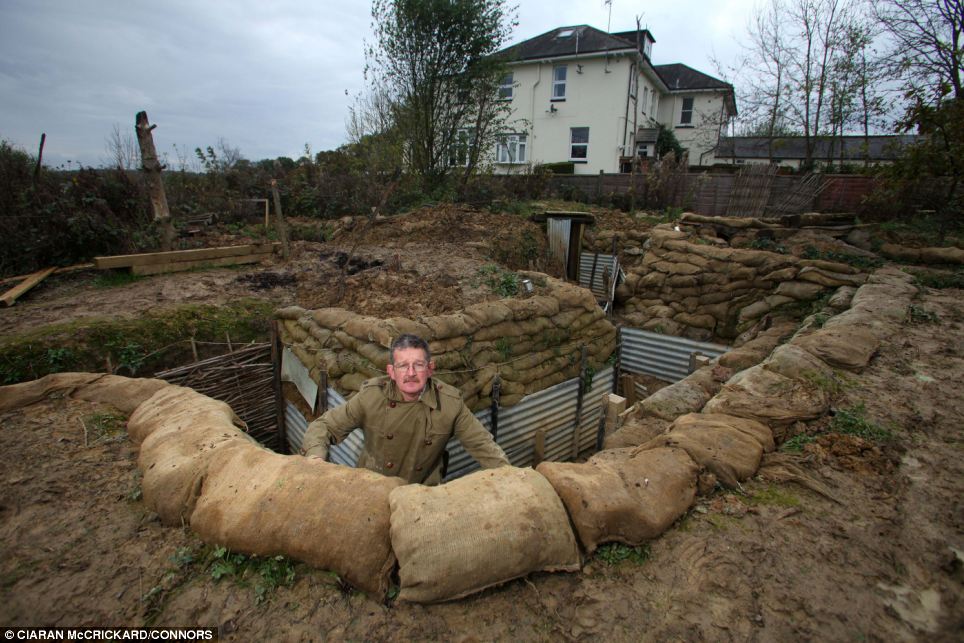
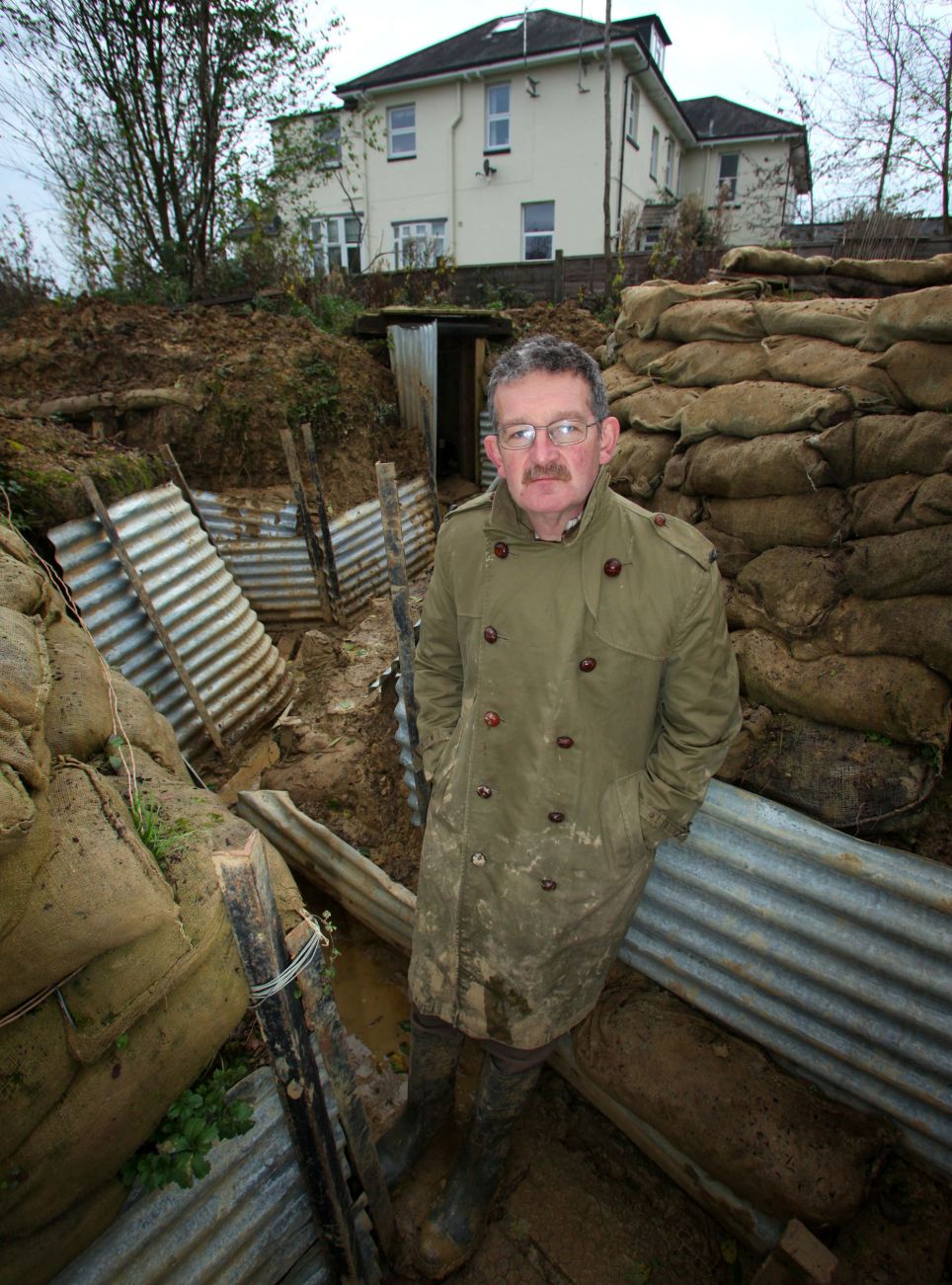
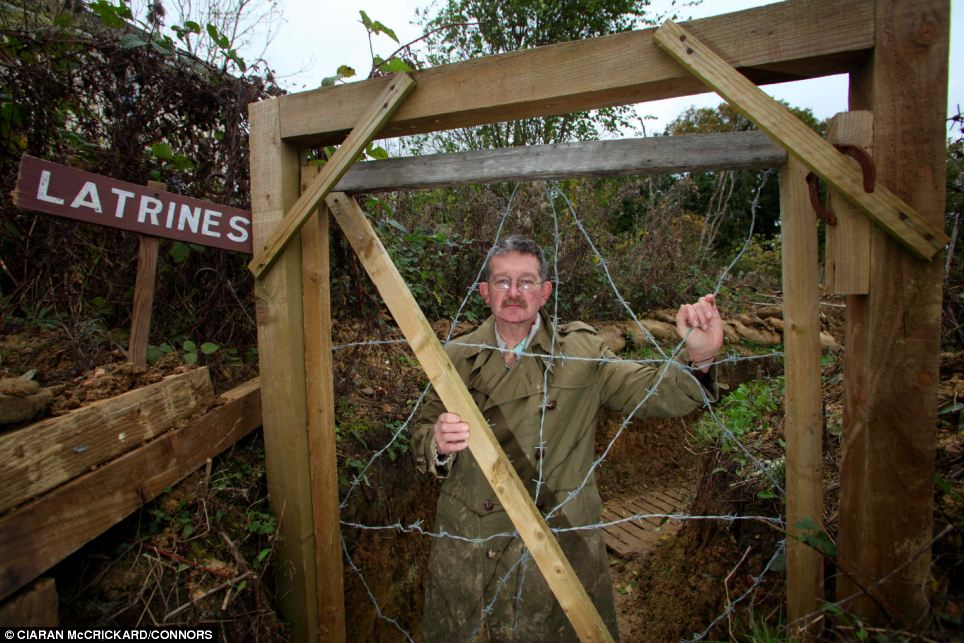
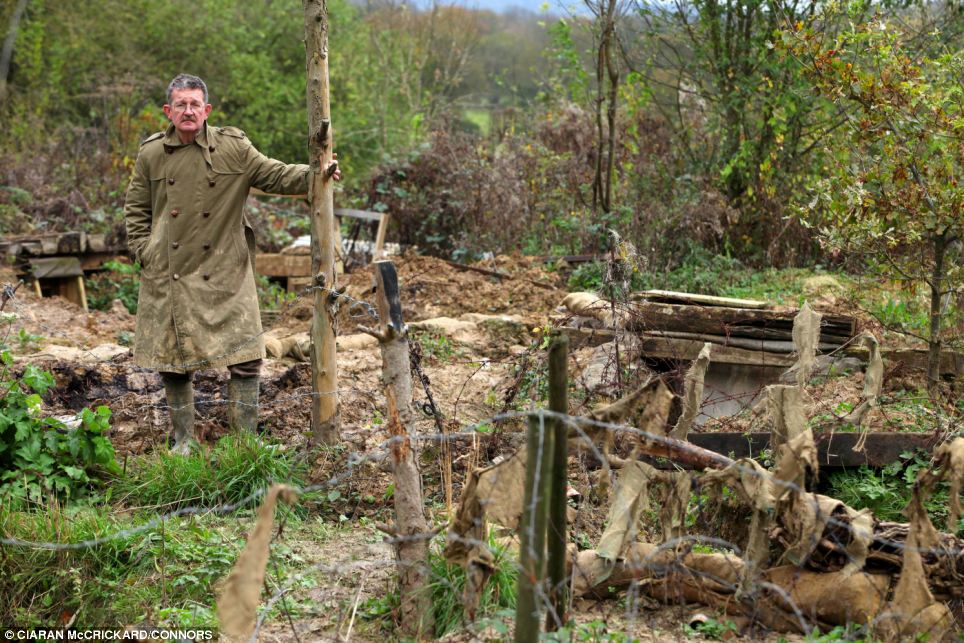
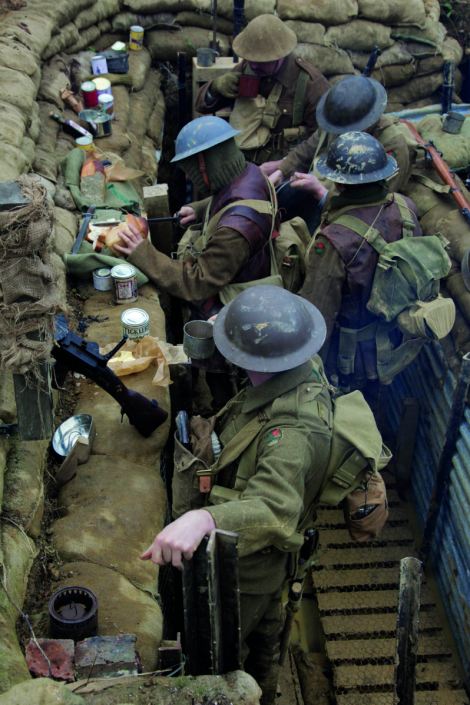
Surrounded by barbed wire, sandbags and mud, this 60ft trench is barely distinguishable from those occupied by British soldiers fighting in the First World War almost a century ago.
The enormous dugout has been painstakingly recreated by an ex-history teacher in his back garden in Surrey, and the dedicated 55-year-old even spent 24 hours living in its confines with a team of volunteers as part of his efforts to experience life as a WWI soldier.
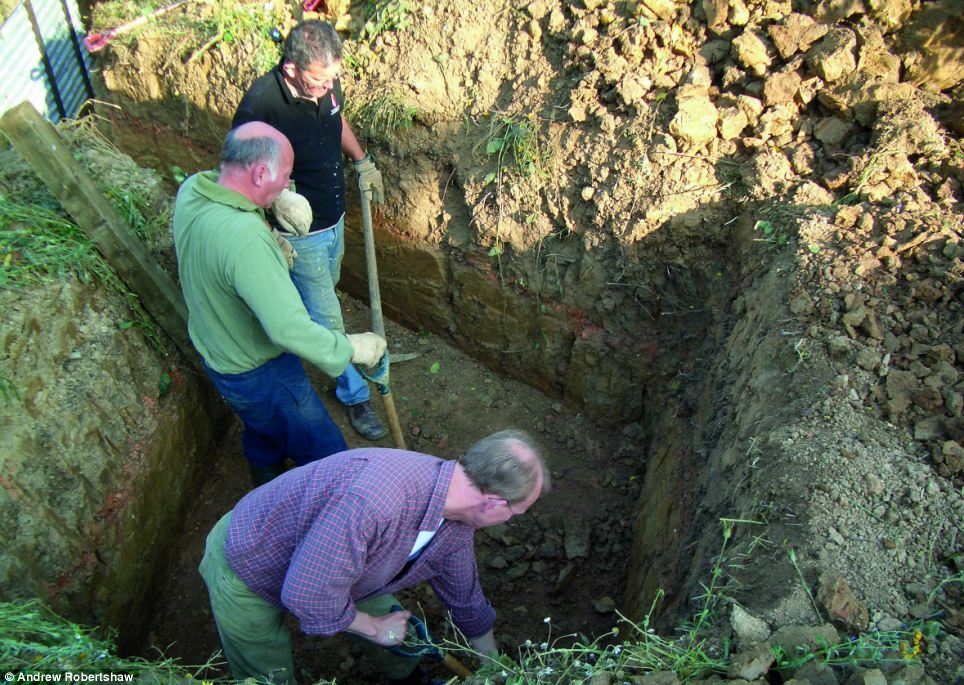
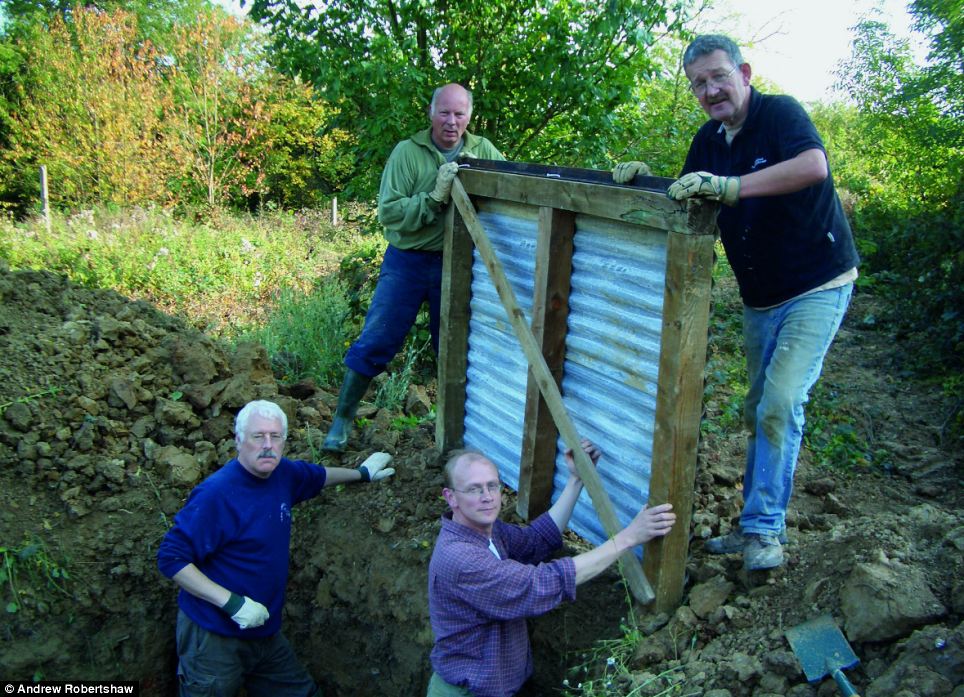
Andrew Robertshaw and 30 helpers spent a month shifting around 200 tonnes of earth to build the enormous three-room trench, which he hopes will teach people more about the horrific living conditions endured by British troops during the Great War.
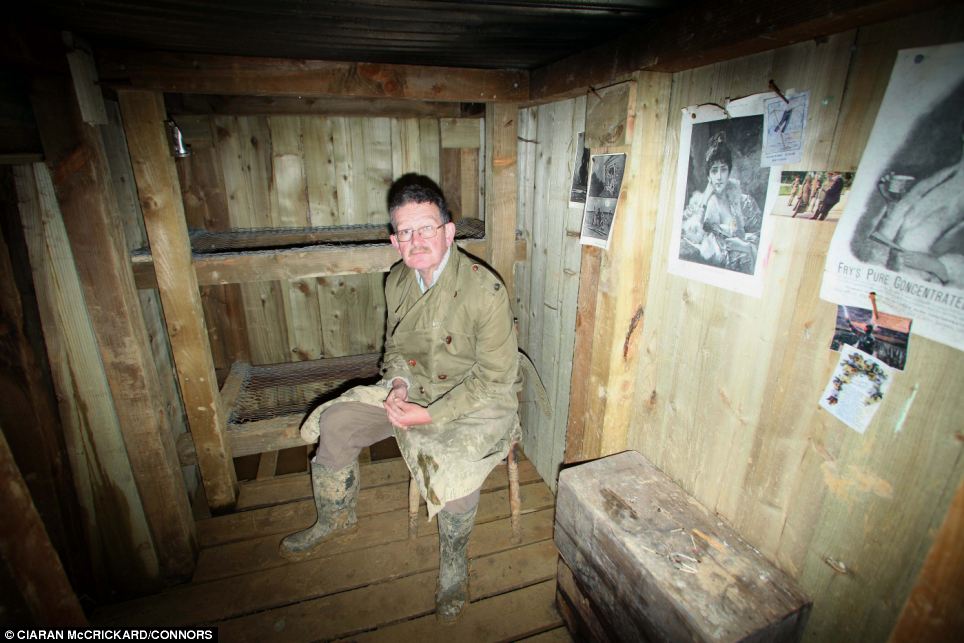
The father-of-one has even spent 24 hours living in the hole - which features a kitchen, infantry room, and officers' dugout - as part of an overnight re-enactment of trench warfare in the garden in Charlwood.
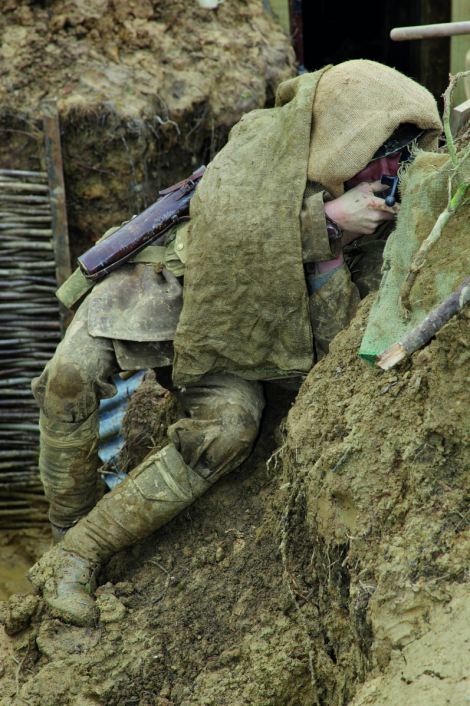
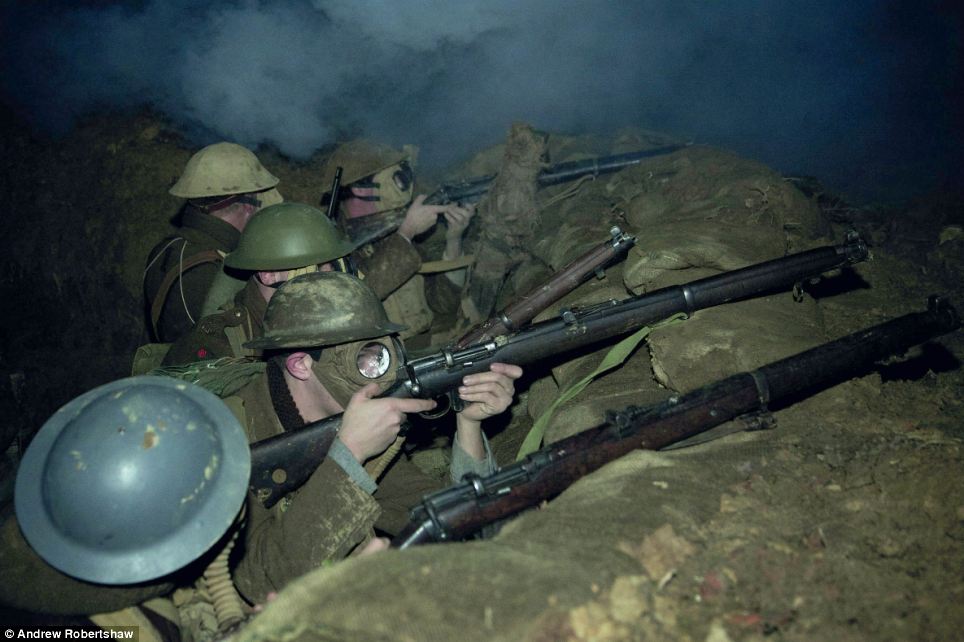
Mr Robertshaw - who acted as a military advisor on the Steven Spielberg epic War Horse - and a band of volunteers dressed up in replica uniforms and used rifles to fire blanks into the countryside during their stint in the trench.
'My grandfather fought in the war and was wounded three times,' said the historian, who also runs the Royal Logistics Corps Museum in Deepcut, Surrey.
'I wanted to show people that the war was about survival and not just about death. When the soldiers weren't fighting this is how they were living.
'The most common experience was living in a trench and trying to be as comfortable as possible while living in a hole in the ground,' he added.
With Remembrance Day approaching, Mr Robertshaw said it was particularly important to reflect on the living conditions endured by British troops.
'Many people will know someone who was involved in the war and it is a direct legacy to the world today,' he said.
Mr Robertshaw and his band of volunteers - which included soldiers from the 23 Pioneer Regiment Royal Logistics Corps - got a glimpse into the life of a Tommy when they spent 24 hours living in the trench and kept a diary of the experience.
'It's all about learning,' said Mr Robertshaw, who explained that all of the participants wrote about their experiences of cooking, eating and cleaning in the trench.
‘I am an ex-history teacher and I just want people to know more about our history and the First World War is such a big part of that,' said the historian, who has appeared on the television programme Time Team and worked behind the scenes on Who Do You Think You Are?
‘Particularly as Remembrance Day is coming up it is important to realise how those troops were living.'
The former teacher is in the process of creating a video for use is schools, which will explore the trench and include footage of some of his First World War re-enactments.
Mr Robertshaw is also hoping to launch a website through which schoolchildren can virtually explore the dugout.
The historian, who has opened the trench to the public in the past, said: 'I usually target war enthusiasts and societies like the Western Front Association, as it will mean more to them,' he said.
'I have just made a tester video for schools to use when teaching about the war and I have had an idea to make the trench available via the web.'
Mr Robertshaw said such a website would help bring history to life for youngsters watching.
‘A website for the trench could be used by schools to give lectures which are much more realistic then looking at a black and white photograph, which is what we have at the moment,' he said.
Photographs of Mr Robertshaw's 24-hour stint in the trench are also included in his book, entitled 24 Hour Trench: A Day In The Life Of a Frontline Tommy, which is set in April 1917.
While the sprawling trench is overlooked by a number of other houses in Charlwood, Mr Robertshaw said he had received no complaints from neighbours and some even made cups of tea for the 'troops' during the overnight battle re-enactment.
Since building the dugout last summer Mr Robertshaw has sold his Surrey house and moved, but eager to hold on to the results of his ambitious project, he has retained ownership of the land housing the trench.
Steven Andrews, 63, who lives next to the trench in Charlwood, told how he hears the sound of gunfire emerging from the dugout when re-enactments are taking place.
'My land borders Andy's land but we have never had any real problems,' he said.
'The only issue I have ever raised is that I have horses and when the re-enactments are going on they can get easily spooked.
'Last time we came to an agreement that Andy would stop shooting at certain times when the horses were out.
'We can hear the gunfire from the house, he uses real rifles used in WWI, but as it isn't very often we don't mind,' Mr Andrews said.
Mr Robertshaw's latest book, 24 Hours In Battle, is due to be released next year.
Images of the re-enactment are taken from the book 24hr Trench: A Day in the Life of a Frontline Tommy by Andrew Robertshaw, published by The History Press, www.thehistorypress.co.uk.
http://www.dailymail.co.uk/news/art...t-plight-frontline-Tommies.html#ixzz2AysjpGsj
The enormous dugout has been painstakingly recreated by an ex-history teacher in his back garden in Surrey, and the dedicated 55-year-old even spent 24 hours living in its confines with a team of volunteers as part of his efforts to experience life as a WWI soldier.
Andrew Robertshaw and 30 helpers spent a month shifting around 200 tonnes of earth to build the enormous three-room trench, which he hopes will teach people more about the horrific living conditions endured by British troops during the Great War.
The father-of-one has even spent 24 hours living in the hole - which features a kitchen, infantry room, and officers' dugout - as part of an overnight re-enactment of trench warfare in the garden in Charlwood.
Mr Robertshaw - who acted as a military advisor on the Steven Spielberg epic War Horse - and a band of volunteers dressed up in replica uniforms and used rifles to fire blanks into the countryside during their stint in the trench.
'My grandfather fought in the war and was wounded three times,' said the historian, who also runs the Royal Logistics Corps Museum in Deepcut, Surrey.
'I wanted to show people that the war was about survival and not just about death. When the soldiers weren't fighting this is how they were living.
'The most common experience was living in a trench and trying to be as comfortable as possible while living in a hole in the ground,' he added.
With Remembrance Day approaching, Mr Robertshaw said it was particularly important to reflect on the living conditions endured by British troops.
'Many people will know someone who was involved in the war and it is a direct legacy to the world today,' he said.
Mr Robertshaw and his band of volunteers - which included soldiers from the 23 Pioneer Regiment Royal Logistics Corps - got a glimpse into the life of a Tommy when they spent 24 hours living in the trench and kept a diary of the experience.
'It's all about learning,' said Mr Robertshaw, who explained that all of the participants wrote about their experiences of cooking, eating and cleaning in the trench.
‘I am an ex-history teacher and I just want people to know more about our history and the First World War is such a big part of that,' said the historian, who has appeared on the television programme Time Team and worked behind the scenes on Who Do You Think You Are?
‘Particularly as Remembrance Day is coming up it is important to realise how those troops were living.'
The former teacher is in the process of creating a video for use is schools, which will explore the trench and include footage of some of his First World War re-enactments.
Mr Robertshaw is also hoping to launch a website through which schoolchildren can virtually explore the dugout.
The historian, who has opened the trench to the public in the past, said: 'I usually target war enthusiasts and societies like the Western Front Association, as it will mean more to them,' he said.
'I have just made a tester video for schools to use when teaching about the war and I have had an idea to make the trench available via the web.'
Mr Robertshaw said such a website would help bring history to life for youngsters watching.
‘A website for the trench could be used by schools to give lectures which are much more realistic then looking at a black and white photograph, which is what we have at the moment,' he said.
Photographs of Mr Robertshaw's 24-hour stint in the trench are also included in his book, entitled 24 Hour Trench: A Day In The Life Of a Frontline Tommy, which is set in April 1917.
While the sprawling trench is overlooked by a number of other houses in Charlwood, Mr Robertshaw said he had received no complaints from neighbours and some even made cups of tea for the 'troops' during the overnight battle re-enactment.
Since building the dugout last summer Mr Robertshaw has sold his Surrey house and moved, but eager to hold on to the results of his ambitious project, he has retained ownership of the land housing the trench.
Steven Andrews, 63, who lives next to the trench in Charlwood, told how he hears the sound of gunfire emerging from the dugout when re-enactments are taking place.
'My land borders Andy's land but we have never had any real problems,' he said.
'The only issue I have ever raised is that I have horses and when the re-enactments are going on they can get easily spooked.
'Last time we came to an agreement that Andy would stop shooting at certain times when the horses were out.
'We can hear the gunfire from the house, he uses real rifles used in WWI, but as it isn't very often we don't mind,' Mr Andrews said.
Mr Robertshaw's latest book, 24 Hours In Battle, is due to be released next year.
Images of the re-enactment are taken from the book 24hr Trench: A Day in the Life of a Frontline Tommy by Andrew Robertshaw, published by The History Press, www.thehistorypress.co.uk.
http://www.dailymail.co.uk/news/art...t-plight-frontline-Tommies.html#ixzz2AysjpGsj
























