Martini Enfield

gerard488

Regular
GunNutz
Rating - 100%
25   0   0
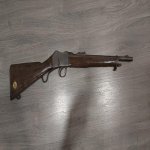
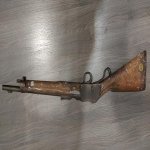
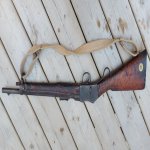
I bought an old Martini Enfield in rough shape that turned out to be a pretty good shooter after a week of scrubbing the bore and decided to take it a step farther. After stripping the paint, I found every crack ,dent and ding filled with what looked like auto body filler. After hooking it all out with an exacto knife, here it is with a couple of coats of tung oil. The sights were in really bad shape, looks like the front one was hammered down and the rear bent a bit but still fairly accurate. Anyway, here are the before, during and after pics. Not gonna try to get it any better. Sorry about upside ddown pics , they were right when I posted them1.jpg
2.jpg
3.jpg
 

Attachments

  • 1.jpg
    1.jpg
    52 KB · Views: 335
  • 2.jpg
    2.jpg
    54.8 KB · Views: 335
  • 3.jpg
    3.jpg
    50.4 KB · Views: 332
Is your rifle Turkish, Pakistan, British etc marked??

It's a carbine version and were some of the last to be released as surplus. They were made up from FTRed 577-450 rifles and rebarreled to 303 British, usually, but not always by the British. The original markings are often scrubbed off and new stamping added to represent the nation paying for the conversion.

Sometimes you see them with both original and later national marks.

Some nations, such as Afghanistan actually built their own Martini rifles, under British supervision of course.

If it's seen Middle East service, it may have been used for training/drill purposes as well. Some countries aren't very particular about stamping a big DP or such on the receivers.

The last ones I purchased, back in the mid eighties, from International Firearms out of Montreal, were mostly in Drill Purpose condition.

The front sights were worn from scabbards and the rear sights were often broken or bent. There were a few jewels in the mix though.

You just had to buy enough of them, to be allowed to pick through the pallets they were stacked on.

I bought 300 of them, under contract to Alan Lever of Lever Arms and was allowed to pick through them for the rifles with decent bores, not to badly dented and with intact sights. I managed to find 40, that looked like they'd never been issued.

We also bought another 300 that were still chambered in 577-450, in VG condition. These rifles were welded together at the receivers and to a ring around the bayo lugs, to be turned into lamps. All of them went to the US markets.

 
Last edited:
Do you have on of the unissued condition rifles?

Given how cheap this country is, I am surprised similar rifles or Rolling Blocks in 303 were never issued here.
 
Do you have on of the unissued condition rifles?

Given how cheap this country is, I am surprised similar rifles or Rolling Blocks in 303 were never issued here.

In the early 1890s .303" Martini Metfords were purchased for trial in Canada with a view to adopting this arm for general service. As told in "Defending the Dominion" the MLE was eventually chosen.
 
Is your rifle Turkish, Pakistan, British etc marked??

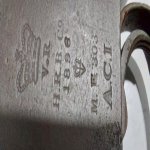
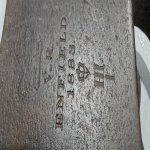
No other marks, just British, Has an "E" on the Nock's form. Also marked "NOT FOR BALL" but everything works and getting 1 1/2 group at 50 yards.111.jpg222.jpg
 

Attachments

  • 111.jpg
    111.jpg
    52.9 KB · Views: 258
  • 222.jpg
    222.jpg
    84.2 KB · Views: 259
A lot of them never left the UK, until they were surplussed on the world markets in the 70s-80s

Your rifle appears to be one of those.

Many were left behind in India, but usually show some service/issue marks.

I have yet to find one of those conversions that doesn't shoot well, especally with flat base or exposed lead core base ammo.

If you look on top of the knox, it will either be marked with an "E" or nothing. Sometimes there are other stamps, again, depending on where it came from.

If it has an "E" stamp, the barrel will have Enfield factory designed rifling, designed for smokeless powder.

If it's plain, the rifling will likely be Metford design. This looks washed out an rounded, but it handles black powder and early smokeless types of powder, with much less fouling issues

I have two Martini Enfields, chambered in 303 British. Both are rifles. One has Metford style rifling and the other has Enfield style rifling.

I also have what I thought to be a Khyber Pass Martini but the crest on the right flat turned out to be from the Royal Afghan Armory. It's also in 303 Brit and has Metford type rifling.

Both types of rifling seem to shoot flat base bullets, of at least 174 grain best.
 
Last edited:
In the early 1890s .303" Martini Metfords were purchased for trial in Canada with a view to adopting this arm for general service. As told in "Defending the Dominion" the MLE was eventually chosen.
Canada was full of good red blooded British citizens so they could be trusted with the MLE. The Martini Enfield was for WOG troops who couldn't be trusted. British Army regulars had 10 rounds but the (not to be trusted) natives only had one.
 
Canada was full of good red blooded British citizens so they could be trusted with the MLE. The Martini Enfield was for WOG troops who couldn't be trusted. British Army regulars had 10 rounds but the (not to be trusted) natives only had one.

So was Australia and they adopted the ME rifle.
 
Canada ordered 1000 .303 Martini Metford rifles and 200 cavalry carbines in 1893 for trials to replace the (mostly) sniders and some Martini Henry rifles acquired many years earlier. The trials did not favour the heavy .303 Martinis at all. Fortunately Canada did receive 40,000 Lee Enfields with bayonets in late 1896 but I'm sure that a Venezualan problem expedited that order. So Australia had nothing to do with anything but there own business. The carbine on this post is simply a surplus Martini Enfield carbine that could have miscellaneous provenance. JOHN
 
Back
Top Bottom