












































You are using an out of date browser. It may not display this or other websites correctly.
You should upgrade or use an alternative browser.
You should upgrade or use an alternative browser.
Martini henry flamethrower
- Thread starter john94
- Start date



View attachment 544233
Full service loads in a 21” barrel throws some awesome fireballs out of this carbine I got from the equipment exchange.
Great photo!

I am wondering if, by "full service load", you mean the rifle cartridge service load (85 gr. black powder, 480 gt. bullet) or the reduced loading specifically adopted for carbines (70 gr. black powder, 410 gr. bullet very close to the original load for the .45-70.)
Here are the relevant entries from the War Department's "List of Changes in War Matériel and of Patterns of Military Stores" -
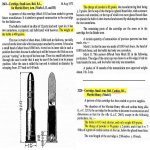
If you are beating yourself up shooting the full rifle load in a carbine, you may want to consider downloading a bit … not even the hard-nosed British War Department was sadistic enough to make its military personnel shoot that full load in carbines … They conducted trials of the carbines using the full rifle load, but then delayed actually issuing the approved carbines to the intended recipients until this reduced carbine loading had been developed and put into production!
Here are the relevant entries from the War Department's "List of Changes in War Matériel and of Patterns of Military Stores" -
If you are beating yourself up shooting the full rifle load in a carbine, you may want to consider downloading a bit … not even the hard-nosed British War Department was sadistic enough to make its military personnel shoot that full load in carbines … They conducted trials of the carbines using the full rifle load, but then delayed actually issuing the approved carbines to the intended recipients until this reduced carbine loading had been developed and put into production!
Attachments

Thanks Grant, that’s a very informative diagram. I’ve been trying out both the 85 grain load and 70 grains with toilet paper as filler. However I haven’t had enough range time to see how they compare in performance. I wonder which load the sights were calibrated for.
If it is a carbine, the sights would be regulated for the carbine load. That said, 19th century British military rifles and carbines tend to print quite high, relative to point of aim, at the ranges we tend to shoot them, so you'll likely have to make some allowance for that.
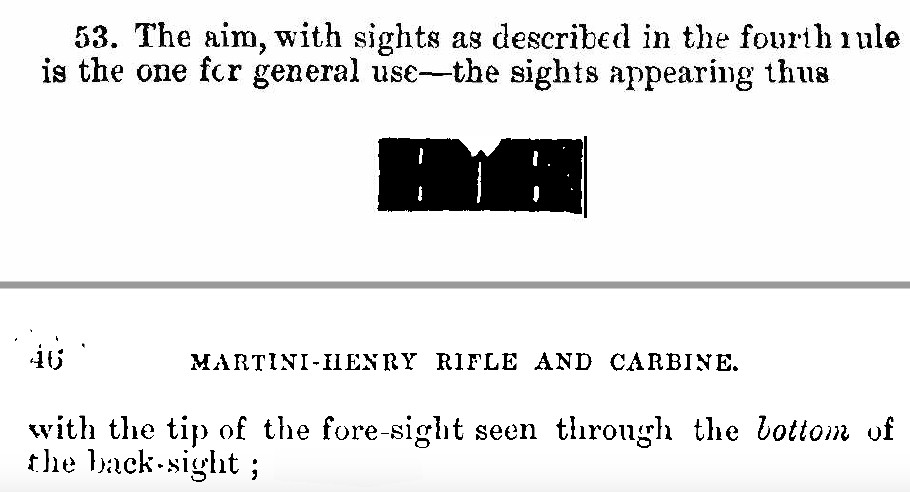
One reason for this is that British soldiers were trained to take a very fine sight picture, with the tip of the foresight just visible in the bottom of the sight notch, rather than the "full sight" alignment most of us tend to use today … i.e. with the tip of the forsight aligned with the top of the rear sight … which of course makes the shot go higher …
One reason for this is that British soldiers were trained to take a very fine sight picture, with the tip of the foresight just visible in the bottom of the sight notch, rather than the "full sight" alignment most of us tend to use today … i.e. with the tip of the forsight aligned with the top of the rear sight … which of course makes the shot go higher …






















