












































You are using an out of date browser. It may not display this or other websites correctly.
You should upgrade or use an alternative browser.
You should upgrade or use an alternative browser.
Match chamber or?
- Thread starter Horus7
- Start date

You know you have a match chamber when you go to unload an unfired round and get empty brass, then have to shake the powder out of the action and grab your squib rod to free the bullet from the start of the rifling.
(If you have anything close to a match chamber, this is always something to check!)
That said, neither the CZ nor the Tikka here have exhibited that problem and are both very good accurate .22LR rifles.
(If you have anything close to a match chamber, this is always something to check!)
That said, neither the CZ nor the Tikka here have exhibited that problem and are both very good accurate .22LR rifles.
- Location
- Northeastern Ontario
With a true match chamber the dimensions are smaller than on the standard CIP chamber of the Tikka or CZ (both follow CIP specs). All CIP chambers will be a little tighter and shorter than the SAAMI sporter chambers found on many North American-made .22LR rifles.
CZ advertises that on some models it has what it calls a "CZ match chamber" so it is expected to have smaller dimensions than the standard CZ CIP chamber, but by how much we don't know.
Match chambers are generally smaller in diameter and shorter in length. This means the .22LR bullet engages with the leade angle and rifling. Standard chambers typically don't have bullet/rifling engagement.
Match chambers allow for more consistent bullet entry and minimizes bullet deformation that can be caused in sporter chambers when the bullet engages the leade angle and rifling more abruptly.
Because match chambers are a little tighter they will not accomodate as wide a variety of different .22LR ammos as will standard chambers. They are designed for match ammo.
Sporter chambers are more forgiving chambers and allow reliable feeding of varied ammo. They trade a bit of precision for robustness.
CZ advertises that on some models it has what it calls a "CZ match chamber" so it is expected to have smaller dimensions than the standard CZ CIP chamber, but by how much we don't know.
Match chambers are generally smaller in diameter and shorter in length. This means the .22LR bullet engages with the leade angle and rifling. Standard chambers typically don't have bullet/rifling engagement.
Match chambers allow for more consistent bullet entry and minimizes bullet deformation that can be caused in sporter chambers when the bullet engages the leade angle and rifling more abruptly.
Because match chambers are a little tighter they will not accomodate as wide a variety of different .22LR ammos as will standard chambers. They are designed for match ammo.
Sporter chambers are more forgiving chambers and allow reliable feeding of varied ammo. They trade a bit of precision for robustness.
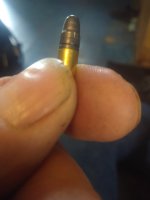
The barrels roll stamped CZ-US may be marked Match, this is American marketing at its finest. SAMMI American standards have two, a sport and a match. Convert the dimensions on the CIP chamber status, and they are a little tighter than CIP's Match chamber. This is why Tika, CZ, Anschutz seem to shoot better, they must adhere to the mandatory CIP standards. BTW the CZ-US barrels, if threaded, will have 1/2-28 thread, the CZUB stamped will have the European standard thread, 1/2-20. Real differences come from standard deviation, barrel to barrel. There are custom manufactured barrels with custom chambers, but there seems to still be a bit of a barrel lottery as to how they will shoot, how clean they stay, etc.With a true match chamber the dimensions are smaller than on the standard CIP chamber of the Tikka or CZ (both follow CIP specs). All CIP chambers will be a little tighter and shorter than the SAAMI sporter chambers found on many North American-made .22LR rifles.
CZ advertises that on some models it has what it calls a "CZ match chamber" so it is expected to have smaller dimensions than the standard CZ CIP chamber, but by how much we don't know.
Match chambers are generally smaller in diameter and shorter in length. This means the .22LR bullet engages with the leade angle and rifling. Standard chambers typically don't have bullet/rifling engagement.
Match chambers allow for more consistent bullet entry and minimizes bullet deformation that can be caused in sporter chambers when the bullet engages the leade angle and rifling more abruptly.
Because match chambers are a little tighter they will not accomodate as wide a variety of different .22LR ammos as will standard chambers. They are designed for match ammo.
Sporter chambers are more forgiving chambers and allow reliable feeding of varied ammo. They trade a bit of precision for robustness.
Establish a base line with they rifle you have, then decide if you can improve it's accuracy, or if it is accurate enough, or if it is a hopeless case. There is a lot more affects accuracy that the chamber.
Last edited:
- Location
- Northeastern Ontario
CZ barrels are made in the Czech Republic and are CIP spec, no matter whether they have CZ-US stampings on them or 1/2-28 threading. SAAMI specs, either Match or Sporting, are not used.The barrels roll stamped CZ-US may be marked Match, this is American marketing at its finest. SAMMI American standards have two, a sport and a match. Convert the dimensions on the CIP chamber status, and they are a little tighter than CIP's Match chamber. This is why Tika, CZ, Anschutz seem to shoot better, they must adhere to the mandatory CIP standards. BTW the CZ-US barrels, if threaded, will have 1/2-28 thread, the CZUB stamped will have the European standard thread, 1/2-20. Real differences come from standard deviation, barrel to barrel.
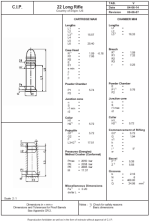
CIP specs don't require one single chamber dimension. Some CIP-compliant chambers may differ from each other. In other words, CIP chamber dimensions aren't all the same.
Chambers play a role in a barrel's accuracy potential as does bore quality. Neither is always fixed across any model of rimfire rifle produced in the quantities characteristic of CZ .22LR rifles.
While I agree that some CIP specs are what they are the variation chamber to chamber must still fall within the upper and lower tolerance limits. Same goes for surface finishes; a worn reamer may yield a slightly tighter chamber but with a slightly more irregular surface finish than a brand new sharp one.CZ barrels are made in the Czech Republic and are CIP spec, no matter whether they have CZ-US stampings on them or 1/2-28 threading. SAAMI specs, either Match or Sporting, are not used.
CIP specs don't require one single chamber dimension. Some CIP-compliant chambers may differ from each other. In other words, CIP chamber dimensions aren't all the same.
Chambers play a role in a barrel's accuracy potential as does bore quality. Neither is always fixed across any model of rimfire rifle produced in the quantities characteristic of CZ .22LR rifles.
- Location
- Northeastern Ontario
Indeed. The CIP chamber specs show the minimum dimensions. They don't show a maximum. The result is that manufacturers aren't required to make a one-size chamber to comply with CIP specs.While I agree that some CIP specs are what they are the variation chamber to chamber must still fall within the upper and lower tolerance limits. Same goes for surface finishes; a worn reamer may yield a slightly tighter chamber but with a slightly more irregular surface finish than a brand new sharp one.
CIP match chambers in, say a Bleiker or a Walther or an Anschutz, may well not be the same as each other's and none of them will be the same as in a sporter repeater such as the the CZ models with the "CZ match chamber".
@Buck1950, why the sad face reply; hoping for a simple buy your accuracy answer?The barrels roll stamped CZ-US may be marked Match, this is American marketing at its finest. SAMMI American standards have two, a sport and a match. Convert the dimensions on the CIP chamber status, and they are a little tighter than CIP's Match chamber. This is why Tika, CZ, Anschutz seem to shoot better, they must adhere to the mandatory CIP standards. BTW the CZ-US barrels, if threaded, will have 1/2-28 thread, the CZUB stamped will have the European standard thread, 1/2-20. Real differences come from standard deviation, barrel to barrel. There are custom manufactured barrels with custom chambers, but there seems to still be a bit of a barrel lottery as to how they will shoot, how clean they stay, etc.
Establish a base line with they rifle you have, then decide if you can improve it's accuracy, or if it is accurate enough, or if it is a hopeless case. There is a lot more affects accuracy that the chamber.
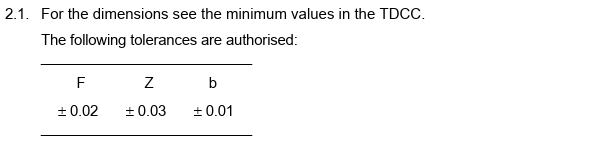
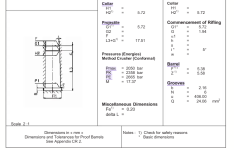
Actually, there are upper and lower tolerances; not at the bottom of the page it states that tolerances are listed in appendix CR 2; it took a bit of hunting but here they are:Indeed. The CIP chamber specs show the minimum dimensions. They don't show a maximum. The result is that manufacturers aren't required to make a one-size chamber to comply with CIP specs.

Never experienced the symptom of a "match" chamber in any of my CZ's thankfully of course.You know you have a match chamber when you go to unload an unfired round and get empty brass, then have to shake the powder out of the action and grab your squib rod to free the bullet from the start of the rifling.
(If you have anything close to a match chamber, this is always something to check!)
That said, neither the CZ nor the Tikka here have exhibited that problem and are both very good accurate .22LR rifles.
And I understand the 452'453's and other otc CZ's are not sold as "Macth" chambers, but they are tight.
Plated bullets with wax coatings fit tight, very tight when racked to chamber.
To the OP, you will need a Dewey rod and accessories for any CZ you buy , not sure about Tika though.
Tight Groups and have fun making them.
Rob

- Location
- Northeastern Ontario
I once looked for this kind of information but gave up. The tolerances referred to are associated with the barrel and don't seem to be chamber-related.Actually, there are upper and lower tolerances; not at the bottom of the page it states that tolerances are listed in appendix CR 2; it took a bit of hunting but here they are:


On the off chance the OP is thinking there is something meaningful lost (accuracy-wise) on a standard chamber in either brand, let me be the guy to say that at my club/based on my observations...maybe 1/100 guys I've witness shooting match guns or guns with match barrels...appear to be really shooting at the barrel/ammo's potential. If the OP was looking to compete, then whichever gun he picks will req. a diet of better, higher $ ammo anyway. Match chamber makes sense, being mindful of the fact that there are factory rifles better-suited to competition.
Both Tikka and CZ shoot extremely well as configured, I'd put good ammo and a lighter trigger spring ahead of chamber considerations, as I think both will make a bigger difference/sooner if the OP isn't super experienced. Especially with these guns.
I spent a couple hours behind a new Tikka T1x UPR a few days ago for the first time, shooting 60m @ a paper target. SK Rifle Match, no match chamber. Based on how close those holes were together, I was only smiling...and not wishing I was shooting anything else.
Both Tikka and CZ shoot extremely well as configured, I'd put good ammo and a lighter trigger spring ahead of chamber considerations, as I think both will make a bigger difference/sooner if the OP isn't super experienced. Especially with these guns.
I spent a couple hours behind a new Tikka T1x UPR a few days ago for the first time, shooting 60m @ a paper target. SK Rifle Match, no match chamber. Based on how close those holes were together, I was only smiling...and not wishing I was shooting anything else.






















