measuring trigger pull on Glock 17?

sevoman

CGN Regular
Rating - 100%
139   0   0
Location
Vancouver island
So what is the correct way to measure the trigger pull on a Glock?

I want to ensure that its greater than 5lbs(which Im pretty sure that it is),to be OK to use in production division

I have a RCBS gauge,and measured lots of triggers before,however,I find that its quite difficult to measure the glocks trigger reliably.Placing the gauge on the midpoint of the trigger and pulling the gauge in the axis of the barrel will often not activate the trigger safety,and the trigger wont move or you end up with a falsely high reading),if the gauge is lower down on the trigger,there is more leverage from the gauge and you arent pulling in the axis of the trigger finger and you end up with a falsely low trigger pull.My readings have varied by as much as 2 lbsdepending where I start off on the trigger

What it the technique used for these triggers at IPSC shoots when checking at the chrono stage that the trigger is above the 5lb mark?
 
I think the only way to make is as constant as possible is to disable the trigger safety.
I'm not sure how you would go about doing this but I know it can be done.
You could always use a small section of tape or sting to hold the trigger safety down and that would also give the trigger pull gauge a bit of traction on the trigger for a more constant pull weight.

Tim
 
they are rated at 5.5 lbs factory, and feel heavier. I wouldn't worry about it, but it is an interesting question.
 
That is a good question.

So what is the correct way to measure the trigger pull on a Glock?

I want to ensure that its greater than 5lbs(which Im pretty sure that it is),to be OK to use in production division

I have a RCBS gauge,and measured lots of triggers before,however,I find that its quite difficult to measure the glocks trigger reliably.Placing the gauge on the midpoint of the trigger and pulling the gauge in the axis of the barrel will often not activate the trigger safety,and the trigger wont move or you end up with a falsely high reading),if the gauge is lower down on the trigger,there is more leverage from the gauge and you arent pulling in the axis of the trigger finger and you end up with a falsely low trigger pull.My readings have varied by as much as 2 lbsdepending where I start off on the trigger

What it the technique used for these triggers at IPSC shoots when checking at the chrono stage that the trigger is above the 5lb mark?

You should ask IPSC.

Ask IPSC

1. If your question is about guns, holsters or other IPSC shooting equipment, join the IPSC Global Village, where you can get opinions and lots of great advice from other competitors. (IPSC does not give advice on such matters.)

2. If your question is about general IPSC Rules, send an email to:
emailImage.php


3. If your question is specifically about IPSC Divisions, try the Divisions FAQ (and the Approved Gun List in respect of IPSC Production Division). If you still can't find the answer you seek, send an email to:

4. If your question is about joining IPSC, see the list of Regions for contact information in your country. If your country is not listed, and you're interested in creating a new organization in your country to affiliate to IPSC, send an email to:
emailImage.php


Return to IPSC Home Page

Last updated Friday, 04-Mar-2005 15:49:46 EST

Copyright © 2005 International Practical Shooting Confederation
All rights reserved

http://www.ipsc.org/


Once you get your answer, the official answer, you can print it out and keep it in your shooting bag (for your quick reference ;), the next time that you're sent to the chrony shack).
 
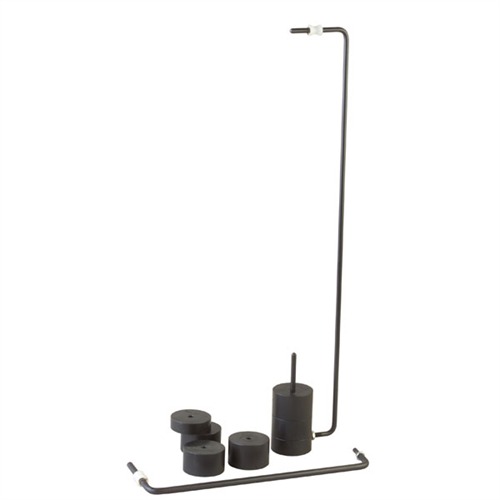
In competitive rifle shooting we always used a weight on a rod. the device as set on the ground and the trigger was used to lift it. If it dropped the sear, it failed.

The same can be achieved by a bucket and string/coat hanger.

I imagine much the same with pistols.

This was similar:

l_678650000_1.jpg
 
It will be measured at all Level 3 or higher matches (although I have seen Chrono set up at the odd Level 2)

Wwen they Chrono your ammo they will also do a qucik inspection to make sure you haven't made any modifications or have parts that would bump you out of Prod.

They will then test the trigger by attaching a 5 lb weight to the trigger (see pic provided by CanAm) and slowly lifting the gun. If the trigger doersn't engage...you're good to go.

They won't do anything like taping back the trigger safety...so don;t do that when you test your trigger pull.

So what is the correct way to measure the trigger pull on a Glock?

I want to ensure that its greater than 5lbs(which Im pretty sure that it is),to be OK to use in production division

I have a RCBS gauge,and measured lots of triggers before,however,I find that its quite difficult to measure the glocks trigger reliably.Placing the gauge on the midpoint of the trigger and pulling the gauge in the axis of the barrel will often not activate the trigger safety,and the trigger wont move or you end up with a falsely high reading),if the gauge is lower down on the trigger,there is more leverage from the gauge and you arent pulling in the axis of the trigger finger and you end up with a falsely low trigger pull.My readings have varied by as much as 2 lbsdepending where I start off on the trigger

What it the technique used for these triggers at IPSC shoots when checking at the chrono stage that the trigger is above the 5lb mark?
 
Thanks for the replies

After looking around on the net,I found that Glock actually rates its trigger pulls taken from the tip of the trigger,so with the 3.5 disconnector,the trigger feels more like about 5 pounds with the trigger finger on the centre of the trigger,pulling straight back.This is due to the glock having a pivoting trigger,with obviously more leverage at the tip.

On the IPSC website,the rules for measuring trigger pull state that the trigger is measured at its centre(tough to do on a glock with the trigger safety so low on the trigger),with the gun pointed vertically,lifting a 5lb weight(so pulling in the axis of the slide).Something to remember at a shoot,so you dont end up shooting open!
 
The individuals performing these "Tests" at an IPSC Matches, are very experienced at doing what they do. The last thing they want to have to do, is bump you into Open, due to a trigger problem. They will test it to the best of their abilities, and are very aware of any potential problems. Unless you have been messing with the firearm,your Glock, and you have a factory trigger, I wouldn't worry about it!

IMHO!
 
If you are a serious competitor going to lots of matches then you might want to worry about testing ahead of time. If you are a recreational competitor, then on the off chance your trigger ever fails it would be a warranty issue that Glock would happily address. Unless the gun is broken, your factory trigger will never fail to meet its rated pull weight as that would be a major liability that Glock couldn't stomach. Imagine the lawsuit if a police officer accidentally shot someone and proved it was because the trigger pool wasn't what it was rated at.
 
Ensure they test it with the weight pulling from the middle of the trigger.
It is rather finicky to do with the glock trigger safety, but can be done.
Testing on the end of the trigger is easier to make work, but can and will fail the weight limit (if not now, eventually once you've put some rounds through it).
 
Back
Top Bottom