Metric Reloading Kits & Manuals

M16LR.50

CGN frequent flyer
Rating - 100%
14   0   0
Location
Canada
I am looking to purchase my first reloading setup but wanted to know if there are any all metric (or metric + imperial) kits out there. Reason being I was brought up metric and grains and thous send my mind into a whirlwind... really... :HR:

Also, do the reloading manuals from Hornady have the load data in metric or is it imperial only? What do the european reloaders use?
 
The Vhitavouri manuals I think show both metric and imperial. I'm not sure why you are having difficulty wrapping your mind around this though. It's not like you need to do calculations or conversations from one unit of measure to another. Choose a bullet, find your caliber/cartridge in the loading manual, match the bullet weight, choose a powder, dispense the powder until the reading on the scale matches what the book says and go from there. Buy yourself a digital mic for measuring and change the unit of measure to mm. Have fun!
 
Thanks and I suppose you are right, but longer term when I want to go beyond just whats in the manual, and tune to more precise values for lengths and weights I'd just prefer working in units that feel more natural to me...
 
Are you trying to convert all measurements to metric? I don't know if that's even possible, as most of the stuff we get is going to come from the US and they don't use metric at all. Some of the terminology is British in origin as well, which is even more confusing.

I wish you luck, but I don't think any published material exists in great quantities. You may have to create your own after converting Imp to Metric
 
Are you trying to convert all measurements to metric? I don't know if that's even possible, as most of the stuff we get is going to come from the US and they don't use metric at all. Some of the terminology is British in origin as well, which is even more confusing.

I wish you luck, but I don't think any published material exists in great quantities. You may have to create your own after converting Imp to Metric
Interesting...
Does that mean the european reloaders just do their development in imperial units? Or do they have different literature and kits available?
 
this is hugely irrelevant. and actually most likely counter-productive since everyone you'll speak to uses the imperial/US units, so trying to convert them to metric is both pointless and will end up ostracizing yourself.

you can scale powder charges up or down regardless of what units they're actually measured in. just because the units are "grains" instead of "grams" shouldn't have any bearing at all on your ability to scale it up or down by 10%.

when you shop for tires, do you convert the size into 100%-metric for yourself because you only think in metric, and then have to explain to the store that your "metricized" 225/55-432 is really a 225/55-17...??? seriously, you'd just end up making MORE work for yourself and confusing (and annoying) anyone you try to communicate with.

best thing to do is - learn both systems (metric & imperial) and be able to jump between them.
 
this is hugely irrelevant. and actually most likely counter-productive since everyone you'll speak to uses the imperial/US units, so trying to convert them to metric is both pointless and will end up ostracizing yourself.

you can scale powder charges up or down regardless of what units they're actually measured in. just because the units are "grains" instead of "grams" shouldn't have any bearing at all on your ability to scale it up or down by 10%.

when you shop for tires, do you convert the size into 100%-metric for yourself because you only think in metric, and then have to explain to the store that your "metricized" 225/55-432 is really a 225/55-17...??? seriously, you'd just end up making MORE work for yourself and confusing (and annoying) anyone you try to communicate with.

best thing to do is - learn both systems (metric & imperial) and be able to jump between them.

Thanks for your opinion... However, I never said I do not want to learn both, but rather I prefer to work in metric. In any case, my original post is to find out WHICH, if any systems are out there that provide measures in metric only or metric + imp. I really do not care about sounding impressive in conversation based on units of measure that's what the interwebs are for :) - But as I said, I'm hoping you guys that have been loading for some time may have come across literature and or tools that are scaled in both units. Thanks
 
nothing on this side of the ocean. bullets you buy are going to be weighed in grains, and powder will be measured our in grains as well. IPSC power factors are calculated using grains and feet-per-second. about the only place you could see a mix of metric and imperial is distances - feet, yards, and meters - and calibers (.45 is in inches, 9mm or 10mm are obv in metric)

and I didn't mean to imply that you're trying to sound impressive. just that if you're going to convert to metric because you're comfy with metric, it'll be futile since stuff you buy isn't in metric anyways, and talking with other shooters isn't in metric either. conventions are a good thing in this case.

I would just ignore the source of the units and worry about the number itself. the bullet weighs 230, the powder weighs 5.8, and the caliber is .45. so far so good. oh, but the units are imperial. your brain shouldn't explode because of that last detail.
 
I would just ignore the source of the units and worry about the number itself. the bullet weighs 230, the powder weighs 5.8, and the caliber is .45. so far so good. oh, but the units are imperial. your brain shouldn't explode because of that last detail.

+1. Either way the measurements are in decimals, the actual unit name shouldn't be an issue. I can see not wanting to work in imperial if you were forced into using fractions (as a carpenter would, for instance), but reloading is a decimal measurement world in both imperial and metric.


Mark
 
+1. Either way the measurements are in decimals, the actual unit name shouldn't be an issue. I can see not wanting to work in imperial if you were forced into using fractions (as a carpenter would, for instance), but reloading is a decimal measurement world in both imperial and metric.

Exactly.

You aren't going to get away from grains. Just like carats is the measure for gem-stones grains is the unit of measurement used for powder. As for OAL, bullet diameter etc. They can be either imperial or metric. I have some analog dial calipers but I find I use the digital ones most often because it is so easy to read and easy to switch between metric and imperial. Heck, it even converts the number for you so with the push of a button you can learn that 1" = 25.40mm.

I was raised on the metric system myself so I understand your thinking but it really isn't a big deal if you just pay attention to the numbers and not get hung up on the units.
 
I am looking to purchase my first reloading setup but wanted to know if there are any all metric (or metric + imperial) kits out there. Reason being I was brought up metric and grains and thous send my mind into a whirlwind... really... :HR:

Also, do the reloading manuals from Hornady have the load data in metric or is it imperial only? What do the european reloaders use?

http://www.lntrade.dk/pdfdoc/Vihtavuori_ladedata.pdf
This is a link to a reloading manual that lists in bot metric and imperial, the Hornady manual does not use the metric system at all.
 
Thanks for your opinion... However, I never said I do not want to learn both, but rather I prefer to work in metric. In any case, my original post is to find out WHICH, if any systems are out there that provide measures in metric only or metric + imp. I really do not care about sounding impressive in conversation based on units of measure that's what the interwebs are for :) - But as I said, I'm hoping you guys that have been loading for some time may have come across literature and or tools that are scaled in both units. Thanks

I've seen some Lapua data in metric, for Lapua products. I use both metric (SI and bastardized North American) and imperial, but I agree with most of the other posts here, it's better to stay imperial. Plus most if not all of the equipment you'll find in North America will be imperial for reloading. You're introducing a murphy element if you're using imperial tools/charts and trying to think in metric.

You'll find measuring equipment such as calipers are available in metric. RCBS Chargemaster allows grams or grains. Good luck in your search.
 
Since powder is sold by the pound it makes more sense to use grains because it is a far more accurate measurement. There are 7000 grains in a pound versus 454 grams.
It is like when Canada switched from Imperial to metric. There are 180 F. degrees difference between water freezing and boiling versus 100 C. degrees thus F. is a more accurate measurement.

Where you will really see the difference when reloading will occur when you were supposed to use 10 grains but mistakenly used 10 grams.

Since you might be trying to reinvent the wheel this post has a mouthful of tongue in cheek!!!
 
Starting about 3 years ago I have converted most aspects of my reloading to metric. It started with overall lengths, for which mm (to one decimel place) is just about the perfect level of precision, and very intuitive.

I don't like digital scales, and I was aware that Ohaus used to make a metric version of the 5-0-5 balance beam scale but it was discontinued. It took some looking, but eventually I found a scale distributor in California that had some dusty old boxes on his shelf, and I cleaned him out. I may now be in possession of the only 505-10 scales in North America that are available for sale. Let me know if you want one.
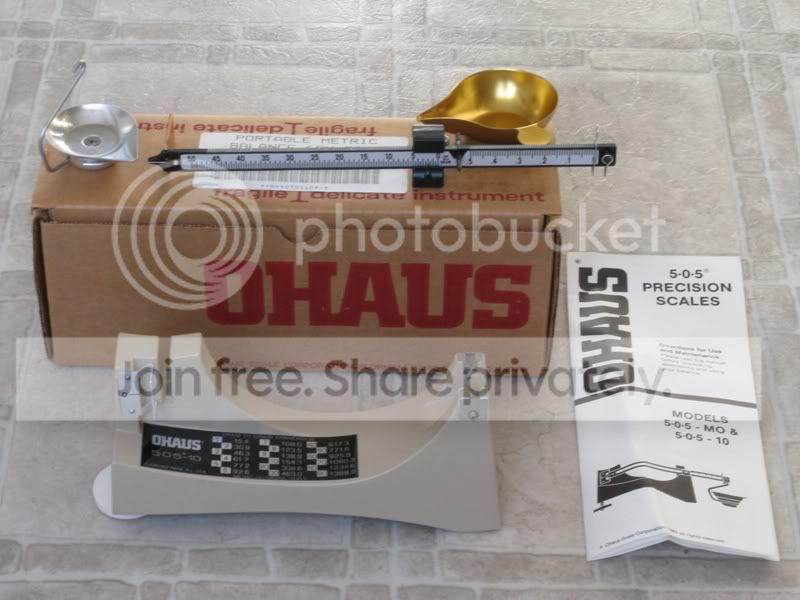
IMG_0696.jpg


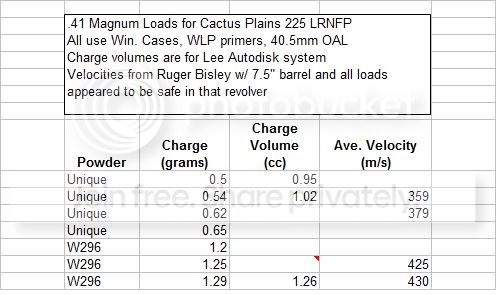
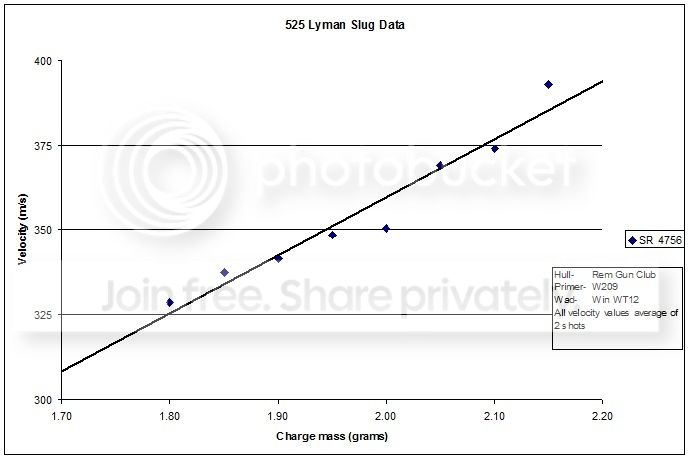
Metric weights are starting to show up on factory ammo boxes (28g & 32g shotshell loads, and Federal puts bullet weights in grams on most of their ammo), but it isn't seen much on component bullets (yet). I usually refer to them without units ("a 147 FMJ bullet"). I have never seen charge weights published in grams. I usually consult a couple of manuals to get an idea of what window I expect to work in in grains, then convert to grams, round to something convenient, make the notes in my reloading notebooks and never glance at the published manual numbers again. Eventually the archaic units lose meaning to you. For example, I can tell you that my standard 5.56mm loads use 1.76g of WC-735, but had to punch that into a calculator just now to figure out that that was 27.1 grains.

It raises some eyebrows when I start chatting reloading with folks at the range, but whatever. I wasn't going to start choosing load data based on their say-so, anyway. I have posted bits of data here and over on the castboolits site, and nobody has chastized me for it yet.

41loadsjpg.jpg


12gaslugdata_zps51421380.jpg
 
Wow, thanks! I know I cannot be the only person out there that likes to work in metric :D
Yes, I am interested in acquiring one such scale. Please check PM.

Starting about 3 years ago I have converted most aspects of my reloading to metric. It started with overall lengths, for which mm (to one decimel place) is just about the perfect level of precision, and very intuitive.

I don't like digital scales, and I was aware that Ohaus used to make a metric version of the 5-0-5 balance beam scale but it was discontinued. It took some looking, but eventually I found a scale distributor in California that had some dusty old boxes on his shelf, and I cleaned him out. I may now be in possession of the only 505-10 scales in North America that are available for sale. Let me know if you want one.
IMG_0696.jpg


Metric weights are starting to show up on factory ammo boxes (28g & 32g shotshell loads, and Federal puts bullet weights in grams on most of their ammo), but it isn't seen much on component bullets (yet). I usually refer to them without units ("a 147 FMJ bullet"). I have never seen charge weights published in grams. I usually consult a couple of manuals to get an idea of what window I expect to work in in grains, then convert to grams, round to something convenient, make the notes in my reloading notebooks and never glance at the published manual numbers again. Eventually the archaic units lose meaning to you. For example, I can tell you that my standard 5.56mm loads use 1.76g of WC-735, but had to punch that into a calculator just now to figure out that that was 27.1 grains.

It raises some eyebrows when I start chatting reloading with folks at the range, but whatever. I wasn't going to start choosing load data based on their say-so, anyway. I have posted bits of data here and over on the castboolits site, and nobody has chastized me for it yet.

41loadsjpg.jpg


12gaslugdata_zps51421380.jpg
 
i don't get it. no, seriously, i don't get it. is it the SOURCE of the units of measure that is bothersome to you (meaning, is it just a principle thing), or do you frequently talk to people who live in europe or asia and their reloading data is all in metric? i just find it unusual - none of the figures are in annoying fractions of 8ths or 64ths like those silly inches are. there's no 16-grains-per-pebble thing to worry about (i mean, it's always in grains, from 1gn up to 400gn or more). i guess the only spot where you transition out of grains is into shotgun slugs where you have to use ounces, but other than that it's all grains.


you must have incredibly strong principles to refuse to use grains simply because they're an imperial unit of measure and not a metric unit of measure!


and now, to be completely facetious - do you insist on measuring boat speeds in km/h all of the time, because knots are too imperial (even though they're the most common around here)? insist on measuring horses in metres instead of hands? trade gold in dollars-per-gram instead of dollars-per-ounce like the entire industry does? simply because "it ain't metric!!!"???
 
i don't get it. no, seriously, i don't get it. is it the SOURCE of the units of measure that is bothersome to you (meaning, is it just a principle thing), or do you frequently talk to people who live in europe or asia and their reloading data is all in metric? i just find it unusual - none of the figures are in annoying fractions of 8ths or 64ths like those silly inches are. there's no 16-grains-per-pebble thing to worry about (i mean, it's always in grains, from 1gn up to 400gn or more). i guess the only spot where you transition out of grains is into shotgun slugs where you have to use ounces, but other than that it's all grains.
you must have incredibly strong principles to refuse to use grains simply because they're an imperial unit of measure and not a metric unit of measure!
and now, to be completely facetious - do you insist on measuring boat speeds in km/h all of the time, because knots are too imperial (even though they're the most common around here)? insist on measuring horses in metres instead of hands? trade gold in dollars-per-gram instead of dollars-per-ounce like the entire industry does? simply because "it ain't metric!!!"???

Lets see... I measure any speed in m/s or km/h, yes. I have zero boat interaction so I do not use knots. I don't have any reason to measure horses, but if I did I would in meters and centimeters. Unfortunately I do not trade gold, but dollars per grams would go really nice. :rolleyes:
I would refer you to the previous posts. I am not refusing to learn imperial, nor saying I am unwilling to use same "because it aint metric." I am merely asking for the resources (books and or tools) that relate the units in metric OR metric+imp. What is so hard to understand?
I want to feel comfortable doing it. If that means getting a bunch of "pointless" metric gear & books before again buying the same in imperial, how is that such a big deal for you to the point that you need to "get facetious?" God knows I am not your gunsmith, so you don't have to worry about me putting 10g of powder in a cartridge to test your rifle when it should have been 10gr... :rolleyes: ... Chill, if you cannot assist me in determining what items are available or how to get them, you can easily just ignore the thread and posts. Thanks.
 
wow. who peed in your cornflakes this morning? i was genuinely asking why the unit of measure in and of itself is something you wish to avoid, or rather utilize a different unit of measure that has its roots in a different system.

hey, you're free to do whatever the hell you want. measure your cartridge OAL in parsecs for all i care, i just asked why the fact that the unit commonly accepted is such a problem. i mean, if the unit of grains had its source in metric, but was still called a grain, would this thread exist???
 
this is about the time when the general in Monty Python would enter the foreground and stop the skit because it was silly.
 
and now for something completely different.

we shall measure our ammunitions using hexadecimal for all numbers smaller than 17.4, and in roman numerals for all numbers greater than 22 7/8ths. all numbers in between shall be based on octal and written in crayon.
 
Back
Top Bottom