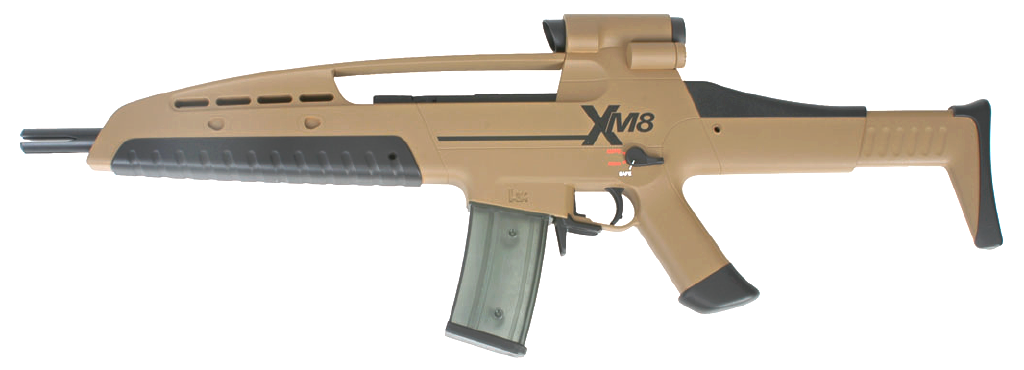
Modular assault rifles made from plastic!

bizz

Regular
Rating - 0%
0   0   0
Location
Portugal
Some state of the art assault rifles are made from plastic. The FN SCAR and the XM8 modular rifles.
Is plastic an appropriate material for the receiver of a firearm?
It's used in stocks instead of wood because it doesn't rotten all that easily, but in the receivers is something new.
The Russians do not use plastic for the receiver of the AN-94, but a plastic casing on the outside.
In your opinion, is plastic suitable for a weapon designed for a battlefield?
:confused:


FN_SCAR-L_%28Standard%29.jpg

XM8_carbine.png

2007090616261464fcf.jpg
 
Last edited:
Nothing new about using plastic for major components.
AUG, Glock.
In sporting arms, the Remington Nylon 66 appeared about 50 years go.
 
Most critical components are still made of ordnance-grade steel. Modern rifle designs contain the ignition in a chamber with the bolt locking into a barrel extension, this alleviates any stress on the receiver, allowing designers to use lightweight and cheap materials (sheet metal, polymers). For instance, this allowed Stoner to use aluminum in the AR-15.
 
Week points

The polymer receivers have some week points:
-Fracture and deformation under stress
-Heat to increase the stress effect
Doesn't someone whose is playing his/her life deserve something reliable and robust?
Some will say - polymer has to be used in the stocks!
I do not agree. Whith the modern chemical treatments for outdoors wood, one can simply buy the raw stock in beech (very light) and treat it.
The stock will become waterproof, inert and fireproof (up to an extension).
 
it's been around for quite a while- look at the nylon 66 and the other stuff made of zytel
 
In your opinion, is plastic suitable for a weapon designed for a battlefield?
Plastic, no. Polymers, yes.

The thing most people have to realise is that 99% of the "plastic" guns don't use polymer for any of the important stuff. The polymer is only there to hold the metal parts in their respective places, such as with the Tavor.
 
Some of the polymers available these days are increadibly strong and they offer some features metals cannot such as their reaction to extreame temperatures, consistancy, ease of manufacturing etc. The issue is as always price.
 
I'd be willing to bet my life on a modern designed polymer weapon. Polymer handguns have been around for quite some time now, proving the concept of using lightweight materials for the housing and frame and using traditional steel for the critical components that require the heat and wear resistance that only steel offers at the moment. Who knows, maybe in the next half century someone will even develop a polymer that can mimic all the properties of steel (THAT would be an interesting day).

Polymer housing black rifles have emerged as a maturing technology as well, the first commercial success that I'm aware of being the Steyr AUG that has a multitude of users in both military and law enforcement circle.

Other weapons that have met commercial success include the SAR-21 from Singapore, the IMI Tavor, the FN P90, and the current incarnation of the HK G36; all have proven to be robust and lightweight weapons in recent years.
 
The lower receiver is made from polymer.:D

Yes, but the lower isn't really a structural or heat absorbing component ;)


The SCAR has an extruded 7 series upper reciever, so its gonna last just as long as an AR15 upper would.


CAV Arms also makes polymer lowers, and they have test models with over 50,000 rounds through em, and they're still trucking.


Polymer is a GREAT material when used PROPERLY. It does NOT react well to heat. It will last miltiple times longer than Alluminum will because alluminum will stress fracture over time (this is a big problem with aircraft), whereas Polymers will either take the force they are given, or they will break. No in between.
 
CAV Arms also makes polymer lowers, and they have test models with over 50,000 rounds through em, and they're still trucking.
They are surprisingly tough, the Cav Arms ones, not sure what epoxy-material is speciffically, but they are quite tough. They will snap though, and areas with lots of leverage will crack (ie the stock, pistol grip, but these are reinforced in certain ways). They aren't bad overall, but I would argue they require more care in rough situations (extreme cold) than a traditional wood-steel combo. That all said, the Cav reciever I tore to pieces was tougher than a C7 plastic mag that bought the farm at the same time.
 
They are surprisingly tough, the Cav Arms ones, not sure what epoxy-material is speciffically, but they are quite tough. They will snap though, and areas with lots of leverage will crack (ie the stock, pistol grip, but these are reinforced in certain ways). They aren't bad overall, but I would argue they require more care in rough situations (extreme cold) than a traditional wood-steel combo. That all said, the Cav reciever I tore to pieces was tougher than a C7 plastic mag that bought the farm at the same time.

Yeah it will get a little brittle at -30 or -40 degrees C.

I think its made of the same stuff HK uses (33% glass fibre re-enforced Nylon 66)

Probably has steel re-enforcements throughout.

Its neat stuff, far from perfect anyhow, but neat nonetheless.
 
Back
Top Bottom