My Highwall project... complete!

leelad

Regular
Rating - 100%
42   0   0
Location
Alberta
ok so where to begin... 9 years ago Rick at ATRS advised my that if i wanted to become a gunsmith, I should get an apprenticeship in a machine shop and hone my machining skills. So i did. I moved west, got signed up with a good custom shop, got my ticket and have been able to tinker all i want.

I year or so ago i decided it was high time i made something from scratch. one of our customers once showed me his grandpas old single shot and it had intreagued me. i asked if i could borrow it to use as a sample and my Highwall project was born!

Im not quite finished yet but i figure i could start posting process pics if anyone is interested...

Im building a pair of them because it'll help me to use a "production" mind set (locating parts with jigs and fixtures/ working out the math instead of eyeballing things etc......) and because, after all this time and labour, i may as well end up with two right?!

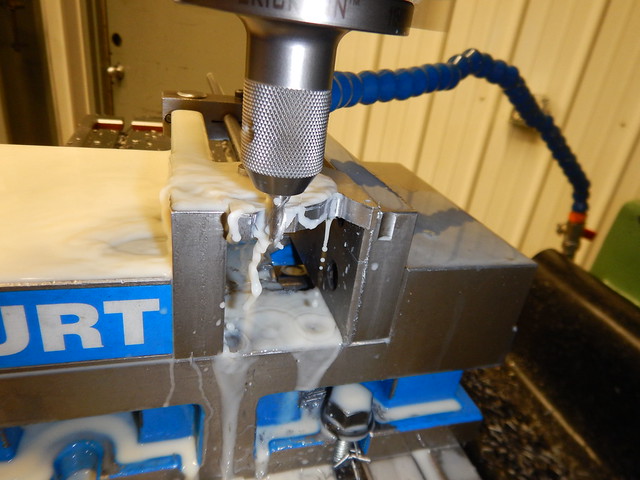
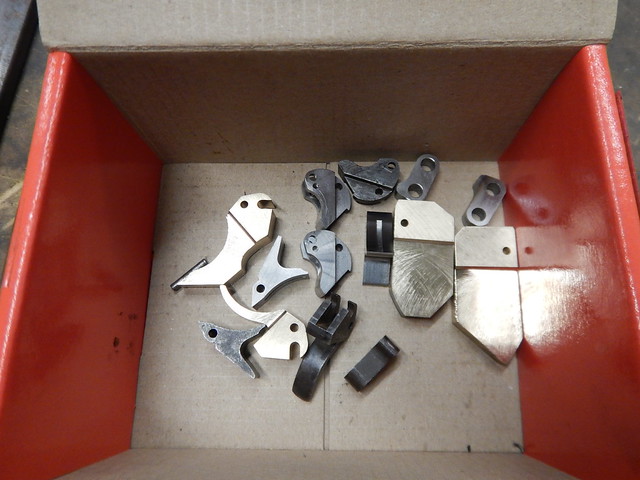
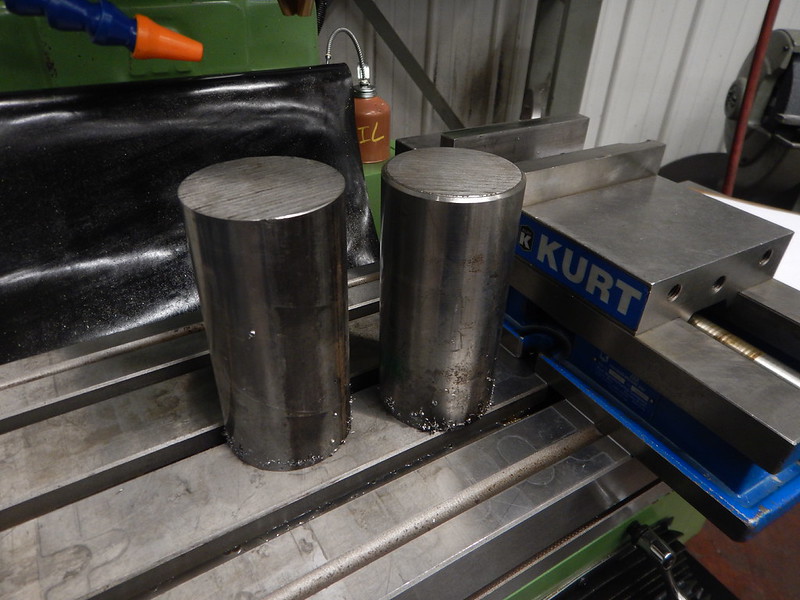
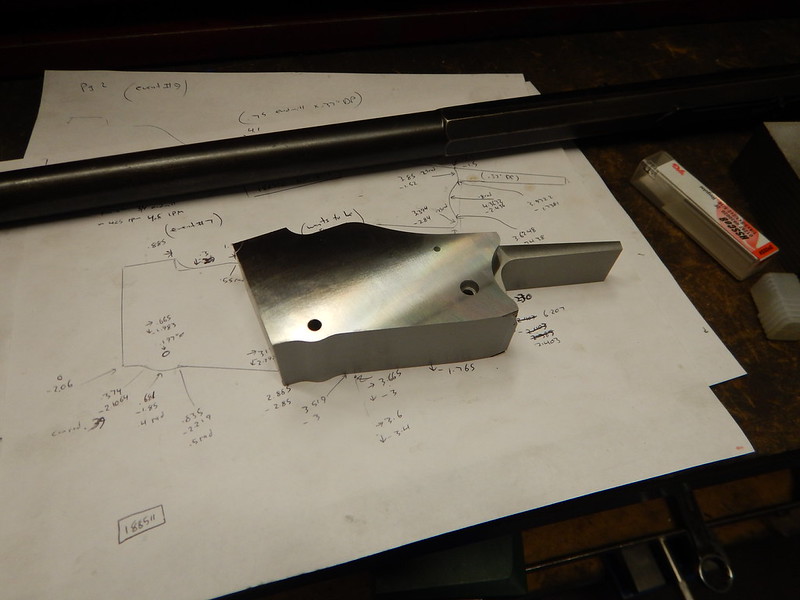
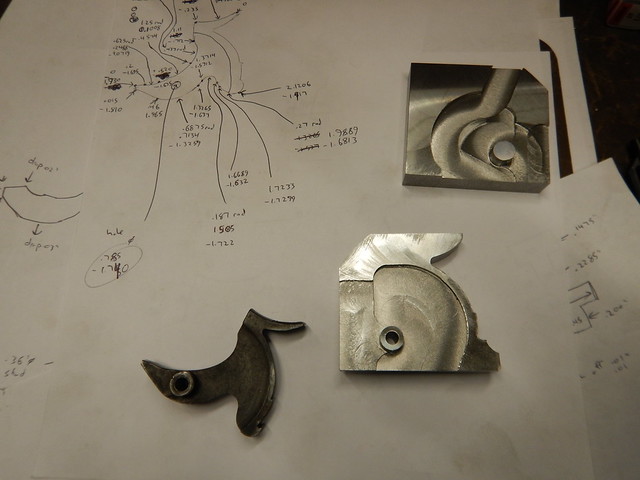
Working on the hammers... they're 4340 and for whatever reason this chunk of material was abnormaly gross to work with. I ended up making another set but this gives the gist of it...
https://flic.kr/p/HQSGqF

https://flic.kr/p/24KciZj

https://flic.kr/p/HQSEKB
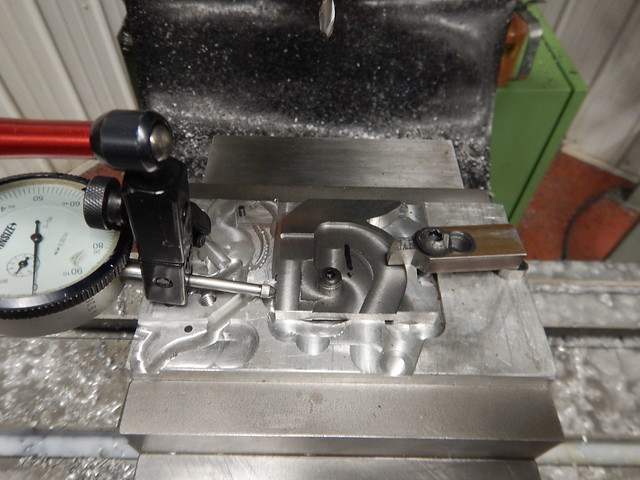
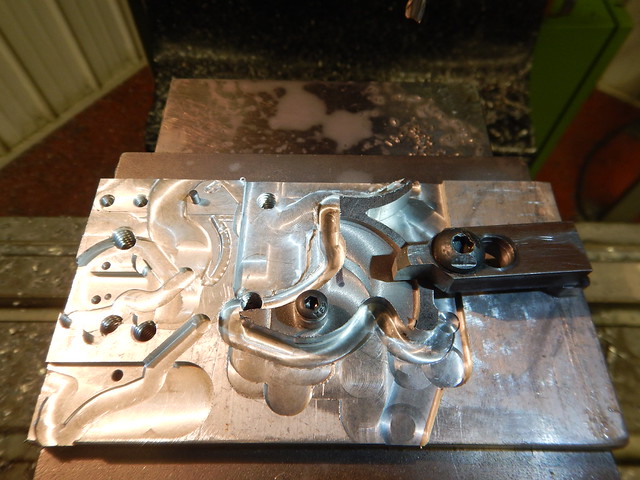
Ive been using locating fixtures as much as possible. here you can see ive already made several other small parts using this same aluminum block...
https://flic.kr/p/24Kch8d

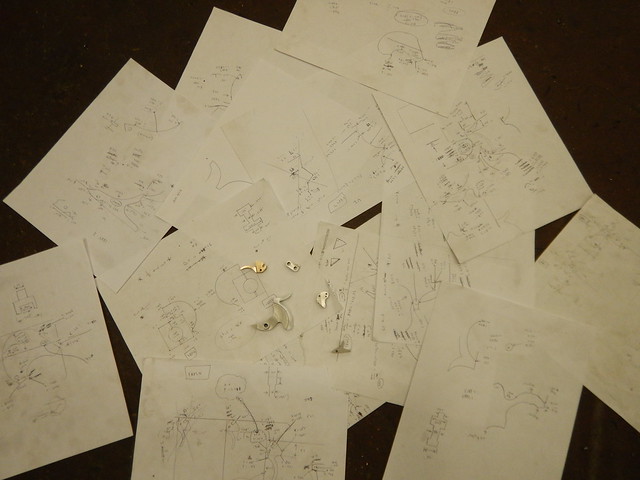
some small parts and some sketches...
https://flic.kr/p/268ajD4

https://flic.kr/p/26oZwpm
 
Last edited:
You’re inspiring. Keep at it buddy! A long time go I bought a manual mill/drill. It taught me. Lot and eventually I had to let it go. But I always think about going into formal schooling.
 
Nice!

Gotta stand a little further back so we can see what you are using!

You using a CAD/CAM software or 'finger-cad'?

I REALLY like the 1885, think it's about the pinnacle of the single shots, once you cross looks with performance.

Keep us posted!
 
Thanks guys!

The mill I'm using is just a Micro cut retrofit with a Proto trax programmable DRO(X,Y). Its a toy really but its a step in the right direction. Our shop is mostly manual with the exception of a couple single tool CNC lathes. A Weiler(my machine) and an old VDF.

I started this project as soon as we got the micro cut and quickly learned what it could/couldn't do. (day job side, we'd only used it for things like drilling bolt patterns to that point.) I had no CAD program so I did everything with paper and calculator. Then I downloaded Qcad and my life got a lot better!
 
Ok lets see...

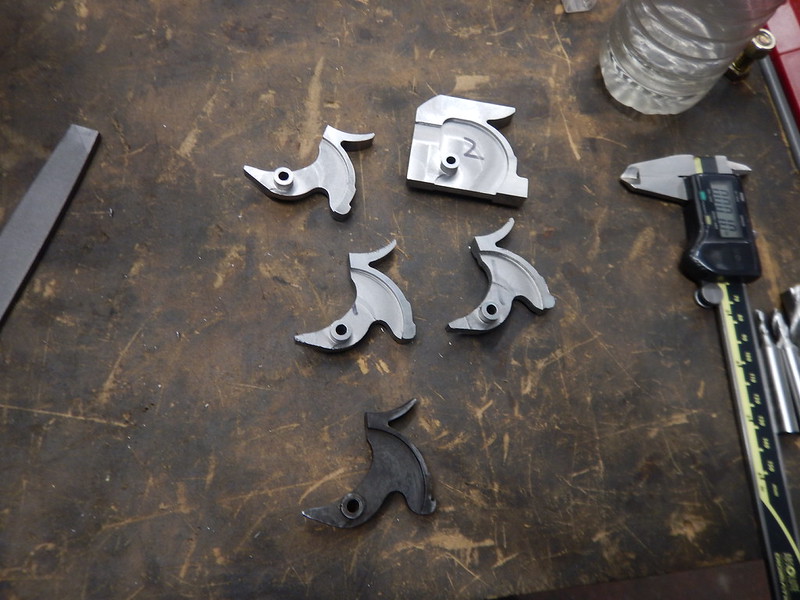
Here's another pic of hammers...
https://flic.kr/p/HU57ZF

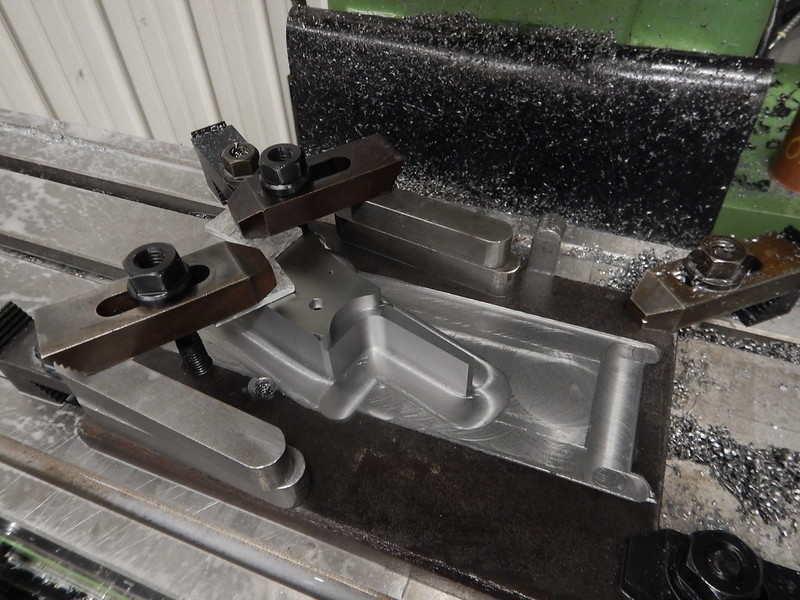
Some chunks of 4140 that will become the recievers...
https://flic.kr/p/HU57oF
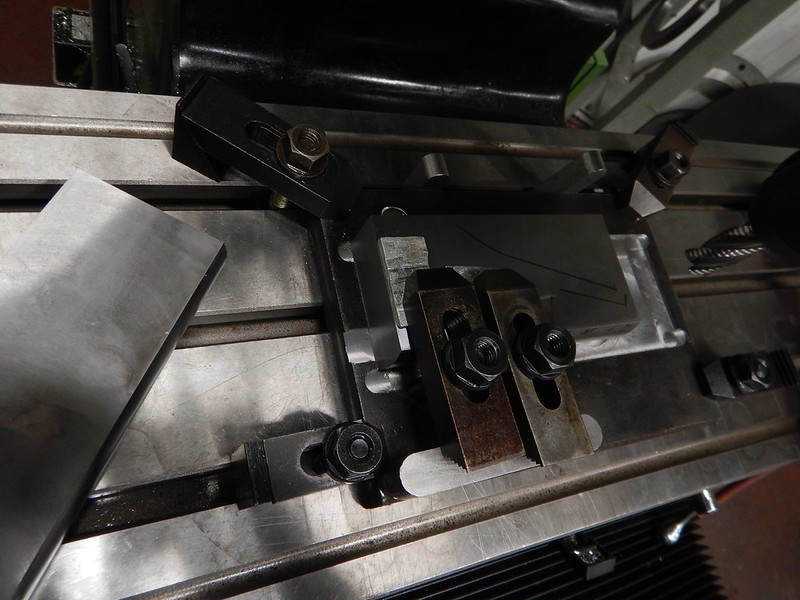
Again, I made fixtures where ever possible. In this case, so I can cut through the piece into my fixture(W/O setting it on shims/blocks).
But because the front/top don't need to be profiled here, it still maintains its locating ability as well.
https://flic.kr/p/26bhoRF
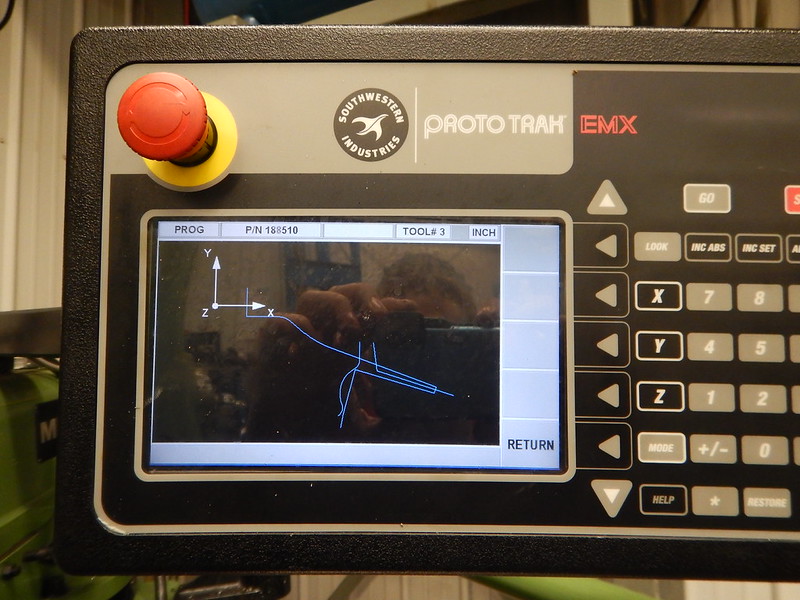
Pic of the program...
https://flic.kr/p/27y3aVp
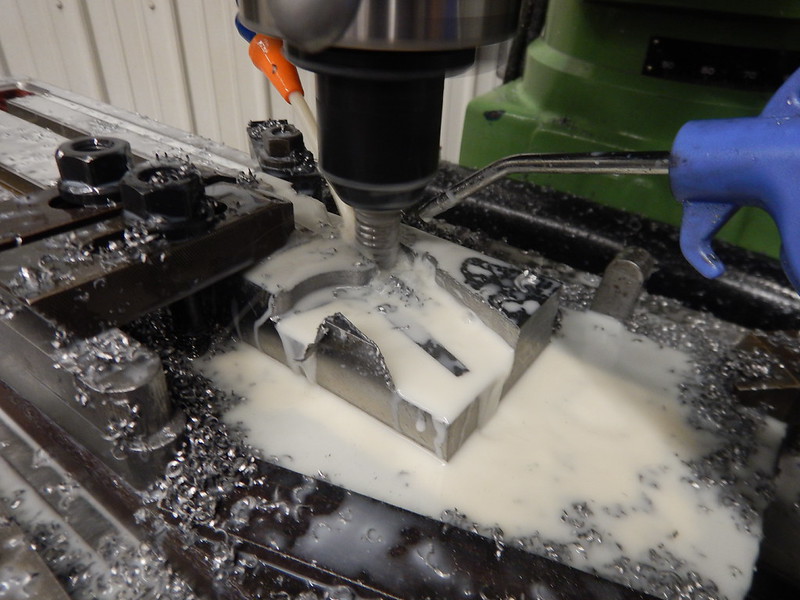
That machine is working hard enough using a 3/4" rougher hence the steps...
https://flic.kr/p/26bhmjr
Finish passes all around and its looking sharp!
https://flic.kr/p/HU52Pa
One receiver Ready for the slotter...
https://flic.kr/p/27y391n
More pics to come...
 
Very cool!

I would have liked to do a machinist apprenticeship but at age 40 I can't really afford to begin at the bottom of a new trade. (I'm not complaining, I do rather well in the welding field).

Will live vicariously through your pictures.
 
I have mentioned the Campbell books on the Winchester Single Shot Rifle, a couple times before and will do so again. Expensive, but well worth tracking down, either as loaners from a public library, or to buy, if you are the least interested in the History and design.

John Browning's single shot was a lot simpler design than the Win High Wall 1885. A fellow named William Mason actually did most of the design work to take JMB's Patent for the falling block action (once they determined that they could not easily bypass it), and turn it into what became a very versatile and easily modified design which could be built in several variations on factory equipment.

William Mason also had worked at Colt's, and designed many of the features of the Single Action Army, he was a very prolific designer and inventor in his own right, and unsung, in history to the levels he deserves.

I see one interesting deviation in this design already, in the treatment of the socket where the butt stock will fit to the receiver. On the originals it was a single radius cut with a dovetail type cutter, the fancy 's' curve came about from the radii of the upper and lower lines of the sides of the action. Another of Mason's ideas, he was supposed to be trying to limit the way that stocks would split under recoil, the tapers were supposed to cause the stock to squeeze 'in' instead of 'out'. That socket has annoyed stock makers since! :)

It may limit you from using the available replacement stocks, or, it may not.

Surfclod, there's nothing stopping you from buying a few tools and starting as a hobby. Get hooked in with some locals and get at whatever stuff you think you gotta have, as far as building, making, machining, casting, blacksmithing, or whatever else. Nobody ever claimed that the ONLY way to learn the stuff was by doing it as work.

There is an annual Model Engineering show, in Estevan Sk, each year in October, worth going to if you are interested in any sorts of metalwork. Bunch of great folks from all over Canada and the US show up and bring their goodies. One of the guys, a fellow named Clarence Elias, retired as a Civil Engineer and took up metalwork as a hobby. He has a pretty good website about his wee Harleys at http://www.telusplanet.net/public/celias/ , and I'll wave that out there to show that it's never really too late to learn some new skills.
 
trevj, yes the campbell books are excellent! (or should i say at least the second one is as i havent found a copy of the first one yet)
The history of development of this period is facinating in the extreme!

Hold your horses a quick second (although props for being quick to catch something missing). my reciever do get those cuts, but i didnt do them till i cut the external rads... updates to come!

thanks guys!
 
trevj, yes the campbell books are excellent! (or should i say at least the second one is as i havent found a copy of the first one yet)
The history of development of this period is facinating in the extreme!

Hold your horses a quick second (although props for being quick to catch something missing). my reciever do get those cuts, but i didnt do them till i cut the external rads... updates to come!

thanks guys!

I bought my copies through Track of the Wolf, and was pleased with dealings there.

Looking forward to seeing your progress! :)
 
Ok here we go!

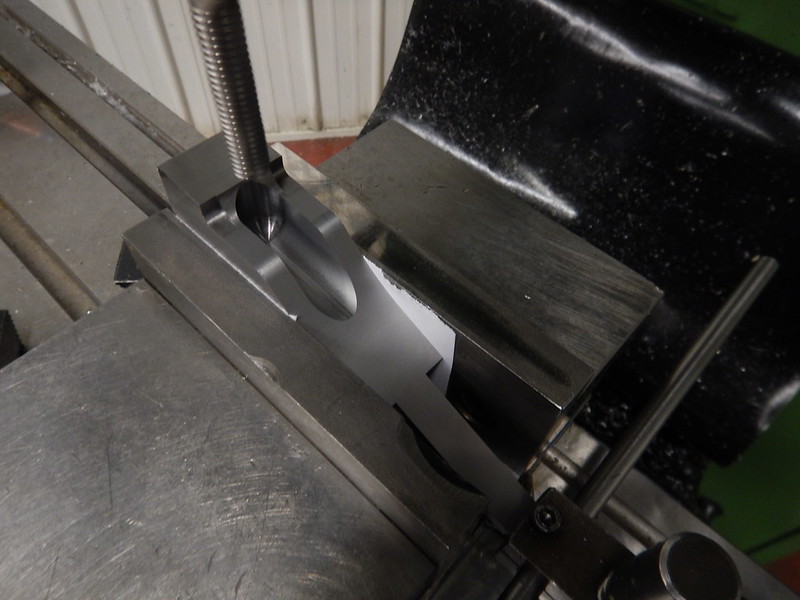
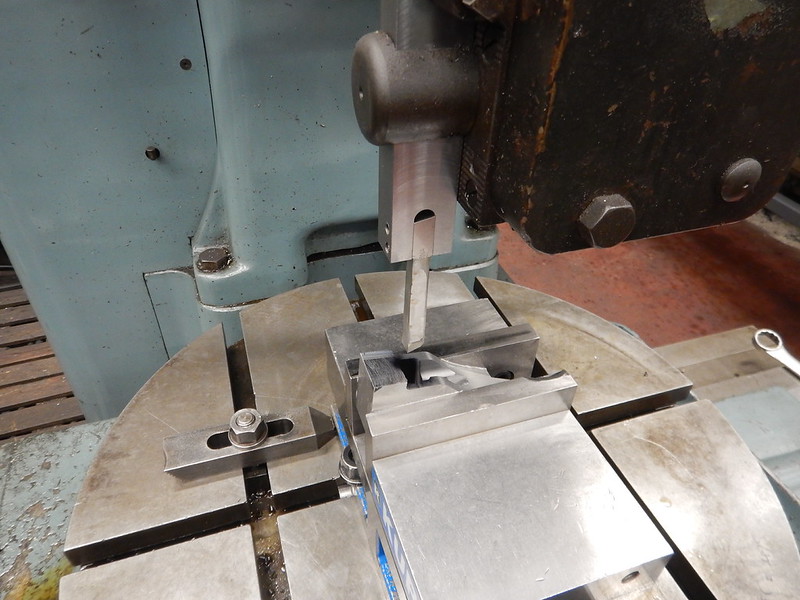
Roughing out the breech mortise...
https://flic.kr/p/27EsU7z

https://flic.kr/p/27EsTmB

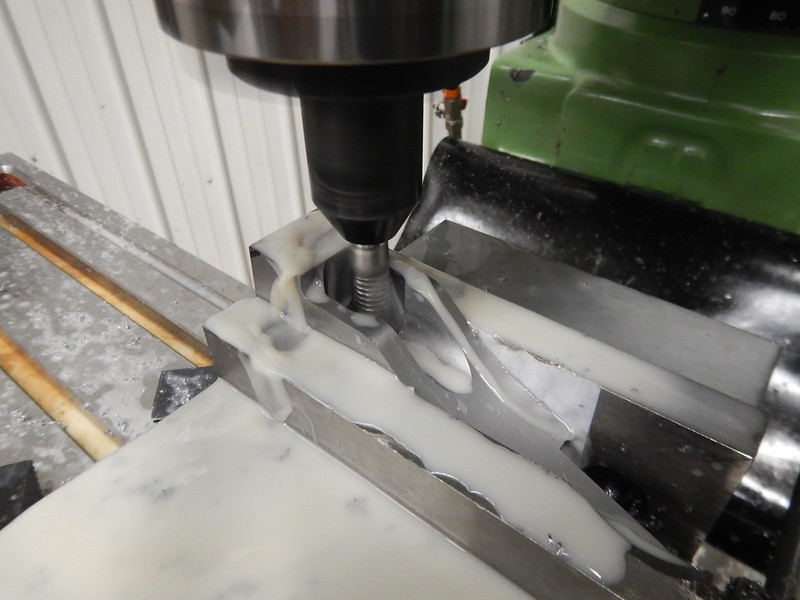
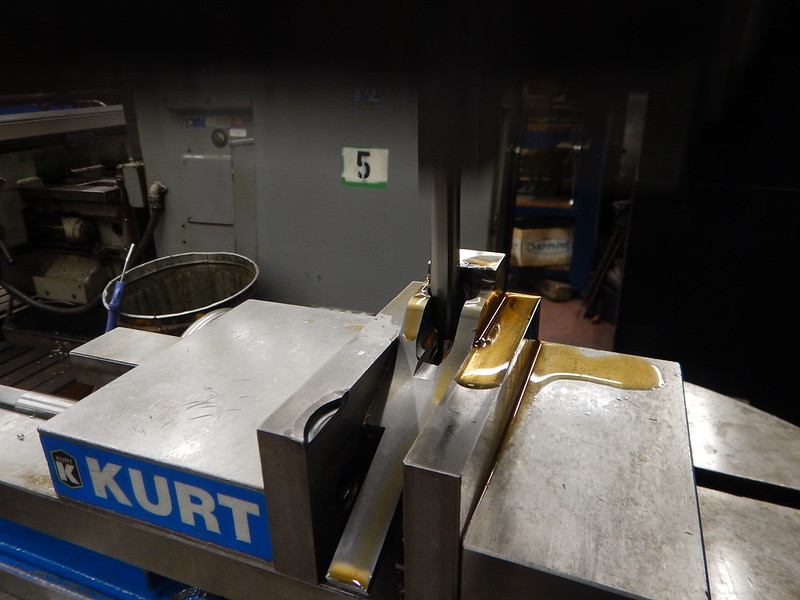
In a perfect world, a wire EDM would be the tool for this job(ahh some day...) but I am very fortunate that we have an old(very tight!) Prat+Whitney slotter in the shop.
https://flic.kr/p/27EsSRt
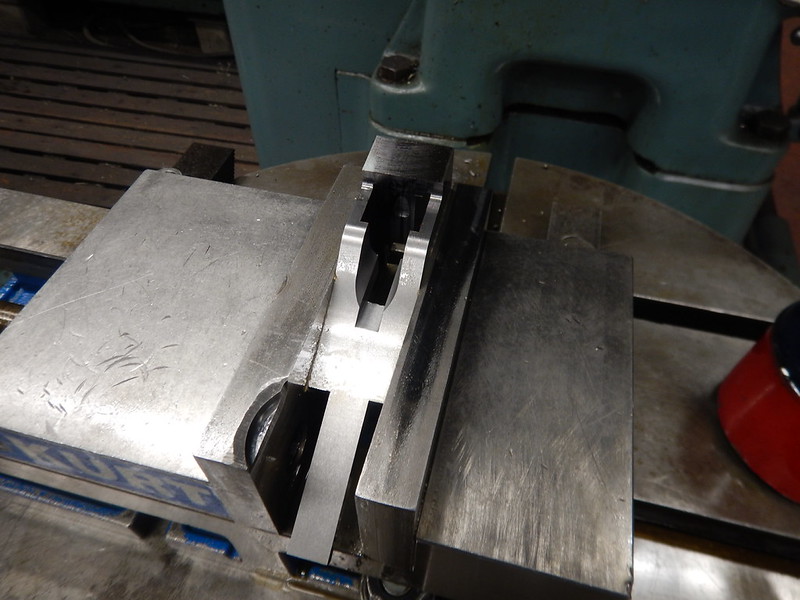
Typically we just cut large metric key ways in coupling halves with this machine. I was nervous I'd break my spindly little tool in there or else have chatter issues. But it worked out well...
https://flic.kr/p/27zZQQo

https://flic.kr/p/26yyWSE
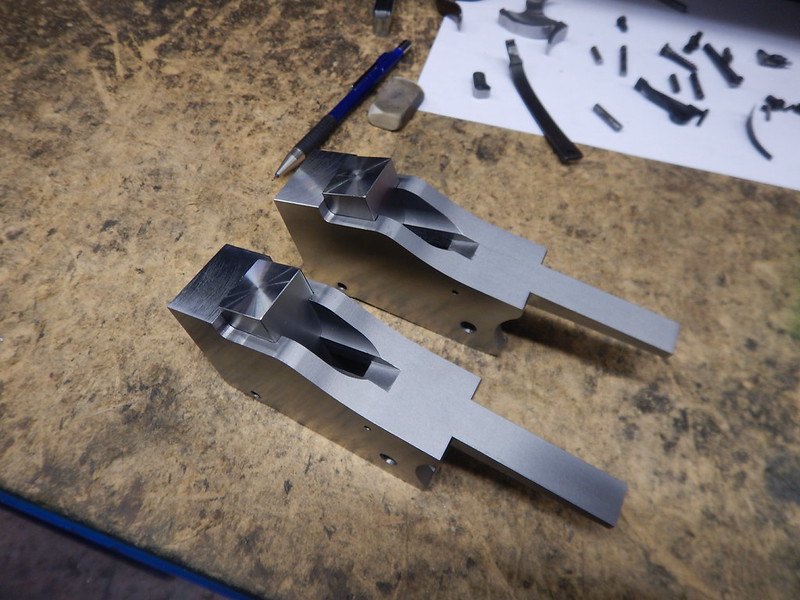
They turned out quite good. I cut the mortises and then made the breech blocks size on size, filing the mortises till they just fit ever so slick-ly. This way, I wouldn't end up cutting a mortise over size for a pre-made breech block, and yet the nice square and true breech block would serve as a go gauge for the mortise. It worked well.
https://flic.kr/p/J1rLXX
Stay tuned...
 
Back
Top Bottom