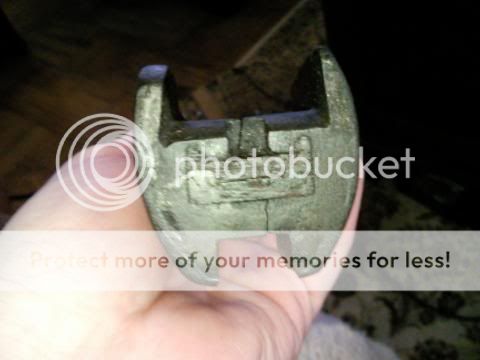
Need advice about a crack

RMM

Regular
Rating - 100%
3   0   0
Hi folks, think it counts as two cracks actually. The wood is from my no1 mark 3*... havent got a chance to fire it yet.. insurance problems, so I dont know how much it effects the gun yet. If you need more pics just ask. I was thinking wood glue for the buttom one and maybe epoxy for the top one because of the gap.


61308a91-8701-45ed-9442-dc63de0e4781.jpg


The camera makes my big hand look fat :(
 
sorry, I thought you needed advice about "crack". ;)

Aren't CGN'ers just the most helpful crew? I'm afraid a title like that is begging for some smart a$$ comments. Hope you get your problem solved but I figure only 1 in 5 comments will really address your issue. :D:D:D
 
is it a lithgow? the coachwood stocks would split like that due to being a straight grained wood, epoxy or wood glue and clamps will do but give it a good degreasing first
 
This is the most common problem with No. 1 wood. You can use just about any type of glue (I prefer Weldbond, a white glue that dries clear). I always use it to repair wood problems - particularly thin pieces that need to be reinforced. I've done quite a few Mosin Nagant M44 handguards that have 'ribboned' because the wood is so thin. Soaked a piece of packing paper in it then laminated it on. Your particular crack could be done with just glue but you might also want to consider a solid brass screw if it threatens to fall apart without a mechanical hold.

I hate gorilla glue - it expands and dries an ugly color. I don't know if anyone has had positive experiences with it- maybe I'm alone on this one.
 
Thanks guys, its actually a Ishapore dated 1964... so its not even that old. I'll try the Weldbond and clamps.
 
I have used gorilla glue

I have used it to tip kayak paddles because polyurethane is 100% waterproof . for firearms I prefer epoxy though. Bear in mind with gorilla glue once you open the cap you have about one year before it goes bad. A good indicator of spoiled gorilla glue is excessive foaming and no bond strength.
 
The crack

This is a typical example of "The Damned Crack." It will give you vertical stringing of your shots and major inaccuracy. Many times it is caused by someone who has no idea of how to disassemble the SMLE rifle, when they attempt to remove the buttstock before removing the fore end wood.

You might send a PM to SMELLIE. He will help you.
.
 
I hate gorilla glue - it expands and dries an ugly color. I don't know if anyone has had positive experiences with it- maybe I'm alone on this one.

It's good where you don't see it. I repaired many pieces of wood with it (even a split tree!) but due to its expanding properties, you have to clamp the parts quite tight. And yes, the color isn't terrible...
PP.
 
Whatever you use wash the wood liberally and blow it out a few times using a good degreaser such as lacquer thinner or "wax and grease prep solvent". This will leave the wood dry looking but after it's glued up you can restore the look with some boiled linseed oil.

If the stock fits nicely with the crack then I'd leave it and just fill the crack with epoxy thinned with a hair dryer warming to seep down deep in the cracks. If the stock fits a bit loosely then by all means use a good wood glue and clamp the crack closed. For wood glue I'd suggest Titebond aliphatic resin. That's the yellowish carpenter's glue. And with the Titebond or other white PVA glues you want the joint to be tight.

I'd start by trying to squeeze the cracks closed. If you can't squeeze them closed by hand then these are a canditate for filling the cracks with epoxy and leave well enough alone. If you can squeeze then closed by hand pressure then by all means use some Titebond or some other wood glue. Gorilla glue also tends to work best with a small glue line. Epoxy is the only one that you can consider as truly and properly crack filling.
 
Thanks for the link, but here he doesnt clean the wood at all. Is that because he knew he would be useing those brass screws?

Edit: I like to think I didnt cause the wood to crack myself when I took it apart. I followd these steps ht tp://www.surplusrifle.com/smle/index.asp
 
Last edited:
Thanks for the link, but here he doesnt clean the wood at all. Is that because he knew he would be useing those brass screws?

Edit: I like to think I didnt cause the wood to crack myself when I took it apart. I followd these steps ht tp://www.surplusrifle.com/smle/index.asp

I don't know ... that's good question .... :)

You might want to ask Peter Laidler how the British Armourer's handled it ...

Regards,
Doug
 
Just because he didn't use any form of degreaser doesn't mean that you can't or shouldn't. How effective a degreaser will be in each case will depend a lot on how often the stock was given a "feeding" coat of oil and if the oil used was the proper boiled linseed, tung or other oil that hardens over time in contact with air.

But the real reason for degreasing the wood is the oil used on the metal parts. That oil does not harden, But it does happily soak into the wood. Cleaning all traces of the metal oil away is what the degreaser is best at doing and why it should be done.

Some brass through screws isn't a bad idea either if you want such a fix. But I suspect most would LIKE to get away with just a glue repair to retain the original look as much as practical. Keep in mind that the through screw style repair is pretty much a belt and suspenders approach and as such would be highly respected on a battle field weapon where you would not want to only rely on some glue holding things together in wood which is highly suspect for it's ability to glue given oil, water and other issues found in a war zone. But with us if the joint SHOULD let go at the range it's not a big deal to set the gun aside and for the second time repairing the stock to go with the screw option.

 
Back
Top Bottom