newbie question regarding Lee 8X57 Mauser set

deanyang

Regular
Rating - 100%
3   0   0
UPDATE: After I tighten the collet all the way to the end and some, I was able to keep the pin from stucking inside the casing. Of cos I added a bit more lube, not much just a bit more, after like 40 rds it fell out again, this time I just push it back in with the press, then tightened some more, but there is no more space for me to tighten, if it goes again nothing I can do.
I noticed the collet is made of aluminum, it gets compressed a little bit everytime I tighten it, not sure if it can remain, but I bought from Amazon so I can always exchange for another set.
Question: Do all the Lee dies have such issue? I saw other brands have different design for that pin+expander, I have ordered a set of RCBS to try out, see if it works better.

Thank you for all your help!
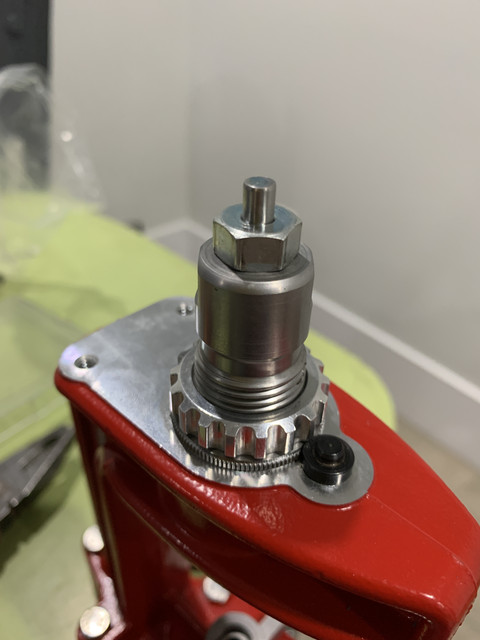


Hi all,

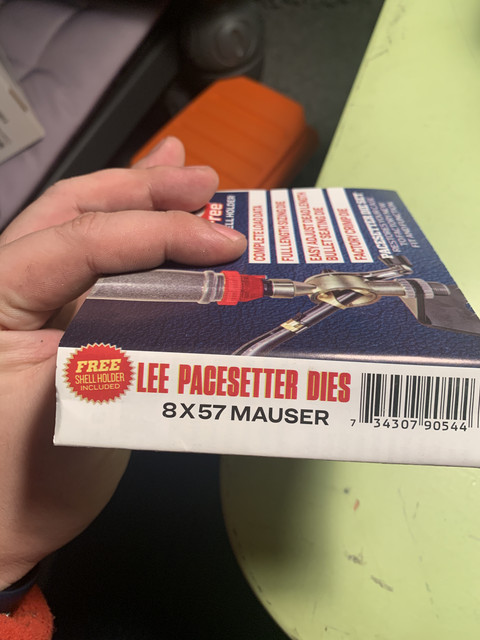
First time trying reload, I bought this lee 8X57 mauser set on Amazon, it is called :Lee Precision Pacesetter Dies 8x57 Mauser
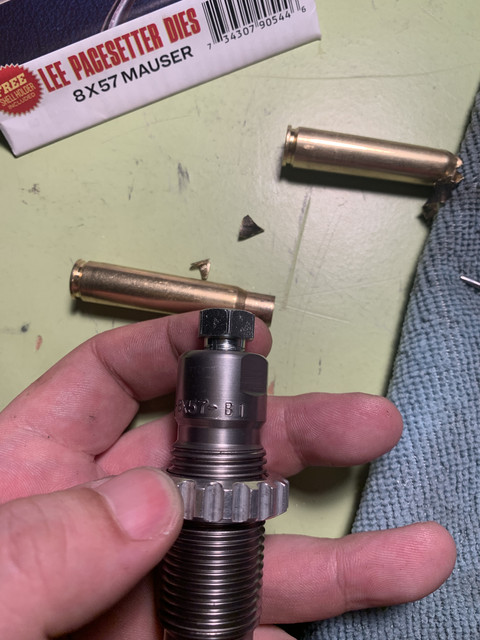
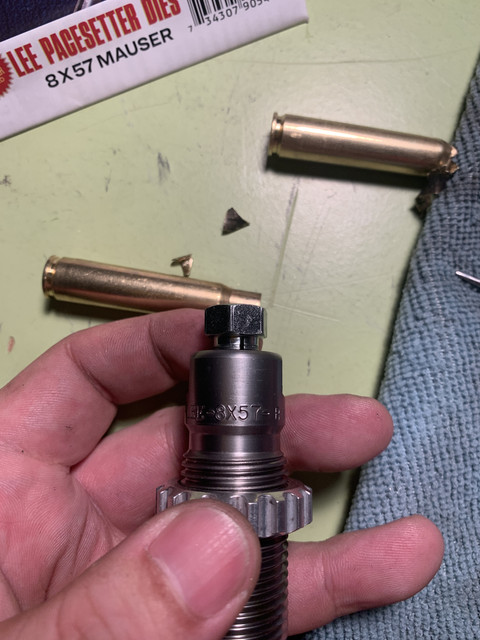
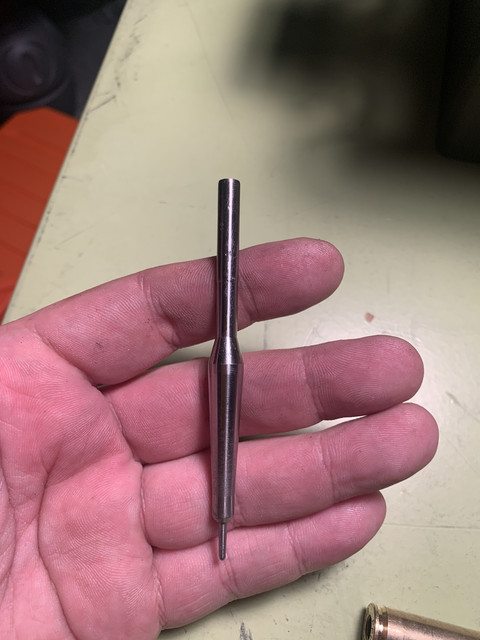
I use a simple single stage press, however when the first time I tried to use the resizing die, the decap pin got pulled out and stuck inside the casing, I had to break the casing to get the pin out, then I tightened the locking nut of that pin and tried again, same result
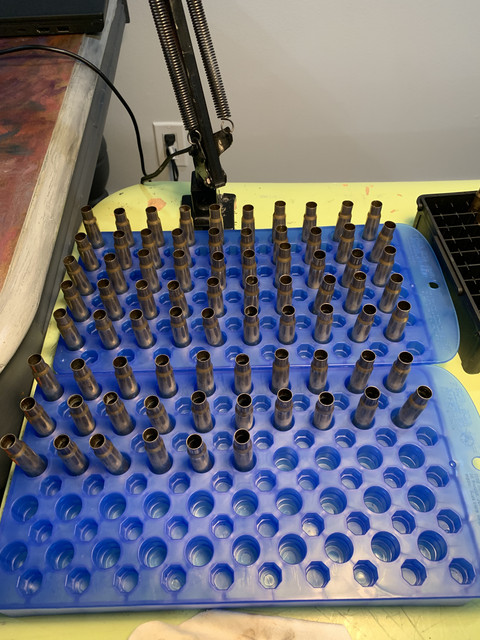
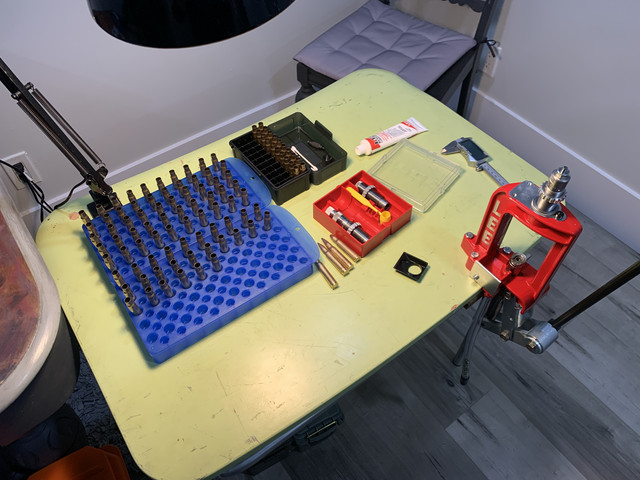
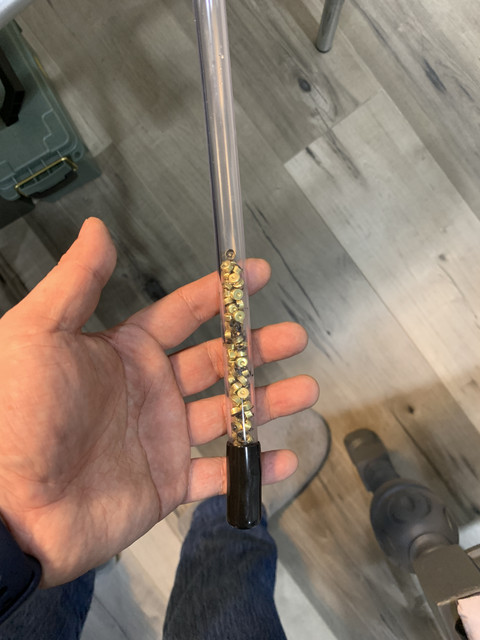
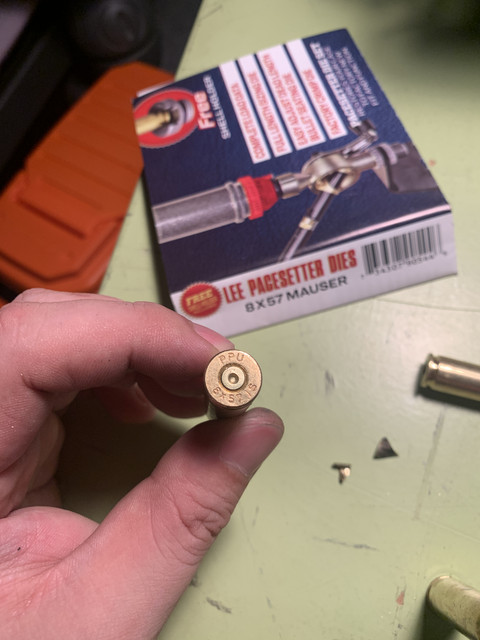
Please see pics
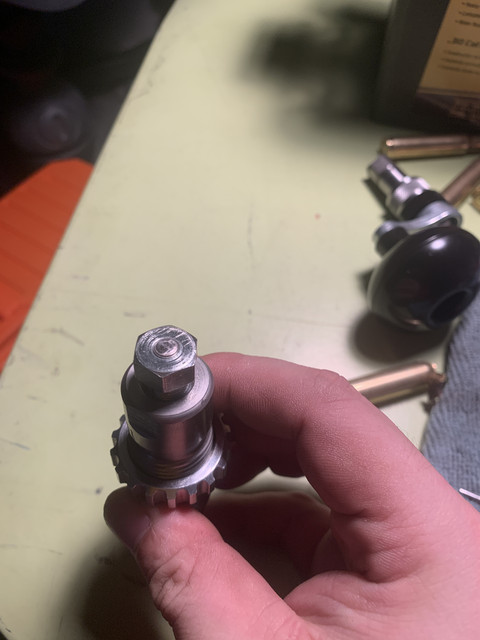


this is after resizing you can see it got stuck inside, such a big difference in size I had to cut the brass open to get it out
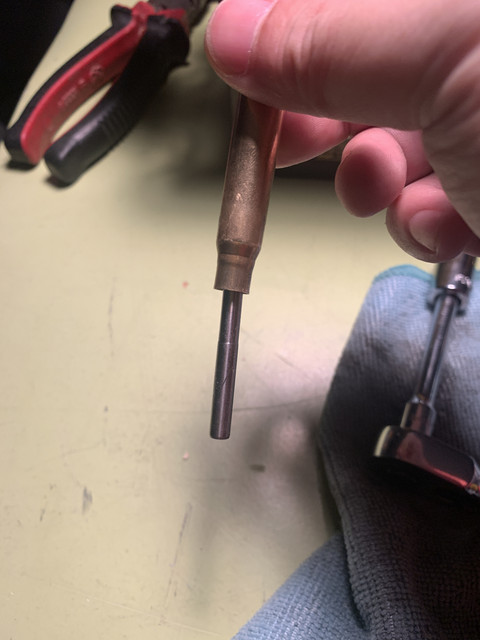

the size is way off
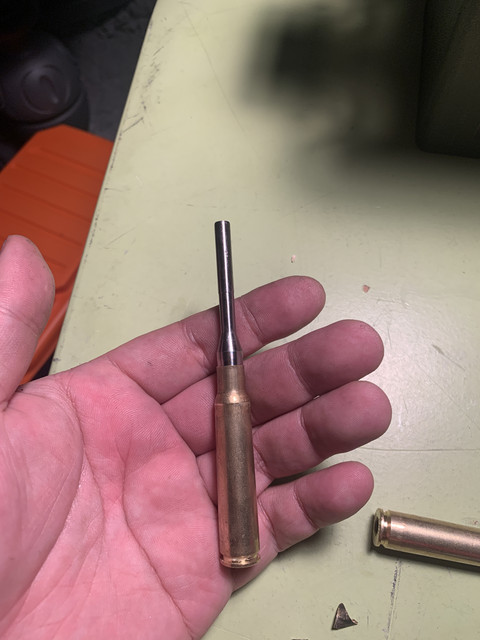

this is before resizing, once fired
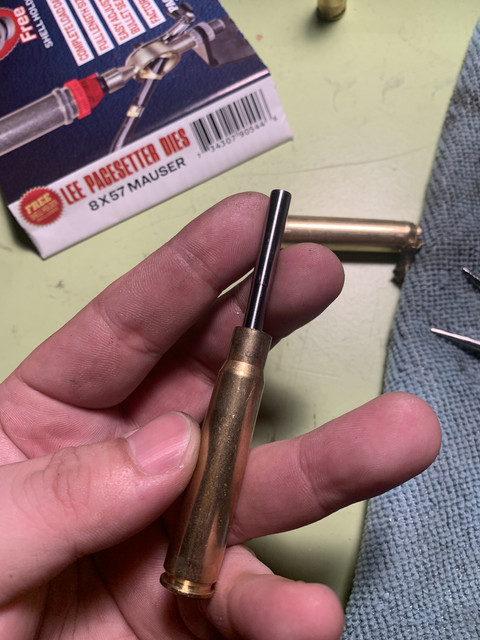


I am using PPU 8X57 IS once fired brass, this resizing die seems to resize the brass to very tight size, I could not even get my bullet to sit on top of the brass, too small to sit properly.

Please advise if I am doing anything wrong, I am thinking of returning this set, what do you guys suggest for a replacement? Am using lee challenger press.

Thanks a lot!
Dean
 
Last edited:
Doesn't look like you used case lube on the inside of the neck.

I usually take apart the die and remove any oils on the collet and mandrel left over from manufacturing.

Did you champfer/debur the brass after sizing?

Make sure you check the diameter of the mandrel, sometimes Lee can get things wrong.
 
OP - maybe some things for you - so previously fired brass - should be able to slide in a bullet into that fired case mouth - before resizing - neck should have opened up to release a bullet when it was fired. Should also be able to slide that expander into that fired case mouth, without a lot of effort.

Next, when that fired brass gets run up into the Full Length sizing die, the walls will get squished in a bit, and the neck will be sized from the outside, to be too small at the top of the ram stroke. That is why there must be some lube on the case walls. I have never applied lube to the outside of case neck, unless forming one size of brass into a different kind. Is explained in most every loading manual, and possibly on the sheet that came with that die. Have to slightly, but sufficiently, lube the outside of the case walls, or you will have huge difficulty to pull that case back out of the die.

You might want to try that - remove that expander and it's collet completely from the die - lube and run a case in and out. Now try that bullet - should not fit. Now try that expander - it should also not fit, anymore. When in use, that expander will be inside the case body, ready to open up the neck some amount, from the inside. Seating a bullet takes a bit of force - I think is in the Lee Reloading Manual that you want .001" to .002" "neck tension" - the action of inserting and seating the bullet expands the neck a further slight bit - larger than the expander did. You can re-assemble your expander into the collet - have that expander TOO LOW in the die - then snug up the collet - TIGHT - slightly lube inside the case neck, and then run that same case back in there - in other words, this time that case neck is being opened up on the "Up" stroke of that ram. Some of us, for some purposes, want to do that on purpose.

In Normal sizing operation, that expander will then be inside the case at the point where the case has been re-sized inside that die. When you lower the press ram, that pulls the case mouth over the expander - to end up with a case neck that is .001" or .002" smaller diameter than a bullet. Previously fired brass often has powder residue which acts as lubricant for the expander - so I seldom lube the inside of the case necks for previously fired cases. But I do apply a powdered lube inside, for new brass, or for stainless pin tumbled "clean" brass.

As mentioned above, the Lee expander is held in place only by friction on that collet - so can not have lube in there - not even factory lube. And, it has to be TIGHT - can read that in the Lee Instructions. Most common failure for me is that the collet is not tightened enough and the expander pulls out when the case is going down.

So quick checks - a piece of fired brass - a bullet should slide into that case mouth - why it needs to be re-sized. The expander should also slide into that case mouth. The die will allow the expander to enter the case, then the die will squish the neck too small (from the outside), the fired primer gets punched out, then the expander will open case neck back up again, as the case is pulled out - therefore all your sized cases are same size on inside of case mouth, regards of variation in case neck wall thickness. You will have very difficult time to withdraw a sized case from the die if you did not sufficiently lube the outside of the case walls - in extreme cases, the shell holder will rip the rim off the brass case and you have the case body stuck inside the sizing die, with the expander inside it. If you have a way to measure stuff - you should - the expander should be same size, or .001" or .002" smaller diameter as a bullet.

If you apply too much lube on the case, it seems to get pushed forward within the die, and may build up on the place inside the die that presses on the case shoulders - when you extract that case, the shoulders will be dented or wavy. That case will likely fire fine, if reloaded, and will be restored to "normal" looking. But that die needs to be cleaned out, inside, to get rid of that excess lube.
 
Last edited:

OP - maybe some things for you - so previously fired brass - should be able to slide in a bullet into that fired case mouth - before resizing - neck should have opened up to release a bullet when it was fired. Should also be able to slide that expander into that fired case mouth, without a lot of effort.

Next, when that fired brass gets run up into the Full Length sizing die, the walls will get squished in a bit, and the neck will be sized from the outside, to be too small at the top of the ram stroke. That is why there must be some lube on the case walls. I have never applied lube to the outside of case neck, unless forming one size of brass into a different kind. Is explained in most every loading manual, and possibly on the sheet that came with that die. Have to slightly, but sufficiently, lube the outside of the case walls, or you will have huge difficulty to pull that case back out of the die.

You might want to try that - remove that expander and it's collet completely from the die - lube and run a case in and out. Now try that bullet - should not fit. Now try that expander - it should also not fit, anymore. When in use, that expander will be inside the case body, ready to open up the neck some amount, from the inside. Seating a bullet takes a bit of force - I think is in the Lee Reloading Manual that you want .001" to .002" "neck tension" - the action of inserting and seating the bullet expands the neck a further slight bit - larger than the expander did. You can re-assemble your expander into the collet - have that expander TOO LOW in the die - then snug up the collet - TIGHT - slightly lube inside the case neck, and then run that same case back in there - in other words, this time that case neck is being opened up on the "Up" stroke of that ram. Some of us, for some purposes, want to do that on purpose.

In Normal sizing operation, that expander will then be inside the case at the point where the case has been re-sized inside that die. When you lower the press ram, that pulls the case mouth over the expander - to end up with a case neck that is .001" or .002" smaller diameter than a bullet. Previously fired brass often has powder residue which acts as lubricant for the expander - so I seldom lube the inside of the case necks for previously fired cases. But I do apply a powdered lube inside, for new brass, or for stainless pin tumbled "clean" brass.

As mentioned above, the Lee expander is held in place only by friction on that collet - so can not have lube in there - not even factory lube. And, it has to be TIGHT - can read that in the Lee Instructions. Most common failure for me is that the collet is not tightened enough and the expander pulls out when the case is going down.

So quick checks - a piece of fired brass - a bullet should slide into that case mouth - why it needs to be re-sized. The expander should also slide into that case mouth. The die will allow the expander to enter the case, then the die will squish the neck too small (from the outside), the fired primer gets punched out, then the expander will open case neck back up again, as the case is pulled out - therefore all your sized cases are same size on inside of case mouth, regards of variation in case neck wall thickness. You will have very difficult time to withdraw a sized case from the die if you did not sufficiently lube the outside of the case walls - in extreme cases, the shell holder will rip the rim off the brass case and you have the case body stuck inside the sizing die, with the expander inside it. If you have a way to measure stuff - you should - the expander should be same size, or .001" or .002" smaller diameter as a bullet.

If you apply too much lube on the case, it seems to get pushed forward within the die, and may build up on the place inside the die that presses on the case shoulders - when you extract that case, the shoulders will be dented or wavy. That case will likely fire fine, if reloaded, and will be restored to "normal" looking. But that die needs to be cleaned out, inside, to get rid of that excess lube.

Thank you sir for your detailed reply!
I think my problem is exactly what you mentioned: "As mentioned above, the Lee expander is held in place only by friction on that collet - so can not have lube in there - not even factory lube. And, it has to be TIGHT - can read that in the Lee Instructions. Most common failure for me is that the collet is not tightened enough and the expander pulls out when the case is going down."
Even though I tried many times to tighten this collet, it seems to be pull out everytime from the die and slight down with the brass, I guess the die squeezed the neck tight for the expander to do its job. I will try to lube the inside of the neck and clean the die and collet before doing that, will report back tonight!

Dean
 
Doesn't look like you used case lube on the inside of the neck.

I usually take apart the die and remove any oils on the collet and mandrel left over from manufacturing.

Did you champfer/debur the brass after sizing?

Make sure you check the diameter of the mandrel, sometimes Lee can get things wrong.

Thank you for your reply, I applied a bit not much, it is just the pin gets pulled away from the die and left with the bullet
 
Lube the inside of the brass neck using a q-tip as well first chamfer the inside + outside of the brass necks.
 
Dean - not certain what you are using to tighten that collet to the expander shaft - probably need to use box end and open end wrenches - and old "german" phrase - "gudentight". Not sure if you will get it with pliers, channel locks or crescent wrench - I could not.
 
Dean - not certain what you are using to tighten that collet to the expander shaft - probably need to use box end and open end wrenches - and old "german" phrase - "gudentight". Not sure if you will get it with pliers, channel locks or crescent wrench - I could not.

Hi I used a wrench to hold the die in place and another socket wrench to tighten to collet, I tried my best but I could try again using a bigger socket wrench, I think this design is quite confusing, Lee wants to protect the pin thus I cannot lock the pin in place too tight...
 
that is a common issue with lee dies.

i usually hold the two wrenches a few degrees apart and use one hand to squeeze them close. switch to two hand when it gets difficult. stop when I can't budge it any more.

make sure you lube inside and outside of the case when you size it. If it feels tight try putting more lube on. you are suppose to use a thin layer but if it is too thin, it may resist the sizing or get stuck.
 
that is a common issue with lee dies.

i usually hold the two wrenches a few degree/s apart and use one hand to squeeze them close. switch to two hand when it gets difficult. stop when I can't budge it any more.

make sure you lube inside and outside of the case when you size it. If it feels tight try putting more lube on. you are suppose to use a thin layer but if it is too thin, it may resist the sizing or get stuck.

cheers I will try that and report back tonight!
I was told not to lube the outside of the neck? So should I lube the case body+inside of the neck only?
 
Since 1970's (?) I use a lube pad - so roll 6 or eight cases at same time - to lube them to re-size - is the case bodies that get lubed - neck outside get nothing. Never had an issue with that? For inside of case mouth, I chose to use a device sold some years ago by Forster and others - is called a "case graphiter" - the replacement powder is labeled "motor mica refill" part no. 018291 by Forster. Others that I see on CGN have used the Lee lube in a squeeze tube - comes out looking sort of like toothpaste (?) - rolled cases around in a closed top bowl - just getting a small bead of it around the inside of neck mouth appears to be sufficient - I have never used that stuff to know.
 
Since 1970's (?) I use a lube pad - so roll 6 or eight cases at same time - to lube them to re-size - is the case bodies that get lubed - neck outside get nothing. Never had an issue with that? For inside of case mouth, I chose to use a device sold some years ago by Forster and others - is called a "case graphiter" - the replacement powder is labeled "motor mica refill" part no. 018291 by Forster. Others that I see on CGN have used the Lee lube in a squeeze tube - comes out looking sort of like toothpaste (?) - rolled cases around in a closed top bowl - just getting a small bead of it around the inside of neck mouth appears to be sufficient - I have never used that stuff to know.

thanks for your advice, what kinda lube pad you use? Got a name for me to search?
 
thanks for your advice, what kinda lube pad you use? Got a name for me to search?

Current one is brand "Lyman" - former one, that got too dirty, was RCBS. I use RCBS Case Lube-2 for lube. From instructions on back of bottle of that lube, " Coat an RCBS Case Lube pad with about one tablespoon of lube and rub in well. Allow lube to saturate pad. Roll clean cases across pad. Do not lubricate shoulder. Lubricate the inside of the neck of the bottle-neck type cases with an RCBS Case Neck Brush. Note: too much lube may destroy powder and primers. Wipe cases clean after sizing".

It was that part about the case neck brush - I was rolling it on the pad to pick up lube - was getting soot / carbon from inside case neck onto the pad - why I replaced the pad and no longer use RCBS Case Neck Brush, although the "case graphiter" (is so old, the brand name is Bonanza) has similar brushes but applies a dry white powder (that at least used to be sold by Forster), not a moist lube, to inside of case necks.

Not so sure if this lube is what I would buy, if starting today, but pretty much my lifetime supply is on hand. Apparently, we got "used to" each other over the years!!!

With this stuff, case does not appear "lubed" - sheen may change slightly - can feel with fingers that case wall is now slippery - but that is all - do not see drips or goops or dribbling lube on the cases. I bought 2 x two ounce bottles in perhaps 1980's or 1990's (?) - still have not opened second bottle. Many, many thousands of bottle neck cases have been done - I never was counting cases - just my guesstimate from numbers of primers used..
 
Last edited:
I see you are using PPU brass. Check the primer hole size. I have some 6.5x55 PPU brass that the primer hole was undersize, compared to most other brass. I drilled that brass out to a normal size. I decap all my rifle brass with a LEE decapper. It is a standalone decapping tool that is hand held and tapped with a hammer to drive the primer out. They used to be available separately. They are included in the LEE loader kits.
 
kjohn has it. You have some cases with a smaller flash hole, and the decapping pin is being held tightly by the case.
My Redding dies for the 8x57 have a smaller pin, so no issues. Small flashholes are a european thing. Dave.
 
kjohn has it. You have some cases with a smaller flash hole, and the decapping pin is being held tightly by the case.
My Redding dies for the 8x57 have a smaller pin, so no issues. Small flashholes are a european thing. Dave.

will check that as well!
 
I see you are using PPU brass. Check the primer hole size. I have some 6.5x55 PPU brass that the primer hole was undersize, compared to most other brass. I drilled that brass out to a normal size. I decap all my rifle brass with a LEE decapper. It is a standalone decapping tool that is hand held and tapped with a hammer to drive the primer out. They used to be available separately. They are included in the LEE loader kits.

Thanks I will check that tonight!
 
PPU are good cases. I never have any issues with it. The primer flash hole is not under sized. Under sized flash hole means the brass is stuck on the depriming pin. I use a frankford arsenal depriming tool. The only brass that gets stuck on it is Hertenberger.
 
Back
Top Bottom