












































newby needs help.... percussion shotgun?

emmab

CGN frequent flyer
Rating - 100%
93   0   0
Location
Vancouver B.C.
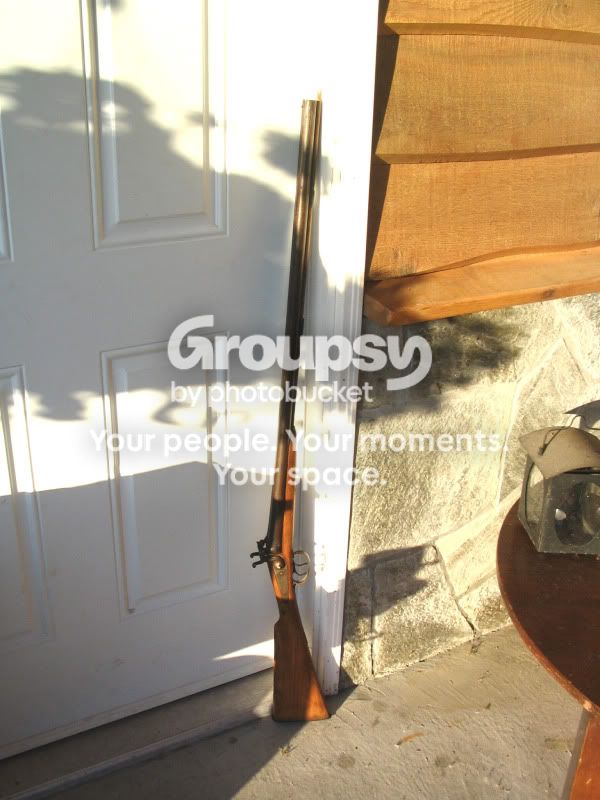
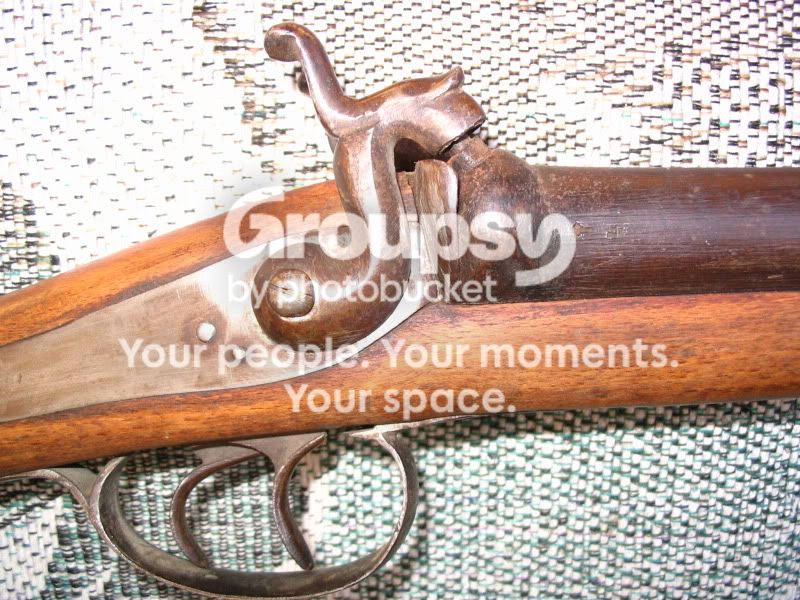
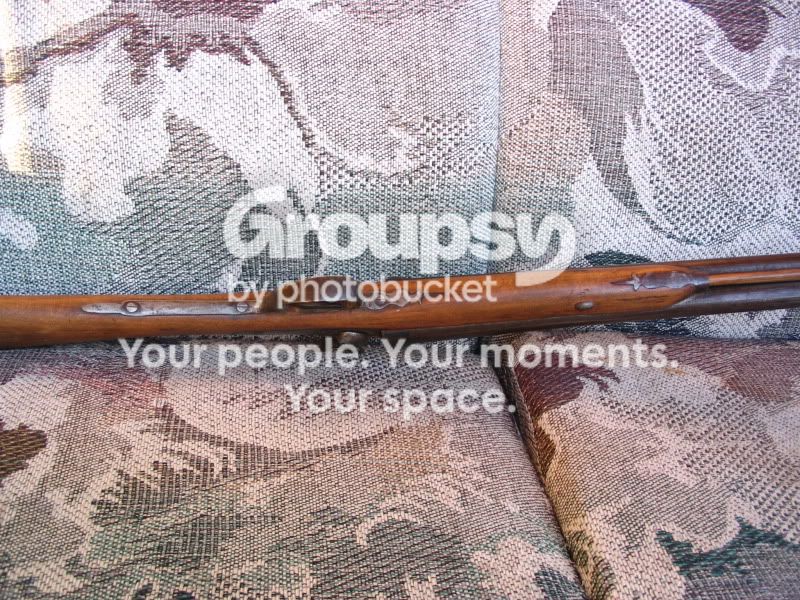
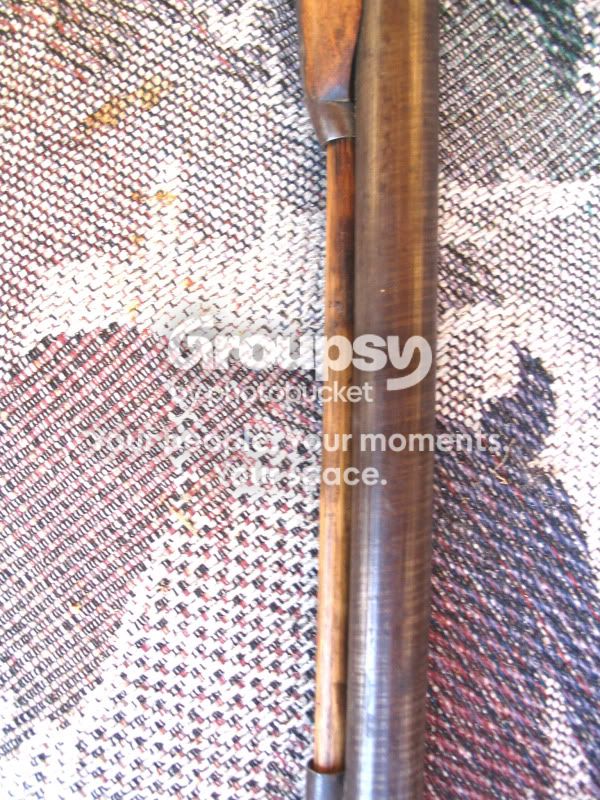
Hello well this one has me stumped! I know virtually nothing about black powder arms but I do own a model navy replica pistol. My buddy gave me this gun which I think is a double bbl exposed hammer percussion shotgun. I have no clue if or when it was fired, but there is a lot of junk in the bottom of the barrels that could be powder. The bore looks to be around 20g and the barrel is finished in a damascus like pattern. Triggers work and the gun has a fairly solid feel to it. There are no maker marks or serial numbers and the only marks I've found are the small "proof marks"? at the side of the bbls. So is this a fantasy gun put together to hang over the fireplace? Or is this an actual gun? Any and all info would be much appreciated. Cheers and thanks

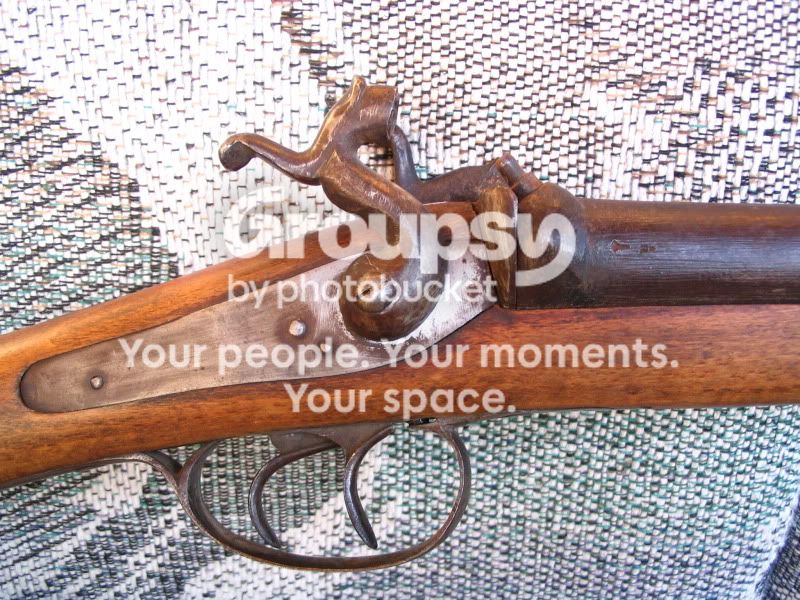
Img_2424.jpg

Img_2425.jpg

Img_2427.jpg

Img_2428.jpg

Img_2429.jpg

Img_2426.jpg
 
Last edited:

If appears to be made in Belgium; on a couple of photos there is a peron (mini eifel tower) stamped near the breach of the gun. 20 guage is .62" bore although yours looks bigger than that. You need to get someone knowledgeable to check it over and would also probably be wise to replace the nipples with modern ones. Do not assume that the nipple threads are 1/4 x 28 threads; measure them with a thread guage and micrometer. They may have to be made on a lathe. Finally the bores need a good cleaning; sounds like you could have rust down there at the bottom. Check the inside depth of the barrels with a ramrod; the breach plugs should end about 1/2" to 5/8" ahead of the end of the barrels. If the ramrod does not go down that far by 1" or more, you have something more than rust in the barrel

cheers mooncoon
 
Thanks mooncoon. Great info. I'll give it a good clean and take it to somebody in the know. Will hot soapy water break up the old powder at the bottom? I've got a micrometer around here somewhere, probably under something, so I'll mic the bore when I find it. What is the proceedure for loading a muzzle shotgun, if that is indeed what it is? Do you think this example is old? Thanks again & Much appreciated
 
Looks to be a modest quality Belgian shotgun. While it is certainly not modern, I don't think it is all that old, perhaps very late 19th century.
Doesn't look messed with. Would be a good idea to remove the nipples if possible, see that the threads are sound. If they are, I wouldn't replace them.
Whether the gun is a shooter or not will depend on the condition of the barrels. They will need to be thoroughly cleaned, perhaps polished as well. A little flashlight could be dropped down, shining back up the bores. You cannot see the breech area this way, but can inspect most of the bores. For a preliminary cleaning, wrap fine steel wool around a brass brush, oil well, and scrub away. Periodically, wipe out thoroughly and inspect. If the bores need to be polished, mount a slitted dowel somewhat under bore size on a rod, and wrap a strip of fine emery around it. Oil, and polish with an electric drill. Keep the go-devil moving end to end. This will really loosen and remove any scab rust, will brighten things up. If there are deep pits, forget shooting the gun.
If you determine that the gun is likely shootable, you will want to test fire it before firing it from the shoulder. I secure guns I'm testing with sandbags, of which I have a number. Bags under the gun, behind it, on top of it. If it is 20 ga, I would test with 1 1/2 oz of shot, equal volume of powder. You can wad with crumpled papaer, over powder wad should be 1/2" or 5/8" thick. Fire with a string.
Based on your photos, the condition looks pretty good, the gun might well be a shooter. I would certainly have a go at it. But do be careful.
 
Hot soapy water should break up powder or fouling. It might be worth finding or making a scraper to clean up the breach. Think of a brass bore sized jag with a screwdriver blade type end.

It looks like a nice example of an original 1800's shotgun. A nice clean design and in good shape (on the outside at least). You should be able to feel some choke when you clean it but you may also be able to shoot balls if the choke isn't too tight.

The loading procedure should it be deemed safe to fire is similar to a shell. 60-90gr of 2F or 3F powder (12ga) then a stiff cardboard wad followed by a wad of felt or fibre. It is important to avoid plastic wads or shot cups in black powder loading as it will make a gooy mess thats hard to clean out. Next throw down a measure of shot and hold it in place with another cardboard card. You're now ready to cap and fire.
 
Lets go back to square one; you are assuming the gun is 20 guage --- measure it. You are also assuming that there is powder in the bottom of the barrel; make up a scraper such as a cold chisel type point/blade on a 3/8 brass rod and spin it against the bottom of the barrel and see what comes out. It could be old rags, newspaper and just plain dirt, I have found all of those things in old barrels. Filling the barrel up with water at this stage might only be creating a rusting problem until the barrel is clean. As an alternative to Tiriaq's sand bags, I use an old car tire and tie the gun to that while firing remotely with a string (20 feet away).

cheers mooncoon
 
Thanks for the advice. I especially find the remote firing technic useful. Nothing to lose but the gun. I will get onto all that and report back. Thanks againn Cheers
 
Here is a variant for test firing barrels...
A stiff test load can produce significant recoil. It would be a shame to break the stock.
I have made a test cradle out of 2x4s to hold only the barrels. Block of wood behind the breeches, barrels held down with fibre packing tape. Hold the whole thing down with sandbags.
Load one barrel only, with the test charge. Make sure the nipple is clear, put a little pile of powder on and around the nipple. A little paper dam can be taped in place to hold the priming powder. Get a length of electric flex. Twist a bit of some steel wool to the exposed wires on one end. Place over the priming powder. Tape in place if necessry. Back off, touch the other ends of the wires to the terminals of a 9v battery. MUCH safer and more effective than messing with fuses.
Test the electric ignition system before live firing, you will see that it works.
 
Back
Top Bottom





















