Google is your friend.
I went googling for this one because it is one I haven't run into before.
Christies' had one for sale a while back. Here is what I stole from them:
Lot Description
AN UNUSUAL W. NOKES 1881 PATENT 14-BORE HAMMER GUN, NO. 147
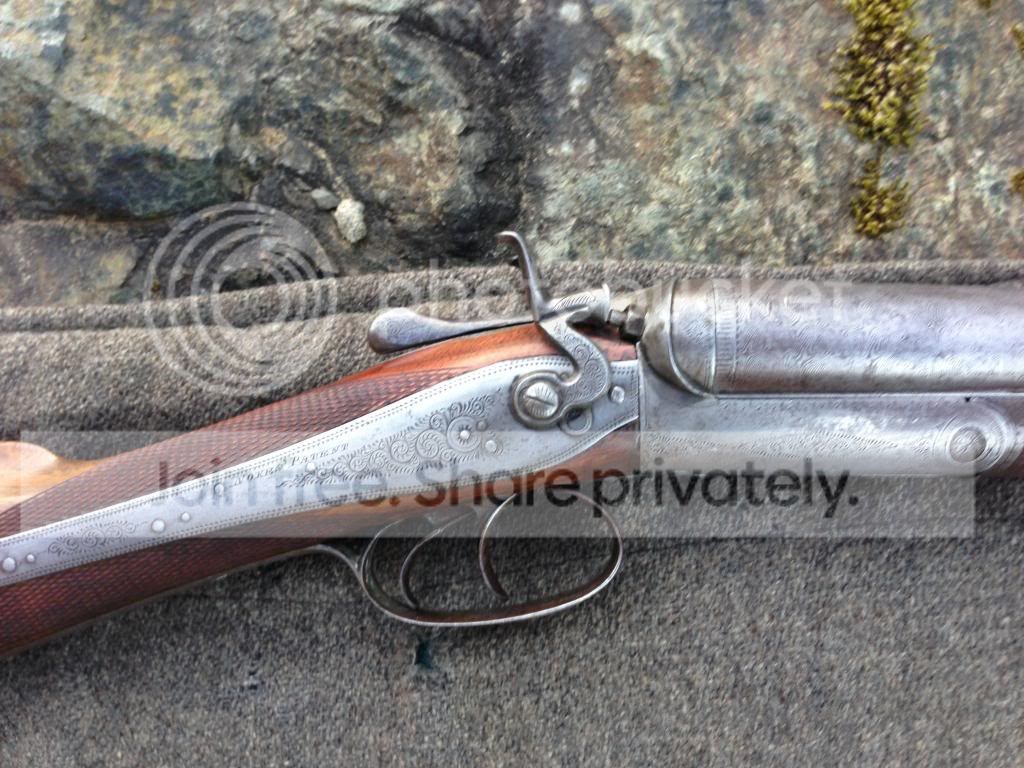
The action incorporating W. Nokes heelplate safety and locking-bolt patent No. 2378 of 1881, the very unusual patent design combining a butt safety with transverse locking bolts acting directly through circular extensions on the bases of the hammers, toplever, elongated lockplates, foliate-scroll engraving with traces of hardening-colour, well-figured stock with skeletal butt-plate, the browned fine damascus barrels with game-rib.
The critter went for 717 Pounds Sterling, which is a tad over 1100 bucks: not pocket change by any means.
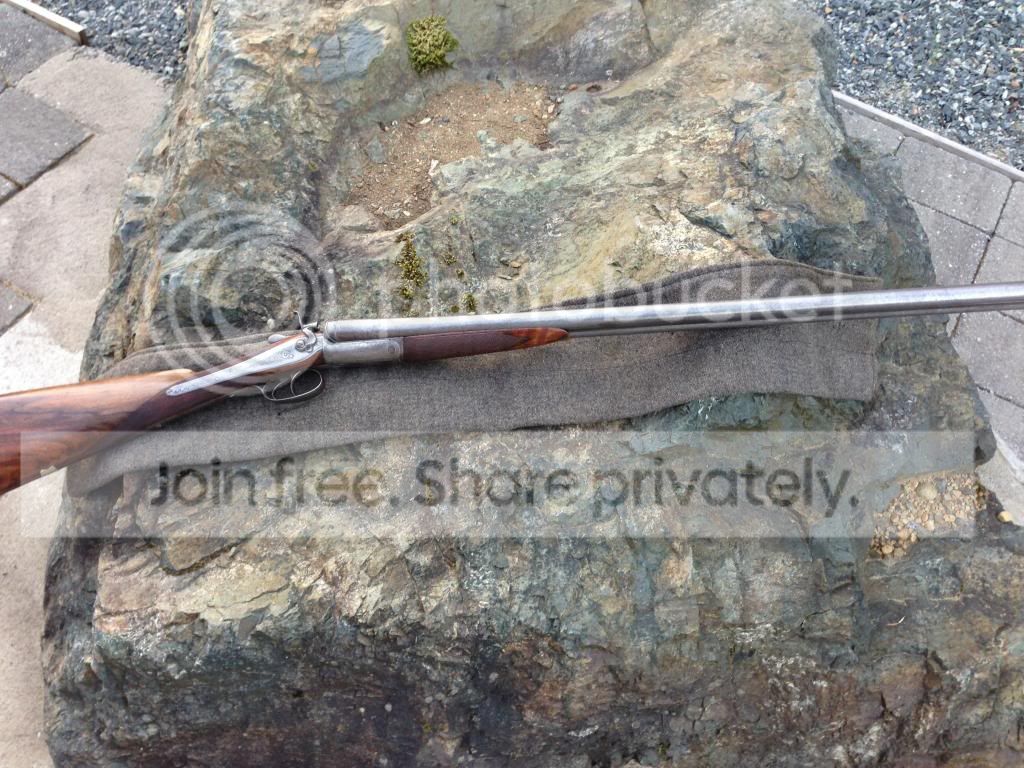
Beautiful rose-and-scroll English engraving on the locks and superb wood!
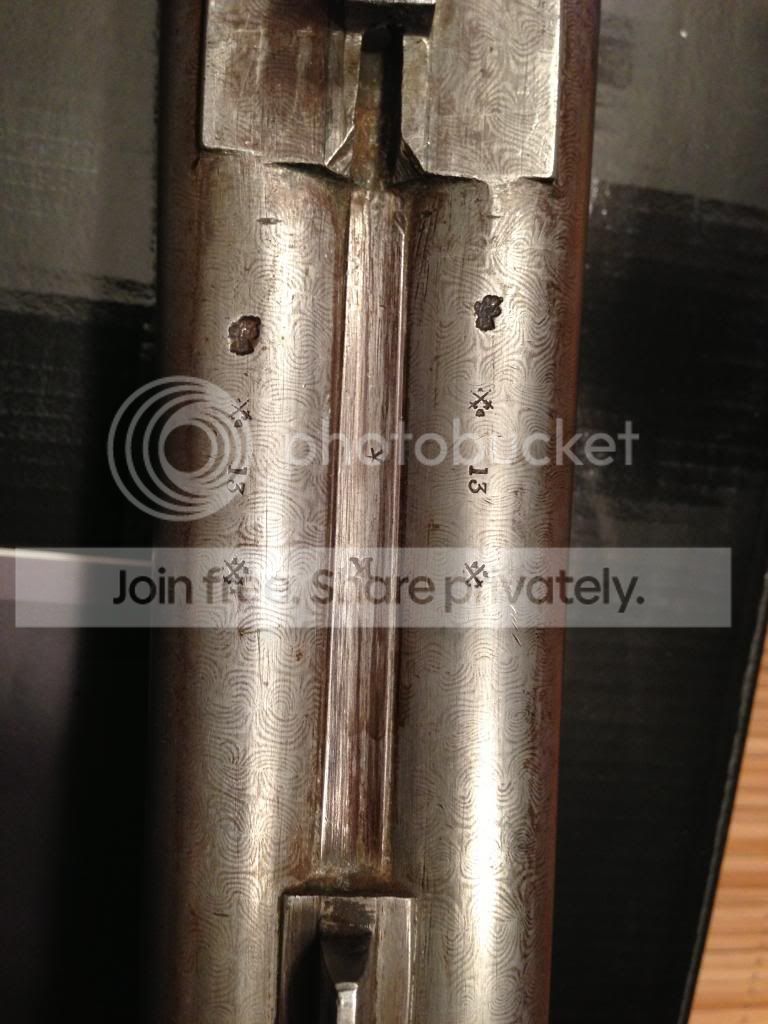
I note that both barrels are marked as 13-bores. Will the Chambers accept 12-bore cartridges easily? Sometimes a gun with 12-bore chambers and tight or choked bores would be Proofed and labelled as a 13...... but sometimes not. This Company is known to have built 14-gauge breechloaders and, at that time, everyone with the money had their own favourites, so it is certainly possible that a very small shop could have built a 13-bore gun and made up the ammunition for it.
Likely somebody will say that I'm nuts for that last statement, but I'm the guy who has an 11-gauge Scott double gun in my vault..... and it is DEFINITELY an 11. Mine is Number 2 of a pair, so there is another out there somewhere. Ten-bore ammo will fit into the chambers, but you need a wood block and a HAMMER to get them in, ramrod to get them out and I really don't like that. It is an 11, no doubt. Cartridges of the World NOW lists the ammo, although they did not for about the first 8 editions.
No real matter. Guns such as yours seem to be rare enough that nobody would risk the critter by taking it out and firing it.
The Noakes Patent referred to a novel Locking-bar mechanism and a positive SAFETY actuated by the heel of the Butt-plate. Butt-plate on the gun at auction is described as "skeleton" and so is there mainly to actuate the Safety. Highest-grade guns often had NO Butt-plates at all, a way of showing that the owner was rich enough to afford a gun-bearer and the gun never touched the ground. Is your buttplate skeletonised or solid?
On your gun, the wood ALONE shows that it was made for someone with a LOT of money and excellent taste. A gun THIS rare should be traceable, if you work at it.
I would REALLY like to see what is INSIDE one of these, but I don't suppose I'll ever get the chance!
You have a Very Fine Toy which is also worth a considerable chunk of money.
Thanks for showing.
**************************************************
This is my 6009th post.
The number 6009 reads the same if you turn it upside-down, same as did 1961.
The NEXT upside-down number is 6119, then comes 8008, the one after that bing 8118 and then 9006.
Doesn't that make you feel all educated-up at this time of the morning?
LOL!
And I'm still waiting for my GOATS!