Noobie first reload problem/question (with pics!)

woofer2609

Regular
Rating - 100%
30   0   0
Location
GVRD
Hi, I am pressing .308 cartridges with 150 gr. Hornady bullets (FMJBT). I'm using Hodgon H308 powder, starting at the recommended low end (48 grains).
I am using Hornady shells (2nd firing, I bought and fired them the first time.) They were all resized and deburred.
I followed the Lyman manual to the T.
I am using a RCBS RockChucker supreme. I am using a hand primer, and this is where my first question comes.

#1-I have primed shells before with no problems, but my Federal Match Large rifle primers were a MAJOR pain in the ass to seat with Hornady brass.
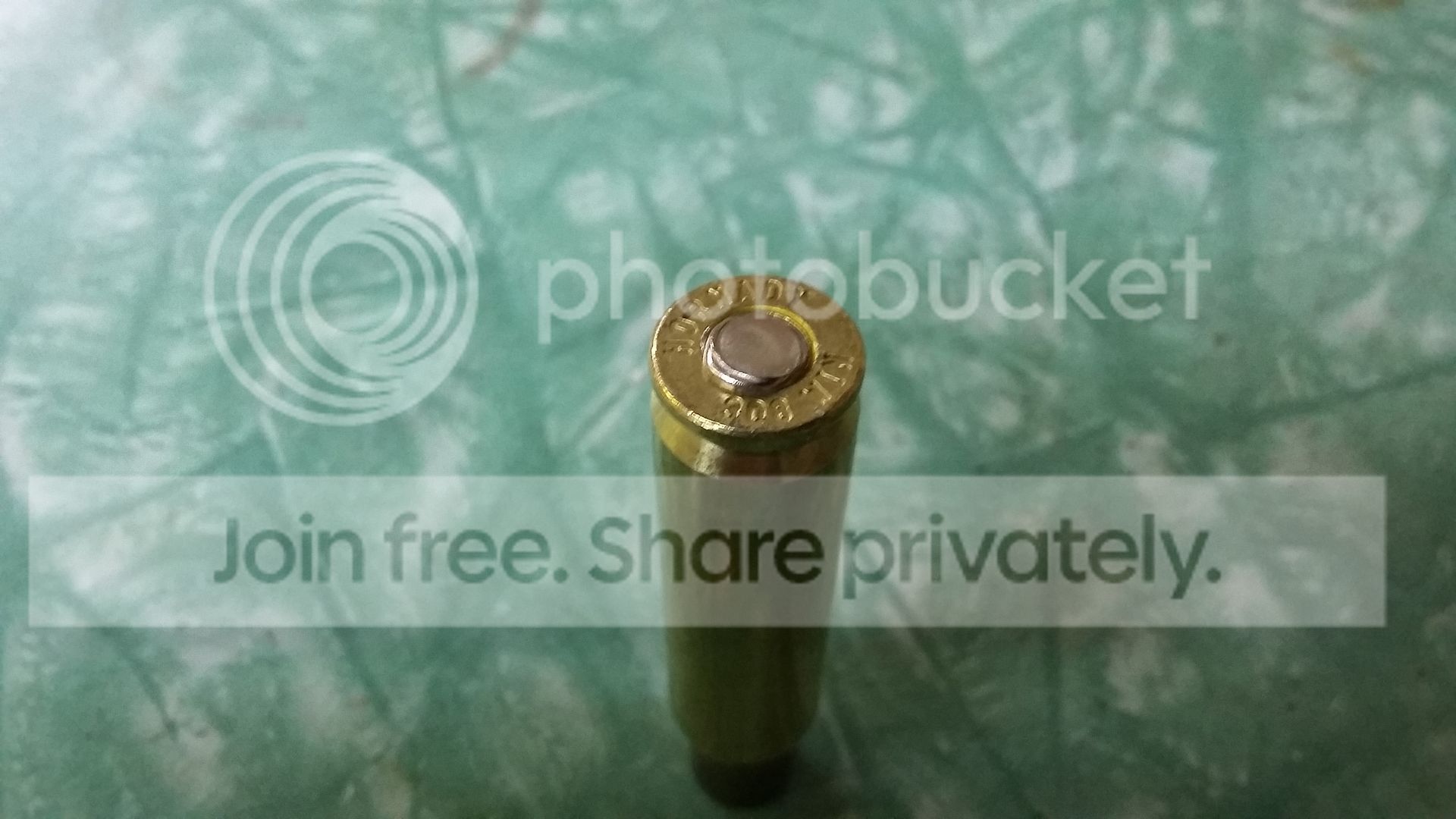
I had no trouble priming Federal shells in 30.06 caliber (see photo).
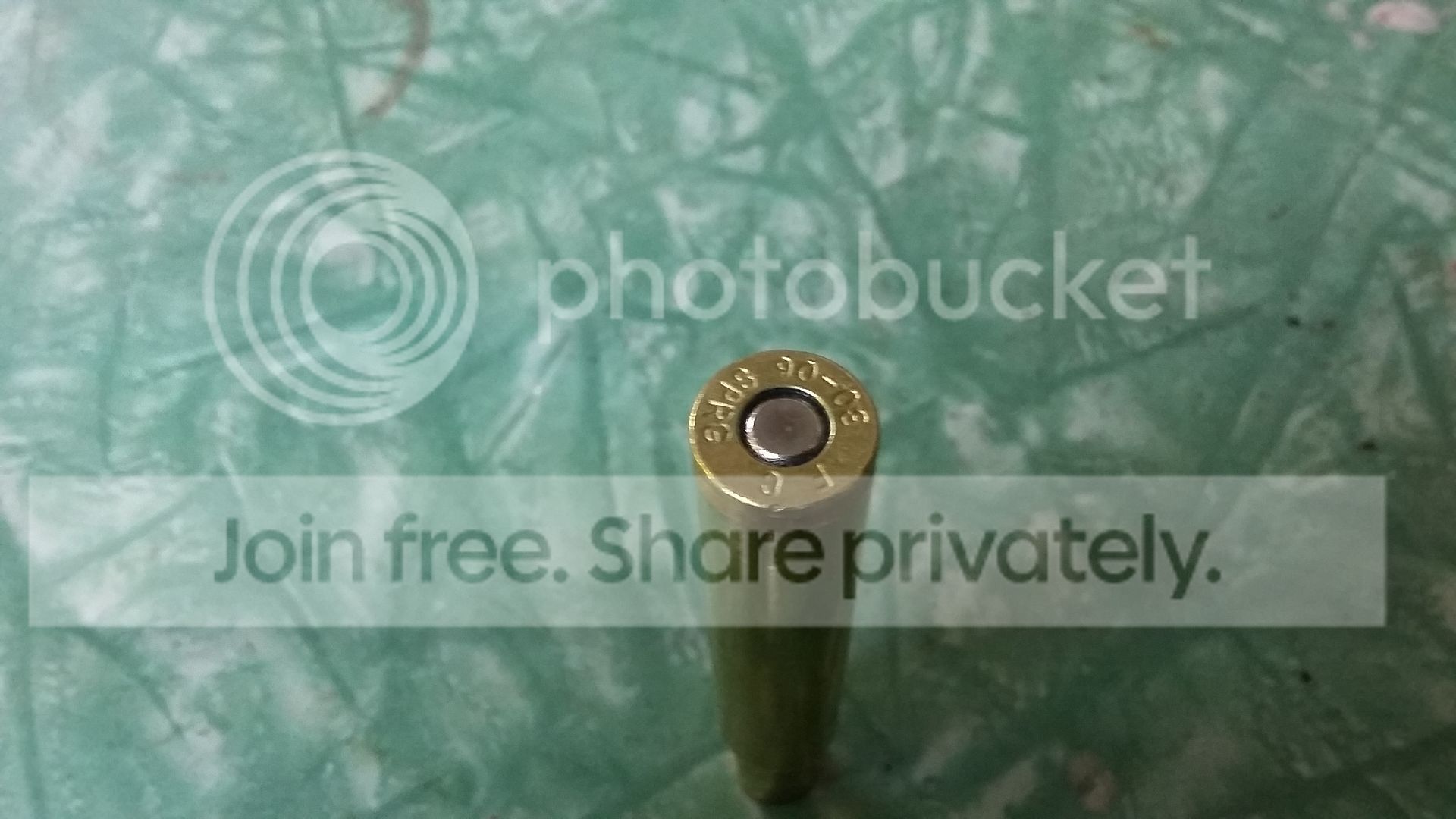
Am I missing something? Are these shells not compatible with these primers? Should I use the press to prime? The 15 that I seated properly are .002 or so below the surface of the rim, so I am happy with those. I did NOT load a powder charge into the 4 suspect shells with screwed up primers.

#2-How should I dispose of these 4 shells, or can I un-prime them?

#3-Looking at the shells, I noticed that Hornady appears to use different casings on their Brown box ammo (more$) than their American Whitetail brand. I'm assuming the Brown Box has less weight fluctuation? I really noticed it most in the extractor groove.

#4- From the Lyman manual, I believe that the OAL with a bullet seated is max 2.815"
I couldn't find any info about how far into the shell the bullet should be pressed, so I went to a length close to some factory Hornady loaded ammo I have. I pressed the bullet in far enough to have the shell neck cover half the the cannelure (does not need to be crimped, as it will be used in a bolt action.)
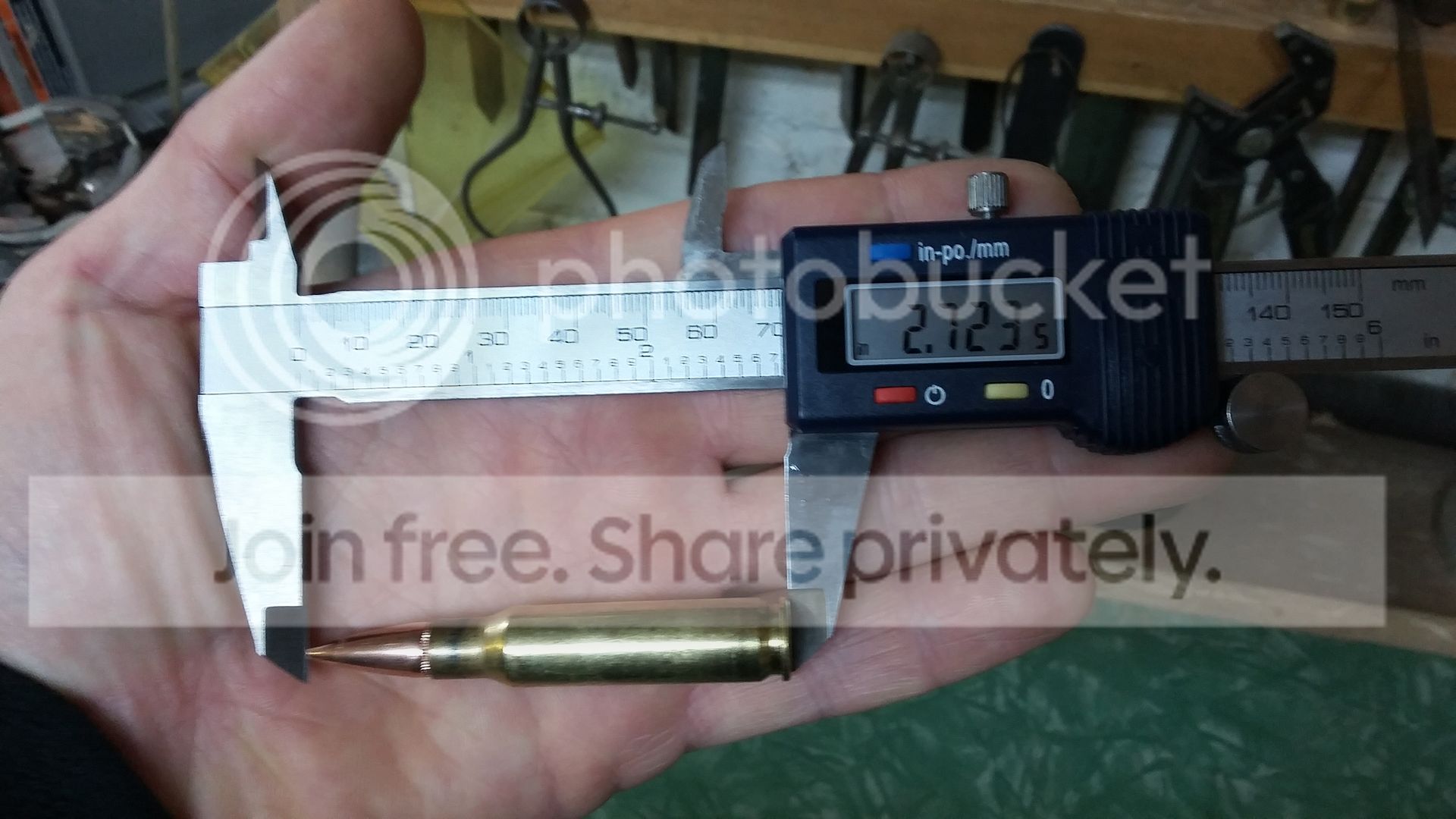
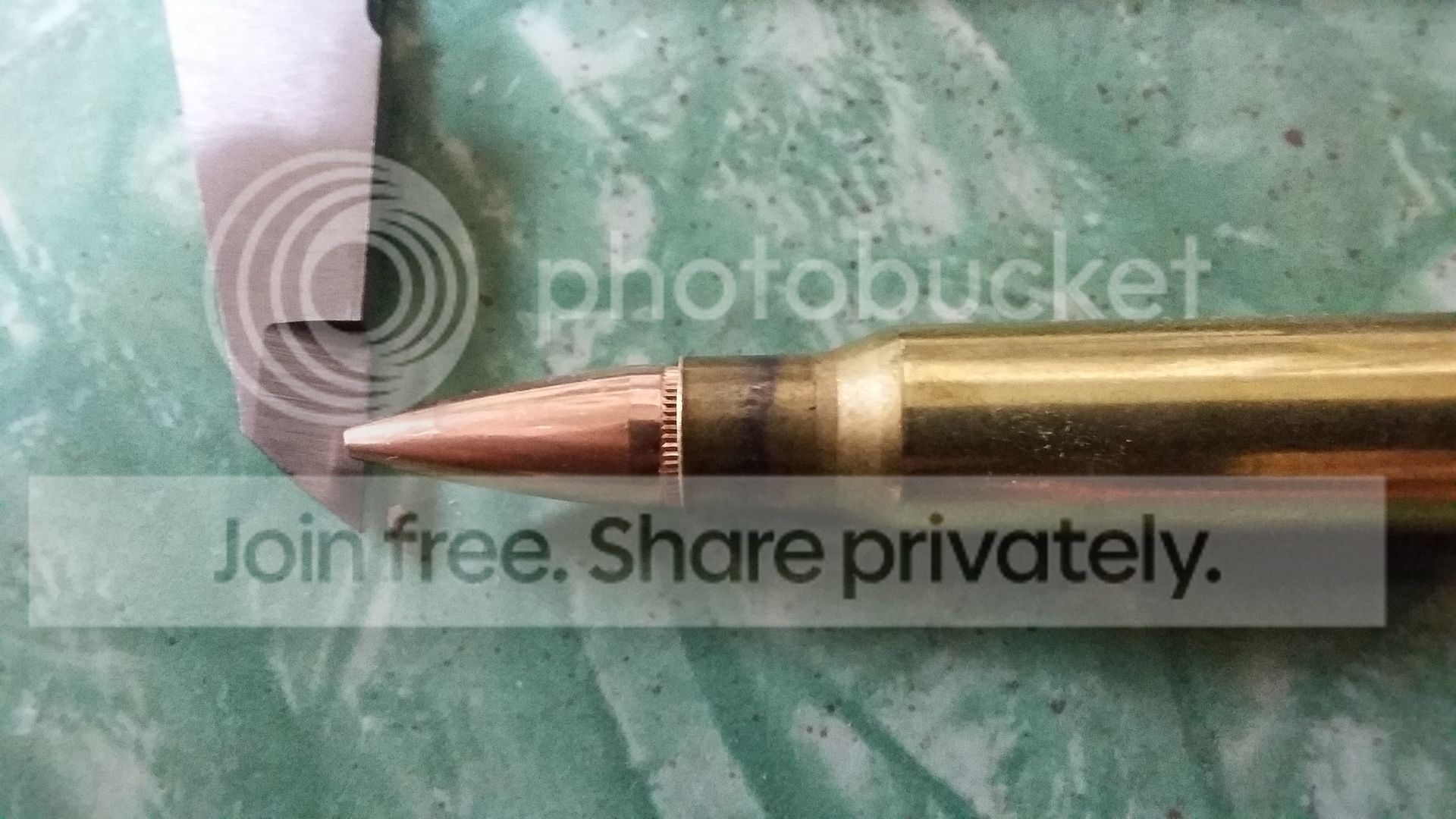
So before I go and shoot these off, I'd love some input.
THANK YOU!
 
Some Hornady primers are crimped like military primers. You have to swage or ream the pocket.
I have carefully decapped live primers with my Lee decapping die, but it's probably not the best idea.
 
Look in the primer pocket and you will see a ring around it. That is the crimp. You need to swage it out with a swager like Dillon makes or just cut it out like bubba.

If you bubba it, use a drill bit that's bigger than the primer pocket and gently cut the crimp ring out. There is also cutting tools made for this.

To unprimed them just pour some water in them and send them through your sizing die again.
 
Last edited:
Thanks everyone!
Some Hornady primers are crimped like military primers. You have to swage or ream the pocket.
I have carefully decapped live primers with my Lee decapping die, but it's probably not the best idea.
I did use my Lee pocket primer, but it doesn't seem to have much affect on the diameter of the pocket,. If this Hornady brass is that much of a PITA, I may just throw the mis-primed ones out.
Would the resizing die(?) with depriming pin work?
I thought about that, but didn't want the primer to go off whilst doing so
Look in the primer pocket and you will see a ring around it. That is the crimp. You need to swage it out with a swager like Dillon makes or just cut it out like bubba.

If you bubba it, use a drill bit that's bigger than the primer pocket and gently cut the crimp ring out. There is also cutting tools made for this.
Thanks, I'll do some research on this.
To unprimed them just pour some water in them and send them through your sizing die again.
Good idea! I've heard water is the enemy of primers
If you are not crimping don't worry about where the cannelure is.
OK, good to know. Any recommendations on O.A.L.? Should I try and get is close to the 2.815" max, or just press down to the cannelure so it er, looks good? I'm pretty sure the boat tail was sitting on top of the powder, so I don't want to compress it anymore, especially seeing as I may still have 2gr. more to add depending on what shoots best.
 
I don't reload so take my advice with the tiniest grain of salt, but I've read you can take a bullet, colour it with a sharpie, set it into a case (not primed) by hand, chamber the round and extract it, where the sharpie is rubbed off is where the lands have contacted the bullet, you can measure that length and set it back another 0.015 for a small jump to the lands.
 
OAL is a pretty useless number in most manuals, what's more important is your rifles chamber and the size of your magazine. I use a Hornady case length gauge to determine when the bullet touches the lands, then back off 15-30 thou, assuming they will still fit in my magazine. If they are too long for the magazine, I reduce it further. I usually go one step further and use a bullet comparator set and seat all my bullets to the same length to the ogive, because bullet tip variations can change the relative length of each bullet. Cannelure is irrelevant unless you crimp.
 
Allright, looks like a Lyman primer pocket reamer is my next purchase.
Good thing reloading is saving me so much money...not.
:)

It's often said that you don't save money by reloading because you end up shooting more. For me, it's building the most accurate round for my specific rifle or rifles. Once you've made the initial investment in things like primer pocket uniformers, flash hole deburring or crimp removal tools, etc. etc, it's done.
 
I have deprimed and reused hundreds if not thousands of primers.
Its not like like you're defusing a bomb or anything.
I've even forgotten that I was depriming a live primer and slammed down on the press handle.
I've never had one go off yet.
 
Some primers just don't like some brass. Have some CCI and Fed that just wouldn't go into certain brands and vice versa. Now that you mention it may be Fed wouldn't go into HDY but CCI no problem.
Lapua brass no problem with FED, CCI, S&B, ... Too bad they're buck 25 each new.

Just pop out the bad primers with a LEE univ. decapper. Get one if you don't have one, must have. Get the Redding larger decapper for 338LM.

Done right reloading saves money. The adage that you shoot more is stupid cause if you really want to save don't shoot.
 
Lyman primer poocket swag tool they are about 15 bucks. Unscrew the tool bit put is in a small drill and run the cases through it takes a bit of time but super simple and you only have to do it once. Hornady brass is good quality, the crimped primers are a PITA but easily fixable. .....make sure you buy the correct size there is large and small I suggest you buy both or a tool with interchangeable tips, then you'll get the flash hole uniformed etc....
 
Just a "for your info" to the OP and others who suggested using water bath to deaden your primers...don't waste your time, I've soaked primers for 4 days in a glass of water and they all went bang. Modern primers have a sealant compound/devise installed, I read somewhere that it is a military requirement so everybody builds them that way incase they suddenly are offered a govt. contract.
That is not to say not to press live primers with re-sizing dies...I've been doing it for 45 yrs. and never had a detonation from the practice.
 
Live primers can be de-primed exactly like dead primers. You could not set one off if you tried.

Your OAL is just fine. If it fits the magazine ok and bullet does not hit the rifling, it is ok.

I cut the crimp of primers by the hundreds using a $7.00 counter sink tool in a electric drill. Buy it at Home Depot. Just touch the pocket with the tool at cut off the edge.
 
OAL is a pretty useless number in most manuals, what's more important is your rifles chamber and the size of your magazine. I use a Hornady case length gauge to determine when the bullet touches the lands, then back off 15-30 thou, assuming they will still fit in my magazine. If they are too long for the magazine, I reduce it further. I usually go one step further and use a bullet comparator set and seat all my bullets to the same length to the ogive, because bullet tip variations can change the relative length of each bullet. Cannelure is irrelevant unless you crimp.

For O.A.L. this is the best advice you will ever get. I always load 5 rounds based on the chamber and then check the magazine: you need every round to fit in any order in that magazine.
 
Back
Top Bottom